
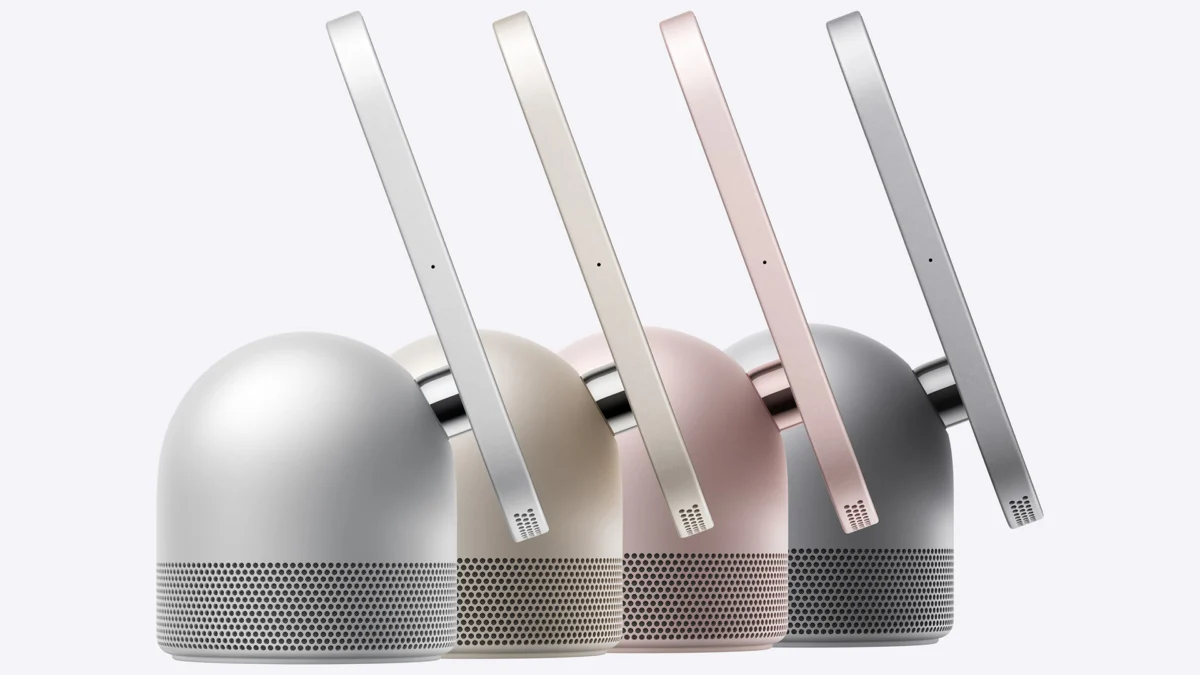
After years of anticipation and persistent industry rumors, Apple has officially unveiled its latest smart home device, the HomeView. This innovative product marks Apple’s significant entry into the smart display market, positioning itself as a direct competitor to existing offerings like Amazon’s Echo Show, but with a distinctly Apple approach. The HomeView is designed to be more than just a voice-activated assistant; it’s a multifaceted hub that seamlessly integrates with Apple’s expansive ecosystem of services, smart devices, and the broader smart home landscape, aiming to centralize control and enhance daily life.
The HomeView’s debut signifies a strategic expansion for Apple, leveraging its established user base and brand loyalty to penetrate a growing market segment. Smart displays have evolved from novelty items to essential components of modern connected homes, offering convenience, information, and entertainment at a glance and by voice command. Apple’s entry suggests a commitment to solidifying its position within this ecosystem, promising a cohesive user experience that aligns with its existing product philosophy. The device’s emphasis on direct service integration and its potential to bridge the gap between digital and physical spaces within the home are key differentiators that will be closely watched by consumers and competitors alike.
Versions and Specifications: Tailored Design for Diverse Needs
Apple is offering the HomeView in two distinct configurations: the standard HomeView and the HomeView (Wall Mounted). Both models are priced at a competitive £299 / $299 and are currently available for pre-order, signaling a deliberate strategy to capture a premium segment of the market. The subtle yet significant differences between these two versions cater to varied user preferences and installation scenarios.
The standard HomeView presents a broader aesthetic choice, available in four sophisticated finishes: Silver, Starlight, Rose Pink, and Space Grey. This palette aligns with Apple’s signature design language, allowing the device to blend seamlessly into different home décors. In contrast, the wall-mounted variant adopts a more minimalist approach, offered in only Silver and Space Grey. This choice likely reflects a design philosophy aimed at a more permanent and integrated installation, where the device becomes a fixture within the home’s architecture.
A notable divergence lies in their audio capabilities. The standard HomeView boasts a more robust audio system, engineered for richer sound output. It features two custom full-range drivers, a custom down-firing woofer for enhanced bass response, and dual force-cancelling passive radiators to minimize distortion and vibration. This configuration suggests a device geared towards an immersive audio experience, suitable for music playback and high-quality video calls. The wall-mounted version, while still equipped with two custom full-range drivers, omits the woofer and passive radiators, indicating a primary focus on clarity for communication and general smart home functions rather than high-fidelity audio.
In terms of visual interface, Apple has opted for a departure from the widescreen aspect ratios commonly found in the smart display market. The HomeView is equipped with a 7-inch Liquid Retina Screen. This display sports a unique square resolution of 1088 x 1088 pixels. This aspect ratio is reminiscent of a larger Apple Watch display, suggesting an interface optimized for glanceable information, app widgets, and interactive elements that benefit from a more contained and focused presentation. This design choice underscores Apple’s intention to create a device that is both functional and aesthetically pleasing, fitting within its established design paradigms.
Under the hood, the HomeView is powered by Apple’s formidable A18 processor, ensuring swift performance and seamless multitasking across its various applications and features. Complementing the processing power is a 12MP Center Stage camera. This advanced camera system, known for its ability to keep subjects in frame during video calls by intelligently panning and zooming, further enhances the HomeView’s capabilities in communication and presence detection.
Functionality: Beyond Voice Commands
While often compared to voice-first smart displays like the Amazon Echo Show, the Apple HomeView positions itself as a more comprehensive smart device, blending a sophisticated touchscreen interface with advanced AI capabilities. It eschews a purely voice-driven paradigm for a richer, app-centric experience akin to interacting with an iPhone or iPad. The HomeView operates with a curated selection of familiar Apple applications and services, including FaceTime, Messages, Calendar, Music, and Home. This integration ensures that data is synchronized across all of a user’s Apple devices, providing a consistent and fluid experience.
The core functionality allows users to engage in messaging and video calls, manage their schedules, and control their smart home devices without needing to physically reach for their smartphones. This positions the HomeView as a complementary device, enhancing the utility of existing Apple products rather than attempting to replace them, much like the Apple Watch serves as an extension of the iPhone. The FaceTime integration, in particular, is expected to be a significant advantage, given Apple’s vast user base and the widespread adoption of its video calling service.
A key feature enabling personalized interaction is the built-in facial recognition. This technology allows the HomeView to distinguish between different family members, presenting them with tailored content and personalized home screens. For general use or when multiple individuals are present, a more basic, universally accessible home screen will be displayed, ensuring that information is relevant and easily digestible for everyone.

Powering the intelligent interactions is Siri AI, the latest generative AI upgrade to Apple’s virtual assistant. Early impressions of Siri AI on iPhones suggest a marked improvement in understanding complex queries and conversational nuances compared to its predecessor. The HomeView’s integration of Siri AI promises a more intuitive and responsive voice command experience. While direct comparisons to rival AI assistants like Amazon’s Alexa+ will require hands-on testing post-launch, the adoption of advanced AI is a clear indication of Apple’s commitment to pushing the boundaries of smart assistant capabilities.
Beyond its interactive features, the HomeView also doubles as a sophisticated smart clock. Its display is capable of dimming to an exceptionally low 0.3 nits, making it suitable for use in bedrooms without emitting disruptive light, a thoughtful consideration for nighttime ambiance and sleep hygiene.
Smart Home Compatibility and Ecosystem Integration
The HomeView is designed to be a central pillar of the smart home, offering robust compatibility with devices connected to Apple Home. This includes products that utilize HomeKit frameworks as well as those supporting the Matter standard. The inclusion of built-in Thread connectivity further enhances its ability to directly connect with compatible devices, streamlining the setup process and improving network reliability. Echoing the functionality of the HomePod and HomePod mini, the HomeView will also serve as a home hub, enabling remote control of smart home devices even when users are away from their home network.
The expanding availability of Matter-certified devices has significantly broadened the smart home device support for Apple’s ecosystem. However, the current limitation of not supporting cloud-connected devices directly means that the total number of smart devices controllable via HomeView might be less extensive than that offered by some Amazon Echo devices, which often leverage cloud-to-cloud integrations.
In anticipation of this, Apple is reportedly developing its own suite of smart home devices, including a smart lock, doorbell, camera, and thermostat. The successful integration and performance of these upcoming products will be crucial in bolstering the HomeView’s appeal and competitiveness within the smart home market. The effectiveness and user experience of these new Apple-branded smart home accessories will undoubtedly be a key factor in evaluating the HomeView’s overall smart home prowess.
Music, Media, and Seamless Handoff
For audio enthusiasts, the HomeView natively supports Apple Music, providing direct access to a vast library of songs and playlists. Furthermore, the device is expected to support AirPlay, allowing users to stream audio and video content from other AirPlay-compatible applications. While full confirmation of third-party app support for AirPlay is pending, this feature would significantly expand the HomeView’s media capabilities beyond Apple’s own services.
A signature Apple feature, Handoff, is also integrated into the HomeView. Users can seamlessly transfer ongoing music playback or active calls from their iPhone to the HomeView by simply bringing their phone close to the display. This functionality mirrors the intuitive experience offered by the HomePod, reinforcing Apple’s commitment to fluid device-to-device interaction.
The Question of an App Store
One of the most significant points of discussion surrounding the HomeView’s launch is the absence of an app store. This decision has been viewed by many as a missed opportunity, particularly given the potential to leverage the vast library of existing iPhone and Apple Watch applications. The ability to port these apps to the HomeView’s interface could dramatically increase device compatibility and unlock a wealth of functionalities. For instance, a dedicated Ring app would allow users to monitor security cameras, arm alarms, and answer their door directly from the HomeView. The expectation is that Apple may introduce an app store for the HomeView at a later stage, once the initial platform has been established and user feedback has been gathered. This phased approach could allow Apple to refine its strategy and ensure a robust and well-curated app ecosystem from the outset.
The introduction of the HomeView represents a bold move by Apple into the increasingly competitive smart display arena. By emphasizing deep integration with its existing ecosystem, a refined user interface, and advanced AI capabilities, Apple aims to carve out a unique position in the market. The success of the HomeView will hinge not only on its hardware and software performance but also on its ability to foster a comprehensive smart home experience through its own forthcoming accessories and potential future app store expansion.

