
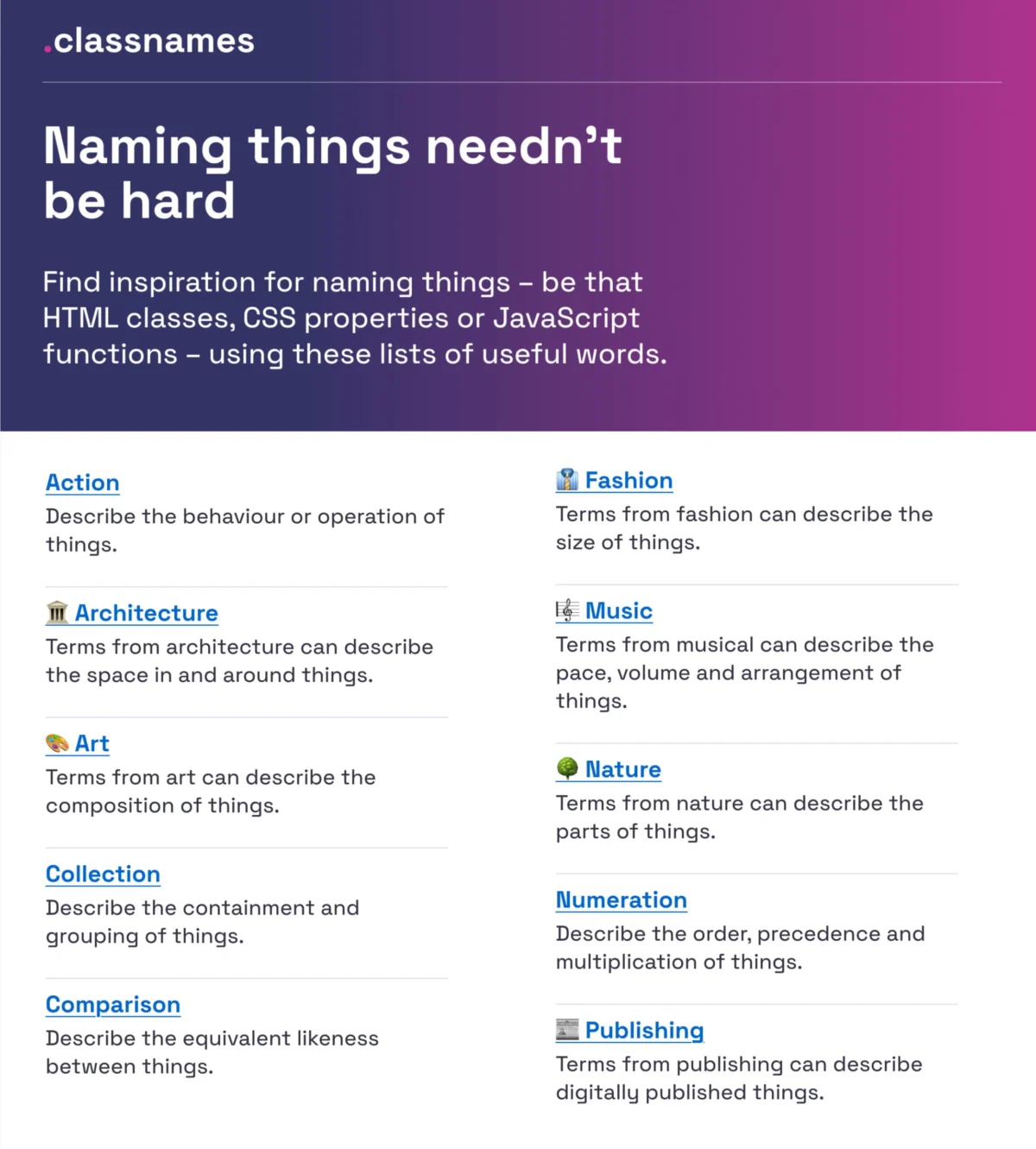
The challenge of naming remains one of the most persistent obstacles in the field of software engineering and user interface design. As the industry shifts toward increasingly complex design systems and multi-platform applications, the lexicon used by cross-functional teams has become a critical infrastructure component. Language does more than label; it dictates the conceptual framework through which designers, developers, and product managers interact with a digital product. When naming conventions are inconsistent, the resulting "dialect gap" between departments leads to technical debt, reduced velocity, and a fragmented user experience. This guide examines the methodologies, resources, and strategic frameworks necessary to establish a robust naming architecture for modern digital environments.
The Strategic Importance of Standardized Naming
In the contemporary development lifecycle, the transition from static design mockups to functional code requires a shared vocabulary. Historically, the "two hard things" in computer science have been cited as cache invalidation and naming things. This difficulty stems from the tension between generic and specific identifiers. A name that is too generic, such as "Container," provides insufficient context for its purpose or behavior, while a name that is too specific, such as "BlueRoundedHeader," limits the component’s reusability and creates maintenance hurdles when visual styles inevitably evolve.

Industry data suggests that developers spend up to 70% of their time reading and comprehending existing code rather than writing new logic. Within this context, the clarity of HTML classes, CSS variables, and design tokens directly impacts the cognitive load of a team. Effective naming serves as a form of "living documentation," allowing a new engineer or designer to understand the intent and scope of a component without referring to external manuals.
The Evolution of Naming Paradigms: A Chronology
The methodology of naming has undergone significant shifts over the last two decades. In the early 2000s, naming was largely presentational, with classes often reflecting visual attributes like red-text or left-sidebar. As the web matured, the industry moved toward semantic naming, where identifiers described the nature of the content (e.g., article-title, navigation-menu).
The mid-2010s saw the rise of methodological frameworks such as Block Element Modifier (BEM), Scalable and Modular Architecture for CSS (SMACSS), and Object-Oriented CSS (OOCSS). These systems introduced a logical structure to naming, focusing on modularity and preventing style leakage in large codebases. By the late 2010s, the emergence of Design Systems and Design Tokens—pioneered by organizations like Salesforce and Airbnb—shifted the focus again. Naming became an exercise in taxonomy, requiring a system that could scale across different brands, themes, and platforms while maintaining a single source of truth.

Frameworks for Color and Visual Property Nomenclature
One of the most frequent points of friction in design systems is the naming of colors. The transition from arbitrary hexadecimal codes to functional variables requires a systematic approach. David Aerne’s repository of color names, which currently houses over 30,355 unique identifiers, provides a foundation for this transition. By utilizing tools like Color Parrot, teams can move away from ambiguous names like "LightBlue2" toward more distinct and memorable identifiers.
However, professional practice suggests that while unique names are useful for creative inspiration, production environments require a semantic layer. For example, a color might be defined as "Cerulean" at the primitive level but must be mapped to a semantic token such as action-color-primary-enabled in the design system. This ensures that if the brand’s primary color changes, the functional mapping remains intact across the entire application.
Best Practices for Layers, Groups, and Component Architecture
Consistency in the design environment is as vital as consistency in the code. Javier Cuello, a prominent voice in design system documentation, emphasizes that effective layer and group naming must be logical, concise, and divorced from visual properties. The "Good Practices" framework suggests that names should reflect the "what" and the "why" rather than the "how."

Key principles include:
- Logical Structure: Using a hierarchical approach (e.g.,
Component / Sub-component / State). - Brevity: Eliminating redundant words that are already implied by the context.
- Universality: Avoiding jargon that is specific to one department but unintelligible to another.
- Visual Independence: Avoiding terms like "Left" or "Round," as these may change in responsive layouts or brand refreshes.
Case Study: Intuit’s Multi-Brand Design Token Taxonomy
The complexity of naming scales exponentially in multi-brand environments. Intuit, the parent company of Mailchimp, QuickBooks, and TurboTax, faced the challenge of creating a design token system that could serve diverse product identities. Nate Baldwin, a lead architect on the project, detailed the development of a flexible taxonomy that moves beyond simple brand themes.
The Intuit team realized that their legacy system was too rigid to accommodate the varied needs of their product suite. By developing a new taxonomy, they created a foundational system that allows for "thematic overrides." This means a single token name—such as background-surface-neutral—can resolve to a different hex code depending on whether it is being used in the QuickBooks interface or the Mailchimp dashboard. This level of abstraction is essential for maintaining a unified developer experience while allowing for brand-specific visual expressions.

Leveraging Community Research: The Component Gallery
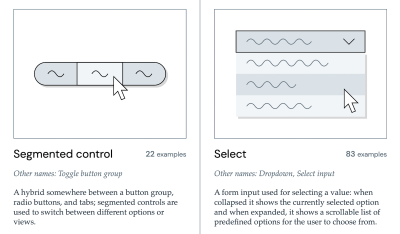
When teams struggle to find the right name for a UI element, looking toward industry standards can provide clarity. Iain Bean’s "Component Gallery" serves as a comprehensive research tool, indexing UI components from real-world design systems. By analyzing how over 50 different organizations name their components—from "Accordions" to "Modals"—teams can identify the most common and effective terms.
This research highlights that while there is some variation (e.g., "Toast" vs. "Snackbar"), there is a growing consensus on the naming of core UI patterns. Adopting these common names reduces the learning curve for new hires who have worked with other established design systems, such as Google’s Material Design or Shopify’s Polaris.
The Impact of Naming on Feature Adoption and Discoverability
Naming is not merely an internal technical concern; it has a direct impact on the end-user. Erin Gannon’s research into feature naming suggests that poor discoverability is often a linguistic problem. Features that are named based on internal company jargon rather than user-centric outcomes often suffer from low adoption rates.

Gannon proposes that a feature’s name should signal its value or the "job-to-be-done." The most effective names are those derived from the users’ own language. By conducting user interviews and asking participants to describe a feature in their own words, product teams can identify names that resonate with the target audience. This reduces the "time-to-understanding," allowing users to integrate the new feature into their existing workflows more quickly.
Advanced Taxonomy: The Vodafone UK Model
For global enterprises like Vodafone, naming must accommodate a complex ecosystem of brands and themes. The Vodafone UK Design System team developed a "Variables Taxonomy Map" to visualize the connections between different types of tokens. This map breaks down the anatomy of a design token into four distinct collections:
- Primitives: The raw values (e.g., colors, spacing units).
- Semantics: The functional application (e.g.,
button-primary-background). - Component-Specific: Tokens tied to a specific UI element.
- Page-Level: Overrides for specific layouts.
This structured approach, building on the foundational work of Nathan Curtis, ensures that the name of a token reveals its intent, its origin, and its scope. This transparency is vital for large-scale collaboration, preventing the accidental duplication of variables and ensuring that updates can be propagated across the system with confidence.
Tools for Implementation and Maintenance
To move from theory to practice, several tools have emerged to assist teams in building their naming structures. Romina Kavcic’s "Design Token Naming Guide" provides an interactive builder that allows teams to configure their naming structure based on components, categories, states, and roles. Furthermore, inventory spreadsheets allow teams to maintain a bird’s-eye view of their tokens, facilitating audits and identifying naming conflicts before they become embedded in the codebase.
For the naming of entire products or services, the open-source repository "Onym" offers a different set of resources. It organizes tools for brainstorming, etymological research, and vetting, ensuring that the chosen name is not only creative but also legally and culturally viable.
Broader Implications and Analysis
The professionalization of naming conventions represents a maturing of the digital design industry. As software becomes more integral to every aspect of the economy, the efficiency with which we build and maintain that software becomes a competitive advantage. Standardized naming reduces friction, minimizes errors, and allows teams to focus on solving complex user problems rather than debating nomenclature.

Furthermore, the rise of Artificial Intelligence and Large Language Models (LLMs) in code generation adds a new layer of importance to naming. AI tools rely on the context provided by variable and class names to suggest relevant code snippets. A codebase with clear, semantic, and standardized naming is significantly more "AI-ready" than one filled with cryptic or inconsistent identifiers.
In conclusion, the right name is the one that is understood by all stakeholders—from the designer who conceives the component to the user who interacts with the final product. By treating naming as a core architectural concern rather than an afterthought, organizations can build more resilient, scalable, and user-friendly digital ecosystems. Addressing naming conflicts and refining taxonomies should be viewed as an ongoing investment in the health of the product and the harmony of the team.

