
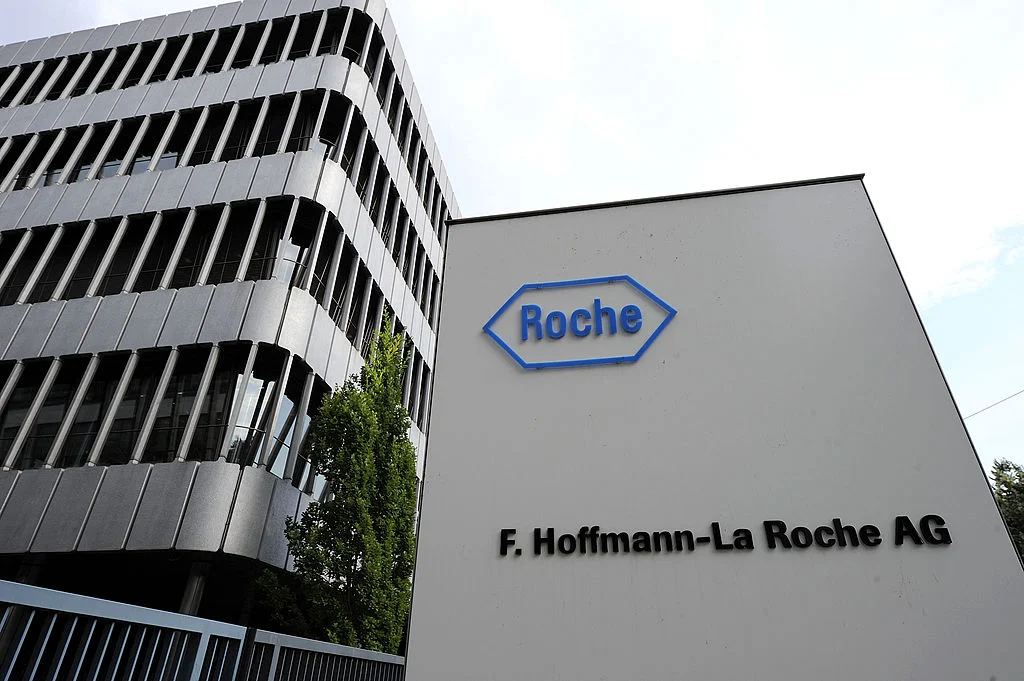
Roche has entered into a definitive global licensing agreement with Shanghai-based Rona Therapeutics to develop and commercialize a novel RNA interference therapy targeting obesity and other metabolic disorders. Under the terms of the agreement, Roche will pay an initial $100 million in upfront and near-term milestone payments to gain exclusive rights to an undisclosed siRNA candidate targeting activin receptor-like kinase 7 (ALK7). This strategic move signals Roche’s intent to aggressively diversify its metabolic portfolio as it seeks to challenge the market dominance of Eli Lilly and Novo Nordisk. Beyond the initial payment, Rona Therapeutics stands to receive up to $1.06 billion in additional development, regulatory, and commercial milestone payments, alongside tiered royalties on future global sales.
The deal highlights a growing industry-wide shift toward "next-generation" obesity treatments that move beyond the traditional glucagon-like peptide-1 (GLP-1) receptor agonists. By targeting ALK7, Roche is betting on a mechanism that interacts directly with fat tissue biology rather than focusing primarily on appetite suppression via the central nervous system. As the obesity market is projected to exceed $100 billion by the end of the decade, the acquisition of a differentiated modality such as RNA interference (RNAi) provides Roche with a potential competitive edge in terms of dosing frequency, tolerability, and metabolic outcomes.
The Science of ALK7 and the RNAi Modality
The cornerstone of the Roche-Rona partnership is the ALK7 protein, a member of the transforming growth factor-beta (TGF-β) receptor family. Unlike many existing metabolic targets that are expressed in the brain or the gut, ALK7 is primarily expressed in adipocytes, or fat cells. Scientific research, including large-scale genetic studies, has identified ALK7 as a critical regulator of energy homeostasis. It functions within a signaling pathway that governs how the body stores fat, how it breaks down stored lipids (lipolysis), and how it balances energy intake against expenditure.
Genetic data suggests that individuals with reduced ALK7 activity tend to have more favorable fat distribution—specifically lower levels of visceral fat—and improved metabolic profiles. By silencing the ALK7 gene through RNA interference, Rona’s therapy aims to mimic these protective genetic traits. RNAi works by utilizing small interfering RNA (siRNA) molecules to intercept and degrade messenger RNA (mRNA) before it can be translated into a functional protein. This "gene silencing" approach allows for a highly specific reduction in the production of disease-driving proteins.
A significant hurdle for RNAi therapies historically has been delivery beyond the liver. While early siRNA treatments successfully targeted liver-based diseases using N-acetylgalactosamine (GalNAc) conjugation, Rona Therapeutics utilizes a proprietary platform designed for extrahepatic delivery. This capability is essential for targeting ALK7 in adipose tissue. Furthermore, Rona claims its platform offers the potential for "best-in-class" performance, characterized by deep knockdown of the target protein and a long duration of action, which could lead to dosing schedules as infrequent as once every six months or even once a year.
Roche’s Strategic Multi-Pillar Approach to Obesity
The agreement with Rona Therapeutics is the latest in a rapid-fire series of transactions intended to rebuild Roche’s presence in the metabolic space. After previously exiting the field years ago, the Swiss pharmaceutical giant has spent the last 18 months assembling a diverse toolkit of assets designed to address the limitations of first-generation weight-loss drugs.
The pivot began in early 2024 with the $2.7 billion acquisition of Carmot Therapeutics. Through that deal, Roche acquired CT-388, a once-weekly injectable dual GLP-1/GIP receptor agonist, and CT-996, an oral GLP-1 receptor agonist. These assets put Roche in direct competition with Eli Lilly’s Zepbound and Novo Nordisk’s Wegovy. However, realizing that the market is moving toward combination therapies and "lean mass preservation," Roche has since looked for complementary mechanisms.
In mid-2024, Roche partnered with Zealand Pharma to develop petrelintide, a long-acting amylin analogue. Amylin is a hormone co-secreted with insulin that regulates gastric emptying and satiety. Unlike GLP-1s, amylin-based therapies may offer weight loss with fewer gastrointestinal side effects and better preservation of muscle mass. This was followed in August 2024 by a licensing deal with Hanmi Pharmaceutical for a peptide designed to activate CRF2 receptors. The goal of the Hanmi asset is to reduce fat while simultaneously increasing muscle mass, addressing a major criticism of current obesity drugs—the significant loss of lean muscle that often accompanies rapid weight loss.
By adding Rona’s ALK7-targeting siRNA to this lineup, Roche now possesses four distinct modalities: GLP-1/GIP incretins, amylin analogues, CRF2 agonists, and RNAi gene silencers. This multi-pronged strategy allows Roche to explore "mix-and-match" combination therapies that could be tailored to individual patient needs, potentially leading to more sustainable weight loss and improved long-term health outcomes.
The Competitive Landscape of RNAi in Metabolic Disease
Roche is not the only major player recognizing the potential of RNAi in the obesity sector. The field is rapidly becoming a secondary front in the "obesity wars," with several biotechnology and pharmaceutical companies advancing their own gene-silencing candidates.
Wave Life Sciences is currently a frontrunner with WVE-007, an siRNA drug targeting the INHBE gene. The INHBE gene produces activin E, a protein secreted by the liver that acts as a ligand to activate the ALK7 receptor. By silencing INHBE, Wave aims to achieve the same metabolic benefits as Roche’s ALK7 inhibitor—breaking down fat while preserving muscle. Wave recently initiated a Phase 2a clinical trial testing WVE-007 in combination with Eli Lilly’s tirzepatide (Zepbound), highlighting the industry’s interest in synergistic treatments.
Other notable competitors include:
- GSK: In May 2024, GSK licensed SA030, an ALK7-targeting siRNA from Suzhou Siran Biotechnology. The deal involves GSK taking over global development following the completion of Phase 1 trials.
- Arrowhead Pharmaceuticals: This RNAi specialist is developing two separate programs: ARO-ALK7 and ARO-INHBE. Both are currently in Phase 1/2a clinical testing, placing Arrowhead among the most advanced in the gene-silencing obesity space.
- Alnylam Pharmaceuticals: The pioneer of RNAi technology, Alnylam, is also working on an INHBE-targeting candidate in the preclinical stage.
- iBio: Taking a different biological approach to the same pathway, iBio is developing IBIO-610, an antibody designed to block activin E. Preclinical data from non-human primate studies showed that a single dose could achieve nearly complete inhibition of the target for up to eight weeks, resulting in fat loss and muscle preservation.
Executive Perspectives and Market Implications
The leadership at Roche has framed the Rona deal as a critical component of their long-term vision for cardiovascular, renal, and metabolic (CVRM) health. Boris Zaïtra, Roche’s Head of Corporate Business Development, emphasized that the complexity of obesity necessitates a variety of treatment options. "Obesity represents a significant health challenge that requires differentiated treatment options for patients," Zaïtra stated. He noted that the partnership with Rona reinforces Roche’s commitment to delivering "next-generation metabolic therapies" that go beyond the current standard of care.
For Rona Therapeutics, the deal serves as a major validation of its RNAi platform. Founded in 2021, the Shanghai-based company has quickly moved from a startup to a significant partner for a top-tier global pharmaceutical firm. The $100 million in near-term capital provides Rona with the resources to continue its R&D efforts while leveraging Roche’s global clinical development and commercialization infrastructure.
Market analysts suggest that the success of these new modalities will depend on three factors: efficacy in "non-responders" to GLP-1s, the ability to maintain muscle mass, and patient compliance. Current GLP-1 therapies require weekly injections or daily pills and are often discontinued due to nausea or vomiting. An siRNA therapy that requires only two injections per year and acts directly on fat tissue could drastically improve the patient experience and long-term adherence.
Chronology of Roche’s Recent Metabolic Expansion
- December 2023: Roche announces the acquisition of Carmot Therapeutics for $2.7 billion, securing GLP-1/GIP assets.
- January 2024: The Carmot deal officially closes, integrating CT-388 and CT-996 into Roche’s pipeline.
- March 2024: Roche enters a partnership regarding petrelintide (Zealand Pharma), focusing on the amylin receptor pathway.
- May 2024: Initial Phase 1b data for CT-388 shows promising weight loss results, bolstering Roche’s confidence in the metabolic sector.
- August 2024: Roche licenses a CRF2-targeting peptide from Hanmi Pharmaceutical to address muscle preservation.
- October 2024: Roche signs the $1.2 billion (total value) licensing agreement with Rona Therapeutics for the ALK7-targeting RNAi therapy.
Conclusion and Future Outlook
The licensing of Rona Therapeutics’ ALK7-targeting siRNA marks a definitive moment in Roche’s attempt to leapfrog its competitors in the metabolic space. By moving into RNAi, Roche is addressing the "treatment burden" of current therapies while exploring a biological pathway—the ALK7/Activin E axis—that holds the promise of high-quality weight loss characterized by fat reduction without the loss of vital muscle tissue.
As clinical trials for these various assets progress, the industry will be watching closely to see if the theoretical benefits of ALK7 inhibition translate into human clinical success. If successful, Roche could find itself at the forefront of a second wave of obesity treatments, offering a sophisticated suite of therapies that provide more durable and tolerable solutions for the millions of people living with metabolic disease worldwide. The $100 million investment today is a calculated bet on a future where obesity management is as much about genetic precision as it is about appetite control.

