
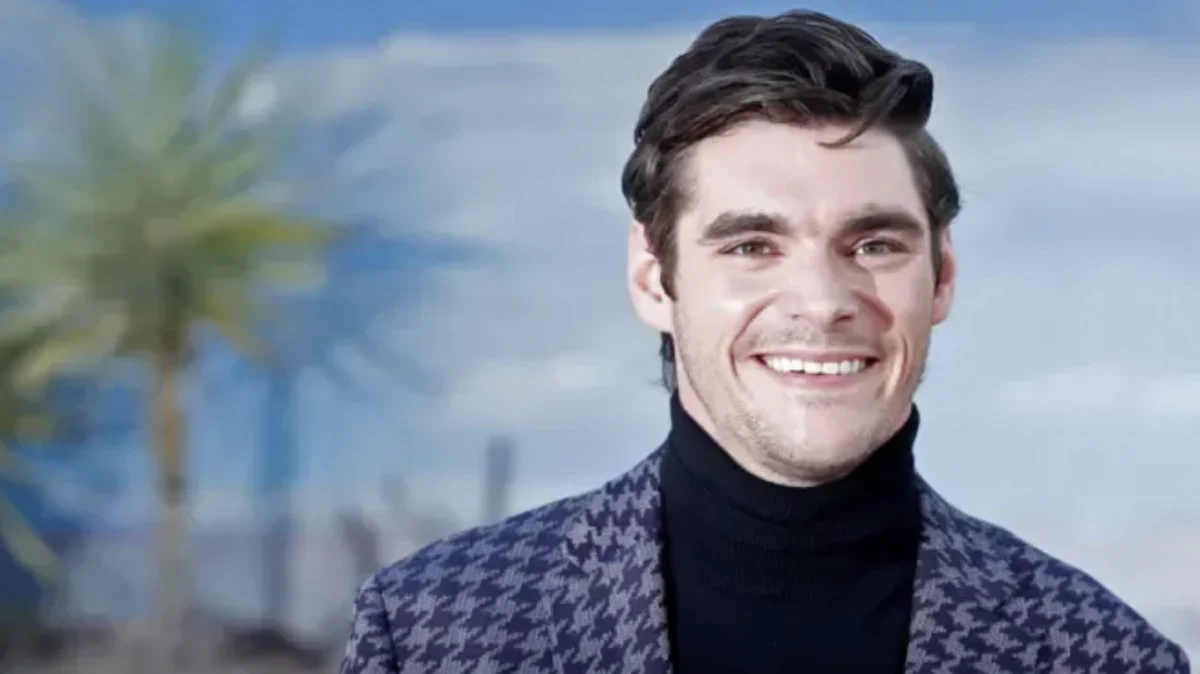
The entertainment industry and disability advocacy communities are mourning the sudden passing of RJ Mitte, the 34-year-old actor best known for his transformative role as Walter White Jr. in the seminal AMC drama series Breaking Bad. Mitte was found deceased on October 12, 2026, in Brownsville, Texas, a city that had become a secondary home for the actor in recent years. While initial reports from local outlets suggested that his death might have been related to complications from cerebral palsy—a condition Mitte lived with and championed throughout his career—subsequent investigations by law enforcement and reports from major news outlets, including TMZ, confirmed the cause of death as suicide. The news has sent shockwaves through Hollywood, highlighting the often-invisible pressures faced by public figures and the specific challenges within the disability community.
The Life and Career of a Trailblazer
Born Roy Frank Mitte III on August 21, 1992, in Jackson, Mississippi, Mitte’s journey to stardom was defined by resilience. Diagnosed with cerebral palsy at the age of three, he was raised by his mother, Dyna Mitte, after his parents separated. The family moved to Los Angeles in 2006 to support his sister’s acting career, but it was RJ who would eventually secure a role that changed the landscape of disability representation on television.
In 2007, at the age of 14, Mitte was cast as Walter White Jr., the son of a chemistry teacher turned methamphetamine kingpin. Unlike many roles involving disability at the time, the character of "Flynn" was not defined solely by his condition. Mitte worked with a speech therapist to regress his speech and learned to use crutches more pronouncedly than he did in his daily life to fit the character’s specific needs. His performance across all five seasons (2008–2013) earned him critical acclaim and a Screen Actors Guild Award for Outstanding Performance by an Ensemble in a Drama Series.
Beyond the Breaking Bad universe, Mitte appeared in the Freeform series Switched at Birth and the satirical superhero series The Guardians of Justice. However, his most significant work often occurred off-camera. He served as a celebrity ambassador for United Cerebral Palsy and Shriners Children’s, and as the president of The Mitte Foundation, which focused on providing opportunities for individuals with disabilities.
Chronology of Events and the Discovery in Brownsville
The events leading up to the announcement of Mitte’s passing suggest a period of both professional activity and private struggle. On October 9, 2026, just three days before his death, Mitte was active on social media, promoting a podcast appearance with Joe Vulpis. In his final tweet, he engaged fans by asking, "Where you y’all think Jr. is these days?" referencing the legacy of his Breaking Bad character. This post has since become a digital shrine for fans, accumulating millions of views as the public grapples with the suddenness of his departure.
On the morning of October 12, 2026, authorities in Brownsville, Texas, responded to a call regarding an unresponsive individual at a private residence. By midday, representatives for Mitte released a formal statement confirming his passing. "It is with profound sadness that we confirm the loss of RJ Mitte," the statement read. "RJ was not only a gifted actor but a tireless advocate for inclusion. He used his platform to ensure that disability was never seen as a limitation, but as a facet of the human experience."
Initial speculation regarding a medical emergency was corrected late that evening when TMZ reported that county officials had classified the death as a suicide. A law enforcement investigation remains ongoing to determine the full circumstances, though no foul play is suspected.
The Weight of Responsibility: A Deeper Context
In the wake of his death, fans and colleagues have recirculated past interviews that shed light on the immense pressure Mitte faced from a young age. A quote-tweet by X user @goblin_formula, which garnered over 800,000 views, highlighted an interview in which Mitte revealed he had been the primary financial provider for his family since the age of 13.
Following a traumatic accident that left his mother paralyzed for six years, Mitte took on multiple jobs to support his mother and younger sister. "I work constantly—I try to do four or five jobs a month that bring in an income," Mitte stated in the archival footage. "When it comes to money, I provide for my family, and that’s important to me." Analysts suggest that this "breadwinner" dynamic, combined with the pressures of maintaining a public image as a disability icon, may have contributed to a significant mental health burden.
Industry Tributes and the "Breaking Bad" Family
The most poignant reaction came from Mitte’s on-screen father, Bryan Cranston. In a statement shared widely across social media platforms, Cranston expressed "deep despair," describing Mitte as a "sweet son" who met every challenge with determination.

"We were texting each other just a few weeks ago—figuring out when we could meet for lunch," Cranston wrote. "I don’t know if that lunch would have changed his future… But I do know that I loved him." Cranston concluded his tribute by imploring those struggling with mental health to reach out to the 988 Suicide & Crisis Lifeline, a sentiment echoed by many of Mitte’s former co-stars.
Daniel Moncada, who played the formidable Leonel Salamanca in the Breaking Bad franchise, shared a video tribute on Reddit and X, referring to Mitte as his "lil brother" and urging fans to realize that "your life matters." The bond between the cast members, which had persisted for over a decade since the show ended, has been a focal point for fans processing the news.
Digital Culture and the "Memification" of Grief
The death of RJ Mitte also highlights a unique phenomenon in modern digital culture: the intersection of genuine grief and meme history. Because Breaking Bad remains one of the most memed shows in internet history, many tributes referenced long-standing jokes associated with Walter White Jr.
The "Walt Jr. Loves Breakfast" meme, which originated from the character’s frequent morning scenes, was utilized by the subreddit r/breakingbadmemes as a form of final salute. "No more breakfast with Walt Jr. Rest in peace, RJ," wrote one user. Similarly, the "Open Na Noor" meme—a play on a scene where Walt Jr. tries to get his father to open a door—was referenced in tributes, with fans wishing that the "noor (door) of heaven" would be opened for the actor.
While some might view the use of memes during a time of mourning as irreverent, cultural critics suggest that for the "internet-native" generation, these references are a sincere form of shorthand for the impact a character had on their lives. The viral nature of these tributes ensured that news of Mitte’s passing reached nearly every corner of the global digital landscape within 24 hours.
Broader Implications for Disability and Mental Health
Mitte’s death has sparked a necessary, albeit painful, conversation regarding the mental health of individuals with disabilities. According to data from the Centers for Disease Control and Prevention (CDC), adults with disabilities report experiencing frequent mental distress almost five times as often as adults without disabilities. The "double burden" of navigating a world not built for one’s body while also serving as a public "inspiration" can lead to significant burnout.
Advocates argue that Mitte’s legacy must now include a push for better mental health support within the disability community. "RJ spent his life advocating for physical access and representation," said a representative from a leading disability rights group. "Now, we must honor him by advocating for the emotional and psychological support that is so often overlooked for those living with chronic conditions."
Conclusion: A Legacy of Authenticity
RJ Mitte’s contribution to the arts cannot be overstated. He was one of the first actors with a visible disability to lead a major television drama, paving the way for a new generation of performers. His portrayal of Walter White Jr. remains a masterclass in subtlety, proving that a character can be vulnerable, defiant, and ordinary all at once.
As the industry reflects on his passing, the focus remains on the person behind the persona: a man who cared deeply for his family, who fought for his community, and who, despite his own struggles, sought to bring joy to millions. The death of RJ Mitte is a tragic reminder of the fragility of life and the urgent need for compassion in an increasingly connected, yet often isolating, world.
For those struggling with thoughts of self-harm or emotional distress, help is available. The 988 Suicide & Crisis Lifeline provides 24/7, free, and confidential support for people in distress, as well as prevention and crisis resources. In the United Kingdom, the Samaritans can be reached at 116 123. These services are vital for ensuring that no one has to face their darkest moments alone.

