
The digital landscape of October 2026 has been marked by a distinctive convergence of seasonal preparation and self-deprecating humor through a viral social media trend known as the Hope Whoever Stole My Amazon Package meme. This phenomenon, which primarily proliferated on the social media platform X, involves users sharing screenshots of their Amazon purchase histories—specifically items intended for Halloween costumes—accompanied by a phrasal template expressing a mock-charitable wish for the individual who purportedly stole their delivery. By blending the very real frustrations of modern "porch piracy" with the creative absurdity of niche costume planning, the trend has become a defining cultural moment of the 2026 autumn season.
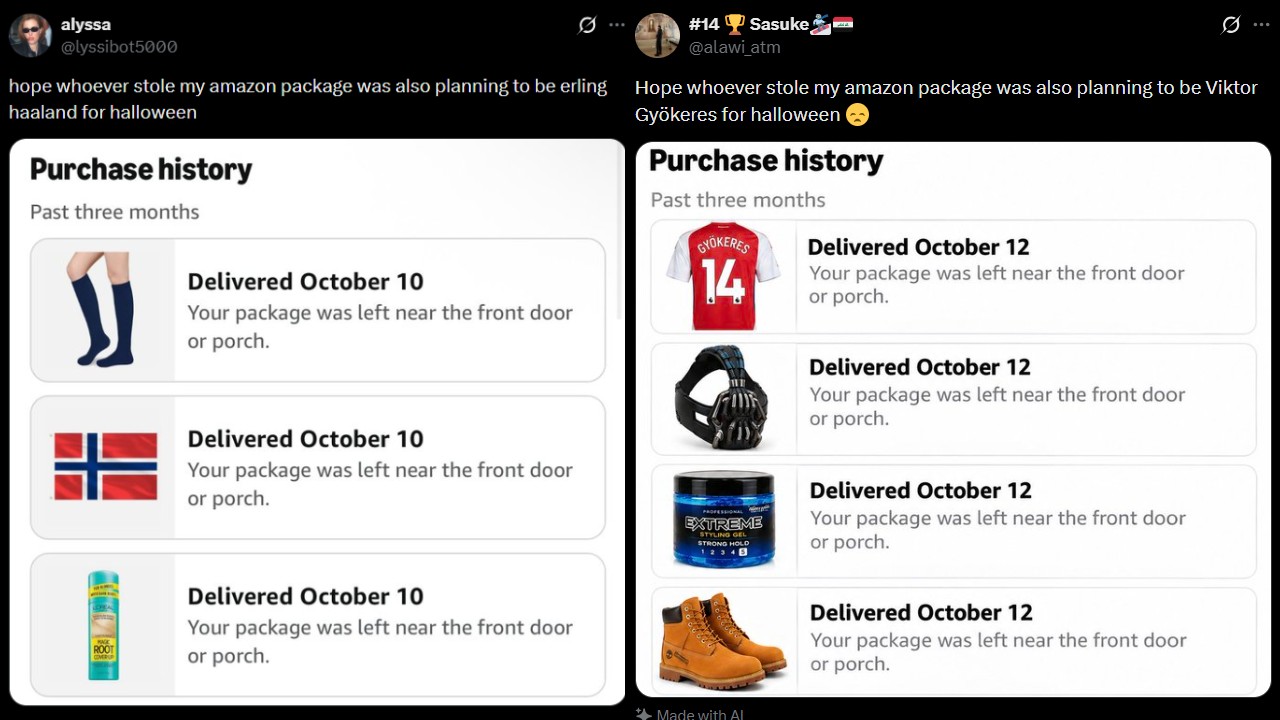
The trend functions as a "snowclone," a type of phrasal template in which certain words are replaced to adapt to new contexts while maintaining a recognizable structure. In this instance, the template "Hope whoever stole my Amazon package [X]" allows users to reveal their intended Halloween identity in a way that emphasizes the specificity, and often the hilarity, of the items stolen. From professional athletes to obscure internet subcultures and hyper-specific pop culture moments, the meme serves as a vehicle for users to showcase their personality and interests through the lens of a common logistical misfortune.
The Genesis of the Trend: The Haaland Incident
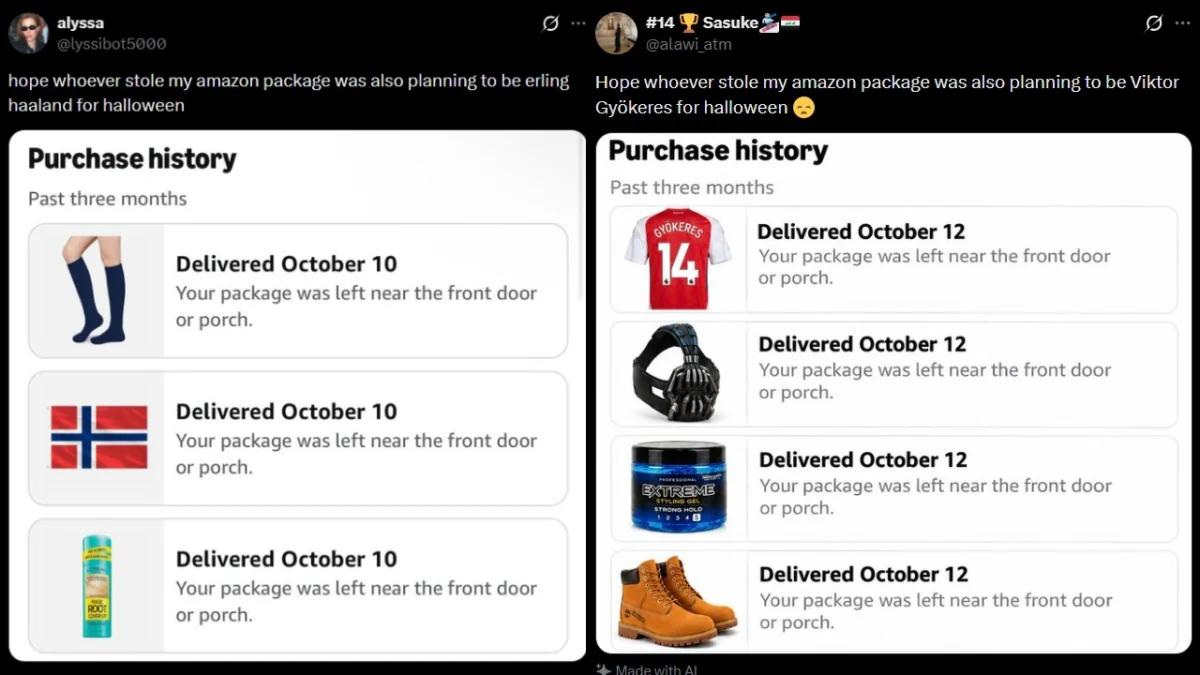
The origin of the meme can be traced to October 11, 2026, when X user @lyssibot5000 posted a screenshot of a purported Amazon delivery confirmation. The image displayed three separate packages delivered on October 10, described as being left "near the front door or porch." The items in the purchase history were components for a costume intended to replicate the likeness of Erling Haaland, the world-renowned Manchester City striker.
The accompanying caption read: "hope whoever stole my amazon package was also planning to be erling haaland for halloween." The post resonated with an immense audience, garnering over 176,000 likes and 1.5 million views within a five-day window. The humor derived from the mental image of a common thief unexpectedly donning the specific athletic gear and blonde wig required to portray the Norwegian footballer. This initial post established the visual and textual grammar that would be replicated by thousands of users in the subsequent week.
Chronological Expansion and Viral Proliferation
Following the success of the Haaland post, the format underwent a rapid evolution as users began to apply it to increasingly niche and abstract concepts. By mid-October, the meme had moved beyond simple celebrity costumes into the realms of music fandom, gaming, and "deep-fried" internet lore.
On October 14, 2026, the trend saw a significant surge in volume. User @chaeryliv adapted the format to reference pop star Olivia Rodrigo, specifically the cover art for the album You Seem Pretty Sad for a Girl So in Love. This post, which included screenshots of items like a parental advisory sticker and specific clothing items, earned over 50,000 likes. The transition from a single person (Haaland) to an entire aesthetic or album cover signaled that the meme had the flexibility to cover broader cultural movements.
Later that same day, the meme took a turn toward the surreal. User @0NEMORETlME posted a version claiming their stolen package contained items for a costume based on the "Why" meme—a popular image of a woman in a plague doctor mask. This iteration reached over 150,000 views, highlighting the community’s appreciation for "meta-memes" (memes about other memes).
By October 15, the trend reached the gaming community. User @SpaghettiSpace_ posted a version referencing the tactical shooter Valorant, specifically the "Ascent B Site triple boxes." This version was particularly notable because it suggested the user was planning to dress as a static environmental object within a video game, further pushing the boundaries of the joke’s absurdity. The post secured 10,000 likes in less than 24 hours, demonstrating the meme’s high engagement within specific digital subcultures.
Supporting Data: The Reality of Porch Piracy in 2026
While the "Hope Whoever Stole My Amazon Package" trend is rooted in humor, its resonance is bolstered by the escalating prevalence of package theft in the mid-2020s. According to 2025 consumer logistics reports, nearly 44% of Americans reported having at least one package stolen from their residence in the previous twelve months. As e-commerce continues to dominate the retail sector, the "porch pirate" has become a ubiquitous antagonist in the modern suburban and urban experience.
Industry analysts suggest that the meme acts as a psychological coping mechanism. By framing the theft as a collaborative, albeit involuntary, costume effort, users reclaim agency over a situation where they have been victimized. The "hope they were planning to be [X]" phrasing transforms a violation of property into a shared, ridiculous narrative. Furthermore, the timing of the meme—coinciding with the peak of Halloween shopping—highlights the seasonal vulnerability of consumers who are ordering time-sensitive, specific items that are difficult to replace before October 31.
Niche Variants and Community Engagement
The diversity of the examples seen between October 14 and October 16, 2026, illustrates the wide demographic reach of the trend. Several notable categories emerged:
1. Music and Performance Art
Users like @gabosarchive shared purchase histories for items intended to recreate Lorde’s performance at the 2017 VMAs. These posts often appeal to "stan" culture, where fans use the meme to signal their deep knowledge of a particular artist’s history and iconic outfits.
2. Sports and Fandom
The meme was heavily utilized by sports fans. For instance, user @ricericebaby22 referenced New York Yankees player Giancarlo Stanton, while @suzukiplsstay joked about a package intended for a Chicago Cubs fan costume. These iterations often appear during the MLB postseason, overlapping two major cultural events.
3. Obscure Internet Personalities
In some of the most specialized versions of the meme, users referenced tech figures or viral internet personalities. User @winternet posted about dressing as Alexandr Wang, the CEO of Scale AI, showcasing the meme’s adoption by the "Tech Twitter" community.
Fact-Based Analysis of Implications
The "Hope Whoever Stole My Amazon Package" trend offers several insights into the state of digital culture in 2026. First, it underscores the continued dominance of Amazon as the primary infrastructure for holiday celebrations. The visual identity of the meme is inextricably linked to the Amazon user interface, making the corporation an invisible but central character in the narrative.
Second, the trend highlights the "modular" nature of modern costumes. Rather than buying a pre-packaged "costume in a bag," contemporary consumers—particularly those in the Gen Z and Millennial cohorts—tend to assemble costumes from individual components (wigs, specific jerseys, props). This makes the "purchase history" screenshot a more effective storytelling tool, as the viewer must mentally assemble the pieces to understand the joke.
Finally, the rapid lifecycle of the meme—from origin to saturation in less than a week—reflects the accelerated pace of social media trends on X. The phrasal template allows for low-effort, high-reward participation, which is the hallmark of successful viral content in the current era.
Official Responses and Broader Impact
While Amazon has not issued an official statement regarding the meme, the trend has inadvertently provided the company with significant organic visibility. However, the subtext of the meme—that packages are frequently stolen—serves as a persistent reminder of the logistical challenges facing the e-commerce giant. Some security experts have noted that while the memes are humorous, they may also inadvertently signal to thieves which types of packages (those containing high-value costume components or electronics) are being delivered during the peak October window.
Law enforcement agencies in several major metropolitan areas have used the visibility of the trend to reiterate safety tips for package deliveries, such as utilizing Amazon Lockers or requiring signatures for high-value items. Despite these serious undertones, the social media community continues to embrace the format, with new variations appearing daily as Halloween approaches.
Conclusion
The "Hope Whoever Stole My Amazon Package" meme represents a sophisticated blend of consumerism, logistical reality, and creative expression. By taking the mundane and frustrating experience of a missed delivery and turning it into a public display of wit, users have created a shared cultural language for the 2026 Halloween season. Whether the thefts depicted in the memes are real or merely a framing device for a joke, the trend has succeeded in capturing the zeitgeist of a society that increasingly lives, shops, and laughs through the interface of a smartphone screen. As October 31 nears, the meme stands as a testament to the internet’s ability to find humor in the shared inconveniences of modern life.

