
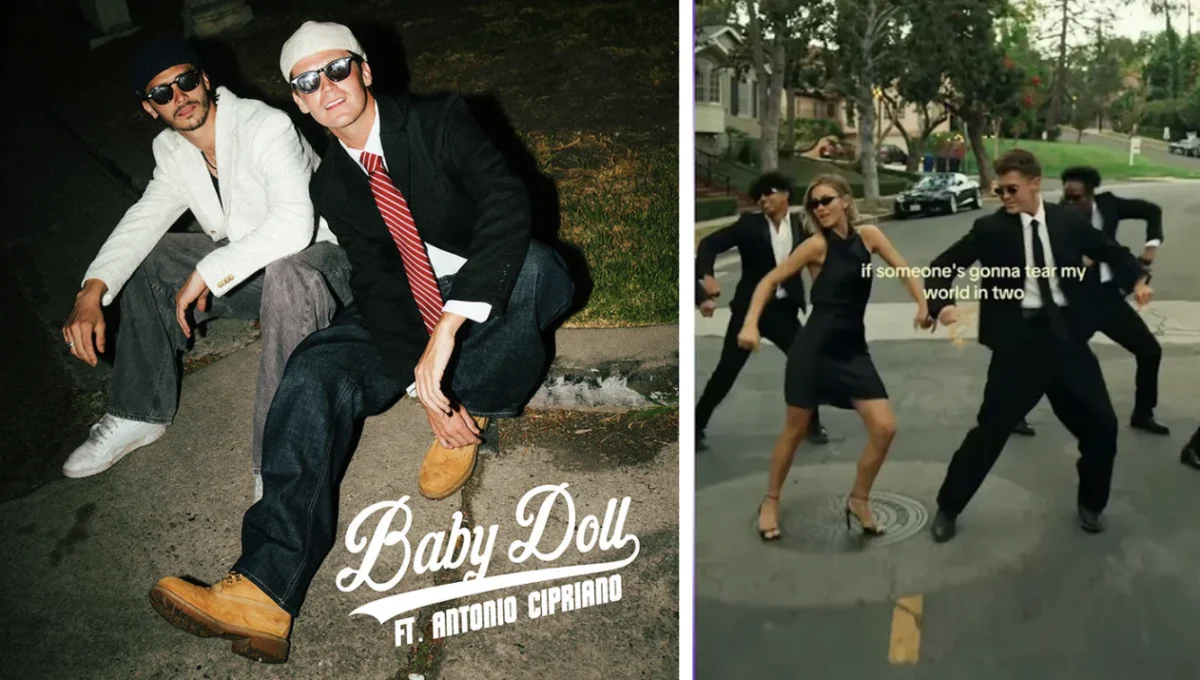
The digital landscape of late 2026 has been significantly reshaped by the "Babydoll Dance Trend," a synchronized social media movement that has transcended simple choreography to become a defining cultural moment of the year. Centered on the melodic pop track "Babydoll" by Welsh singer-songwriter Jamie Miller, the trend has illustrated the potent synergy between musical artistry, celebrity endorsement, and user-generated content. What began as a promotional effort by a former reality television star has evolved into a global phenomenon, garnering tens of millions of views across TikTok, Instagram, and YouTube. The trend is characterized by a distinctive "two-step" routine that balances technical accessibility with rhythmic appeal, making it a staple for influencers and casual users alike.
The Genesis of a Viral Hit: Jamie Miller and the Composition of Babydoll
Jamie Miller, who first gained international recognition as a finalist on The Voice UK, has spent the years following his reality television debut carving out a niche in the soulful pop genre. His release of "Babydoll" on August 7, 2026, marked a strategic pivot toward a more infectious, upbeat sound designed for the contemporary digital era. While Miller had previously seen success with emotional ballads, "Babydoll" was engineered with a rhythmic foundation that invited movement.
The track’s official music video, which debuted on September 18, 2026, served as a high-production anchor for the song’s identity. Within its first month of release on YouTube, the video amassed over 3.2 million views and nearly 44,000 likes. However, the true momentum of the song was not found in traditional broadcasting or long-form video, but in the short-form snippets Miller began sharing as early as July 2024. These early teasers, particularly a video posted on July 24, 2026, introduced the core choreography to an audience of 2.9 million viewers, setting the stage for what would become a massive shift in the song’s trajectory.
The Jennifer Love Hewitt Catalyst: From Piano Cover to Viral Dance
While Miller’s initial promotion provided the spark, the trend reached a critical mass through the unexpected involvement of Hollywood actress Jennifer Love Hewitt. In mid-August 2026, Hewitt, known for her roles in iconic television series and films, discovered the song organically. On August 12, she shared a piano cover of "Babydoll" on her TikTok account, @jenniferhallisay. This acoustic rendition, which garnered 152,700 views, signaled a shift in the song’s demographic reach, bridging the gap between Miller’s younger fanbase and a more mature, mainstream audience.
The relationship between the artist and the actress solidified on August 17, 2026, when Miller and Hewitt appeared together in a collaborative dance video. This post, featuring the "Babydoll" choreography, acted as a definitive endorsement, generating 2.7 million views in a matter of weeks. Industry analysts point to this specific interaction as the "celebrity catalyst" moment—a phenomenon where a recognized public figure validates a burgeoning trend, providing it with the social capital necessary to achieve "mega-viral" status.
Anatomy of the Movement: Breaking Down the Babydoll Choreography
The success of the Babydoll dance is largely attributed to its "beginner-friendly" yet visually engaging routine. In an era where TikTok dances often fluctuate between extreme complexity and oversimplified gestures, the Babydoll routine strikes a calculated middle ground. The choreography incorporates several foundational dance elements:
- The Chug and Side Step: The routine opens with rhythmic weight shifts, providing a steady "groove" that aligns with the song’s bassline.
- Ball Changes and Step-Touches: These movements add a layer of sophistication, requiring a level of coordination that rewards practice without alienating the average user.
- Arm Circles and the Shoulder Shimmy: The upper-body movements provide the "signature" look of the dance, ensuring that even in "waist-up" framing, the trend remains recognizable.
This combination of movements allows for high "reproducibility." By creating a dance that felt achievable for non-dancers while remaining aesthetically pleasing for professional creators, Miller and his team lowered the barrier to entry, a key requirement for any trend seeking to achieve global saturation.
Chronology of the Global Spread
The timeline of the Babydoll trend reveals a steady climb followed by an exponential explosion in participation throughout September and October 2026:
- July 24, 2026: Jamie Miller posts the first promotional video featuring the dance, establishing the "blueprint" for the trend.
- August 7, 2026: "Babydoll" is officially released on all major streaming platforms.
- August 12–17, 2026: Jennifer Love Hewitt engages with the track, first through a piano cover and then via a collaborative dance with Miller.
- September 18, 2026: The official music video is released, providing a visual narrative for the song.
- September 28, 2026: The creator duo @shelbanddyl posts a version of the dance that receives 7.6 million views, proving the trend’s appeal to the "couples" and "lifestyle" niches of social media.
- September 30, 2026: High-profile creator Perrie shares a "bestie sleepover" version of the dance, amassing 2.4 million views and demonstrating the trend’s versatility for group participation.
- October 6, 2026: The "Dad and Clo Show" (@dadandcloshow) introduces the "intergenerational" element of the trend, with a daughter teaching her father the moves. This video, gaining 2 million views, highlighted the trend’s wholesome, family-friendly appeal.
Data Analysis: Metrics of Engagement
The statistical footprint of the Babydoll trend is a testament to its reach. On TikTok alone, the hashtag #Babydoll and its associated sounds have been used in hundreds of thousands of unique videos. The engagement rate—the ratio of likes and shares to total views—has remained remarkably high, often exceeding 10% for top-tier creators.
Furthermore, search interest for "Jamie Miller Babydoll" and "Babydoll dance steps" saw a 400% increase during the first week of October 2026. This surge in search volume suggests that the trend was not merely being passively consumed but was actively driving users to seek out more information about the artist and the specific mechanics of the dance.
The impact also transitioned to music streaming platforms. Spotify and Apple Music reported significant jumps in "Babydoll" streams following the viral peaks on TikTok. This "cross-platform conversion" is the ultimate goal of modern music marketing, where social media virality translates into sustained revenue and chart positions.
Industry Reactions and the Psychology of the Trend
Music industry executives have noted the Babydoll trend as a prime example of "organic-adjacent" marketing. While Miller clearly intended for the dance to catch on, the involvement of figures like Jennifer Love Hewitt appeared authentic rather than a paid partnership. This authenticity is highly valued by Gen Z and Alpha audiences, who are often skeptical of overly polished or obviously sponsored content.
Psychologically, the trend tapped into a collective desire for "lighthearted connectivity." The year 2026 has seen a shift toward "wholesome" content, and the Babydoll dance—with its bright melody and rhythmic, joyful movements—fit perfectly into this cultural zeitgeist. It offered a low-stakes way for users to participate in a global community, using their own living rooms, backyards, and garages as the stage.
Broader Implications for Digital Music Marketing
The Babydoll phenomenon underscores several evolving truths about the music industry in the late 2020s. First, the "hit-making" power has shifted almost entirely to the hands of social media users. A song’s success is now inextricably linked to its "vibe" and its ability to be transformed into a 15-second participatory experience.
Second, the trend highlights the importance of "legacy celebrity" involvement. Jennifer Love Hewitt’s role in the trend demonstrates that stars from the pre-social media era can act as powerful bridges, introducing new artists to older demographics while maintaining their own relevance in a digital-first world.
Finally, the trend showcases the importance of the "instructional" phase of virality. Creators like @dadandcloshow, who posted "behind the scenes" or "tutorial" style videos, played a crucial role in sustaining the trend. By showing the process of learning the dance, they humanized the trend and encouraged others who might have been hesitant to try it themselves.
Conclusion: The Lasting Legacy of the Babydoll Trend
As October 2026 draws to a close, the Babydoll dance trend shows few signs of slowing down. It has successfully navigated the transition from a niche promotional tool to a mainstream cultural staple. For Jamie Miller, the trend has been a career-defining moment, elevating him from a reality show alumnus to a globally recognized pop artist with a proven ability to command digital attention.
The legacy of "Babydoll" will likely be studied as a masterclass in modern music promotion—a perfect storm of a catchy hook, a replicable dance, and the unpredictable magic of celebrity interaction. As the digital world continues to evolve, the Babydoll trend stands as a reminder that at the heart of every viral moment is a simple, universal human desire: the urge to move to a good song and share that joy with the world.

