
The digital landscape is witnessing a paradigm shift as artificial intelligence tools, particularly ChatGPT, emerge as potent drivers of website traffic. While often flying under the radar in standard Google Analytics 4 (GA4) overviews due to initially smaller volumes, traffic originating from ChatGPT is consistently demonstrating exceptionally high engagement rates, even surpassing that of traditional organic search in many instances. This phenomenon, observed by industry professionals engaged in optimizing websites for AI-generated content discovery, suggests a fundamental change in how users interact with online information and seek solutions.
This analysis is rooted in the practical experience of optimizing client websites for AI-driven content discovery, a growing field focused on understanding and leveraging the ways generative AI tools surface information. As AI chatbots become more sophisticated and integrated into user workflows, their role as referral sources is becoming increasingly undeniable. The implications for businesses and content creators are substantial, necessitating a deeper understanding of this emerging traffic channel.
The Rise of AI-Powered Referrals: A New Frontier in Web Traffic
For years, the primary focus of website traffic acquisition has been search engine optimization (SEO) and paid advertising. However, the advent of advanced conversational AI models like ChatGPT has introduced a novel pathway for users to discover and interact with online content. These AI tools act as intelligent intermediaries, processing user queries and then directing them to relevant web pages that provide the requested information or solutions.

Early observations indicate that traffic referred by ChatGPT is not only substantial but also highly valuable. Users arriving via ChatGPT often exhibit longer session durations, lower bounce rates, and higher conversion rates compared to visitors from other channels. This suggests that users who find a website through ChatGPT are actively seeking specific information and are more likely to find what they are looking for, leading to a more meaningful engagement.
While definitive academic studies are still in their nascent stages, industry experts propose several theories for this heightened engagement. One possibility is the intent-driven nature of ChatGPT queries. Users typically turn to ChatGPT with specific problems or questions, and when the AI successfully directs them to a page that provides a comprehensive answer, the user’s satisfaction and subsequent engagement are naturally elevated. This contrasts with broader search queries that might yield a wider range of results, some of which may not precisely match the user’s immediate need.
Another theory suggests that the context provided by ChatGPT before directing a user to a website might prime them for engagement. If the AI summarizes key points or explains why a particular page is relevant, the user arrives with a clearer understanding of what to expect and is more prepared to delve into the content. This pre-qualification of user intent can lead to a more focused and productive website visit.
The trend is expected to evolve rapidly as generative AI tools become more mainstream and their functionalities expand. As more users adopt these platforms for research, problem-solving, and information gathering, the volume and significance of AI-driven traffic are poised to increase. Consequently, monitoring and understanding this traffic source is no longer a niche concern but an essential component of a comprehensive digital marketing strategy.
Tracking ChatGPT Referrals in Google Analytics 4
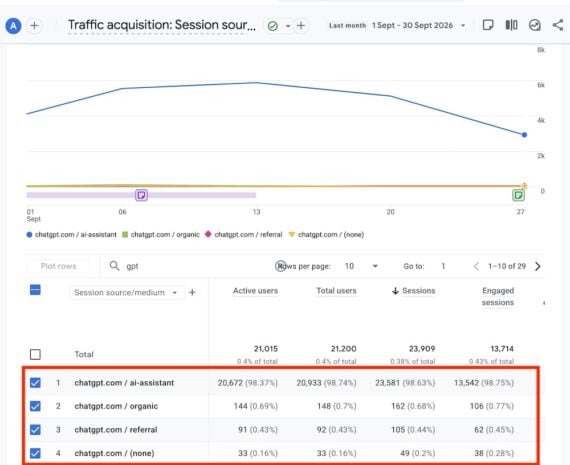
To effectively harness the potential of ChatGPT traffic, businesses must first be able to accurately track its origins. Google Analytics 4 (GA4), the current standard for web analytics, provides the tools necessary to identify and analyze this emerging traffic source, though it requires specific configuration.
Initially, ChatGPT traffic might not be immediately apparent in the standard GA4 overview reports. This is because the volume may be relatively small compared to established channels, and GA4’s default attribution models might not automatically categorize it as a distinct source. However, by delving into the platform’s acquisition reports, marketers can begin to isolate this valuable segment.
The primary method for tracking ChatGPT referrals involves navigating to the "Acquisition" section within GA4 and selecting the "Traffic acquisition" report. This report provides a detailed breakdown of user acquisition by various channels. While ChatGPT itself might not appear as a direct channel name, its referrals can often be identified by looking for specific patterns in the data.
Key Steps for Identifying ChatGPT Traffic in GA4:
- Navigate to Acquisition Reports: Within your GA4 property, go to "Reports" and then select "Acquisition" > "Traffic acquisition."
- Examine the "Session default channel group" and "Session source/medium" dimensions: These dimensions are crucial for understanding where your traffic is coming from. While you might not see "ChatGPT" listed explicitly, look for sources that are less conventional or potentially misattributed.
- Create Custom Reports for Targeted Analysis: To gain more granular insights, it is highly recommended to create custom reports. This allows you to filter and segment your data more effectively. For instance, you can build a report specifically to isolate traffic that originates from or mentions "ChatGPT" in its source parameters.
Leveraging Custom Reports for ChatGPT Insights:
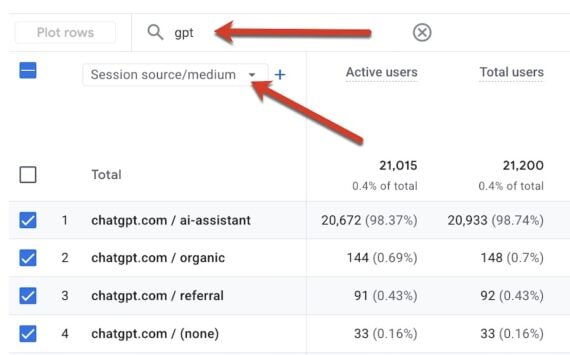
A critical step in analyzing ChatGPT traffic is to create custom reports that allow for quick access to this specific data. This involves utilizing GA4’s filtering capabilities.
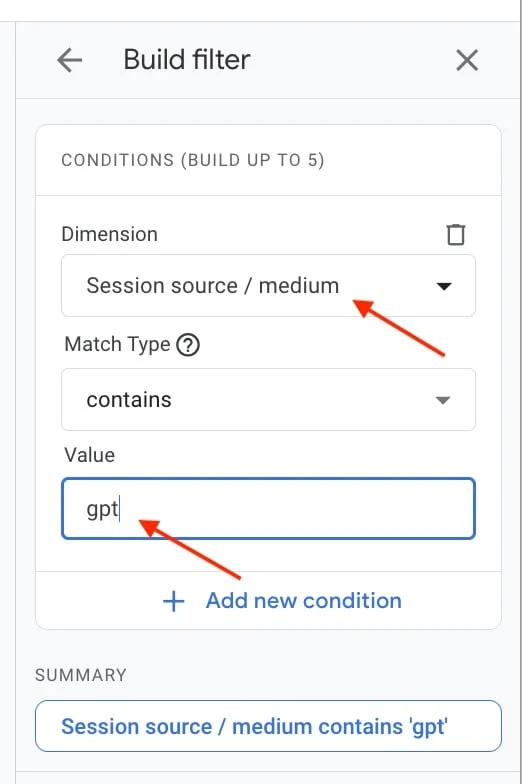
- Building a "gpt" Traffic Source Filter: Within the GA4 interface, users can build filters to narrow down their data. By creating a filter that searches for traffic sources containing the string "gpt" (case-insensitive), you can effectively isolate traffic that is likely originating from ChatGPT or other similar generative AI platforms. This filter can be applied to various reports, including the Traffic Acquisition report.
- Sorting by Landing Page: Once the traffic is filtered, sorting the results by landing page is essential. This will reveal which pages on your website are being cited by ChatGPT as solutions to user queries. The landing pages that receive the most clicks from this channel are indicative of the types of problems ChatGPT users are seeking to solve and the content that the AI deems most relevant.
While ChatGPT does not publicly disclose the exact prompts users employ, analyzing the landing pages that receive this traffic provides a strong inference. Each page that ChatGPT directs users to presumably addresses a specific problem or answers a particular question. Therefore, the content on these pages is likely to mirror the underlying user prompts. For example, if a blog post titled "10 Ways to Improve Your Website’s Loading Speed" is frequently cited, it suggests that users are asking ChatGPT questions related to website performance optimization.
Deepening the Analysis: Understanding the User Intent
Beyond simply identifying the traffic source, it is crucial to understand the context of these referrals. By examining the landing pages that ChatGPT directs users to, businesses can gain valuable insights into the types of questions and problems users are posing to the AI.
To further refine this understanding, a proactive approach can be taken:

- Querying ChatGPT Directly: After identifying high-performing landing pages, it is advisable to engage with ChatGPT directly. By providing the URL of a specific page and asking, for example, "What prompts would trigger ChatGPT to cite this page as a solution?", you can gain direct insight into the AI’s reasoning and the user intent it perceives. This can reveal the specific keywords, concepts, and problem statements that lead the AI to recommend your content.
- Investigating with Other Tools: Complementing GA4 data with other analytical tools can provide a more holistic view. Examining user behavior on these specific landing pages using tools that track heatmaps, scroll depth, and session recordings can offer qualitative insights into how engaged visitors from ChatGPT are interacting with the content. Analyzing search console data for queries that lead to these pages can also reveal the underlying search intent that ChatGPT is fulfilling.
Addressing Misattribution: The Challenge of Direct and Unassigned Channels
A significant challenge in accurately tracking ChatGPT traffic lies in its tendency to be misattributed by web analytics platforms. This is often due to the technical implementation of external links by ChatGPT. To protect user privacy, ChatGPT frequently appends a "noreferrer" attribute to outbound links. This attribute instructs browsers not to send referrer information to the destination website, effectively masking the origin of the traffic.
As a consequence, Google Analytics 4 can misclassify a portion of ChatGPT traffic as either "Direct" (meaning the user typed the URL directly or used a bookmark) or, more commonly, "Unassigned." The "Unassigned" channel in GA4 is a catch-all for traffic that cannot be attributed to any other predefined channel group. For many businesses, their growing ChatGPT traffic is increasingly appearing in this "Unassigned" category, making it difficult to quantify its full impact without specific investigative steps.
The "noreferrer" attribute is a deliberate privacy measure, intended to prevent websites from tracking users across different sessions or platforms without their explicit consent. While this is a positive step for user privacy, it creates an analytical hurdle for marketers trying to understand referral sources. The increasing prevalence of this issue highlights the evolving nature of online privacy and its direct impact on digital analytics.
Proactive Strategies for Data Integrity
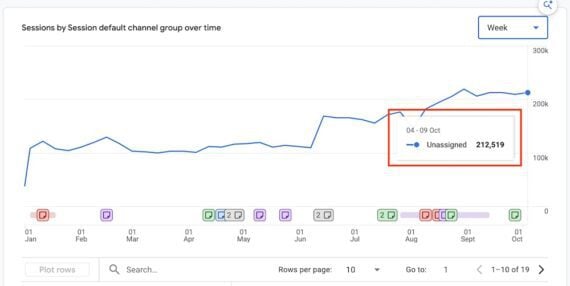
To mitigate the impact of this misattribution and gain a more accurate picture of ChatGPT’s contribution to website traffic, several proactive strategies can be employed:
- Enhanced GA4 Configuration: While the "noreferrer" attribute is beyond direct control, ensuring your GA4 implementation is robust and correctly configured is paramount. This includes proper event tracking and goal setting, which can help in inferring user behavior even when referral data is incomplete.
- Custom Channel Groupings: GA4 allows for the creation of custom channel groupings. By defining rules that identify traffic based on patterns in landing pages or specific UTM parameters (if you can influence them through intermediary links), you can create a dedicated "ChatGPT" or "AI Referral" channel group.
- Server-Side Tagging: For advanced implementations, server-side tagging can offer more control over data collection. By processing tracking tags on your own server rather than directly in the user’s browser, you can potentially capture more complete referral information, even when browser-level privacy settings obscure it.
- UTM Parameter Strategy (with limitations): While ChatGPT itself doesn’t directly support UTM parameters for outbound links, if you are using intermediary tools or have control over the links generated by your own content that is then surfaced by ChatGPT, incorporating UTM parameters can be beneficial. However, this is not a universal solution for ChatGPT’s direct referrals.
The Future of AI-Driven Content Discovery
The emergence of ChatGPT as a significant traffic source marks a pivotal moment in the evolution of how users discover and interact with online content. As AI technologies continue to advance and integrate more seamlessly into daily life, their influence on web traffic is expected to grow exponentially.
For businesses, this presents both an opportunity and a challenge. The opportunity lies in tapping into a highly engaged audience actively seeking solutions. The challenge lies in adapting analytical strategies to accurately measure and understand this new traffic stream, and in optimizing content to meet the specific needs of AI-driven discovery.
The trend toward AI-powered information retrieval is unlikely to diminish. Instead, it will likely become more sophisticated, with AI tools offering more personalized and contextually relevant recommendations. This necessitates a proactive and adaptive approach from marketers and content creators, focusing on creating high-quality, problem-solving content that resonates with both human users and AI algorithms. By understanding the nuances of AI referrals and actively working to track and analyze this traffic, businesses can position themselves to thrive in this evolving digital ecosystem. The ongoing development of AI will undoubtedly lead to new analytical challenges and opportunities, making continuous learning and adaptation crucial for success in the digital marketing realm.

