
The ecommerce sector is experiencing a rapid evolution, driven by technological advancements and strategic partnerships designed to streamline operations, enhance customer engagement, and unlock new revenue streams for merchants. This week’s roundup of new services and product releases highlights a diverse array of innovations, from AI-powered tools for content creation and customer interaction to expanded logistics networks and sophisticated affiliate marketing platforms. These developments signal a continued push towards greater efficiency, personalization, and global reach for online businesses.
AI-Powered Personalization and Engagement Tools Take Center Stage
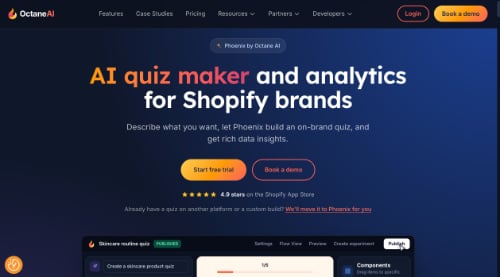
Artificial intelligence is emerging as a pivotal force in modern ecommerce, with new tools designed to automate complex tasks and provide deeper customer insights. Octane AI’s launch of Phoenix, an AI quiz builder for Shopify merchants, exemplifies this trend. Phoenix aims to simplify the creation and optimization of interactive quizzes, a powerful tool for zero-party data collection and personalized product recommendations. Merchants can now generate dynamic quizzes from simple prompts or existing questionnaires, with the AI handling question logic, email opt-ins, and result personalization. The platform’s ability to continuously improve quizzes through experimentation suggests a significant step towards automated optimization of customer engagement strategies. This development is particularly relevant given the increasing consumer demand for personalized shopping experiences, which often begin with tailored product discovery.

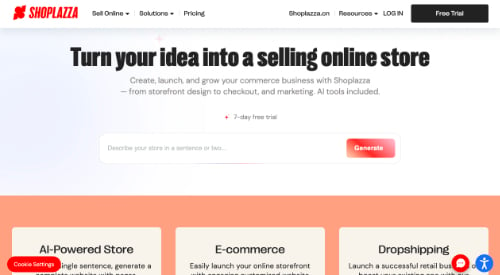
In a similar vein, Shoplazza is collaborating with TikTok to integrate product discovery more seamlessly with the purchase journey. By becoming a commerce and payment partner, Shoplazza is enabling features like "Buy Direct," allowing consumers to purchase products directly within the TikTok app. Furthermore, the "Shopping Assistant" utilizes merchant-provided information to answer product queries within TikTok’s in-app browser. Shoplazza’s existing support for catalog syncing and TikTok Pixel integration underscores its commitment to bridging the gap between social media engagement and transactional outcomes. This partnership leverages TikTok’s vast user base and Shoplazza’s AI-native commerce operating system to create a more fluid and immediate path from discovery to purchase, a critical factor in converting fleeting consumer interest into sales.
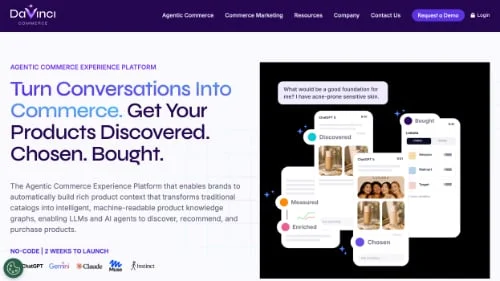
The integration of AI into shopping agents is also a significant area of growth. Bazaarvoice and DaVinci Commerce have partnered to bring authentic shopper reviews to AI shopping agents. This collaboration embeds Bazaarvoice’s extensive network of ratings and review data into DaVinci Commerce’s shopping architecture, including its novel Brand Agent and Product Context Memory technology. The implications are substantial: AI-driven shopping experiences, whether within OpenAI-powered applications or other agentic storefronts, will now be enriched with genuine user-generated content. This can lead to more informed purchasing decisions by consumers and a greater sense of trust, as AI agents can surface credible feedback alongside product information.
Another notable AI initiative comes from Glance and Google, who are partnering to bring an AI-powered commerce experience to Android TV. This collaboration aims to transform the television screen into an interactive portal for shopping and product discovery. The AI-driven shopping agent will act as a personal concierge, offering curated product recommendations based on hundreds of retailer integrations. The platform’s use of proprietary AI for contextual lifestyle simulations and try-on visualizations, delivered through an opt-in experience, points towards a future where in-home entertainment seamlessly blends with commercial activities. This could unlock new avenues for impulse purchases and product exploration within a relaxed, familiar environment.
Streamlining Global Commerce and Logistics
The complexities of cross-border trade and logistics continue to be addressed by new services aimed at simplifying international transactions for merchants. Blue Dart’s launch of International Parcel Connect offers India-based businesses a dedicated service for shipping products to the U.S., powered by DHL eCommerce and Blue Dart’s extensive delivery network. This service supports B2C parcels within a specified weight range and signifies a move to facilitate easier international expansion for smaller and medium-sized enterprises (SMEs). With plans to extend coverage to the U.K., E.U., Canada, and Australia, this initiative addresses a key pain point for Indian sellers looking to tap into global markets.
Klarna Group’s introduction of Consumer FX offers a significant advantage for merchants engaged in cross-border sales. This new service allows shoppers to purchase from participating Klarna merchants worldwide and pay in their local currency without incurring exchange fees. For merchants, this eliminates the need for complex currency integrations, local entities, or foreign bank accounts, as Klarna manages foreign exchange disclosure, consent, and compliance. With Klarna’s extensive consumer base of 120 million across 26 countries, Consumer FX represents a powerful tool for expanding international customer reach and simplifying the payment experience for global shoppers.
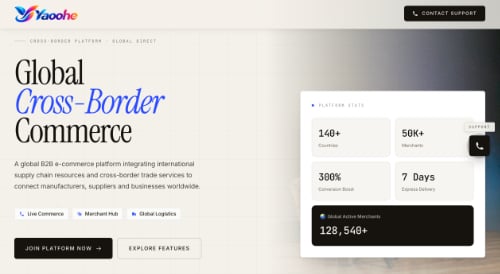
In the realm of B2B ecommerce, Yaoohe has debuted its AI-powered livestream commerce technology. This innovative solution combines a unified commerce experience with AI-generated virtual presenters, intelligent product demonstrations, and automated livestream operations. The platform aims to reduce the operational complexity of traditional livestream commerce, enabling merchants to continuously showcase products, reach customers across different time zones, and enhance multilingual engagement. By leveraging AI presenters and automated workflows, Yaoohe addresses the challenges of scalability and accessibility in global B2B sales, particularly for companies looking to replicate the success of livestream commerce in a business-to-business context.
The logistics sector also saw significant consolidation. Stord, a prominent supply chain and logistics company, has acquired AMS Fulfillment. This acquisition significantly expands Stord’s operational footprint, adding over one million square feet of warehousing space across key East and West Coast hubs in the U.S. AMS Fulfillment’s existing capacity to process over 10 million orders annually for direct-to-consumer (D2C) brands will now be integrated into Stord’s platform, which already spans over 100 global locations. This strategic move enhances Stord’s ability to offer end-to-end supply chain solutions, from fulfillment to transportation, and caters to the growing demand for efficient and scalable logistics services for D2C brands.
Enhancing Product Discovery and Affiliate Marketing
The intersection of social media platforms and ecommerce continues to yield innovative solutions for product discovery and sales. AliExpress and YouTube have announced a global strategic affiliate partnership, integrating AliExpress’s vast product selection into YouTube’s creator ecosystem. This collaboration empowers YouTube creators with products to feature in their content, offering them commission-earning opportunities. Following an initial launch in South Korea, the partnership is set to expand to key markets including the U.S., Brazil, the U.K., and Germany. This initiative leverages the influence of content creators to drive product discovery and sales, capitalizing on the growing trend of shoppable content on video platforms.
Similarly, Roster has enhanced its platform by adding TikTok Spark Ads and Creator Discovery capabilities. This integration allows brands to search the TikTok Creator Marketplace and transform creators’ top-performing organic posts into Spark Ads, with all permissions meticulously tracked within Roster. This provides a consolidated platform for brands to manage their creator marketing efforts across Instagram, Facebook, and TikTok, integrating Meta’s Creator Discovery tool and partnership ads. The ability to leverage existing organic content as paid advertising, with clear attribution and management, offers a powerful way to amplify creator campaigns and reach wider audiences.
Data, Payments, and Ad Creative Innovations
The effective use of data and advanced payment solutions are crucial for modern ecommerce operations. TransUnion’s launch of Transaction Matching is designed to help merchants better identify and understand their customers. By connecting transaction activity to customer identities, and leveraging Fiserv’s Unknown Shopper tool, merchants can recognize customers who may have used different payment methods or loyalty cards. This enables merchants to enrich customer profiles with valuable demographic and lifestyle insights, leading to more personalized offers and improved customer segmentation. The ability to gain a clearer view of purchasing behavior, even from unidentified transactions, is a significant advantage in a competitive market.
Mesh and Visa have partnered to make stablecoin and cryptocurrency balances spendable across Visa’s extensive global acceptance network. This collaboration integrates Visa’s vast network with Mesh’s orchestration infrastructure, enabling consumers to use their crypto holdings for in-store and online purchases. Crucially, merchants receive standard payments, eliminating the need for new hardware or changes to their existing checkout processes. This development represents a significant step towards mainstream adoption of digital currencies for everyday commerce, bridging the gap between the burgeoning crypto market and the established payment infrastructure.
In the advertising space, Cuttable has raised $20 million to automate the creation of ad creative for Meta platforms. The platform scans a brand’s existing photos and videos, along with Shopify order data, to generate AI-driven advertisements. Cuttable also tracks ad messaging, such as promotional details or product origin stories, with human approval required before publishing. This solution addresses the significant time and resource investment required for creating effective ad campaigns, enabling brands to scale their advertising efforts more efficiently by leveraging their existing visual assets.
AdFury has launched a self-service, AI-native rich media tool designed for retail media and the digital shelf. This tool allows brands to generate compliant rich media or expanded content directly from their product pages. Initially available for products on Walmart.com, with integrations for Amazon and other retailers in development, this offering aims to enhance product visibility and engagement on crowded online marketplaces. Rich media can significantly improve product presentation and provide more detailed information, potentially leading to higher conversion rates.
The Growing Influence of Livestream and Reviews
Livestream commerce continues to evolve, with new technologies enhancing its reach and effectiveness. Yaoohe’s AI-powered livestream technology, as mentioned earlier, introduces virtual presenters and automated operations for B2B contexts. This innovation aims to democratize livestream commerce, making it more accessible and efficient for businesses operating on a global scale. The ability to have AI presenters cater to different languages and time zones opens up new markets and customer segments.
The integration of verified purchaser intelligence is also gaining traction. VerifiedViews has launched Verified Purchaser Intelligence, a suite of AI analytics tools designed to analyze product ratings, reviews, and customer feedback. By using AI-powered narrative analytics, the platform organizes this qualitative data into a continuously updated dashboard, identifying recurring themes and emerging issues related to product performance, packaging, and perceived value. This granular insight into customer sentiment can inform product development, marketing strategies, and customer service improvements, fostering greater customer satisfaction and loyalty.
Strategic Acquisitions and Market Expansion
The ecommerce ecosystem is also shaped by significant strategic moves. Salesforce’s planned acquisition of Braze for $5.66 billion highlights a strong focus on real-time customer engagement. Braze, a customer engagement platform specializing in real-time and mobile communications, will enhance Salesforce’s marketing capabilities, enabling more immediate and personalized customer interactions across various channels. This integration is expected to complement Salesforce’s existing offerings, creating a more robust suite for managing customer relationships and driving conversions through timely and relevant communications.
In India, Flipkart, the Walmart-owned ecommerce giant, is reportedly testing a food delivery service. The company has deployed a dedicated fleet of riders through its logistics arm, Ekart, separate from its quick-commerce operations. This move indicates Flipkart’s ambition to enter the competitive food delivery market, with plans to launch soon and expand to multiple cities by year-end. This expansion aligns with the broader trend of ecommerce platforms diversifying their service offerings to capture a larger share of consumer spending.
Conclusion
The flurry of new services, partnerships, and acquisitions this week underscores the dynamic and rapidly evolving nature of the ecommerce landscape. From AI-driven personalization and global logistics solutions to innovative payment systems and enhanced advertising tools, merchants have an expanding arsenal to optimize their operations, connect with customers, and drive growth. The increasing focus on AI, seamless cross-border capabilities, and integrated social commerce experiences signals a future where online retail will be more personalized, efficient, and globally interconnected than ever before. Businesses that can effectively leverage these new technologies and strategic alliances are poised to thrive in this increasingly sophisticated market.

