

The notion of generating a sustainable income from blogging often sparks a dichotomy of perception: on one end, the allure of rapid, significant financial gains, and on the other, skepticism bordering on outright dismissal of its viability. This polarization is frequently amplified by marketing efforts for online courses and services, which tend to highlight extraordinary success stories, while counter-narratives emerge from those who question the authenticity or sustainability of full-time blogging careers, often attributing such claims to deception or aggressive sales tactics. However, a more nuanced reality exists, positioned between these two extremes, where blogging can indeed become a legitimate source of income, ranging from supplemental earnings to a full-time profession.
This exploration delves into the multifaceted landscape of blog monetization, drawing upon the experiences of individuals who have navigated this digital terrain for nearly a decade. The insights presented aim to demystify the process, offering a grounded perspective on the effort, strategy, and time investment required to transform a blog from a personal outlet into a profitable venture. The underlying message is clear: while not a get-rich-quick scheme, consistent application of effort and strategic planning can yield tangible financial rewards.
The Tangible Reality of Blog Monetization
For nearly ten years, the author has been actively involved in the blogging sphere, with a significant portion of that time dedicated to generating income. What began as modest daily earnings, often measured in a few dollars, has progressively evolved. This evolution saw the blog’s revenue escalate to a level equivalent to a part-time job, then a full-time employment, and subsequently, the establishment of a business that now employs other individuals. While the practice of disclosing specific income figures was discontinued due to concerns about appearing ostentatious or voyeuristic, the overarching trend of consistent year-over-year income growth has persisted.
This journey has been influenced by a confluence of factors, including an early entry into the blogging ecosystem in 2002. Despite perceiving this as a late start at the time, the strategic timing of launching new blogs on relevant topics has also played a role in this sustained success. Crucially, the author emphasizes that personal experience is not an isolated phenomenon. A considerable number of other bloggers have also achieved financial independence through their online platforms, with many having entered the field much later. These individuals represent a spectrum of income generation: for some, blogging serves as a means to cover discretionary expenses, such as the cost of coffee; for others, it supplements income from traditional employment or provides flexibility to manage family commitments. For a dedicated group, blogging constitutes their primary livelihood.
The landscape of successful bloggers is not confined to a select few early adopters. The increasing maturity of the online content creation market means that individuals entering the field more recently can also carve out a profitable niche. This underscores the adaptability and enduring potential of blogging as a revenue-generating activity, provided the right strategies are employed.
Diverse Monetization Pathways: Beyond a Single Formula
A fundamental aspect of blog monetization is the absence of a singular, universally applicable formula for success. The author’s observations, particularly from hosting events like the ProBlogger conference in Melbourne, have highlighted the diverse strategies employed by successful bloggers. During one such event, a lineup of Australian bloggers, operating within the part-time to full-time income spectrum, showcased a variety of approaches. These included individuals who had established significant online presences in niches such as travel, personal finance, and even specific craft industries.
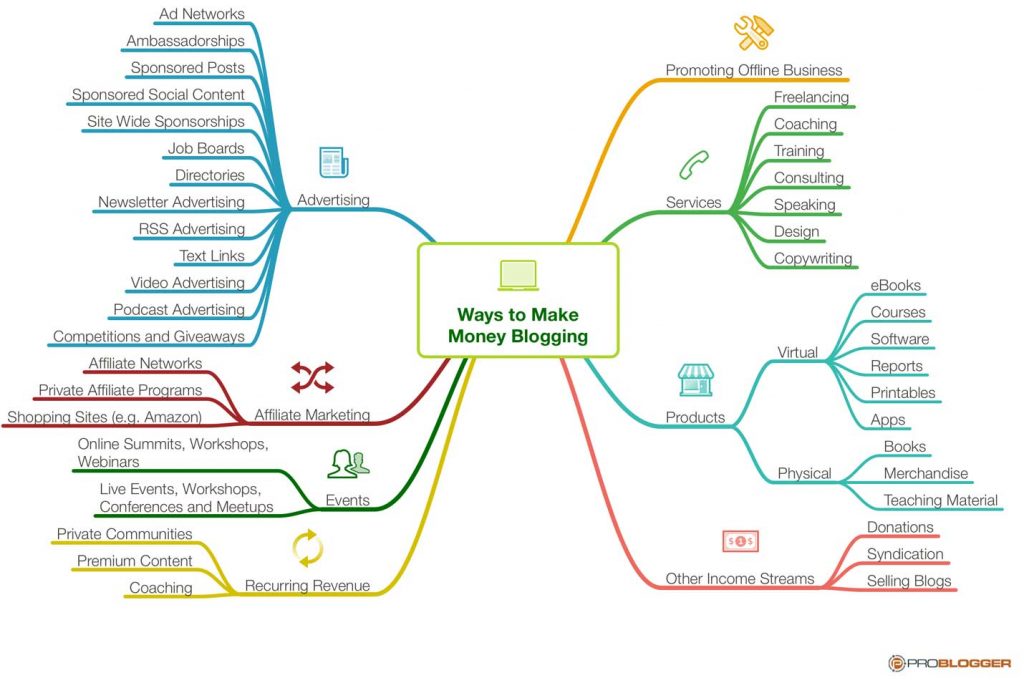
The preceding year’s event featured other notable bloggers, including those focused on parenting advice, health and wellness, and lifestyle content. These speakers, predominantly full-time bloggers, represented a broad range of subject matter. Their monetization strategies were equally varied, encompassing direct advertising sales, the creation of membership sites offering exclusive content, the sale of digital products like e-books, the promotion of affiliate products, leveraging their blogs to drive business for offline enterprises, securing speaking engagements, and even negotiating book deals. Many of these successful individuals employed a combination of these revenue streams, demonstrating a fluid and adaptive approach to income generation.
The geographic origin of these bloggers, while specific to Australia, reflects a global trend. Similar patterns of diverse monetization are observable across continents. This reinforces the understanding that a blog’s niche or topic does not inherently limit its income potential; rather, it influences the most effective monetization strategies.
To illustrate the breadth of potential revenue streams, a visual representation, often termed a "money map," has been developed. This infographic outlines a comprehensive array of monetization methods that can be applied to blogs. Furthermore, extensive resources, including a free webinar dedicated to monetizing blogs, have been made available to provide a deeper understanding of these techniques.
The notion that specific "formulas" for blogging success are being marketed is acknowledged, with some products claiming to offer guaranteed pathways to income. However, based on extensive experience, the author posits that no such definitive formula exists. Each successful blogger has carved a unique trajectory, often driven by intuition and serendipitous discoveries. While commonalities in their journeys can be identified, such as building an audience and establishing trust, the specific execution and the interplay of personal style, audience engagement, and niche dynamics result in distinct outcomes. The core recommendation is to learn from the experiences of others while remaining open to forging an individual path.

Broad Applicability of Monetization Across Niches
A persistent critique within the blogging community is the assertion that only those who teach others how to make money blogging are themselves financially successful in this domain. This perspective is demonstrably inaccurate. As evidenced by the speaker lineups at industry events, numerous bloggers achieve substantial incomes from platforms focused on everyday topics rather than solely on the mechanics of online income generation.
The author’s personal experience further substantiates this point. While ProBlogger, a blog centered on blogging itself, is profitable, the author’s photography blog, Digital Photography School, has consistently proven to be significantly more lucrative. This disparity, estimated to be tenfold in profitability, highlights that niche focus does not preclude substantial financial returns.
Interviews with full-time bloggers conducted for webinar series have reinforced this observation. Individuals like Sarah, who primarily discusses health and well-being, Tsh, focusing on simple living, and Ana, specializing in woodworking, all generate substantial incomes from their respective niches without engaging in the business of teaching others to monetize their blogs. Their success underscores the principle that a passionate and engaged audience, coupled with effective monetization strategies tailored to the niche, can lead to significant financial rewards.
The Statistical Reality: Income Distribution in Blogging
A recurring theme in surveys of ProBlogger readers reveals a notable trend: the majority of bloggers who attempt to monetize their platforms do not achieve a full-time income. In a survey of 1,500 ProBlogger readers, the distribution of monthly earnings among those actively pursuing income generation demonstrated that a significant percentage earns minimal amounts. Specifically, 10% reported no earnings, and 28% made less than $0.30 per day. Cumulatively, 63% of respondents earned less than $3.50 per day from their blogging efforts.
It is important to contextualize these figures by noting that ProBlogger’s readership often comprises newer bloggers; approximately half of the survey participants had been blogging for less than two years. Therefore, these statistics reflect an early stage of monetization for many.
Despite this, the survey also provided a glimpse into the upper echelon of earning potential. Out of the 1,508 bloggers surveyed, 65 individuals (approximately 4%) reported earnings exceeding $10,000 per month, placing them in the six-figure annual income bracket. An additional 9% earned over $1,000 per month, which can be considered a part-time income level.
Based on observations from blogging conferences over the past six years, there is a discernible increase in the number of full-time bloggers. Furthermore, a growing segment of bloggers are achieving income levels equivalent to several days of work per week. However, the prevailing statistical data indicates that the substantial majority of bloggers who are actively trying to earn money do not reach a full-time income level.
The Crucial Role of Time in Building a Profitable Blog
Analysis of income data, particularly focusing on the top earners, reveals a strong correlation between longevity and financial success in blogging. Among those in the highest income bracket, approximately 85% had been blogging for four years or more. The remaining individuals in this group had typically been active for three to four years.
This temporal aspect aligns with the author’s personal experience. The initial year of blogging yielded no income. It took approximately two years of gradual growth after implementing monetization strategies before approaching a full-time income level. Reaching the top income bracket of over $10,000 per month required about four years of consistent effort.
This data underscores that blog monetization is not an immediate gratification process. Building a substantial audience, cultivating a recognizable brand, and establishing credibility and trust within a niche are processes that inherently require significant time investment. Even after four to five years of dedicated blogging, there is no absolute guarantee of achieving a considerable income. The sustained effort over an extended period is a critical, though not sole, determinant of success.
The Indispensable Component: Sustained Effort and Action
Beyond longevity, a common characteristic observed among successful full-time bloggers is a pronounced inclination towards action and proactive engagement. A passive approach is generally incompatible with the demands of building a profitable blog. The perception of blogging as a purely "passive income stream" is often perpetuated in marketing materials, but it deviates significantly from the reality experienced by most successful bloggers.
The author’s experience over the past decade highlights a commitment to hard work that surpasses any previous professional undertaking. While the work is often enjoyable and energizing, it is also demanding. This includes the daily creation of high-quality content, staying abreast of industry trends and community developments, diligently managing the business aspects of the blog, developing products or services for sale, and actively cultivating and engaging with the audience.
The foundational pillars for building a profitable blog can be categorized into four key areas:
- Creating Exceptional Content: This involves producing original, insightful, and valuable material that resonates with the target audience.
- Finding and Attracting Readers: Implementing effective strategies for content promotion and audience acquisition is paramount.
- Building Reader Engagement: Fostering a community and encouraging interaction with the audience is crucial for long-term success.
- Monetization Strategies: Developing and implementing diverse revenue streams that align with the blog’s content and audience.
The overarching principle is to create blogs that hold significant value for readers, offering unique perspectives and helpful information. This does not occur spontaneously; it necessitates a considerable and sustained investment of effort.
A critical, often overlooked, element is the act of starting. Despite having aspirations for blogging, many individuals hesitate to launch their platforms. The advice to "start today" is fundamental, emphasizing the importance of taking the initial step to overcome inertia and begin the journey.
Conclusions: The Realistic Outlook for Blog Monetization
The evidence strongly suggests that generating income from blogging is indeed achievable. An increasing number of individuals are succeeding in earning part-time to full-time incomes through their blogs. However, it is crucial to acknowledge that these individuals still represent a minority within the broader blogging population.
Bloggers who manage to achieve financial independence hail from a diverse array of niches. A common thread among them, however, is their sustained commitment over an extended period. The journey to profitability in blogging is typically a marathon, not a sprint, demanding patience, persistence, and strategic adaptation.
For those aspiring to build a profitable blog, subscribing to resources like ProBloggerPLUS offers a pathway to receive weekly tips and tutorials focused on key areas such as content creation, audience development, reader engagement, and monetization strategies. This consistent educational input, coupled with dedicated effort, can provide the necessary guidance and support to navigate the complexities of building a successful online presence. The ultimate success hinges on a combination of strategic planning, consistent execution, and a realistic understanding of the time and effort required.

