
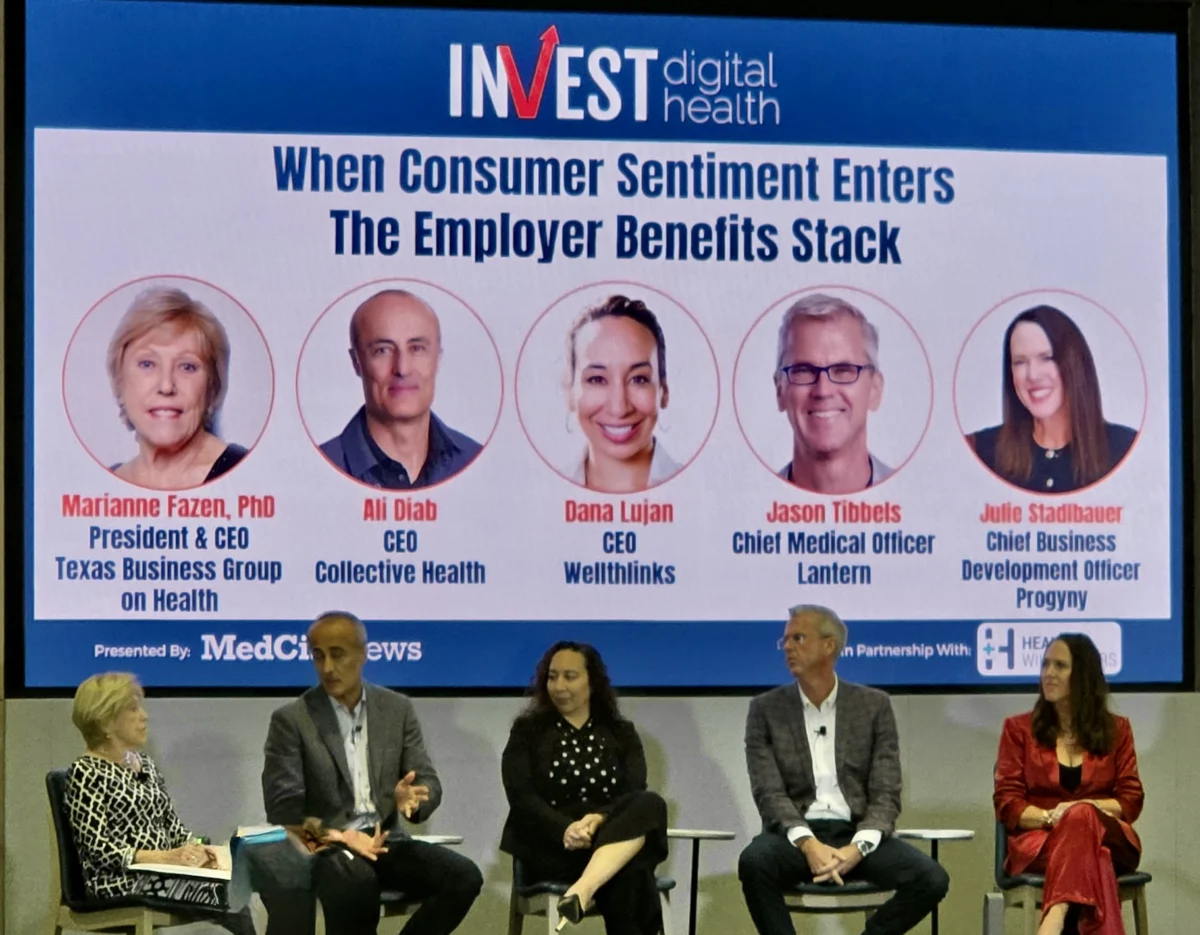
In 2023, employer-sponsored health insurance served as the primary source of medical coverage for approximately 165 million Americans, according to data from the Government Accountability Office (GAO). Despite the massive scale of this market and the significant financial investment made by corporations, the selection of health benefits is frequently dictated not by clinical outcomes or cost-efficiency, but by entrenched economic forces and vertical integration. At the INVEST Digital Health conference held in Dallas last month, industry leaders gathered to discuss the systemic barriers that prevent innovative health solutions from reaching the employers who need them most.
Ali Diab, CEO of Collective Health, an independent third-party benefits administration platform, provided a stark assessment of the current landscape. He argued that the market for employer benefits is currently "coin-operated," driven by financial incentives that prioritize the status quo over the adoption of superior healthcare solutions. According to Diab, the current ecosystem is designed to keep "innovators with better benefits—both in terms of cost and outcomes—outside" the decision-making circle of major corporations.
The Economic Moats of Incumbent Insurers
The central theme of the panel discussion was the existence of "walled gardens" maintained by the nation’s largest health insurance carriers and third-party administrators (TPAs). Diab specifically identified industry giants such as UnitedHealthcare and Cigna, noting that these incumbents utilize their vast financial resources to maintain market dominance. One such tactic involves the use of "transition credits"—large sums of money, often totaling millions of dollars, offered to employers to offset the costs of switching plans or to incentivize them to remain with their current carrier.
These credits effectively serve as an economic moat. For a smaller, independent platform like Collective Health, matching these multi-million-dollar payouts is financially impossible. Consequently, even if a smaller provider offers better clinical outcomes or a more transparent cost structure, the immediate financial lure of transition credits often sways corporate procurement departments.
Furthermore, Diab highlighted the role of benefits consulting firms in this cycle. Many of these firms, which employers rely on to navigate the complexities of health insurance, derive significant revenue from their contracts with Pharmacy Benefit Managers (PBMs). This creates a conflict of interest; consultants may be less likely to recommend transparent PBM options or disruptive health tech solutions if doing so jeopardizes their existing financial arrangements with legacy providers.
Chronology of the Employer-Sponsored Insurance Evolution
To understand the current friction in the market, it is necessary to examine how employer-sponsored insurance (ESI) became the dominant model in the United States.
- The 1940s (Post-WWII): Following the Stabilization Act of 1942, which limited wage increases during the war, employers began offering health insurance as a fringe benefit to attract workers. The IRS later ruled that these benefits were tax-exempt, cementing ESI as the bedrock of the American healthcare system.
- The 1970s and 80s: The passage of the Employee Retirement Income Security Act (ERISA) in 1974 allowed large employers to "self-insure," meaning they pay for medical claims directly rather than paying premiums to an insurance company. This gave rise to the Third-Party Administrator (TPA) market.
- The 2000s (Consolidation): The healthcare industry saw massive waves of horizontal and vertical integration. Insurers began acquiring PBMs, physician groups, and pharmacies.
- 2010–Present: The "Big Three" PBMs—CVS Caremark, Express Scripts (owned by Cigna), and OptumRx (owned by UnitedHealth Group)—came to control roughly 80% of the market. This consolidation has led to the "walled garden" effect discussed at the INVEST conference.
- 2024 and Beyond: Federal scrutiny of PBM practices and vertical integration has reached an all-time high, with the Federal Trade Commission (FTC) launching investigations into the "anti-competitive" nature of these business models.
Supporting Data: The Rising Burden on Employers
The urgency of the discussion in Dallas is underscored by the escalating costs of healthcare for American businesses. According to the Kaiser Family Foundation (KFF) 2023 Employer Health Benefits Survey, the average annual premium for family coverage reached $23,969, a 7% increase over the previous year. Over the last decade, average family premiums have increased by 47%, far outpacing inflation and wage growth.
The financial strain is particularly acute for self-insured employers, who bear the direct risk of high-cost claims. While these employers theoretically have the power to customize their benefits, the lack of transparency in PBM contracts and the difficulty of accessing raw claims data often leave them flying blind.
During the panel, Julie Stadlbauer, Chief Development Officer of Progyny, emphasized that proving return on investment (ROI) is no longer optional for vendors. She cited a case study in which an employer used a third-party warehouse analysis to evaluate Progyny’s fertility benefits program. The analysis concluded that the program saved the employer $32 million over seven years while significantly improving clinical outcomes, including thousands of successful births. This type of hard data is essential for smaller vendors to break through the barriers set by incumbents.
The Role of Technology and AI in Driving Value
Beyond cost savings, the panel addressed the need for "delighting" the end-user: the employee. Jason Tibbels, Chief Medical Officer of Lantern Health, argued that a program’s value is non-existent if employees refuse to use it.
"Your employee needs to be delighted," Tibbels stated. "It doesn’t matter how valuable your program is. If people don’t use it, it is not valuable."
Lantern Health focuses on surgical outcomes, boasting a complication rate of less than 1%. This high-quality care provides value to the employer by reducing secondary costs and to the employee by ensuring a safer recovery. However, Tibbels noted that "delight" often comes from removing administrative friction.
He pointed to Artificial Intelligence (AI) as a tool for streamlining the benefits experience. Currently, employees are often forced to fill out repetitive forms asking for information the employer or insurer already possesses, such as their deductible status or home address. Tibbels suggested that AI can be leveraged to pre-populate this data and offer employees a curated selection of "three choices on what to do next," rather than overwhelming them with a complex directory of providers.
The Data Accessibility Barrier
One of the most significant obstacles to innovation identified by the panelists is the "castle" mentality regarding data. To prove their effectiveness, digital health vendors need access to large claims files to run comparative analyses. However, legacy insurance companies often charge exorbitant fees—ranging from $10,000 to $15,000 or more—simply to pull a single data file for an employer.
Ali Diab characterized this as a defensive maneuver: "Because in their mind, that’s like letting you into the castle. They don’t want to let you into the castle." By monetizing or restricting access to claims data, incumbents make it difficult for employers to realize exactly how much they might save by switching to a more transparent or specialized provider.
This lack of transparency has drawn the ire of high-profile figures like Mark Cuban. Through his "Cost Plus Drugs" and the recently launched "Cost Plus Wellness" initiatives, Cuban has used his platform to urge self-insured employers to scrutinize their PBM contracts and utilize AI to uncover hidden fees. Cuban’s model advocates for a simple "cost plus 15%" markup, a stark contrast to the complex rebate systems used by traditional PBMs.
Broader Implications and Federal Scrutiny
The frustrations voiced at the INVEST conference are reflecting a broader national shift toward regulatory intervention. In late 2024, the healthcare industry watched closely as CVS Health announced a plan to split its business, though many experts, including those cited in the original reporting, argue that the core conflicts of interest inherent in vertical integration remain.
The year 2027 is expected to be a pivotal point for federal scrutiny. Several bipartisan bills currently in the U.S. Congress aim to "unbundle" the various arms of healthcare giants. These measures seek to prevent a single entity from acting as the payer (insurance company), the provider (physician groups), the PBM, and the pharmacy simultaneously.
Proponents of these bills argue that such integration allows companies to steer patients toward their own higher-cost services, effectively stifling competition from independent pharmacies and specialized health-tech firms. If these legislative efforts succeed, the "walled gardens" described by Ali Diab may finally begin to crumble, allowing for a more meritocratic benefits marketplace.
For employers, the stakes are high. Under ERISA, corporate executives have a fiduciary duty to act in the best interest of plan participants. As transparency increases and more data becomes available, employers may soon find themselves legally obligated to move away from legacy "walled garden" providers in favor of solutions that offer demonstrably better outcomes and lower costs.
The consensus from the Dallas panel was clear: the era of "coin-operated" healthcare is facing its greatest challenge yet. While incumbent insurers still hold the keys to the castle, the combination of employer frustration, technological advancement, and regulatory pressure is creating a crack in the wall that innovators are ready to exploit.

