
The traditional landscape of the American pharmacy, once defined by local brick-and-mortar establishments and face-to-face interactions with a community pharmacist, is undergoing a profound structural shift toward digital-first consumer platforms. For decades, the consumer’s primary choice in the prescription process was limited to selecting a physical location for pickup. Today, that choice has expanded into a complex ecosystem of online fulfillment, home delivery, and direct-to-consumer (D2C) models that prioritize transparency and user experience. At the heart of this evolution is a concerted effort by technology companies, payers, and pharmaceutical manufacturers to dismantle the historical "black box" of drug pricing and benefit coverage, moving toward a model where patients are treated as informed consumers rather than passive recipients of care.
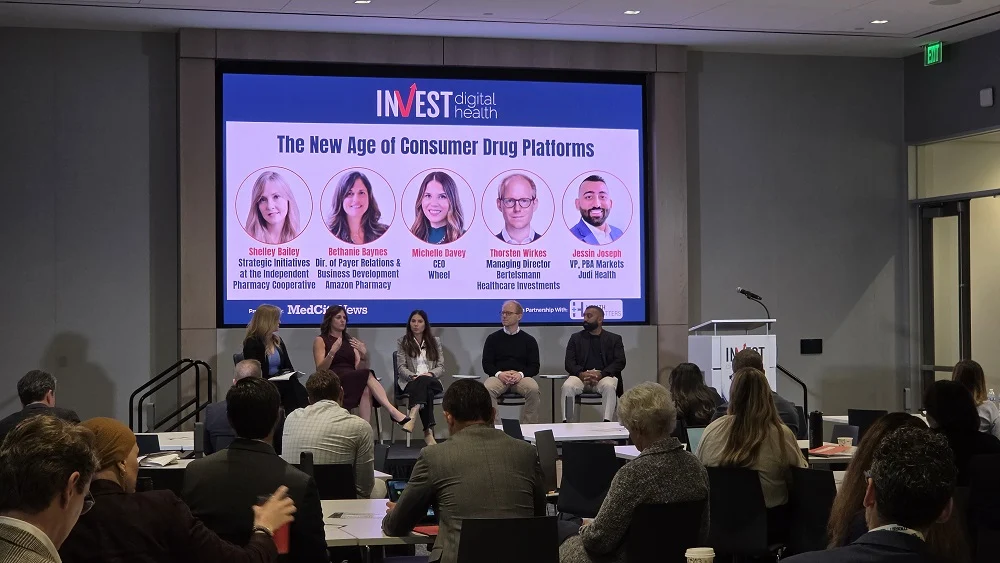
This transition was the focal point of a recent panel discussion at the MedCity News INVEST Digital Health Conference in Dallas, where industry leaders gathered to dissect the mechanics of modern pharmacy innovation. Moderated by Shelley Bailey of the Independent Pharmacy Cooperative, the panel featured executives from Amazon Pharmacy, Wheel, Judi Health, and Bertelsmann Healthcare Investments. The consensus among these experts was clear: the future of pharmacy lies in reducing the "friction points" that have long plagued the patient journey—ranging from opaque pricing to the logistical hurdles of medication adherence.
The Push for Pricing Transparency and Patient Agency
Historically, the pharmacy counter has been a place of significant financial uncertainty for patients. Unlike almost any other retail experience, a consumer often does not know the final cost of a product until the moment of purchase. This lack of transparency is a byproduct of the complex relationships between pharmaceutical manufacturers, pharmacy benefit managers (PBMs), and insurance providers.
Bethanie Baynes, director of payer relations and business development at Amazon Pharmacy, noted during the conference that pharmacies have historically offered very little clarity regarding coverage and costs. "We really see this as a clear need in this industry to put more agency at the patient and the members’ hands to see what their options are and make the best decision for them," Baynes stated. This shift toward agency is not merely a convenience; it is a clinical necessity. According to industry data, approximately 20% to 30% of prescriptions are never filled, and about 50% of medications for chronic diseases are not taken as prescribed. A primary driver of this non-adherence is "sticker shock" at the pharmacy counter.
By integrating real-time insurance data and cash-pay alternatives into a single digital interface, platforms like Amazon Pharmacy allow users to compare costs before they ever leave their doctor’s office. This level of transparency enables patients to choose between using their insurance benefit or opting for a lower cash price—a scenario that is becoming increasingly common as high-deductible health plans (HDHPs) proliferate across the United States.
Care Orchestration and the Holistic Patient Journey
The digital transformation of pharmacy is not occurring in a vacuum. It is part of a broader movement toward "care orchestration," a term used to describe the seamless integration of telehealth, diagnostics, and pharmacy services. Michelle Davey, CEO of Wheel, an enterprise platform that powers virtual care, observed that the conversation has shifted significantly since 2018. While early discussions focused primarily on simple cash-pay interactions for lifestyle medications, today’s market demands a more holistic approach.
"Patients need support through the entire healthcare journey, not just one particular point of that journey," Davey explained. This journey includes the initial consultation, the clinical decision-making process, and the ongoing management of a condition. For digital platforms to be successful, they must ensure that the "point of care" does not end with a single transaction. Instead, they must facilitate follow-up visits and ensure long-term medication adherence.
The rise of cardiometabolic drugs, particularly GLP-1 agonists like Wegovy and Zepbound, has served as a catalyst for this model. Because these medications require significant clinical oversight and are often subject to complex prior authorization requirements or high out-of-pocket costs, they have become the perfect test case for integrated digital platforms. Davey noted that many employers are now responding by covering the cost of the clinical care itself while directing employees to specialized cash-payment pharmacies, such as Eli Lilly’s LillyDirect or Novo Nordisk’s NovoCare Pharmacy, to obtain the medicine.
Breaking Down Industry Silos through Data Integration
One of the greatest obstacles to a seamless consumer experience in pharmacy is the siloed nature of healthcare data. The information required to process a prescription—clinical data from the physician, benefit data from the PBM, and inventory data from the pharmacy—is often stored in disparate systems that do not communicate effectively.
Jessin Joseph, vice president of PBA markets at Judi Health, highlighted the role of pharmacy benefit administrators in bridging these gaps. Judi Health operates a platform for medical claim adjudication and pharmacy benefit administration designed to reduce the "heavy lifting" for patients. "At the end of the day, there’s no reason why people have to go to every different pharmacy to figure out what is the cost of the drug," Joseph said.
The integration of these data points allows for a more "connected" healthcare system. When a patient can see where a drug is available and exactly what it will cost under their specific plan—integrated with their deductible status—the likelihood of adherence increases. This connectivity also benefits providers, who can make more informed prescribing decisions based on a patient’s financial reality and the local availability of medications.
The Role of Logistics in Medication Adherence
Beyond pricing and data, the physical logistics of obtaining medication remain a significant barrier. For many patients, especially those in rural areas or those with demanding work schedules, the requirement to visit a physical pharmacy during business hours is a major friction point.
Amazon Pharmacy has addressed this through a robust home-delivery model. Baynes emphasized that for many consumers, free shipping and home delivery are essential for maintaining adherence. "Every friction point for the patient and a drug is a chance for a patient to stop taking a drug," she noted. By removing the need to travel to a physical location, digital pharmacies are effectively lowering the barrier to entry for maintenance medications.
This logistical evolution is particularly important as the U.S. faces a growing number of "pharmacy deserts." A study published in Health Affairs found that between 2009 and 2015, one in eight pharmacies closed, disproportionately affecting low-income and urban neighborhoods. Digital platforms provide a vital safety net for these populations, ensuring that geographic location does not dictate access to essential medicine.
Investment Trends: The Rise of D2C and D2E Models
From an investment perspective, the shift toward direct-to-consumer (D2C) and direct-to-employer (D2E) platforms is viewed as a long-term structural change rather than a passing trend. Thorsten Wirkes, managing director at Bertelsmann Healthcare Investments, suggested that these models will continue to gain traction because they align with consumer demands for convenience and transparency.
"As consumers want more decision-making and have the chance and need to be more involved in decision-making, they need a different environment to operate in," Wirkes said. He identified two primary categories of drugs that are ripe for digital platform expansion:
- High List Price, Low Net Price Products: These include primary care medications such as respiratory inhalers, migraine treatments, and cardiometabolic drugs.
- Non-Formulary Drugs: Medications that are either not covered by an insurance plan or are placed on a non-preferred tier, making cash-pay digital platforms a more attractive option for consumers.
The D2E model is particularly noteworthy. As employers grapple with rising healthcare costs—driven in part by the high price of specialty drugs—they are increasingly looking for ways to bypass traditional PBM-driven models. By partnering with digital pharmacy platforms, employers can offer their employees more transparent pricing and more convenient access, potentially lowering overall healthcare spend by improving chronic disease management.
Analysis of Implications: A New Era for the Pharmacy Ecosystem
The implications of this digital shift are far-reaching, affecting every stakeholder in the healthcare continuum.
For Retail Pharmacies: Traditional giants like CVS and Walgreens are being forced to pivot. While they maintain a significant physical footprint, they are increasingly investing in their own digital and home-delivery capabilities to compete with Amazon. Furthermore, retail pharmacies are shifting their focus toward clinical services—such as vaccinations and point-of-care testing—to replace the declining margins on generic drug dispensing.
For Pharmaceutical Manufacturers: The success of LillyDirect and NovoCare indicates that manufacturers are no longer content to rely solely on traditional distribution channels. By going direct to the consumer, they can better manage the patient experience, offer financial assistance programs more effectively, and gather valuable data on patient adherence and outcomes.
For Patients: The ultimate beneficiary of this transformation is the patient. The move toward a more transparent, integrated, and logistically sound pharmacy experience reduces the cognitive and financial load of managing health. However, this shift also requires a higher level of "health literacy" as patients are asked to navigate more choices regarding how and where they purchase their medications.
Conclusion
The evolution of consumer platforms for medicines represents a fundamental re-engineering of the pharmacy experience. As discussed at the INVEST Digital Health Conference, the convergence of technology, data integration, and logistics is creating a more patient-centric model that prioritizes transparency and ease of use. While challenges remain—particularly regarding data privacy and the digital divide—the trajectory of the industry is clear. The pharmacy of the future is not a destination, but a service that is seamlessly integrated into the patient’s daily life, providing the agency and information necessary to make the best possible healthcare decisions. With the continued growth of D2C and D2E models, the healthcare ecosystem is moving toward a future where the "black box" of pharmacy is finally opened, placing the consumer at the center of the journey.

