
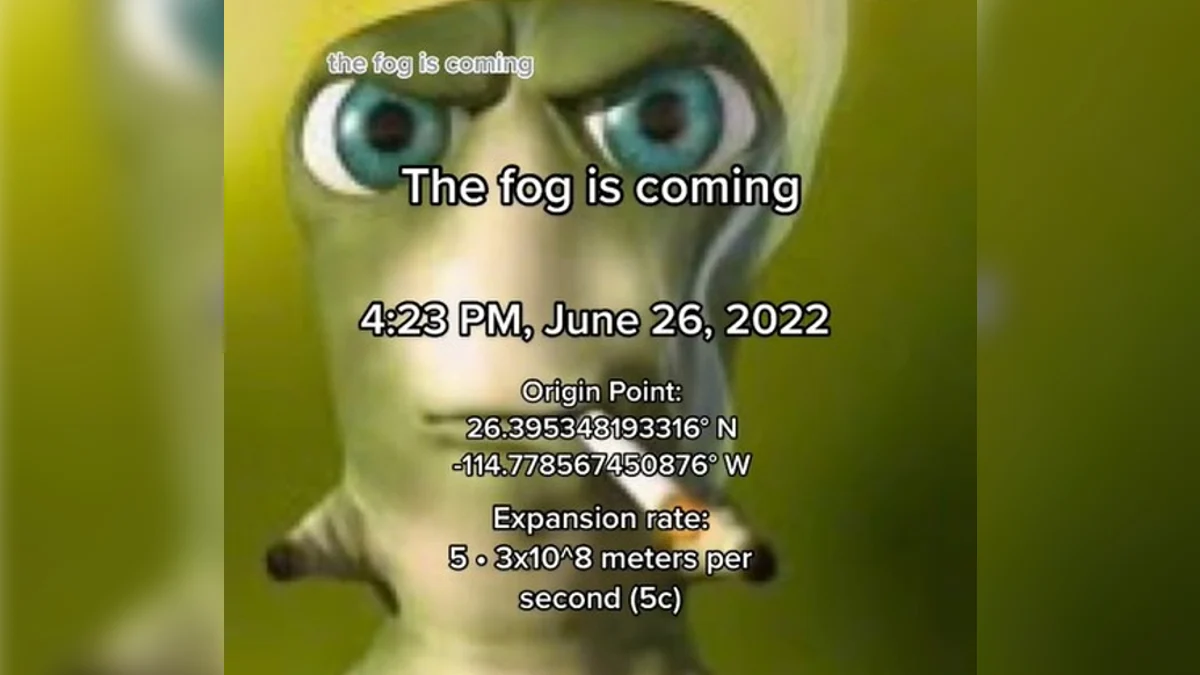
The Fog Is Coming refers to a digital cultural phenomenon and catchphrase that has permeated social media platforms, evolving from a singular satirical tweet into a widespread series of cryptic memes, image macros, and short-form videos. Characterized by an ominous, existential tone, the trend warns of an impending, all-consuming fog, often accompanied by specific dates, GPS coordinates, and eerie visual edits. While rooted in the absurdist humor of the early 2020s, the meme has grown to represent a unique intersection of analog horror, ironic nihilism, and the "schizoposting" subculture, reflecting a broader societal anxiety regarding the future.
The Genesis of an Ominous Prophecy
The origin of "The Fog Is Coming" can be traced to a specific moment of satirical commentary on the nature of long-term planning in an increasingly unpredictable world. On November 22, 2021, Twitter user @Senn_Spud posted a message that juxtaposed the mundane world of professional sports with a sudden, unexplained apocalyptic event. The tweet read: "So funny when athletes sign these long contracts. Oh you’re gonna be playing for the Yankees in 2031? Buddy the fog is gonna consume us in 2027. The fog is coming. The fog is coming. The fog is coming."
This initial post resonated with the internet’s penchant for dark humor, garnering over 22,000 likes and thousands of retweets within a few months. The humor derived from the contrast between the rigid structure of a Major League Baseball contract and the chaotic, inevitable destruction promised by "the fog." By personifying the unknown as a meteorological event, @Senn_Spud tapped into a primordial fear of the unseen, repackaged for a generation accustomed to sudden global shifts.
Viral Expansion and the Shift to Multimedia
Following the success of the initial tweet, the phrase quickly migrated from Twitter to more visual-centric platforms. During December 2021 and January 2022, screenshots of the original post began appearing on Instagram accounts such as @meaningful_incellectuals and @spooky.miller. These reposts served as a bridge, introducing the concept to a wider audience and setting the stage for its transformation into a visual meme format.
The transition to TikTok in early 2022 marked a significant turning point in the meme’s evolution. On January 1, 2022, TikTok creator @caleb_lib posted a video outlining various "predictions" for the coming year. The video utilized on-screen text to suggest that the fog was an imminent reality, a post that eventually amassed over 1.4 million views. This shift from a static joke to a dynamic, video-based warning allowed creators to incorporate atmospheric elements, such as distorted audio, "liminal space" imagery, and low-fidelity horror aesthetics.
As the meme gained momentum, other creators began to add layers of specificity to the warnings. On February 11, 2022, TikToker @trashcanpaul introduced a specific deadline, claiming the fog would arrive on August 23, 2022. This introduction of "doomsday dates" became a hallmark of the trend, creating a sense of faux-urgency that encouraged high engagement and participation through the sharing of GPS coordinates or survival tips.
Aesthetic and Subcultural Context: Schizoposting and Analog Horror
To understand the proliferation of "The Fog Is Coming," it is necessary to examine the subcultures from which it draws its aesthetic. The meme is a primary example of "schizoposting," a controversial and often misunderstood internet subculture that uses surrealism, paranoia, and fragmented narratives to create a sense of psychological discomfort. Within this context, the fog is not a literal weather event but a metaphor for the "Void"—a state of non-existence or the collapse of societal reality.
Visually, the memes often utilize the conventions of "analog horror," a genre of internet fiction that mimics the look of outdated media, such as VHS tapes or emergency broadcast signals. By using grainy filters, high-contrast images, and uncanny characters—such as the "Kanye Holding Notepad" meme or distorted versions of popular mascots—creators build an atmosphere of dread that feels both nostalgic and threatening. This aesthetic choice bridges the gap between traditional creepypastas (internet horror stories) and modern meme culture.
The 2023 Resurgence and the Role of Celebrity Parody
While the meme saw a peak in early 2022, it experienced a massive resurgence in 2023, fueled by a bizarre intersection with celebrity parody culture. In January 2023, a video surfaced featuring Skitzy_VA, a voice actor known for his "MrBeast" rap battle impersonations. In the clip, which appeared to be a commissioned video from the platform Cameo, the impersonator looks directly into the camera and solemnly declares, "The fog is coming."

This juxtaposition of the hyper-energetic, philanthropic persona of MrBeast with an apocalyptic warning proved to be highly effective. The clip was rapidly remixed into edits featuring "phonk" music (a genre characterized by distorted bass and lo-fi aesthetics) and dark imagery. On January 29, 2023, TikToker @thefogiscoming15may2023 posted an edit using this footage, assigning a new date of May 15, 2023, for the event. This single video garnered over 1.1 million views in a week, while a similar edit by @ern..x reached nearly 4 million views in just five days.
The 2023 resurgence demonstrated the meme’s staying power. By attaching the phrase to a recognizable cultural figure like MrBeast—even in parody form—the meme transcended the niche "schizoposting" community and entered the mainstream "For You" pages of millions of users.
Data and Metrics: Quantifying the Spread
The statistical footprint of "The Fog Is Coming" highlights its reach across diverse demographics. On TikTok, the hashtag #thefogiscoming has accumulated hundreds of millions of views. Key milestones in the data include:
- Initial Engagement: The November 2021 tweet by @Senn_Spud served as the baseline, with a 2,300% retweet-to-like ratio indicating high viral potential.
- Peak Growth Phases: January 2022 saw the first major spike on TikTok, with @caleb_lib’s video achieving a view count exceeding 1.4 million.
- Secondary Peak: The February 2023 resurgence saw a dramatic increase in engagement, with top-performing edits reaching 3.9 million views and generating thousands of user-led "survival" videos.
- Search Interest: According to Google Trends, search queries for "the fog is coming" peaked significantly in February 2022 and again in early 2023, correlating with the viral dates proposed by creators.
Psychological and Societal Analysis
Sociologists and digital culture analysts suggest that memes like "The Fog Is Coming" serve as a form of "ironic nihilism" for younger generations. In an era marked by climate change, economic instability, and global health crises, the concept of an all-consuming fog acts as a digestible, albeit dark, representation of future uncertainty.
Unlike the "Doomsday" prophecies of previous decades, which were often rooted in religious or literal interpretations, "The Fog Is Coming" is treated with a layer of irony. Users do not truly believe a magical fog will consume the Earth on a specific Tuesday in May; rather, they participate in the meme to acknowledge a shared sense of existential dread. It is a communal way of saying that the future feels opaque and threatening, but by turning that threat into a meme, the community gains a sense of control over the anxiety.
Furthermore, the meme functions as an "Alternate Reality Game" (ARG) light. By providing GPS coordinates or specific dates, it encourages users to interact with their physical environment through the lens of the meme. This "gamification" of horror keeps the trend interactive and prevents it from becoming a static joke.
Broader Impact and Digital Legacy
The legacy of "The Fog Is Coming" lies in its ability to adapt and survive across different platforms and years. It has influenced other similar trends, such as the "Indomitable Human Spirit" meme, which often serves as a hopeful counterpoint to the nihilism of the fog. Together, these trends represent a duality in internet culture: the acknowledgement of impending doom and the humorous, defiant response to it.
As the internet continues to move toward shorter, more atmospheric content, "The Fog Is Coming" stands as a foundational example of how a simple phrase can be built into a complex, multi-layered mythology. It proves that in the digital age, horror is not just found in movies or novels, but in the cryptic warnings that appear between dance videos and cooking tutorials on a smartphone screen.
Whether the fog is viewed as a satire of doomsday cults, a metaphor for environmental collapse, or simply a clever piece of internet theater, its impact on the digital landscape is undeniable. It remains a haunting reminder of the internet’s power to turn a fleeting thought into a global obsession, ensuring that for many, the phrase "the fog is coming" will continue to evoke a unique blend of amusement and unease for years to come.

