
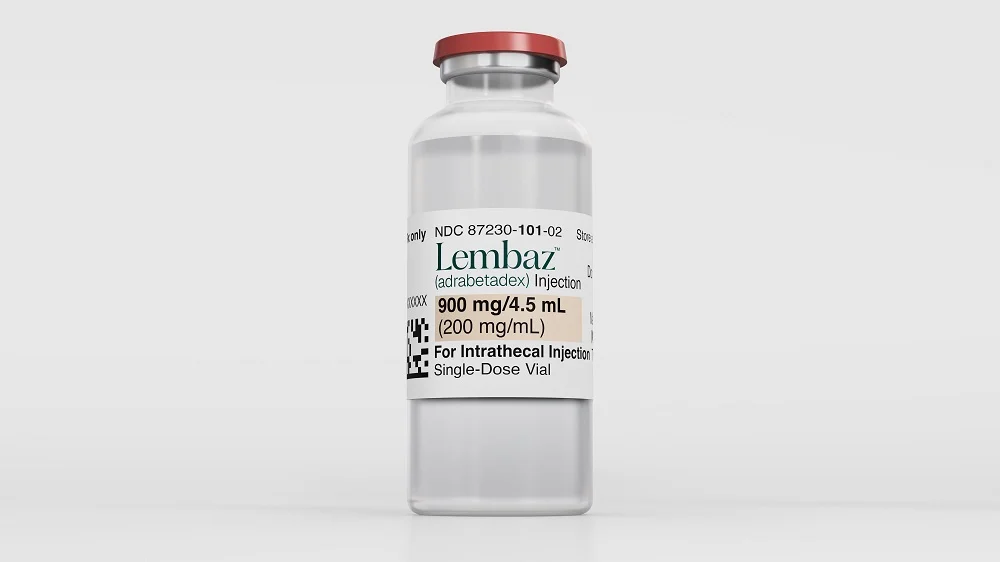
The U.S. Food and Drug Administration (FDA) has granted approval to Lembaz (adrabetadex), a landmark therapy developed by Beren Therapeutics, for the treatment of Niemann-Pick disease type C (NPC). This regulatory milestone, announced on November 17, marks a transformative shift in the management of this rare and fatal genetic disorder. While two other treatments for NPC were approved earlier this year, Lembaz distinguishes itself as the first and only medication backed by clinical data demonstrating a significant survival benefit for patients. Specifically, the drug is indicated to reduce the risk of death in both adult and pediatric patients whose neurological symptoms of NPC manifested before the age of six.
Niemann-Pick disease type C is a rare, inherited lysosomal storage disorder characterized by the body’s inability to properly transport cholesterol and other lipids within cells. This failure leads to the toxic accumulation of fats in various organs, most critically the brain. For decades, the medical community could offer little more than supportive care, as the progressive neurological decline—encompassing cognitive impairment, loss of motor function, and difficulty swallowing—frequently claimed the lives of patients before they reached adulthood. The approval of Lembaz represents the culmination of a two-decade scientific journey that survived clinical trial failures, corporate bankruptcies, and complex regulatory hurdles.
The Pathological Underpinnings of Niemann-Pick Type C
The history of NPC is rooted in the early 20th century, named after German physicians Albert Niemann and Ludwig Pick, who first described the clinical manifestations of the disease. However, it was not until the 1960s that researchers at the National Institutes of Health (NIH) pinpointed the fundamental biological defect: a breakdown in cholesterol trafficking. Further genetic research identified mutations in the NPC1 or NPC2 genes as the primary drivers of the condition. These mutations result in either the absence or the dysfunction of the NPC protein, which is essential for moving cholesterol out of the cell’s lysosome.
When this protein is defective, cholesterol becomes trapped, triggering a cascade of cellular damage. In the central nervous system, this buildup leads to the progressive death of neurons. The clinical results are devastating, often beginning with "clumsiness" or mild cognitive delays in early childhood and progressing to severe ataxia, dementia, and dysphagia (difficulty swallowing). Because the disease is so rare—affecting approximately one in 100,000 live births—development of targeted therapies has historically been slow and fraught with economic challenges.
A Two-Decade Chronology of Drug Development
The development of Lembaz, known scientifically as adrabetadex, began at the NIH in 2006 with a comprehensive natural history study. This study was vital in establishing a baseline for how NPC progresses without intervention, providing a benchmark for future clinical trials. NIH scientists discovered that cyclodextrins—a family of cyclic oligosaccharides—could potentially bypass the defective NPC protein and facilitate the movement of trapped cholesterol.
Under NIH stewardship, the cyclodextrin-based molecule successfully moved through Phase 1 testing. In 2015, the drug was licensed to Vtesse, a biotech startup focused on rare diseases. Vtesse accelerated the program into Phase 2b/3 trials, attracting significant industry attention. This led to a series of high-profile acquisitions: Sucampo Pharmaceuticals purchased Vtesse for $200 million in 2017, and just a year later, Mallinckrodt Pharmaceuticals acquired Sucampo for $1.2 billion. At the time, adrabetadex was viewed as a "crown jewel" asset in Mallinckrodt’s pipeline.
However, the program hit a major obstacle in 2018 when Mallinckrodt announced that the Phase 2b/3 trial had failed to meet its primary endpoint. The data showed no statistically significant difference between the treatment group and the control group at 52 weeks. The trial’s failure, coupled with Mallinckrodt’s mounting legal liabilities related to opioid litigation, eventually led the company to file for bankruptcy protection in 2020. It was during this period of corporate instability that Mandos, a subsidiary of the newly formed Beren Therapeutics, acquired the rights to the drug in 2021, seeking to revive a therapy that many in the patient community believed was effective despite the trial data.
Reanalyzing the Data: "The Trial Failed the Medicine"
Beren Therapeutics founder and CEO Jason Camm has been a vocal proponent of the drug’s efficacy, arguing that the 2018 trial failure was a result of flawed study design rather than a lack of therapeutic merit. "This was a situation where the medicine didn’t fail the trial; the trial failed the medicine," Camm stated. He noted that in a slowly progressing neurodegenerative disease like NPC, a one-year (52-week) window is often insufficient to observe a measurable decline in a control group, making it nearly impossible to show a treatment benefit in a composite endpoint.
Rather than launching a new, multi-year prospective trial, Beren proposed a novel regulatory path to the FDA. The company conducted a massive retrospective analysis encompassing a decade of data from every patient ever treated with the drug, including those who received it via compassionate use programs. This data was then compared against an external control group derived from the original NIH natural history study started 20 years ago.
The results of this longitudinal analysis were striking. Patients treated with Lembaz demonstrated a median survival of 8.5 years, compared to just 4.9 years in the external control group. This survival benefit remained consistent regardless of whether patients were also taking miglustat, a drug frequently used off-label to treat NPC. This data provided the "substantial evidence of effectiveness" required for FDA approval, particularly for the high-risk infantile-onset population.
Mechanism of Action and Clinical Profile
Lembaz is administered via intrathecal injection—directly into the spinal fluid—to ensure the molecule can bypass the blood-brain barrier and reach the affected neurons. While the FDA label notes that the exact mechanism of action is not fully characterized, the biological hypothesis is that the drug binds to accumulated cholesterol, enabling it to be processed through alternative cellular pathways.
Beren Therapeutics believes the drug does more than just halt decline. According to Camm, by clearing the cholesterol "logjam," the treatment may allow the developing brains of children to form new neural connections. However, the treatment is not without significant risks. The FDA has mandated a "black box" warning on the Lembaz label regarding the risk of permanent hearing loss (ototoxicity). This side effect was common in clinical trials, necessitating rigorous audiological monitoring. Clinicians are required to perform comprehensive hearing evaluations before the first dose and prior to subsequent administrations to adjust dosing and mitigate the risk of deafness.
Competitive Landscape and Market Dynamics
The approval of Lembaz follows the 2024 approvals of two other NPC treatments: Zevra Therapeutics’ Miplyffa (arimoclomol) and IntraBio’s Aqneursa (levacetylleucine). While these drugs offer the convenience of oral administration, Beren Therapeutics argues that Lembaz holds a distinct competitive edge.
First, Lembaz is the only therapy with data explicitly showing a reduction in the risk of death. Second, the drug addresses a critical gap in pediatric care. Many NPC patients develop dysphagia, making oral pills or liquids difficult and dangerous to administer. Furthermore, Lembaz is approved for use in infants weighing as little as 7 kilograms (approximately 15.4 pounds), whereas Miplyffa is restricted to patients aged two and older, and Aqneursa’s dosing begins at 15 kilograms.
The financial stakes in the NPC market are high. Zevra reported nearly $89 million in sales for Miplyffa in the first three quarters of 2024, and Shionogi & Co. recently announced a $2 billion acquisition of IntraBio to secure Aqneursa. Beren Therapeutics, having recently raised $300 million in financing, is preparing for a commercial launch in early December. Additionally, the FDA granted Beren a rare pediatric disease priority review voucher upon approval. These vouchers are highly valuable assets that can be sold to other pharmaceutical companies to fast-track different drug applications; recent sales of such vouchers have exceeded $200 million.
A New Model for Rare Disease Development
Beren Therapeutics operates as a Public Benefit Corporation (PBC), a legal structure that allows the company to prioritize the interests of patients, caregivers, and public health alongside those of its shareholders. Camm emphasizes that this structure was essential for navigating the complexities of the NPC landscape. "We don’t want to be forced into short-term trade-offs when there’s a long-term goal for patient benefit and shareholder benefit," he explained.
The approval of Lembaz is also a significant case study for the broader pharmaceutical industry regarding the use of "real-world evidence" and historical control groups. In the realm of ultra-rare diseases, where traditional large-scale randomized controlled trials are often unfeasible or unethical, the FDA’s willingness to accept Beren’s survival analysis signals a potential shift in regulatory flexibility.
As Beren prepares for the December launch, the focus shifts to patient access and long-term monitoring. For the families of those with Niemann-Pick type C, the arrival of a third treatment option—and the first to offer the hope of a longer life—marks the end of an era defined by therapeutic nihilism and the beginning of a new chapter in rare disease intervention. The 20-year journey of adrabetadex, from an NIH lab to a commercial product, serves as a testament to the persistence of patient advocates and the evolving science of lipid metabolism.

