
The landscape of online commerce is experiencing a significant evolution with the emergence of artificial intelligence-powered chatbots as a potent referral source. ChatGPT, in particular, has demonstrated its capability to drive traffic to e-commerce product pages, presenting businesses with a novel avenue for customer acquisition and a wealth of data for strategic analysis. This development marks a pivotal moment, shifting the perception of AI from a purely informational tool to a direct contributor to online sales funnels.
The Rise of AI-Driven Product Recommendations
A common and increasingly popular use case for large language models like ChatGPT involves users seeking product recommendations and comparisons. When prompted with queries such as "Best headphones for running in 2026," ChatGPT has been observed to generate detailed responses that include specific product names, their associated prices, key features, and crucially, direct links to purchase. This functionality transforms the chatbot into an interactive shopping assistant, capable of guiding consumers through the decision-making process by providing curated information tailored to their stated needs.

For instance, a hypothetical prompt for "Best headphones for running in 2026" might yield a response featuring products like the Shokz OpenRun Pro 2, priced at $179, and the Beats Powerbeats Pro 2, retailing for $239.99. The AI’s output typically includes a breakdown of their advantages and disadvantages, offering a concise yet comprehensive overview to aid the consumer. This immediate provision of actionable information streamlines the path from inquiry to potential purchase, a stark contrast to traditional search engine results which often require users to navigate multiple websites to gather similar data.
Tracking the Flow: Unlocking the Value of ChatGPT Referrals
The increasing integration of e-commerce links within ChatGPT’s responses is not merely a functional convenience; it carries significant implications for how businesses track and understand their referral traffic. Upon closer examination, the URLs generated by ChatGPT for product recommendations often contain a specific UTM (Urchin Tracking Module) parameter: utm_source=chatgpt.com&utm_medium=feed. This parameter acts as a digital fingerprint, allowing e-commerce companies to meticulously monitor and analyze the traffic originating directly from ChatGPT’s recommendations.
This capability is invaluable for several reasons. Firstly, it allows businesses to quantify the direct impact of AI-driven recommendations on their sales funnel. By segmenting their web analytics data, companies can isolate and measure the volume, engagement, and conversion rates of visitors referred by ChatGPT. This data can then inform marketing strategies, product development, and even the way products are presented within AI interfaces.

Leveraging Google Analytics for ChatGPT Traffic Analysis
The process of identifying and analyzing ChatGPT-referred traffic is made accessible through standard web analytics platforms, most notably Google Analytics. E-commerce managers can implement a straightforward series of steps within Google Analytics 4 (GA4) to gain granular insights into this emerging traffic source.
-
Accessing Traffic Acquisition Reports: The initial step involves navigating to the "Traffic acquisition" report within GA4. This section provides an overview of all incoming traffic sources to a website.
-
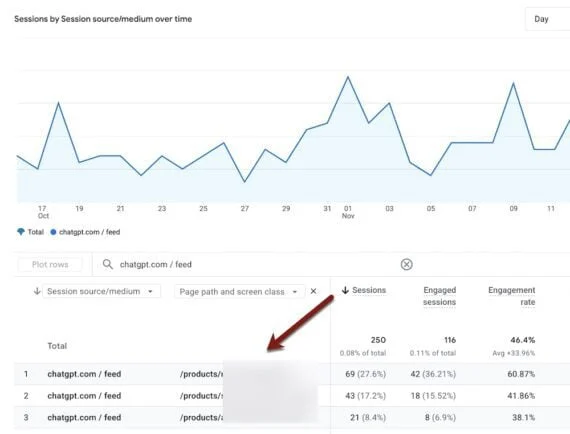
Filtering for ChatGPT Source/Medium: To isolate traffic from ChatGPT, users can utilize the search bar within the Traffic Acquisition report. By entering "chatgpt.com / feed" into the search field, the report will dynamically filter to display only sessions attributed to this specific source and medium combination. This effectively isolates all traffic that has followed a purchase link directly provided by ChatGPT.

-
Investigating Product-Specific Traffic: Once ChatGPT-referred traffic is identified, the next logical step is to understand which specific product pages are benefiting from these recommendations. This can be achieved by adding a secondary dimension to the report. Within the Traffic Acquisition report, after filtering for ChatGPT, users can click on the "+" icon next to the primary dimension (usually "Session source/medium") and select "Page path and screen class" or a similar page-level dimension. This will break down the ChatGPT traffic by the specific URLs (product pages) that visitors landed on.
-
Analyzing Engagement and Performance: With the traffic segmented by product page, businesses can then analyze key metrics such as the number of sessions, user engagement time, bounce rates, and ultimately, conversions for each product. The GA4 report will display a clear breakdown, showing which products are most frequently recommended by ChatGPT and how users interact with those pages once they arrive. For example, a report might reveal that the Shokz OpenRun Pro 2 has generated 250 sessions from ChatGPT referrals, with a high engagement rate, indicating its strong performance as an AI-recommended item.
Differentiating Mobile vs. Web User Behavior
A critical aspect of understanding AI-driven referral traffic is recognizing the platform through which users are interacting with these AI tools. The majority of users engage with ChatGPT via its mobile application. Therefore, segmenting traffic by mobile versus web is crucial for accurately assessing user behavior and optimizing strategies.

Within Google Analytics, after applying the ChatGPT filter, users can further segment the data to compare mobile and web traffic. This comparison can reveal significant differences in session volume and engagement. For instance, a report might show that while ChatGPT referrals are strong overall, the mobile app drives a substantially higher number of sessions (e.g., 168 sessions from mobile) compared to the web interface (e.g., 78 sessions from web) for specific product pages. This insight is vital for understanding the primary user journey and tailoring content and user experience accordingly.
Strategic Implications and Future Opportunities
The ability to precisely track and analyze ChatGPT-referred traffic opens up a new frontier for e-commerce strategy. By understanding which product pages are performing best through these AI recommendations, businesses can delve deeper into the underlying reasons for their success.
- Content Optimization: Businesses can analyze the product descriptions, reviews, frequently asked questions (FAQs), and use-case scenarios associated with high-performing pages. This analysis can reveal what elements make a product appealing and easily recommendable by AI. Are the descriptions clear and concise? Do the reviews highlight key benefits that align with common user queries? Is the product well-represented in terms of its practical applications?
- SEO Synergy: It’s plausible that products that rank prominently in organic search results are also more likely to be surfaced by AI models like ChatGPT. This suggests a potential symbiotic relationship between robust Search Engine Optimization (SEO) strategies and AI recommendation performance. If a product is easily discoverable and well-indexed by search engines, it likely possesses the foundational content and authority that AI models leverage. This reinforces the importance of maintaining strong organic search visibility.
- Competitive Benchmarking: By monitoring traffic from ChatGPT, companies can gain an indirect understanding of competitor performance within AI recommendation ecosystems. If competitors’ products are consistently appearing in AI-generated lists, it signals their strong positioning and may prompt a re-evaluation of one’s own product offerings and marketing efforts.
- Future of E-commerce: The trend suggests that AI chatbots will become increasingly sophisticated in their ability to curate and recommend products. This could lead to a future where a significant portion of online shopping discovery and decision-making is influenced by AI interactions. E-commerce businesses that proactively understand and adapt to this shift will be best positioned for success.
The Evolving Role of AI in Consumer Decision-Making

The integration of ChatGPT into the e-commerce ecosystem is more than just a technological novelty; it represents a fundamental shift in how consumers discover and evaluate products. As AI models become more adept at understanding user intent and providing personalized recommendations, they are poised to become indispensable tools for both consumers and businesses.
The implications are far-reaching. For consumers, it promises a more efficient and personalized shopping experience, cutting through the noise of vast online marketplaces to find exactly what they need. For businesses, it offers a powerful new channel for customer acquisition, coupled with unprecedented data insights into consumer preferences and behaviors. The strategic imperative for e-commerce players is clear: to embrace this evolving landscape, harness the power of AI-driven insights, and adapt their strategies to thrive in this new era of intelligent commerce. The ability to track and analyze traffic from sources like ChatGPT is not just a technical exercise; it’s a strategic necessity for understanding and capitalizing on the future of online retail.

