

The question of whether blogging can translate into a sustainable income stream is a persistent one, often met with a polarized mix of fervent claims and outright skepticism. While some online narratives paint a picture of overnight millions, others dismiss the notion of full-time blogging as a lucrative endeavor, often labeling proponents as purveyors of unsubstantiated hype. The reality, however, resides in a more nuanced space, acknowledging both the potential for significant financial reward and the inherent challenges involved.
For individuals who have navigated the digital landscape for a substantial period, the consensus is clear: generating income through blogging is indeed achievable. This is not exclusive to a niche group of "make money online" gurus; rather, it spans a diverse array of passions and professions, from fashion and food to travel and technology. The journey from a personal hobby to a full-time career is, by all accounts, not a swift one. It demands a confluence of perseverance, innovative thinking, and a keen understanding of the blogging ecosystem.
This exploration delves into seven fundamental insights gathered from years of observation and direct experience within the blogging sphere, aiming to provide a grounded perspective on the financial viability of this digital pursuit.
1. The Tangible Possibility of Monetization
The assertion that blogging can generate income is not merely theoretical. For many, it has evolved from a modest supplementary earning to a primary source of livelihood, and in some cases, a full-fledged business venture. An individual, who has been actively blogging for nearly a decade, has witnessed this progression firsthand. What began as a trickle of a few dollars daily gradually escalated to an income equivalent to a part-time job, then a full-time profession, and ultimately, a business employing others.
While specific earnings figures were once shared to illustrate the trajectory, a conscious decision was made to cease such disclosures. This was not due to a lack of continued growth, but rather a recognition that the focus should remain on the principles of success rather than the quantification of individual financial gains. This blogger’s journey, while benefiting from an early entry into the blogging world (dating back to 2002, though perceived as late at the time), is not an isolated phenomenon. Numerous other bloggers have achieved significant financial success, often with considerably less time invested in the field.
The spectrum of financial outcomes is broad. For some, blogging serves as a means to cover discretionary expenses, such as the cost of coffee. For others, it provides a substantial supplement to their primary employment, offering financial flexibility or enabling them to manage other commitments, like raising a family. For a dedicated segment, it represents a full-time professional pursuit. This demonstrates that the potential for earning ranges from minimal to substantial, catering to diverse personal and professional goals.
2. A Multifaceted Approach to Blog Monetization
A critical misconception is the existence of a singular, universally applicable method for monetizing a blog. In reality, the strategies employed by successful bloggers are as varied as the niches they inhabit. At a prominent blogging event held in Melbourne, Australia, a lineup of speakers showcased the diverse monetization models adopted by individuals operating at part-time to full-time income levels.
The speakers represented a broad spectrum of industries and expertise. Among them were bloggers focused on:
- Parenting and Family Life: Generating income through a combination of sponsored content, affiliate marketing, and the sale of their own digital products.
- Food and Recipe Development: Leveraging advertising revenue, partnerships with food brands, and the sale of cookbooks or online courses.
- Travel and Lifestyle: Earning through sponsored travel, affiliate partnerships with booking sites and travel gear companies, and the sale of travel guides.
- Personal Finance and Investing: Primarily monetizing through affiliate marketing for financial products and services, as well as offering premium advisory services.
- Technology and Gadget Reviews: Generating revenue through affiliate links to e-commerce platforms, display advertising, and sponsored reviews.
- Health and Wellness: Utilizing affiliate marketing for health products, offering online coaching or fitness programs, and selling informational e-books.
The previous year’s event featured a similarly diverse group, including:
- DIY and Crafting: Earning through ad revenue, sponsored tutorials, and the sale of craft supplies or patterns.
- Photography and Videography: Monetizing through the sale of stock photos and videos, online workshops, and affiliate marketing for photography equipment.
- Book Reviews and Literary Criticism: Generating income through affiliate links to bookstores, sponsored book promotions, and advertising.
- Fitness and Sports: Offering online training plans, sponsored content with athletic brands, and affiliate marketing for fitness equipment.
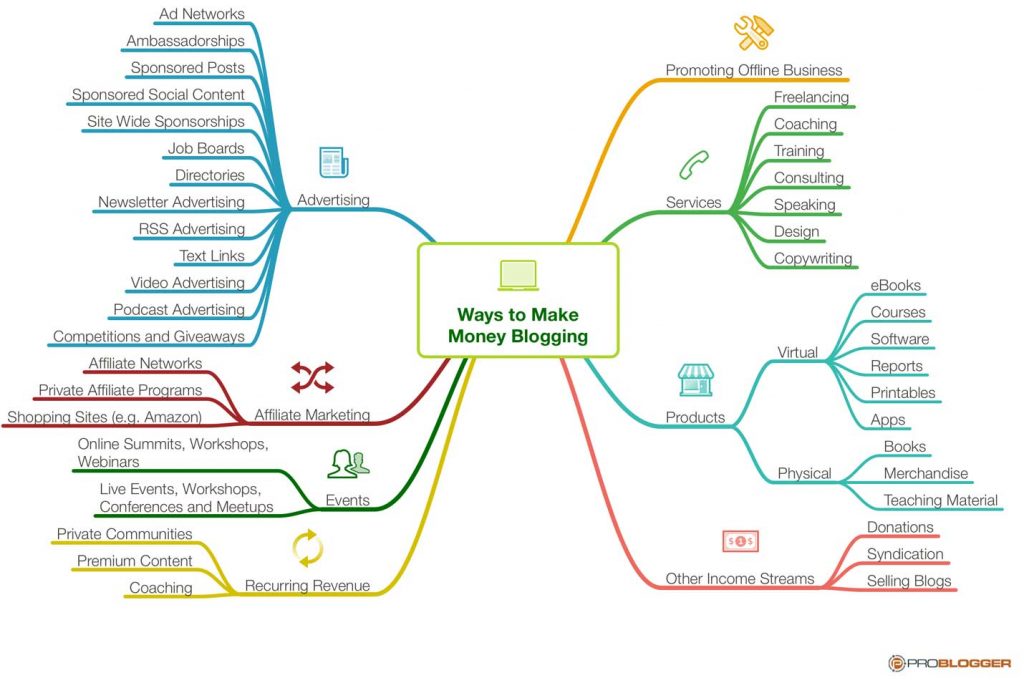
The common thread among these individuals, many of whom are full-time bloggers, is not a standardized monetization strategy but rather a tailored approach that aligns with their specific audience and content. They employ a variety of income streams, including direct advertising sales, membership programs, the sale of e-books and digital products, affiliate marketing, promotion of offline businesses, speaking engagements, and even book deals. This illustrates that the path to profitability is rarely linear and often involves a strategic combination of revenue-generating activities.
This global phenomenon is not confined to Australia. The landscape of blog monetization is rich and multifaceted, with numerous avenues to explore. A visual representation, often referred to as a "money map," attempts to outline some of these diverse strategies, highlighting the potential for creative income generation. Furthermore, in-depth educational resources, such as comprehensive webinars, offer detailed introductions to these monetization techniques, providing practical guidance for aspiring bloggers.
3. The Absence of a Universal Formula
The allure of a "formula for success" in online ventures is undeniable, and it’s a narrative often exploited by those selling digital products. However, experience consistently reveals that no such prescriptive formula exists for making money blogging. Each individual who achieves financial success through their blog has carved a unique path, often driven by intuition and serendipitous discoveries.

While commonalities can be observed among successful bloggers – such as a dedication to their niche, a clear understanding of their audience, and consistent effort – the specific strategies and their implementation are deeply personal. Bloggers possess distinct personalities and writing styles, catering to diverse demographics and interests. Furthermore, the monetization potential of different niches can vary significantly.
The most valuable lesson in this regard is to remain informed about the broader trends and strategies employed by others in the blogging community. Learning from their experiences can provide valuable insights and inspiration. However, it is equally crucial to cultivate the willingness to deviate from established norms and forge a personalized path. This requires adaptability, a willingness to experiment, and a commitment to understanding what resonates uniquely with one’s own audience.
4. The Broad Monetization Potential Across Niches
A recurring critique leveled against the discourse surrounding blog monetization is the assertion that only those who teach others how to make money blogging are actually earning a living. This perspective, however, is demonstrably inaccurate. As evidenced by the speaker lineups at industry events, a significant number of full-time bloggers operate within conventional, everyday topics, rather than focusing on the mechanics of online income generation itself.
The personal experience of operating a blog about blogging (ProBlogger) alongside a blog dedicated to photography (Digital Photography School) further substantiates this point. The photography blog, by a considerable margin, has proven to be the more profitable venture, estimated to be ten times more lucrative. This highlights that success is not solely dependent on the topic of "making money online."
Interviews with numerous full-time bloggers reveal a consistent pattern: their primary income streams are derived from their core niche, not from selling courses on blogging. For instance:
- Sarah: Primarily blogs about health and well-being, generating income through affiliate marketing for health products, sponsored content with wellness brands, and the sale of her own e-books on healthy living.
- Tsh: Focuses on simple living, earning through a combination of affiliate partnerships with sustainable product companies, advertising, and the sale of planners and guides related to intentional living.
- Ana: Specializes in woodwork, monetizing through affiliate links to tool manufacturers, sponsored content with woodworking businesses, and the sale of her own woodworking plans and online tutorials.
These examples underscore that a wide array of niches possess substantial monetization potential. The key lies in understanding the audience within that niche, identifying their needs and desires, and strategically aligning products or services to meet those demands.
5. The Majority of Bloggers Do Not Earn a Full-Time Living
Statistical data consistently indicates that a significant majority of individuals who attempt to monetize their blogs do not achieve a full-time income. Surveys conducted among ProBlogger readers, a demographic that generally includes newer bloggers, reveal that a substantial portion earns minimal revenue.
In a recent survey of 1500 ProBlogger readers who were actively attempting to monetize their blogs, the distribution of monthly earnings painted a clear picture:
- Approximately 10% reported earning nothing.
- A further 28% earned less than $0.30 per day.
- A total of 63% earned less than $3.50 per day.
This data, while specific to a particular audience segment, strongly suggests that the dream of a full-time blogging income remains an aspiration for the minority. It’s important to note that ProBlogger readers are often in the earlier stages of their blogging journey, with about half having been blogging for less than two years.
However, the survey also highlighted a segment of bloggers achieving more substantial financial success. Of the 1508 participants:
- Approximately 4% (65 individuals) reported earnings exceeding $10,000 per month, translating to over six figures annually.
- An additional 9% earned over $1,000 per month, which is generally considered a part-time income level.
Based on observations from industry conferences and discussions over several years, the number of full-time bloggers appears to be on an upward trend. Concurrently, there’s a growing segment of bloggers earning the equivalent of a few days’ work per week from their online platforms. Nevertheless, for the broader blogging community, substantial income remains an exception rather than the rule.
6. The Importance of Time and Gradual Growth
An in-depth analysis of income statistics from the aforementioned survey, particularly focusing on those in the highest earning brackets, reveals a strong correlation between longevity and financial success. A striking 85% of top-earning bloggers had been actively blogging for four years or more. The remainder had typically been blogging for three to four years.
This pattern mirrors the personal experience of many successful bloggers. For instance, one individual blogged for a year without generating any income. It took approximately two years of consistent effort after implementing monetization strategies before reaching a part-time income level. It was closer to four years before achieving an income that placed them within the top earning bracket (over $10,000 per month).
This data strongly suggests that blogging for profit is not a get-rich-quick scheme. Building a substantial audience, establishing a recognizable brand, and cultivating trust and a strong reputation are processes that require considerable time. Even after four or five years of dedicated blogging, there remains no absolute guarantee of achieving a significant income. Patience and sustained effort are paramount.
7. The Indispensable Role of Hard Work and Action
Beyond longevity, another common characteristic observed among successful full-time bloggers is a profound commitment to action and a proactive approach. Passivity and blogging for substantial financial gain are generally incompatible. The notion of blogging as a purely "passive income stream" is often promoted in marketing materials, but it seldom reflects the lived reality of those who have achieved considerable success.
The journey of building a profitable blog often demands more intensive effort than any previous professional endeavor. While the work can be engaging and energizing, it necessitates a considerable investment of time and energy. This includes the consistent creation of high-quality content, staying abreast of industry trends and community developments, managing the business aspects of the blog, developing and marketing products, and actively engaging with and growing an audience.
Four key areas are consistently identified as crucial for building profitable blogs:
- Content Creation: Developing original, engaging, and valuable content that resonates with the target audience. This involves in-depth research, thoughtful writing, and an understanding of SEO best practices.
- Audience Acquisition: Implementing effective strategies to attract readers to the blog. This can include search engine optimization (SEO), social media marketing, email list building, and guest blogging.
- Reader Engagement: Fostering a community around the blog and encouraging interaction. This involves responding to comments, actively participating in social media, and creating opportunities for dialogue.
- Monetization Strategies: Implementing diverse and effective methods for generating revenue from the blog. This requires careful consideration of the audience, niche, and available monetization options.
The fundamental principle is to create blogs that hold genuine value for readers – blogs that are original, insightful, and helpful. This does not happen by chance; it requires sustained and dedicated effort.
A crucial, often overlooked, factor is the act of starting. Many individuals harbor aspirations of launching a blog but never progress beyond the idea phase. Overcoming this initial inertia is a critical first step. Resources are readily available to guide individuals through the process of creating a blog, emphasizing the importance of taking immediate action.
Conclusions on the Viability of Blogging for Income
The evidence strongly supports the assertion that generating income from blogging is indeed a tangible possibility. A growing number of individuals are successfully earning at part-time to full-time levels. However, it is crucial to acknowledge that they remain a minority within the broader blogging landscape.
Those who achieve financial success through blogging hail from a diverse array of niches. A significant common denominator among them is their sustained commitment and longevity in the field. The journey often requires years of consistent effort, strategic development, and a deep understanding of their audience and market.
For those seeking to embark on this path, the ProBlogger platform offers a wealth of resources. Weekly newsletters provide curated tips and tutorials focused on building profitable blogs. These resources delve into the core areas of content creation, audience development, reader engagement, and monetization strategies, alongside practical advice on the technical aspects of blog management. Subscribing to these updates offers a continuous stream of valuable insights for individuals committed to developing a successful and financially rewarding blogging career.

