
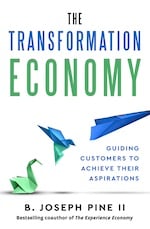
Management guru Joseph Pine, renowned for his seminal 1999 bestseller "The Experience Economy," has once again pushed the boundaries of business strategy with his latest work, "The Transformation Economy: Guiding Customers to Achieve Their Aspirations." This new book argues that while the concept of experiences as a driver of consumer loyalty, as detailed in his previous work, has indeed blossomed over the past quarter-century, it is no longer sufficient. Pine posits that today’s consumers are seeking something more profound: products and services that tangibly improve their lives and businesses, leading them towards achieving their deepest aspirations.
This evolution in consumer demand signifies a critical shift in the economic landscape, a progression Pine meticulously outlines as the "progression of economic value." He traces this trajectory from the agrarian economy, through the industrial economy, the subsequent rise of services, and finally to the experience economy. Now, Pine asserts, we are entering the era of the transformation economy, where businesses must facilitate genuine personal growth and achievement for their customers.
The Shifting Economic Value Proposition
Pine’s core argument is that customers are not merely purchasing goods or services; they are investing in the outcome those offerings promise. Businesses that deeply understand the underlying goals and aspirations of their clientele can unlock a new level of value, one that dictates pricing far more effectively than the mere cost of materials or labor. This fundamental principle is encapsulated in Pine’s assertion, "You are what you charge for," highlighting the intrinsic link between a business’s perceived value and the tangible results it delivers to its customers.
The initial chapters of "The Transformation Economy" delve into the definition of transformation within the business context. Pine elaborates on the concept of human flourishing as the ultimate purpose of business, identifying four key spheres where individuals seek growth: health and well-being, knowledge and wisdom, wealth and prosperity, and purpose and meaning. He illustrates this with compelling examples of companies that have successfully transcended their conventional offerings to become facilitators of transformation. Equinox Fitness Clubs, for instance, is presented not just as a purveyor of gym memberships but as a catalyst for improved health and lifestyle. Similarly, Fender Musical Instruments is positioned as an enabler of creative expression and personal fulfillment, extending beyond the sale of guitars.
Other notable case studies include Eataly, which offers a transformative culinary journey through its curated food products; Burning Man, an outdoor festival that fosters a sense of community and self-expression; the U.S. Army, which transforms recruits into disciplined and skilled individuals; and Princess Cruises, which provides transformative travel experiences that broaden horizons and create lasting memories. These diverse examples, enriched by insights from various business leaders, underscore the widespread applicability of the transformation economy model across different industries.
Pine further dissects how companies can strategically transition from offering mere experiences to delivering profound transformations. He meticulously details the different types and levels of these offerings, employing helpful diagrams to visually represent these complex concepts. This analytical framework empowers businesses to assess their current position and chart a course towards becoming transformation providers.
The concluding chapters of the book are designed to be highly practical, offering readers specific questions and prompts to apply these principles within their own business contexts. The inclusion of comprehensive notes and an extensive index further enhances the book’s utility as a valuable resource for business leaders, strategists, and entrepreneurs.
Beyond Experiences: Understanding Customer "Jobs to Be Done"
While many of Pine’s concepts are particularly well-suited for high-end service industries such as health and wellness, travel, and finance, where personalized customer engagement is paramount, his "jobs to be done" framework offers universal applicability. This framework, which focuses on understanding what customers are trying to accomplish, is a powerful tool for any business, regardless of its sector.
Pine wisely acknowledges that "customers often don’t know what they want, and even when they do, they can’t always articulate it. You need to draw it out of them." This insight is crucial in an era where genuine understanding of customer needs, often latent or unexpressed, is a key differentiator. By employing the "jobs to be done" lens, businesses can move beyond superficial customer feedback to uncover the deeper motivations and desired outcomes that drive purchasing decisions.
A Legacy of Economic Insight
Joseph Pine’s intellectual contributions to business strategy are extensive and impactful. His 1992 book, "Mass Customization," was lauded by the Financial Times and Library Journal as a significant business publication, signaling his early recognition as a visionary thinker. This was followed by "Authenticity" in 2007 and "Infinite Possibility" in 2011, co-authored works that continued to explore the evolving landscape of value creation.
However, it is "The Experience Economy," first published in 1999, that cemented Pine’s reputation as a foremost authority on the future of commerce. The book’s prescient analysis of the shift towards experiential consumption has proven remarkably durable, remaining a consistent bestseller in Amazon’s product marketing category for over two decades, even after two updated editions. This enduring relevance speaks volumes about the fundamental accuracy of his observations and the enduring impact of his ideas.
The 25 years since the initial publication of "The Experience Economy" have witnessed a dramatic proliferation of businesses prioritizing experiential offerings. From immersive retail environments and curated events to personalized travel itineraries and interactive digital platforms, consumers have become accustomed to seeking out memorable and engaging interactions with brands. This has undoubtedly raised the bar for businesses seeking to capture and retain customer attention and loyalty.
The Implication of the Transformation Economy for Businesses
The transition to a transformation economy presents both challenges and opportunities for businesses. Companies that cling to traditional product or service-centric models may find themselves increasingly outmaneuvered by those who embrace Pine’s principles. The ability to identify and address the underlying aspirations of customers will become a critical determinant of success.
For businesses in the consumer packaged goods (CPG) sector, the application of transformation principles may require a more nuanced approach. While direct personal engagement with every customer might be impractical, understanding the "jobs to be done" related to convenience, health, sustainability, or even emotional satisfaction can inform product development, marketing strategies, and brand messaging. For example, a cereal company might focus on the "job" of providing a healthy and convenient start to a busy family’s day, or a cleaning product manufacturer might address the "job" of creating a safe and hygienic home environment.
The implications for pricing are also significant. When a business effectively facilitates a customer’s transformation, the perceived value can far exceed the cost of goods sold, allowing for premium pricing and enhanced profitability. This shifts the focus from cost-plus pricing to value-based pricing, where the price is determined by the benefit and outcome delivered to the customer.
Broader Societal Impact
Beyond its implications for business strategy, the transformation economy has the potential to foster a more purpose-driven approach to commerce. By emphasizing human flourishing and personal growth, businesses can align their objectives with broader societal goals. This can lead to the development of products and services that not only drive economic value but also contribute positively to individual well-being and community development.
Pine’s work encourages a reevaluation of what it means to be a successful business. It suggests that true success lies not just in financial returns but in the positive impact a company has on the lives of its customers. This ethical dimension adds another layer of significance to the transformation economy, promising a future where business is a force for good.
As businesses navigate this evolving economic landscape, Joseph Pine’s "The Transformation Economy" serves as an indispensable guide. It offers a compelling vision for the future of commerce, one that is deeply rooted in understanding and empowering individuals to achieve their highest aspirations. The book’s clear, conversational prose, coupled with its rigorous analysis and practical examples, makes it a vital read for anyone seeking to thrive in the next frontier of economic value. The continued relevance of Pine’s work, from "Mass Customization" to "The Experience Economy" and now "The Transformation Economy," underscores his consistent ability to anticipate and articulate the profound shifts shaping the business world.

