

Emiru, born Emily Beth Schunk, has solidified her position as a central figure in the digital entertainment landscape, ascending to become the most-watched female streamer on Twitch by early 2026. Her journey, which began in the competitive arena of League of Legends and transitioned into high-production cosplay and organization leadership, reflects the broader evolution of the "creator economy." However, her meteoric rise has been punctuated by significant personal and professional trials, including high-profile stalking incidents, physical assault at industry events, and complex legal battles that have sparked nationwide conversations regarding the safety of female creators and the responsibilities of platform management.
Early Career and the Rise of a Digital Icon
The trajectory of Emily Beth Schunk’s career began in late 2015. While still a high school student, she began broadcasting League of Legends gameplay on Twitch under the pseudonym Emiru. Unlike many of her contemporaries who focused solely on mechanical skill, Schunk integrated her passion for cosplay into her brand, creating a unique niche that appealed to both the gaming and creative arts communities. Her dedication to the aesthetic of the game was so profound that in 2021, Riot Games developers acknowledged that Schunk served as a primary inspiration for the visual design of the character Gwen, a doll-themed skirmisher in League of Legends.
Her professional growth accelerated in 2020 when she signed with Cloud9, one of the world’s most recognizable esports organizations. This partnership provided the infrastructure necessary to scale her content, leading to a massive influx of followers across YouTube and Instagram. By 2022, seeking greater creative control and a stake in the industry’s future, Schunk transitioned from Cloud9 to One True King (OTK), a creator-led media company. Her influence within the organization was formalized in 2023 when she was named a co-owner, making her one of the few women to hold an executive leadership position in a major streaming collective.
Professional Milestones and Statistical Dominance
By 2025, Emiru’s metrics placed her among the elite tier of global broadcasters. She was ranked within the top 50 overall streamers on Twitch, a list traditionally dominated by male creators. Her versatility was recognized at the 2025 Streamer Awards, where she won the "Best Creative Arts Streamer" category, highlighting her ability to blend traditional gaming with high-concept costume design and craftsmanship.
This period also saw Schunk diversify her brand through high-profile sponsorships, most notably becoming a Red Bull Athlete. This partnership signaled a shift in how mainstream brands perceive "non-competitive" streamers, acknowledging their athletic-level discipline in content production and audience engagement. As of February 2026, her digital footprint includes over 2 million followers on Twitch, 1.5 million subscribers on YouTube, and 1.2 million followers on Instagram, cementing her status as a premier "variety" creator.
The March 2025 Stalker Incident: A Catalyst for Safety Debates
Despite her professional success, 2025 proved to be a year of significant personal peril. On March 2, 2025, Schunk participated in a collaborative "Sisathon" stream with fellow creators Valkyrae and Cinna. While broadcasting live from the Santa Monica Pier in California, the group was targeted by a persistent harasser.
The incident, which was captured in its entirety by the live broadcast, showed a male individual demanding Schunk’s phone number and subsequently stalking the group through the crowded pier. The situation escalated when the man bypassed security interventions, explicitly threatening the lives of the women. The footage went viral on platforms like Reddit and X (formerly Twitter), garnering millions of views and reigniting the debate over the dangers of "IRL" (In Real Life) streaming. Critics and fans alike pointed to the incident as a stark example of the "parasocial" dangers high-profile women face when their real-world locations are accessible to the public.
The TwitchCon San Diego Assault and Security Failures
The conversation regarding creator safety reached a breaking point in October 2025 during TwitchCon San Diego. On the night of October 17, Schunk was physically assaulted during a scheduled meet-and-greet event. Reports and video evidence indicated that a male attendee grabbed her and attempted to kiss her without consent.
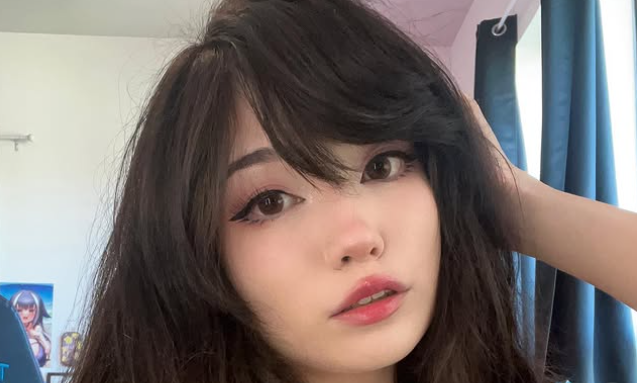
The fallout from this incident was compounded by revelations regarding the event’s security protocols. In the days following the assault, clips surfaced of Schunk explaining that she had been barred from bringing her preferred private security detail—a guard who had successfully protected her during previous incidents—due to a prior altercation where the guard had detained a harasser. Furthermore, Schunk indicated that she felt contractually obligated by Twitch to perform the meet-and-greet despite her documented concerns for her physical safety.
The incident sparked a massive backlash against Twitch management. Public scrutiny fell heavily on CEO Dan Clancy, with critics arguing that the platform’s leadership was more focused on the celebratory aspects of the convention than the fundamental safety of its most valuable creators. The assault served as a grim bookend to a year that had already seen Schunk targeted by a stalker only seven months prior.
Legal Turmoil: Abuse Allegations and Defamation Lawsuits
On October 25, 2025, just a week after the TwitchCon assault, Schunk utilized her platform to address her past relationship with fellow streamer Mizkif (Matthew Rinaudo). In a detailed broadcast, she accused Rinaudo of long-term psychological and sexual abuse, stalking, and blackmail. One of the most harrowing claims involved the death of her pet rabbits; Schunk alleged that Rinaudo threatened to frame her for animal cruelty to ensure her silence.
Schunk stated that the trauma of the TwitchCon assault gave her the impetus to finally speak out about her domestic situation. The allegations sent shockwaves through the streaming community, particularly given that both creators were central figures in the OTK organization. In response, Rinaudo filed a defamation lawsuit against Schunk, denying the allegations in their entirety. As of February 2026, the legal proceedings remain ongoing, representing one of the most significant legal disputes in the history of the creator economy.
The February 2026 ICE Controversy and Political Neutrality
As Schunk navigated these personal and legal crises, she found herself at the center of a socio-political firestorm in early 2026. On February 6, a clip from her stream went viral in which she appeared to decline to comment on the controversial activities of U.S. Immigration and Customs Enforcement (ICE). In the clip, she suggested that viewers who rely on "streamers who don’t know anything about politics" for their worldview should "get off the internet."
The comment was met with swift condemnation from various political factions. Left-leaning commentators, including the streamer Denims, labeled Schunk a "racist chud," accusing her of "fence-sitting" on issues of human rights. The controversy was further fueled by Schunk’s continued professional association with Asmongold (Zack Hoyt), a streamer known for his vocal support of ICE and other right-wing positions.
On February 8, 2026, Schunk issued a clarifying statement via a tweet (which was later deleted). She explained that she had not initially realized her audience was referring to the government agency and explicitly stated that she did not support ICE, citing "basic human empathy." She also addressed the "bad actors" in her social circle, claiming that she had been misled by individuals who hid their controversial behaviors from her.
Broader Impact and Industry Implications
The saga of Emiru’s career from 2025 to 2026 serves as a case study for the modern digital age. Her experiences highlight three critical areas of industry-wide concern:
- The Security Gap: The repeated harassment and assault of Schunk emphasize that current security measures at major conventions and within public spaces are insufficient for the level of fame top-tier streamers now possess.
- Contractual Vulnerability: The revelation that creators may feel "obligated" to enter potentially dangerous situations due to platform contracts suggests a need for a "Creators’ Bill of Rights" or stronger unionization efforts within the industry.
- The Burden of Political Commentary: The ICE controversy underscores the increasing pressure on entertainers to act as political avatars. Schunk’s struggle to maintain a "gaming-first" brand in a hyper-polarized environment reflects the difficulty of navigating the modern "culture war" as a public figure.
Despite the controversies and the weight of an ongoing lawsuit, Emiru remains a dominant force on Twitch. Her ability to maintain her viewership—and indeed, grow it to the top of the female charts—suggests a high level of audience loyalty and a personal resilience that has become her trademark. As the legal battle with Rinaudo continues and the industry grapples with the fallout of the TwitchCon security failures, Emily Beth Schunk stands as a testament to both the immense rewards and the harrowing costs of digital superstardom.

