
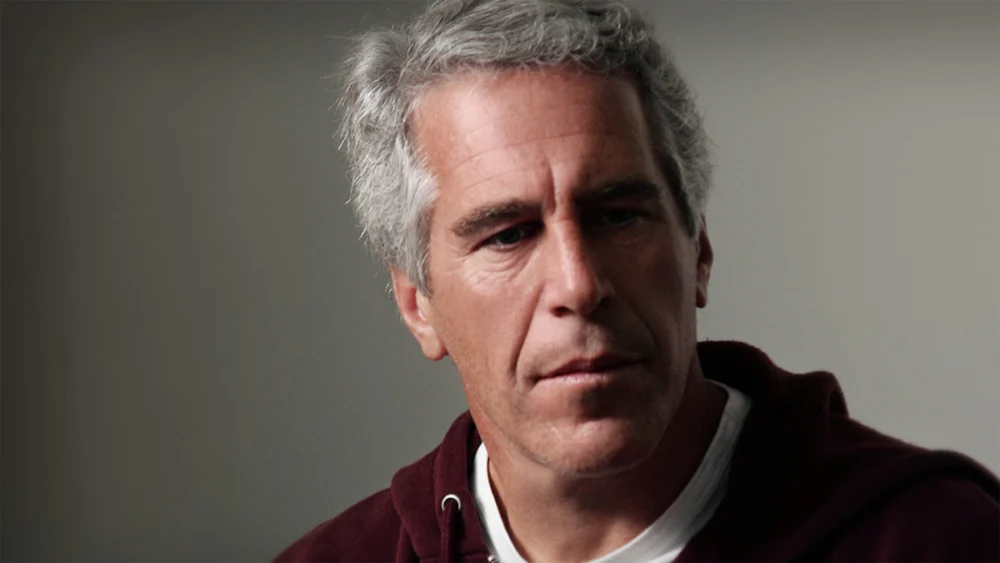
The legacy of Jeffrey Epstein remains one of the most complex and controversial chapters in modern American legal and social history. A former financier whose wealth and influence granted him access to the highest echelons of global power, Epstein’s life and subsequent death have become a focal point for discussions regarding systemic failure, the protection of elite interests, and the pervasive nature of digital conspiracy culture. From his early days as a mathematics teacher to his final years as a federally indicted sex trafficker, the Epstein case continues to evolve through the ongoing release of classified documents and the persistent scrutiny of the public.
Early Life and the Ascent to Financial Influence
Jeffrey Edward Epstein was born on January 20, 1953, in Brooklyn, New York. Demonstrating early intellectual promise, he graduated from Lafayette High School at the age of 16. His academic journey led him to the Cooper Union and later the Courant Institute of Mathematical Sciences at New York University. However, Epstein left higher education in 1974 without obtaining a degree, a fact that did not hinder his entry into prestigious professional circles.
In 1974, despite his lack of formal credentials, Epstein secured a position as a calculus and physics teacher at the Dalton School, an elite private institution in Manhattan. His tenure there was brief and marred by allegations of inappropriate behavior toward female students. He was dismissed in 1976 for what the school termed poor performance, yet this setback served as the catalyst for his entry into the world of finance. Through a connection with a Dalton parent who was an executive at Bear Stearns, Epstein transitioned into investment banking.
By the early 1980s, Epstein had established himself as a formidable, if enigmatic, figure on Wall Street. He eventually founded his own firm, J. Epstein & Co., which reportedly managed the assets of clients with a net worth exceeding $1 billion. His most notable client was Leslie Wexner, the billionaire founder of L Brands, who granted Epstein broad power of attorney over his personal and business finances. This relationship provided Epstein with the capital and social standing necessary to cultivate a network that included former presidents, royalty, and Nobel Prize-winning scientists.
The 2008 Florida Prosecution and Non-Prosecution Agreement
The first significant legal challenge to Epstein’s operations occurred in 2005, when the Palm Beach Police Department began investigating reports of sexual misconduct involving minors at his Florida estate. The investigation, spearheaded by Chief Michael Reiter, identified dozens of victims and compiled a massive volume of evidence suggesting a sophisticated sex trafficking ring.
However, the subsequent legal proceedings resulted in what has been widely criticized as a "sweetheart deal." In 2008, Epstein entered into a non-prosecution agreement (NPA) with federal prosecutors, led by then-U.S. Attorney Alexander Acosta. Under the terms of the deal, Epstein pleaded guilty to two state felony counts of soliciting prostitution, including one involving a minor. In exchange, he served only 13 months in a county jail with extensive "work release" privileges, allowing him to spend up to 12 hours a day at his office. The agreement also granted immunity to several of Epstein’s alleged co-conspirators and was kept secret from the victims, a violation of the Crime Victims’ Rights Act that was later ruled unlawful by a federal judge.
The 2019 Federal Indictment and Sudden Death
The 2008 agreement shielded Epstein for a decade, during which he continued to move within elite circles. However, investigative reporting by the Miami Herald in 2018 renewed public interest in the case, leading to a fresh federal investigation. In July 2019, Epstein was arrested at Teterboro Airport in New Jersey and charged by the U.S. Attorney’s Office for the Southern District of New York (SDNY) with one count of sex trafficking of minors and one count of conspiracy to commit sex trafficking.
The indictment alleged that between 2002 and 2005, Epstein exploited dozens of girls at his residences in Manhattan and Palm Beach. Denied bail and deemed a flight risk, Epstein was detained at the Metropolitan Correctional Center (MCC) in Manhattan. On August 10, 2019, Epstein was found unresponsive in his cell. The New York City Medical Examiner’s Office officially ruled the cause of death as suicide by hanging.
The circumstances of his death—occurring while he was supposedly under heightened observation and following a previous incident of self-harm—triggered immediate and widespread skepticism. Reports later revealed that the two guards assigned to watch him had fallen asleep and falsified logs, and that the facility’s security cameras had malfunctioned. These failures provided fertile ground for the "Epstein Didn’t Kill Himself" phenomenon, which transcended political boundaries and became a staple of internet culture.
The Unsealing of the Epstein Files: 2020–2026
The death of Jeffrey Epstein did not end the legal scrutiny of his network. Instead, the focus shifted to his longtime associate Ghislaine Maxwell, who was arrested in 2020 and later convicted on multiple counts of sex trafficking. Parallel to the criminal proceedings, a series of civil lawsuits led to the gradual unsealing of thousands of pages of court documents, colloquially known as the "Epstein Files."
The 2020 and 2025 Disclosures
The first major tranche of documents was unsealed in July 2020, stemming from a 2015 defamation lawsuit filed by victim Virginia Giuffre against Maxwell. These files contained flight logs for Epstein’s private jet, the "Lolita Express," and depositions that implicated various high-profile figures in potential misconduct. In February 2025, the U.S. Department of Justice (DOJ) initiated a more comprehensive release of internal investigative files. While much of this material reinforced existing reporting, it provided deeper insight into the FBI’s long-term monitoring of Epstein’s activities and the systemic failures that allowed his behavior to persist for decades.
The 2026 Transparency Act Release
A watershed moment occurred in late January 2026, when the DOJ released approximately 3.5 million pages of documents under the "Epstein Files Transparency Act." This massive data dump represented the most complete record of the Epstein investigation to date. The documents included previously redacted correspondence, financial records, and interviews with employees at Epstein’s private island, Little St. James.
The 2026 release was notable for its sheer volume and the granular detail it provided regarding the logistics of Epstein’s operation. Analysts noted that the files documented not just the crimes themselves, but the systematic way in which Epstein used his wealth to buy silence and influence within legal and academic institutions.
The 4chan Connection and the "/pol/" Conspiracy
Among the more unexpected revelations in the 2026 document release was evidence suggesting a link between Epstein and the early development of the imageboard 4chan. According to the unsealed DOJ files, Epstein and his associates had reached out to 4chan creator Christopher Poole, known online as "moot," in late 2011.
The documents alleged that Epstein had met with Poole to discuss the mechanics of online influence and the dissemination of information. Shortly after these alleged meetings, Poole created the "/pol/" (Politically Incorrect) board, which would eventually become a hub for far-right discourse and internet subcultures. This discovery sparked a massive wave of online speculation in early 2026, with some theorists suggesting that Epstein had viewed the platform as a tool for social engineering or the destabilization of democratic norms. While many experts cautioned against overstating the direct influence of Epstein on the site’s content, the connection added a new, digital dimension to the Epstein mythology, portraying him as a figure who sought to manipulate the very architecture of the internet.
Digital Mythology and the "Epstein Didn’t Kill Himself" Phenomenon
The Epstein case is unique in how it has been processed through the lens of internet culture. The phrase "Epstein Didn’t Kill Himself" evolved from a genuine expression of skepticism into a pervasive meme, often appearing as a non-sequitur at the end of unrelated social media posts or on physical merchandise.
By the mid-2020s, the figure of Jeffrey Epstein had become abstracted from his actual crimes in certain corners of the web. "Fancams" and AI-generated video edits, often referred to as "glazing edits," began to circulate on platforms like TikTok. These videos used irony and shock value to frame Epstein in the style of a celebrity or "alpha" figure, a trend that social psychologists identified as a coping mechanism for the grim and unresolved nature of the case. This "gamification" of the Epstein saga reflects a broader trend where high-stakes criminal cases are absorbed into the "lore" of the internet, often stripping them of their human cost and legal gravity.
Systemic Implications and Institutional Accountability
Beyond the headlines and memes, the Jeffrey Epstein case has forced a reckoning across several major institutions.
- The Legal System: The 2008 NPA remains a case study in the failures of the justice system to protect vulnerable victims when the accused possesses significant resources. It led to calls for more stringent oversight of federal plea agreements.
- Financial Services: Banks such as JPMorgan Chase and Deutsche Bank faced significant legal and reputational consequences for maintaining Epstein as a client long after his initial conviction. In 2023, JPMorgan settled a lawsuit with Epstein’s victims for $290 million, acknowledging its failure to flag suspicious activity.
- Academia and Philanthropy: Prestigious institutions, including MIT and Harvard, were forced to return donations and issue public apologies after it was revealed they had accepted funding from Epstein even after his 2008 conviction. The case highlighted the "reputation laundering" that often accompanies high-level philanthropy.
- Politics: The case continues to be used as a political weapon, with figures on both sides of the aisle pointing to Epstein’s connections to various world leaders to suggest deep-seated corruption.
Conclusion
The story of Jeffrey Epstein is not merely a chronicle of one man’s crimes, but a mirror reflecting the structural vulnerabilities of modern society. The transition of the case from the courtroom to the digital archives of 2026 underscores a persistent public demand for transparency that the traditional legal system failed to provide in real-time. As the millions of pages released under the Transparency Act continue to be analyzed, the full scope of Epstein’s influence and the extent of the networks that enabled him may finally be understood. However, the transformation of his life and death into a permanent fixture of internet mythology ensures that the "Epstein" name will remain a symbol of systemic distrust for generations to come.

