
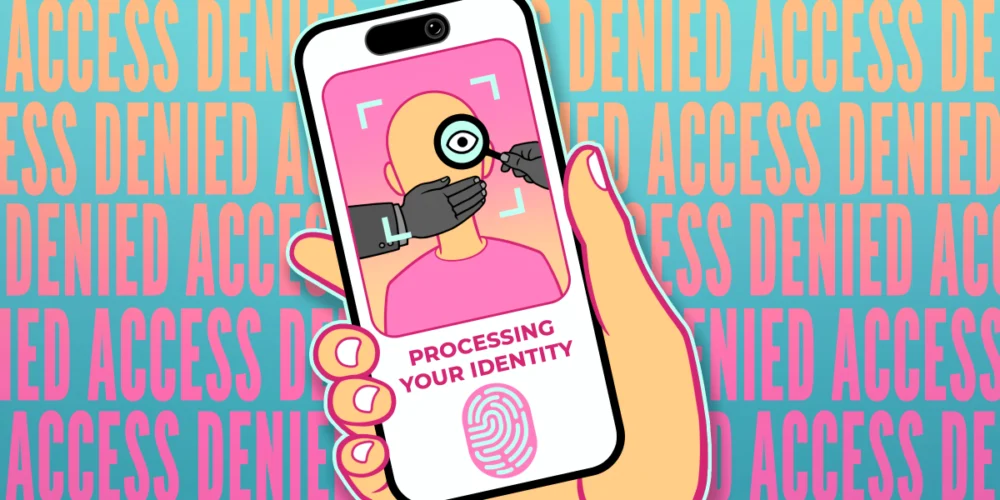
Discord has officially announced a significant delay in the global implementation of its mandatory age verification system, pushing the rollout from March 2026 to the second half of the year. The decision, revealed in a company update on February 24, 2026, follows intense criticism from privacy advocates, digital rights organizations, and a broad segment of the platform’s 200 million monthly active users. In addition to the delay, the San Francisco-based communications giant stated it would enforce stricter security requirements for its third-party verification partners, mandating that all facial age estimation processes occur entirely on-device to prevent sensitive biometric data from being transmitted to external servers.
This strategic pivot comes as Discord attempts to navigate the complex intersection of online safety and user privacy. The company confirmed that one of its initial partners, Persona, was removed from the rollout in certain capacities because it failed to meet the new "on-device" processing standards. While Discord maintains that these measures are necessary to create "teen-appropriate experiences," the Electronic Frontier Foundation (EFF) and other watchdogs continue to raise alarms regarding the potential for mass surveillance and the erosion of anonymous speech on the internet.
The Evolution of Discord’s Age Assurance Policy
The journey toward mandatory age verification began as an effort to segment the platform’s user base into age-appropriate tiers. Under the proposed system, users identified or estimated to be under the age of 18 are placed into a "teen-appropriate experience" by default. This restricted mode includes aggressive content filters, limitations on direct messaging and friend requests, and a prohibition on participating in "Stage channels," which are high-capacity audio spaces frequently used for community town halls, live performances, and educational seminars.
To determine which users fall into these categories, Discord introduced a multi-layered "age inference" system. This algorithmic approach analyzes account tenure, device metadata, and platform activity patterns to estimate a user’s age without requiring immediate documentation. However, for users whose age cannot be inferred—or for those the system flags as minors who wish to contest the designation—Discord requires more invasive measures. These include scanning a user’s face for AI-driven age estimation or uploading a government-issued identification document.
The backlash to this policy was immediate. For years, digital rights groups like the EFF have documented the risks associated with age gates, arguing that they act as a "surveillance nightmare." The current controversy is heightened by Discord’s recent history of data insecurity, which remains a primary point of contention for users being asked to submit sensitive personal information.
Chronology of Security Concerns: The 2025 Data Breach
The skepticism surrounding Discord’s ability to handle identity data is rooted in a major security failure that occurred in 2025. During that incident, attackers successfully compromised Discord’s third-party customer support system. The breach resulted in the exposure of approximately 70,000 users’ government IDs, selfies, and other sensitive verification materials. The data had been routed through a general ticketing system, a practice that security experts criticized as fundamentally flawed.
In the aftermath of the breach, the EFF awarded Discord its "We Still Told You So" Breachies Award, highlighting that advocates had long warned about the dangers of centralizing identity documents on social media platforms. While Discord has since discontinued the use of that specific ticketing system and moved toward dedicated vendors like k-ID and Persona, the reputational damage persists.
The February 2026 update represents an attempt to rebuild this lost trust. By mandating on-device facial estimation, Discord aims to ensure that "biometric templates" or raw video feeds of users’ faces never reach the cloud. However, technical analysts point out that even on-device processing does not eliminate the risk of "age-inference" data being stored or misused, nor does it address the inherent flaws in the AI models used to guess a person’s age.
Technical Limitations and Demographic Bias in Age Estimation
One of the most significant hurdles for Discord’s age assurance rollout is the unreliability of facial age estimation technology. Research has consistently shown that these AI systems are not universally accurate. Factors such as lighting, camera quality, and physical health can skew results. More importantly, independent audits have revealed significant demographic biases.
Facial estimation tools frequently struggle with accuracy when processing the faces of people of color, transgender and non-binary individuals, and people with physical disabilities or unique bone structures. For these populations, a failed facial scan often leads to a "forced appeal," where the only remaining option is to upload a government ID. This creates a secondary barrier: millions of people globally do not possess valid government-issued identification, and many who do are rightfully hesitant to share it with a private corporation.
Furthermore, the "cat-and-mouse" game between platform security and bad actors has already begun. Reports have surfaced of users successfully bypassing facial age gates using 3D models, high-resolution photographs, or "deepfake" technology. These vulnerabilities suggest that while the system may inconvenience and alienate legitimate users seeking privacy, it may fail to effectively bar determined bad actors from accessing restricted spaces.
The Chilling Effect on Anonymous Speech and Vulnerable Communities
Beyond the technical and security risks, the move toward mandatory verification poses a philosophical threat to the nature of the internet. For decades, pseudonymity has been a cornerstone of online interaction. Discord, in particular, has served as a haven for various communities that rely on the ability to speak freely without linking their digital persona to their legal identity.
Advocacy groups highlight several key populations at risk:
- LGBTQ+ Youth: Individuals exploring their identity in restrictive environments often use Discord to find support systems. The requirement of a government ID—which may not reflect their chosen name or gender identity—can be outing and dangerous.
- Survivors of Abuse: For those fleeing domestic violence or stalking, the link between a digital account and a legal identity represents a physical safety risk.
- Political Dissidents: In jurisdictions with restrictive speech laws, the ability to organize anonymously is a matter of survival.
The EFF argues that when identity checks become a condition of participation, the result is a "chilling effect." Users who fear their speech can be traced back to a government document are less likely to participate in sensitive discussions or may opt out of the platform entirely. This migration has already begun, with some users moving toward decentralized or older protocols like IRC (Internet Relay Chat) to avoid the encroaching requirements of major platforms.
Industry Context and Legal Landscape
Discord’s decision to implement these systems voluntarily is notable because it contrasts with the strategies of other major tech entities. While some jurisdictions, such as the United Kingdom and Australia, have moved toward stricter age-gating laws, many platforms are fighting these mandates in court.
In the United States, trade groups representing companies like Meta, Google, and TikTok have successfully challenged more than a dozen state-level age verification laws. Courts in California, Louisiana, and Texas have blocked several of these statutes on First Amendment grounds, ruling that they unconstitutionally burden the rights of adults to access information and the rights of minors to engage in protected speech. Reddit has also taken a firm stand, filing lawsuits internationally to challenge Australia’s social media age bans.
Discord’s "comply in advance" strategy is viewed by some analysts as an attempt to appease global regulators and avoid future litigation. However, by imposing these rules in jurisdictions where they are not legally required, Discord has placed itself at the center of a burgeoning "tech-lash."
Broader Implications for the Digital Ecosystem
The delay to the second half of 2026 provides a temporary reprieve for Discord’s user base, but the trajectory of the platform remains clear. As the video game industry—now larger than the film and music industries combined—continues to rely on Discord as its primary communication hub, the platform’s policies set a precedent for the entire digital world.
If Discord successfully normalizes the requirement of facial scans and ID uploads for basic social interaction, other platforms are likely to follow. This could lead to a "tiered" internet where privacy is a luxury available only to those willing to accept restricted functionality.
In response to the rollout, the EFF has published guides for users on how to navigate age gates while minimizing data exposure. These recommendations include using privacy-focused browsers, limiting the amount of metadata shared with the platform, and advocating for legislative changes that protect digital anonymity.
As the second half of 2026 approaches, the global tech community will be watching closely. The success or failure of Discord’s "on-device" verification experiment will likely determine the future of age assurance technology and whether the internet remains a space where one can participate without a digital passport. For now, the backlash has forced a pause, highlighting the enduring tension between the corporate desire for "safety" and the fundamental human right to privacy.

