
The rapid integration of Artificial Intelligence into search engine results pages (SERPs) presents a significant paradigm shift for businesses aiming to cultivate organic visibility. Unlike the well-established metrics and reporting tools available for traditional search, AI-driven answers, such as those generated by Google’s AI Overviews and Microsoft’s Copilot, currently lack native performance reporting mechanisms. This deficit leaves SEO professionals and digital marketers in a precarious position, struggling to strategize and measure their organic visibility in this evolving digital ecosystem.
Historically, search engine optimization (SEO) has relied on detailed performance data provided by platforms like Google Search Console. This tool allows businesses to track keyword rankings, impressions, clicks, and click-through rates (CTR) for their organic listings, forming the bedrock of their content and visibility strategies. However, the advent of AI-generated summaries and direct answers complicates this landscape. Google’s Search Console, for instance, now combines data from AI Overviews and traditional organic listings within its "Performance" section. This aggregation makes it challenging, if not impossible, for optimizers to discern which specific channel – AI-generated summaries or conventional links – is driving visibility and subsequent traffic. The ability to attribute success to precise areas of the SERP is crucial for refining strategies, allocating resources effectively, and understanding user behavior.
The situation is further compounded by the proprietary nature of AI model development and data access. While some AI platforms, like ChatGPT, may share metrics, this access is typically restricted to content publishers who have entered into licensing agreements with companies like OpenAI. This creates a significant information asymmetry, where only a select few have insight into how their content is being leveraged within AI responses. This lack of universal transparency poses a challenge for the broader digital marketing community, hindering a collective understanding of AI’s impact on organic search.
In this context of burgeoning AI integration and data scarcity, Bing has emerged as a notable pioneer in offering a degree of transparency. Following the publication of its comprehensive "guide to AEO and GEO" (AI-Enhanced Optimization and Generative Experience Optimization), Bing has taken a significant step forward by launching an "AI Performance Report" within its Webmaster Tools. This initiative marks a critical development, providing webmasters with a dedicated section to monitor how their content is being utilized in AI-generated search experiences.

Unpacking Bing’s AI Performance Report
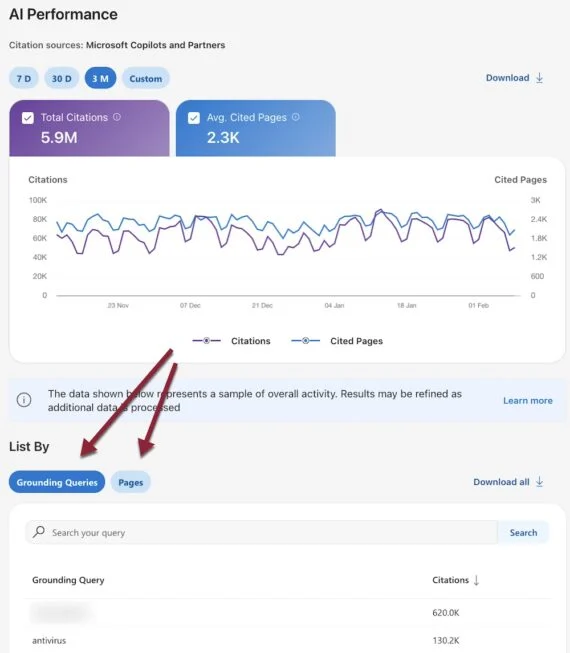
The newly introduced AI Performance Report in Bing Webmaster Tools aims to shed light on the visibility of a website’s content within Microsoft’s AI ecosystem. This includes citations in Microsoft Copilot, AI-generated summaries that appear in Bing search results, and contributions to select AI partner integrations. While this report represents a commendable effort towards transparency, it currently presents certain limitations that webmasters should be aware of.
A primary constraint of the report is the absence of granular filtering options. Users cannot currently isolate data for a specific AI surface, such as solely tracking citations within Copilot versus AI summaries in Bing. Furthermore, the report does not provide a clear mechanism for identifying the specific integration partners involved or detailing the nature of their engagement with Bing’s AI services. This lack of segmentation and identification makes it difficult for businesses to understand the nuanced impact of different AI applications on their visibility.
Despite these limitations, the report offers valuable foundational data. It tracks two key metrics: "Total Citations" for a chosen period and "Avg. Cited Pages." These metrics provide a broad overview of how frequently a website’s content is being referenced by Bing’s AI features. The report then breaks down this visibility further, categorizing it by "Grounding Queries" and "Pages."
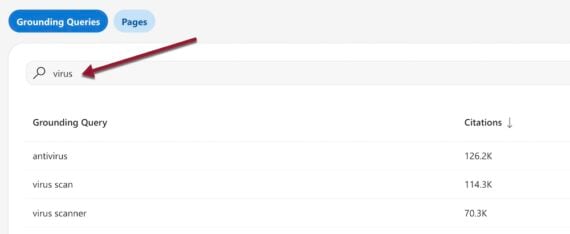
The "Grounding Queries" tab is designed to reveal the specific search queries that prompted the AI to cite a particular piece of content. This information is crucial for understanding the context in which a website’s information is being accessed by AI. By analyzing these queries, webmasters can gain insights into user intent and the types of informational needs that their content is fulfilling within AI-generated responses.
The "Pages" tab, conversely, provides a list of the specific URLs from a website that have been cited by the AI. This allows businesses to identify which of their web pages are proving most valuable or relevant to AI-driven information synthesis. Understanding which pages are being cited can help inform content creation and optimization efforts, highlighting areas of strength and potential for further development.
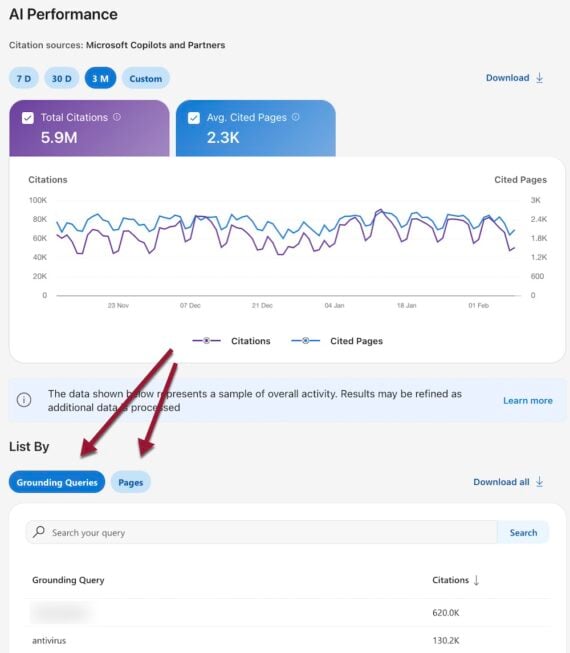
Each of these tabs is supplemented with additional visibility data, offering a more detailed perspective on AI performance. For instance, the report might include information on the number of times a specific page was cited, the average position of the citation within an AI answer, or the type of AI feature that generated the citation. However, it is important to note that the current iteration of the report does not provide traffic or click-through data. This means that while webmasters can see if their content is being cited, they cannot directly measure the resultant traffic or engagement generated by these AI citations. Furthermore, there remains a lack of clarity regarding the precise "Grounding Queries" that led to specific citations, making it challenging to establish direct cause-and-effect relationships for optimization.
Strategizing with Emerging AI Performance Data
While Bing’s AI Performance Report is a significant step forward, its current data offerings are limited in their direct actionability for traffic generation and conversion strategies. The report is a diagnostic tool, providing a foundational understanding of AI content utilization rather than a comprehensive performance analytics suite. However, its existence is a critical development that could potentially influence the broader AI search landscape. The hope is that this initial transparency from Bing will encourage other major search engines to follow suit and provide similar insights to their webmaster communities.
According to Bing’s own description of the report, its purpose is to "show how your site’s content is used in AI-generated answers across Microsoft Copilot and partner experiences by highlighting which pages are cited, how visibility trends change over time, and the grounding queries associated with your content." This statement underscores the report’s intention to offer a window into the complex interplay between website content and AI information retrieval.
In light of the current data limitations, webmasters and SEO professionals are employing creative strategies to derive maximum value from the AI Performance Report. One such approach involves cross-referencing the "Grounding Queries" data with traditional keyword research and analytics. By identifying common themes and modifiers within the grounding queries, marketers can begin to infer user intent and the specific information needs that AI is addressing. For example, if a significant number of grounding queries related to a specific product include modifiers like "review," "best," or "alternative," this suggests that users are seeking comparative or evaluative information.
Furthermore, identifying common modifiers within the grounding queries can offer clues about how AI agents are interpreting and processing information to find relevant pages. Analyzing patterns in these modifiers can help webmasters understand how their content is being categorized and matched to AI-generated queries. For instance, the presence of specific technical terms, problem descriptions, or question formats in the grounding queries can inform content creation by highlighting the language and context that AI systems are likely to recognize and prioritize.
The Path Forward: Setting Up and Utilizing Bing Webmaster Tools
For businesses looking to leverage this new AI performance data, setting up Bing Webmaster Tools is a straightforward process. The platform is designed for ease of use, and integration with existing Google Search Console data can expedite the setup.
To begin, users can log in to Bing Webmaster Tools using their Microsoft account. The system offers a convenient "Import your sites from GSC" option, which allows for a streamlined setup by leveraging existing site verification from Google Search Console. This feature significantly reduces the time and effort required to add and verify websites. After completing the initial setup, it typically takes approximately 24 hours for Bing to begin collecting and populating the performance data within the Webmaster Tools interface.
Once the data begins to populate, webmasters can navigate to the "AI Performance" section. It is recommended to set a relevant date range to analyze trends over time. Initially, focusing on identifying the top-cited pages and the most frequent grounding queries is a prudent starting point. This foundational analysis can help uncover unexpected patterns or confirm existing hypotheses about content performance in AI contexts.
As the AI landscape continues to evolve, the data provided by Bing’s AI Performance Report will likely become more sophisticated. Future iterations may offer greater granularity in filtering, clearer attribution of citations to specific AI features or partners, and, crucially, some form of traffic or engagement metrics. Until then, a proactive and analytical approach to the available data, combined with traditional SEO best practices, will be essential for businesses seeking to maintain and enhance their organic visibility in the age of AI-driven search. The early adoption of these new tools and strategies will position businesses to adapt more effectively to the transformative changes ahead. The insights gleaned, however nascent, offer a critical advantage in understanding and shaping a brand’s presence within the emergent realm of AI-powered information delivery.

