
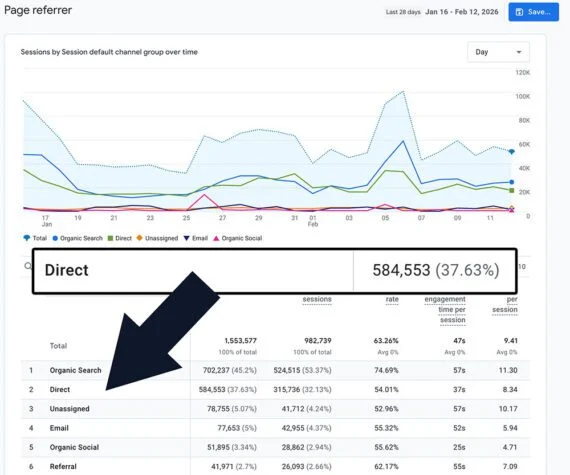
The seemingly straightforward category of "direct" traffic within website analytics platforms, such as Google Analytics, is increasingly being recognized as a significant misnomer, potentially misrepresenting user behavior and undermining marketing effectiveness. This widespread issue, affecting an estimated 20% to 60% of all site traffic according to industry reports, creates a "black box" for marketers, obscuring valuable insights into how users discover and engage with their online presence. The core problem lies in how analytics software defines and categorizes this traffic, often acting as a default bin for any visitor whose origin cannot be definitively identified through standard referral mechanisms or tracking parameters.
This phenomenon can be analogized to a large e-commerce sortation center. When a package arrives without clear origin information, it’s typically placed in a generic "direct" bin for later handling or to avoid disrupting the primary sorting flow. Similarly, analytics platforms, when unable to trace a website visit back to a specific source – be it a referring website, a paid ad campaign, a social media post, or an email link – default to classifying it as "direct." This catch-all approach can inadvertently conflate genuine direct traffic, such as users who consciously type a website’s URL into their browser, with a multitude of other traffic sources that have simply lost their identifying metadata.
The traditional understanding of "direct" traffic signified a strong brand presence and high user recognition, where consumers actively sought out a brand. However, the modern digital landscape, characterized by evolving user privacy practices, the proliferation of new communication channels, and the inherent limitations of tracking technologies, has rendered this definition increasingly obsolete. Prominent figures in the digital marketing sphere, including Neil Patel, Jon Henshaw, and Katie Rigby, have voiced concerns about the inflated and inaccurate reporting of direct traffic, highlighting its potential to mask the true performance of various marketing initiatives.
Understanding the Mechanics of Traffic Attribution
At the heart of this issue are the mechanisms analytics platforms employ to determine the origin of website visits. "Referrers," often communicated via HTTP headers, provide information about the URL of the previous page a user visited before landing on a site. Similarly, "parameters," such as UTM tags (Urchin Tracking Module), are appended to URLs to specifically track the source, medium, and campaign of traffic originating from marketing efforts. When a visitor arrives at a website, the analytics software attempts to read these referrers and parameters. If this information is present and correctly configured, the visit is attributed to the corresponding source. However, in the absence of this data, the visit is categorized as "direct."
This lack of attribution can lead to significant data distortion. For instance, a successful outreach campaign conducted on platforms like Discord, or a highly effective SMS marketing campaign, where direct links might not always pass referrer data or where users copy-paste links, could see their traffic inaccurately lumped into the "direct" category. Even traffic from emerging platforms like Google Discover, which presents content to users based on their interests without a direct referral link, can be misclassified.
The Pervasive Nature of "Direct" Traffic

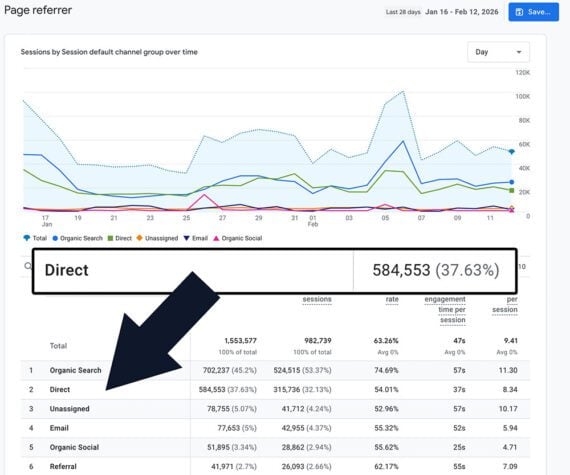
Industry reports consistently indicate that "direct" traffic constitutes a substantial portion of a website’s overall visitors, often ranging from 20% to 60%. While some portion of this is undoubtedly genuine direct traffic, the sheer volume raises red flags for many marketing professionals. The visual representation of this data in analytics dashboards, often showing a significant chunk of traffic under the "Direct" label, can lead to an overestimation of organic brand strength and an underestimation of the effectiveness of other, less visible, marketing channels.
The implications of this misattribution are far-reaching. Marketers might mistakenly believe their brand is performing exceptionally well organically when, in reality, a significant portion of that traffic is being driven by other, often indirect, efforts that are failing to be properly tracked. This can lead to misguided resource allocation, with marketing budgets potentially being shifted away from high-performing, yet mislabeled, channels towards initiatives that appear to be driving less traffic but are correctly attributed.
Investigating Suspicious "Direct" Traffic
To address the potential inaccuracies in their direct traffic data, marketers can undertake several investigative steps. The first is a thorough audit of the "direct" traffic segment within their analytics platform. This involves examining user behavior patterns associated with these visits, such as bounce rates, pages per session, and conversion rates. If a segment of "direct" traffic exhibits characteristics similar to known marketing channels, it may indicate misattribution.
A deeper dive involves analyzing landing page data for direct traffic. If a significant portion of "direct" visits are landing on specific campaign pages or product pages that are typically promoted through paid or earned media, it suggests these visits might not be purely direct. Furthermore, comparing direct traffic trends with the launch dates of specific marketing campaigns can reveal correlations that point towards misattributed traffic. For example, a spike in direct traffic immediately following the launch of a new influencer campaign or a prominent PR placement might indicate that these efforts are being miscategorized.
Categorizing the Unseen: Dead, Dark, and Blind Traffic
Beyond the general misattribution, the "direct" traffic category can also encompass several distinct types of traffic that further complicate analysis:
Dead Traffic (Bot and Crawler Activity)
While generally considered the smallest percentage of "direct" traffic, "dead" or "zombie" visits are non-human incursions into a website. These can include AI agents, search engine crawlers, website monitoring systems, or even competitive price-scraping bots. While sophisticated analytics platforms often filter out known bots, a significant number of sophisticated or novel bot traffic can evade detection. This bot traffic can distort behavioral signals, inflate metrics, and negatively impact marketing campaign analysis. A recent exploration by Fast Company into the rise of "zombie internet" – a digital realm populated by AI agents, exemplified by platforms like Moltbook, a social network designed exclusively for AI – highlights the growing concern about non-human internet activity and its potential to fundamentally alter advertising and online engagement metrics. The development of AI-centric online spaces suggests a future where distinguishing between human and artificial visitors will become increasingly challenging, further complicating the accurate measurement of website traffic.
Dark Traffic (Unattributed Legitimate Visits)
"Dark" traffic refers to legitimate user visits that lack clear referral or parameter data, making them impossible to attribute to a specific source through standard tracking methods. This category is a significant contributor to the inflated "direct" traffic numbers. Examples include:
- Secure Browsing (HTTPS to HTTP): When a user clicks a link from a secure website (HTTPS) to a non-secure website (HTTP), the referrer information is often stripped by browsers for security reasons.
- Mobile App Traffic: Links clicked within native mobile applications, such as messaging apps or social media apps that do not explicitly pass referrer data, can result in dark traffic.
- Email Clients: Some email clients, particularly older versions or those with strict privacy settings, may not pass referrer information when a user clicks a link in an email.
- Private Browsing Modes: While users in private browsing modes might still generate some tracking data, the lack of persistent cookies and referrer information can contribute to attribution challenges.
Analytics Blindness (Privacy-Driven Non-Recording)
In contrast to dark traffic, where visits occur but are unidentifiable, "analytics blindness" refers to website visits that are not recorded by analytics software at all. This is most commonly due to advanced privacy protection applications. While many privacy tools focus on removing tracking parameters, some employ more aggressive methods, such as blocking JavaScript from loading entirely. Since most web analytics platforms rely on JavaScript to collect data, this effectively prevents the session from being recorded, leading to an undercount of total traffic and a distortion of the traffic mix. As user awareness and adoption of privacy-enhancing technologies grow, this form of "blindness" is likely to become a more significant factor in analytics accuracy.
Addressing Attribution Gaps for Strategic Marketing
The pervasive issue of mislabeled "direct" traffic presents a critical challenge for businesses seeking to understand and optimize their marketing efforts. Merchants heavily invested in community marketing, public relations, or those attracting privacy-conscious consumers are particularly susceptible to these attribution gaps. A thorough audit of "direct" traffic is not merely an academic exercise; it is essential for preventing the inadvertent cutting of high-performing marketing channels.
Beyond scrutinizing analytics platforms, businesses can leverage alternative measurement strategies to gain a more comprehensive understanding of their audience and traffic sources. These include:
- Customer Surveys: Directly asking customers how they discovered the brand or website can provide invaluable qualitative data that analytics alone cannot capture.
- Unique Discount Codes: Implementing unique discount codes for different marketing campaigns or channels can help track conversions and attribute sales to their respective origins.
- Post-Purchase Surveys: Inquiring about the customer’s journey leading to a purchase can reveal the touchpoints that were most influential.
- Brand Monitoring Tools: While not directly measuring traffic, tools that monitor brand mentions across the web can help identify awareness and interest that may not be translating into trackable website visits.
By acknowledging the limitations of the "direct" traffic metric and proactively employing a multi-faceted approach to data analysis and measurement, businesses can move beyond the misleading simplicity of current analytics reports. This will enable them to make more informed strategic decisions, optimize marketing investments, and ultimately foster more effective and authentic connections with their target audiences in an increasingly complex digital ecosystem. The journey towards accurate attribution is ongoing, requiring continuous vigilance and adaptation to the evolving landscape of user privacy and digital engagement.

