
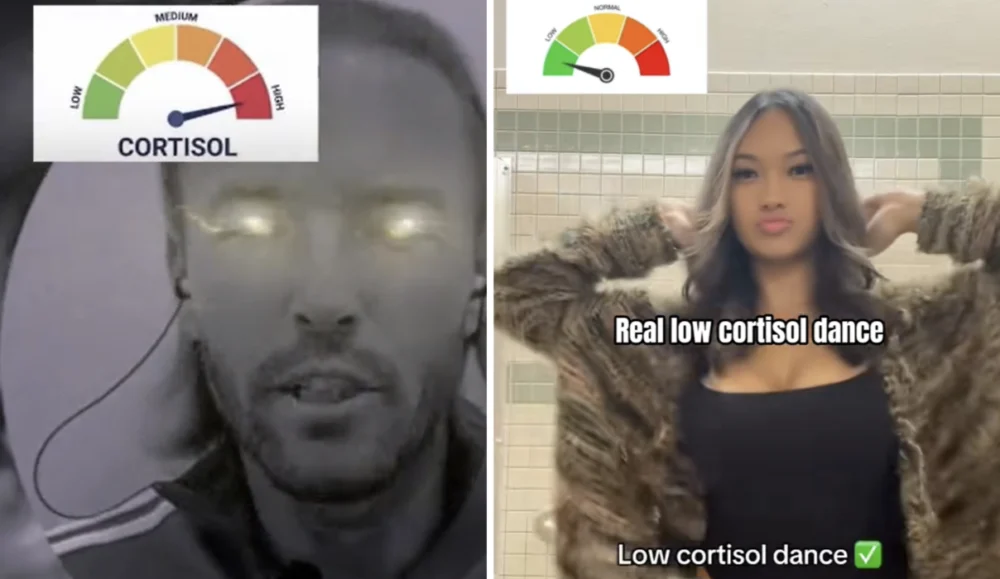
The emergence of the Cortisol Spike meme represents a significant shift in digital communication, where physiological terminology is repurposed to describe complex social and psychological states. Cortisol, known biologically as the body’s primary stress hormone, has transitioned from the realm of endocrinology into the lexicon of internet slang, specifically within communities focused on "looksmaxxing," "blackpill" philosophy, and general social commentary. This phenomenon involves the use of the phrase to denote moments of acute second-hand embarrassment, sudden shock, or perceived threats to one’s physical and aesthetic well-being. By framing emotional reactions as measurable biological events, internet users have created a new template for expressing discomfort in the digital age.
The linguistic evolution of the term began in early 2025, but its roots lie in the broader "looksmaxxing" movement—a subculture dedicated to the optimization of physical appearance through various lifestyle, dietary, and medical interventions. In this context, cortisol is viewed not merely as a survival mechanism, but as a catabolic agent that degrades muscle tissue and negatively impacts facial aesthetics. Consequently, the "Cortisol Spike" meme is both a humorous observation of stress and a reflection of the anxieties prevalent in modern digital environments.
Chronology and Origin of the Phenomenon
The specific trajectory of the Cortisol Spike meme can be traced to late February 2025. On February 26, 2025, a user on the social media platform X, formerly known as Twitter, under the handle @evristainted, published a post stating, “You’re Trying to Spike My Cortisol and Make Me Less Beautiful.” This phrasing was pivotal, as it successfully bridged the gap between biological science and the aesthetic-focused humor of the "looksmaxxing" community. The post suggested that external stressors—such as interpersonal conflict or annoying behavior—were deliberate attempts to sabotage the poster’s physical attractiveness by triggering a hormonal response.
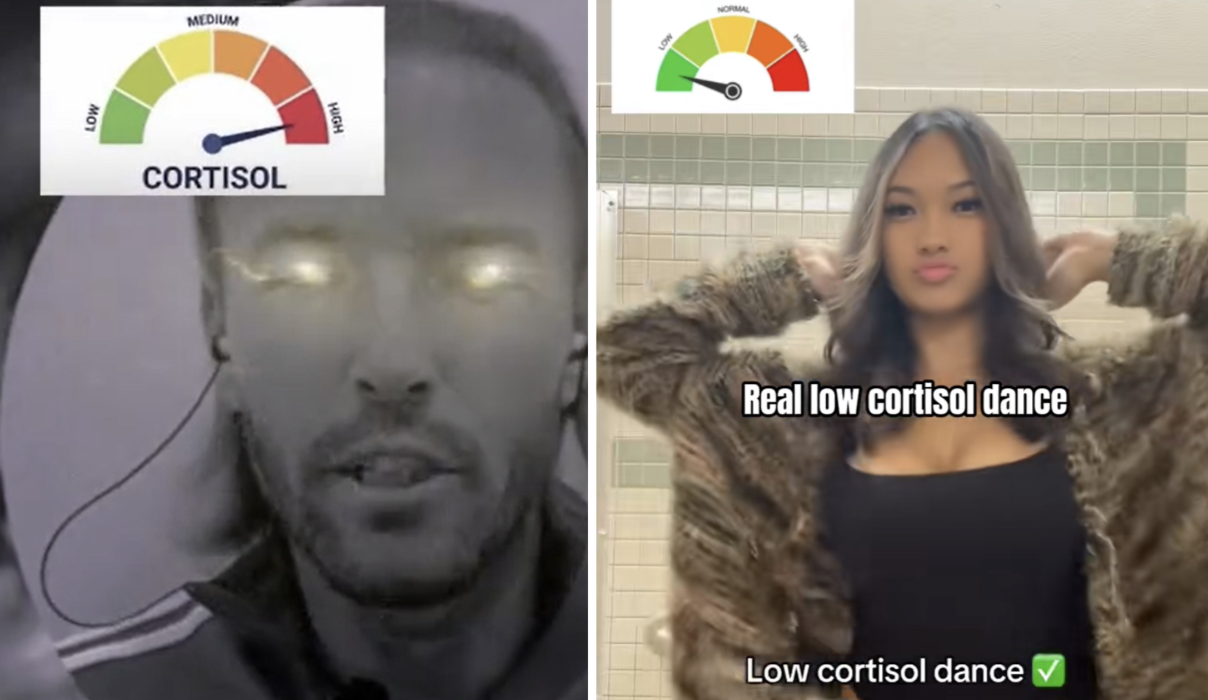
The phrase resonated across X and quickly migrated to other platforms, including TikTok and Instagram. Throughout the spring and summer of 2025, "You’re trying to spike my cortisol" became a standard rebuttal to "cringe" content or confrontational interactions. By late 2025, the meme underwent a visual transformation. Creators began pairing the phrase with a graphic of a "cortisol meter," a needle-based gauge that swings from "low" to "high." This visual aid standardized the format, allowing for rapid-fire reaction videos where the meter would fluctuate in response to various stimuli.
In early 2026, the meme saw a resurgence through its association with specific influencers and subcultures. Latvian nutrition influencer and YouTuber Goatis, also known as Sv3rige, became a frequent subject of these memes. His unconventional views on diet and health provided ample material for creators to overlay cortisol meters, either suggesting that his content caused spikes in viewers or that his own lifestyle was a pursuit of "low cortisol" living.
The Intersection of Biology and Aesthetics
To understand the proliferation of this meme, one must examine the role of cortisol within the "looksmaxxing" and "blackpill" communities. These subcultures operate on the premise that physical attractiveness is a primary determinant of social success and that one must "ascend" by maximizing their genetic potential. Within this framework, cortisol is identified as a primary antagonist.
Biologically, cortisol is released by the adrenal glands in response to stress. While essential for the "fight or flight" response, chronic elevation of cortisol can lead to various physiological issues, including weight gain, skin problems, and decreased bone density. In the "looksmaxxing" community, these facts are often amplified and distilled into the belief that a "cortisol spike" is a direct hit to one’s facial structure and skin clarity.
The meme, therefore, functions as a form of "biological hyper-awareness." When a user claims their cortisol is spiking in response to a "cringe" video, they are ironically suggesting that the content is so embarrassing it is causing actual physical degradation. This medicalization of social discomfort is a hallmark of Gen Z and Gen Alpha digital culture, where health-related jargon is frequently co-opted for comedic effect.
Key Viral Moments and Influencer Involvement
Several notable figures and events have catalyzed the spread of the Cortisol Spike meme throughout 2026. One such figure is the Australian Kick streamer and influencer known as Androgenic. Associated with the "looksmaxxing" scene, Androgenic’s content often focuses on maintaining high testosterone and low cortisol levels. When he was trolled during live streams, clips emerged showing him maintaining a stoic demeanor, labeled by fans as a "High Ranked CHAD" demonstrating how to avoid a "MASSIVE Cortisol spike."
Another significant moment involved the influencer Clavicular, who became the center of a viral incident known as being "Frame Mogged by ASU Frat Leader." In this context, "mogging" refers to one person being physically overshadowed or outshined by another. The digital community reacted to this event by creating edits where Clavicular’s cortisol meter was shown hitting maximum levels as he stood next to a more physically imposing individual. This instance highlighted how the meme is used to describe the stress of social hierarchy and perceived physical inadequacy.
Furthermore, the meme has converged with the "Logan Paul Never StreSS" series. These are AI-generated video memes featuring YouTuber Logan Paul depicted in a state of hyper-calm or robotic stoicism. In these edits, Paul is often contrasted with others who are experiencing "cortisol spikes," positioning him as the pinnacle of "low cortisol" optimization. The use of AI to create these narratives underscores the high-tech nature of the meme’s evolution.
Crossover with Mythological and Existential Memes
The versatility of the Cortisol Spike meme is evidenced by its crossover with seemingly unrelated trends, such as the "Agartha" memes. Agartha is a legendary kingdom said to be located in the Earth’s core, often associated with "Hollow Earth" theories. In the meme world, Agartha is treated with a layer of irony, where users film themselves searching for "portals" to this underground realm.
The integration of the cortisol meter into Agartha content typically involves a protagonist discovering a portal, with the meter showing "low cortisol" as they enter the mythical world. This implies that the stressors of the modern surface world—and the biological toll they take—can only be escaped by retreating into a fictional, subterranean utopia. This crossover demonstrates how the cortisol meme has moved beyond simple social commentary and into the realm of existential and surrealist humor.
Psychological and Societal Implications
The popularity of the Cortisol Spike meme provides insight into the psychological state of modern internet users. The "gamification" of stress through the use of meters and gauges suggests a desire to quantify and control emotional responses. In an era of constant connectivity and information overload, the "cortisol spike" serves as a shorthand for the overwhelming nature of digital consumption.
Furthermore, the meme reflects a growing obsession with "self-optimization." The fear of a cortisol spike is, at its core, a fear of losing control over one’s health and appearance. By joking about it, users are able to distance themselves from the very real anxieties of the modern world. However, the frequent use of "blackpill" terminology—a philosophy often associated with fatalism and nihilism regarding social status—suggests an underlying layer of genuine concern regarding the impact of stress on the individual.
From a journalistic perspective, the trend also highlights the speed at which scientific concepts can be flattened and repurposed by social media algorithms. While the actual science of endocrinology is complex and nuanced, the "Cortisol Spike" meme reduces it to a binary of "good" (low) versus "bad" (high), tailored for the five-second attention span of a TikTok viewer.
Conclusion and Future Outlook
The Cortisol Spike meme is more than a fleeting internet trend; it is a manifestation of how biological literacy and aesthetic obsession are merging in digital spaces. As of mid-2026, the meme continues to evolve, with new variations appearing as AI technology becomes more accessible to meme creators. The transition from a single tweet in 2025 to a multi-platform visual language involving meters, influencers, and mythological crossovers illustrates the robust and viral nature of modern slang.
As digital communities continue to explore the boundaries of "looksmaxxing" and self-optimization, the language of hormones and physiology will likely remain a staple of internet discourse. Whether used as a humorous reaction to a social faux pas or as a serious metric for lifestyle success, the "Cortisol Spike" has firmly embedded itself in the cultural zeitgeist, reminding users that in the world of social media, even one’s hormones are subject to public scrutiny and parody.

