
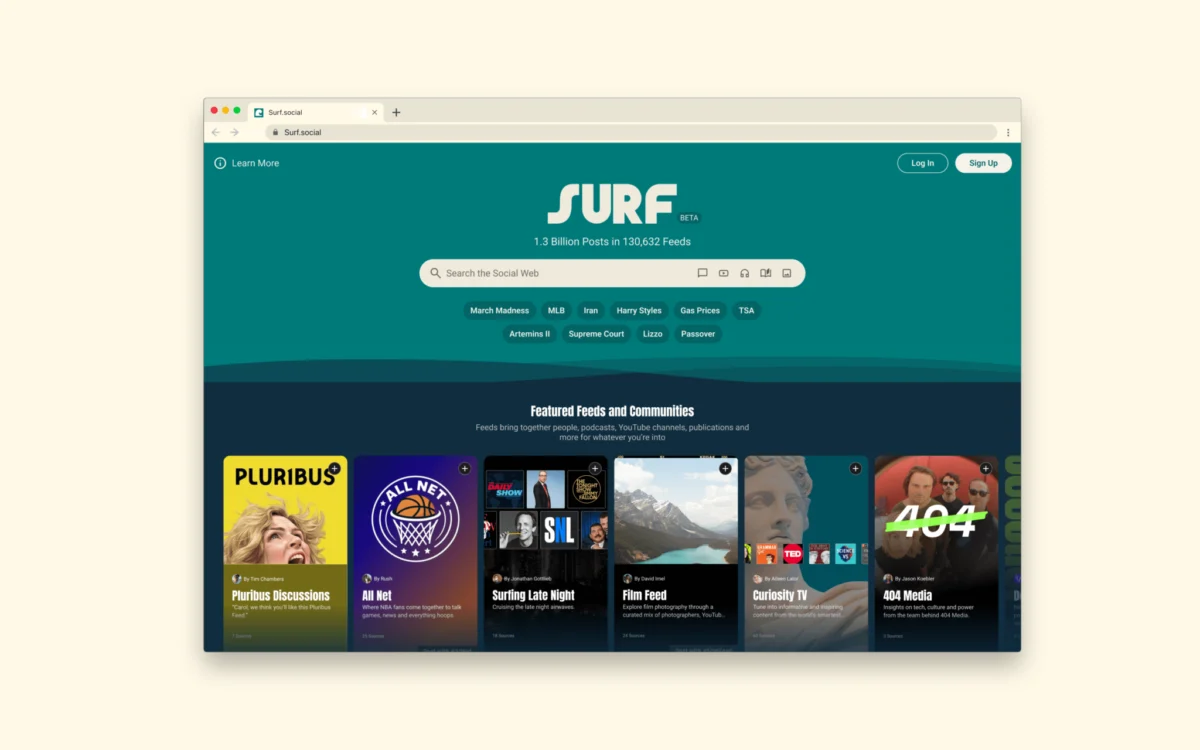
Flipboard announced on Thursday the launch of social websites, an innovative new paradigm designed to empower creators and publishers with their own customizable spaces on the open web. This development marks a significant step towards a more decentralized and creator-centric internet, allowing individuals and organizations to curate and control their online communities and content without the inherent limitations of traditional, centralized social media platforms.
These newly introduced social websites are meticulously constructed around the dynamic conversations already unfolding across the vast expanse of the open social web. This encompasses a broad spectrum of decentralized platforms, including prominent names like Mastodon and Bluesky, alongside other public web content sources. The initiative reflects Flipboard’s deepening commitment to fostering an internet ecosystem where content ownership, algorithmic transparency, and community autonomy are paramount.
A Unified Hub for Diverse Content and Conversations
At their core, social websites offer a singular, comprehensive destination where a creator’s or publisher’s entire digital footprint can converge. This includes social posts, engaging videos, insightful podcasts, informative newsletters, and myriad other conversations, all consolidated into a space fully controlled by its owner. The power of this aggregation is substantial, enabling the consolidation of profiles and posts from a wide array of platforms such as Bluesky, Mastodon, Threads, YouTube, as well as traditional content streams like podcasts, blogs, and RSS feeds. This eliminates the fragmentation often experienced by audiences navigating multiple platforms to follow their favorite creators or news sources.
Flipboard envisions social websites not merely as an incremental feature, but as a fundamental re-imagining of the social media model. In this new framework, communities are afforded unprecedented levels of ownership and direct control over how their content is organized, discovered, and discussed. The company, which has been an early and enthusiastic adopter of decentralized social media principles over the past few years, is now extending its efforts to simplify access to the open social web for a broader audience of publishers and independent creators. This move strategically positions Flipboard at the forefront of the evolving digital landscape, advocating for an internet that prioritizes user and creator empowerment.
Mike McCue, CEO of Flipboard, articulated this vision in a recent blog post accompanying the announcement. "Social websites help podcasters, creators and publications build communities around their work and control the experience, including the algorithm," McCue stated. He further emphasized the efficiency of this approach: "Rather than starting a community from scratch, creators can use social websites to easily bring together the people and conversations that are already happening around their podcasts, videos and newsletters across the social web." This highlights a key differentiator: leveraging existing engagement rather than demanding a fresh start, thereby reducing the barrier to entry for community building.
The Genesis: From Surf App to Web-Based Extension
The introduction of social websites represents the inaugural web-based extension of Surf, Flipboard’s innovative reader application that debuted in December 2024. Surf was designed specifically to enable users to seamlessly browse and explore the open social web, offering a curated and intuitive experience for navigating the burgeoning decentralized ecosystem. The company explicitly notes that these new social websites are powered by the very same Surf feeds that underpin its reader app, ensuring a cohesive and integrated experience across its product offerings. This chronological progression underscores Flipboard’s strategic roadmap, beginning with a reader-focused application and now expanding into a creator-centric publishing platform.
Addressing the Challenges of Centralized Social Media
The launch of social websites is a direct response to a growing dissatisfaction with the traditional, centralized social media landscape. For years, creators, publishers, and users alike have grappled with issues such as:
- Algorithmic Opacity and Control: Centralized platforms often employ proprietary algorithms that dictate content visibility, leading to unpredictable reach and a lack of transparency for creators. Flipboard’s model promises a degree of control over the "algorithm," implying a more predictable and user-defined content flow.
- Content Ownership and Monetization: Creators frequently find themselves subject to the terms of service of platforms, with limited control over their intellectual property and often unfavorable monetization schemes. Social websites offer a path to greater autonomy.
- Ephemeral Nature of Content: Posts and conversations on many platforms are designed to be fleeting, making it difficult to build lasting archives or persistent communities. By aggregating and housing content in a dedicated space, social websites offer greater longevity.
- Platform Dependency and Walled Gardens: Creators are often beholden to the rules and whims of single platforms, facing risks of de-platforming, account suspension, or sudden policy changes that can devastate their online presence. Social websites mitigate this risk by acting as a hub that draws from multiple sources, reducing reliance on any single entity.
- Data Privacy and Security: Centralized platforms frequently collect vast amounts of user data, raising privacy concerns. While social websites aggregate public content, the control over the presentation and curation lies with the site owner, offering a different data dynamic.
The rise of the Fediverse (a portmanteau of "federation" and "universe") and other decentralized social networks like Bluesky’s AT Protocol signals a broader industry trend towards open standards and interoperability. Flipboard’s initiative is well-timed to capitalize on this movement, providing a practical tool for those looking to leverage the benefits of decentralization without needing to build complex infrastructure from scratch.

Pioneering Partnerships: Early Adopters and Diverse Use Cases
To demonstrate the immediate utility and potential of social websites, Flipboard has already forged partnerships with a diverse array of prominent publishers and influential creators. These early adopters are showcasing the versatility of the platform across various content domains:
- Leading Publications: Esteemed news and culture outlets such as The Verge, Wired, Rolling Stone, 404 Media, and The Oregonian have already established their own social websites. These platforms serve as comprehensive hubs where readers can effortlessly follow their favorite journalists, access podcasts, watch videos, and engage with conversations pertinent to the publication’s coverage, all within a unified environment. For these publishers, it represents an opportunity to consolidate their dispersed audiences and offer a more controlled and direct reader experience, bypassing the unpredictable nature of third-party social algorithms.
- Niche Community Building: Beyond traditional media, creators are also leveraging social websites to cultivate specialized communities. A prime example is "All Net," a social website crafted by creator David Rushing, specifically tailored for ardent NBA fans. All Net aggregates basketball-related conversations from across the web, official league news, engaging video content, and real-time game commentary, creating an immersive and centralized destination for enthusiasts of the sport. This demonstrates the platform’s potential for fostering vibrant, topic-specific communities that transcend individual social networks.
These initial partnerships underscore the broad applicability of social websites, from large-scale media organizations seeking audience retention and direct engagement to individual creators aiming to build dedicated communities around specific interests. The common thread is the desire for greater control, consolidation, and a more direct relationship with their audience.
Accessibility for Creators: A Simple Setup Process
Flipboard has designed the creation process for social websites to be remarkably straightforward, making this powerful tool accessible even to those without extensive technical expertise. The journey begins with establishing a Surf feed, which acts as the foundational content stream for the social website.
To create a Surf feed, interested users need only navigate to surf.social, sign up for an account, and select the intuitive "+ Create Feed" option located in the sidebar. From there, a guided series of prompts facilitates the process of adding desired content sources. This could include links to Mastodon profiles, Bluesky feeds, YouTube channels, RSS feeds from blogs or news sites, and more. Users are then prompted to assign a community hashtag, which helps categorize and organize the content, and to set specific filters to further customize their feed, ensuring relevance and quality.
Once the Surf feed is meticulously configured to the creator’s specifications, the transformation into a fully functional social website is a simple next step. The owner can assign a custom domain to their feed via the three-dot menu in the feed header. This crucial feature allows creators to brand their social website with a unique, memorable URL that they own and control, further solidifying their independence from platform-specific branding. Flipboard emphasizes that these social websites are inherently designed to exist and thrive beyond the confines of the Surf application itself, as they can be shared and accessed across the entire open web, maximizing their reach and discoverability.
Future Enhancements and the Broader Impact
The launch of social websites is presented by Flipboard not as a finished product, but as a foundational offering with a clear roadmap for future development. The company has indicated that more extensive customization tools are currently in development. These upcoming features will include the ability to implement custom headers, select personalized color schemes, and access additional feed management functionalities. Such enhancements will empower creators with even greater artistic and organizational control over their digital spaces, allowing for a truly bespoke online presence.
Flipboard succinctly summarizes the core value proposition: "By combining content and conversations from across social platforms, Surf social websites become destinations to keep up on anything you’re interested in." This statement encapsulates the platform’s potential to become the go-to resource for individuals seeking comprehensive, curated information and engagement on their passions, free from the noise and algorithmic manipulation prevalent elsewhere.
The broader implications of Flipboard’s social websites extend far beyond just a new product offering. This initiative represents a significant push towards a more open, interoperable, and creator-friendly internet. In an era where "platform risk" is a growing concern for anyone building an audience online, tools that empower creators to own their communities and content are invaluable. This move by Flipboard aligns with the overarching trend of decentralization, which seeks to distribute power and control away from monolithic tech companies and back into the hands of users and creators. It fosters an environment where innovation can flourish, diverse voices can be heard, and communities can thrive on their own terms. As the digital landscape continues to evolve, Flipboard’s social websites could very well set a new standard for how content is aggregated, shared, and experienced across the global web, ushering in a new era of digital autonomy.

