
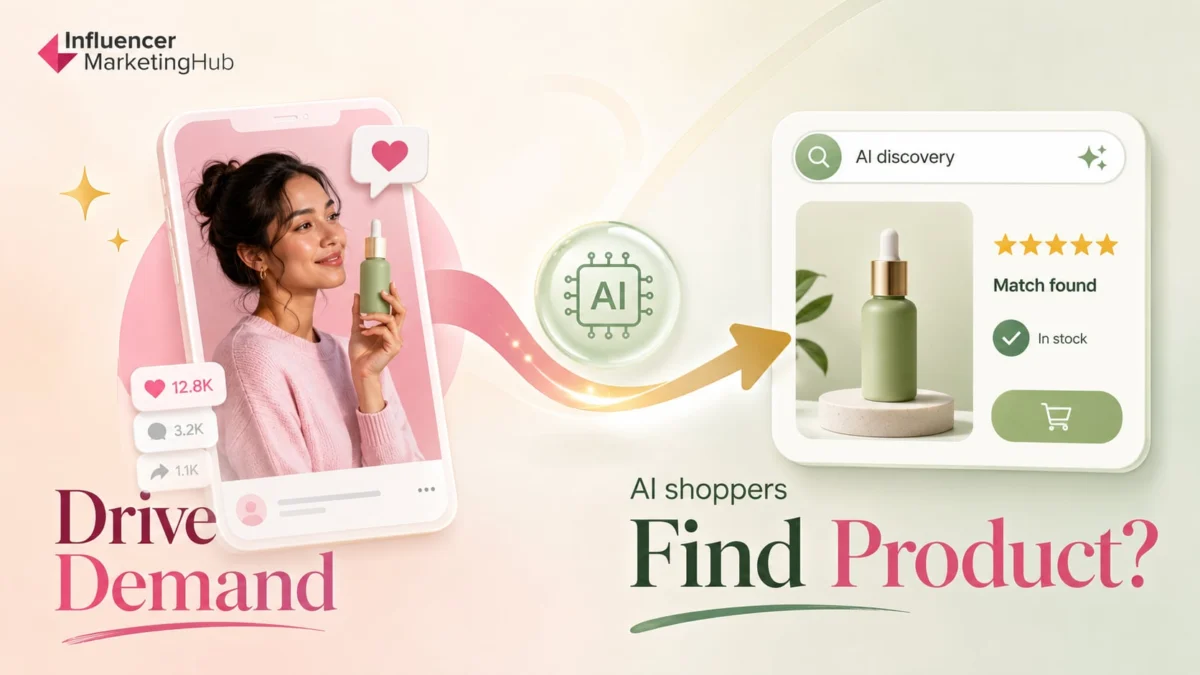
A palpable disconnect is emerging in the modern retail landscape, threatening to undermine the burgeoning power of creator commerce as artificial intelligence increasingly mediates shopping experiences. While content creators excel at translating product features into relatable, human-centric benefits, brands’ underlying product catalogs often fail to capture this nuanced language, leading to lost sales and fragmented customer journeys. The chasm is exemplified by a common scenario: a creator enthusiastically showcases a compact carry-on, extolling its ability to fit "every overhead bin" and a "front pocket that actually holds my laptop," a detail gleaned from rigorous, real-world testing across "six airports." Viewers, captivated by this authentic endorsement, flood the comments with buying inquiries. Some click the direct link, converting instantly. However, a significant and growing segment turns to AI shopping assistants like ChatGPT or Gemini, asking for "the suitcase with a laptop pocket that fits overhead bins." This second group frequently encounters a dead end because the brand’s internal catalog describes the item as a "22-inch polycarbonate spinner," omits the laptop compartment from the primary description, and labels the popular "beige" color as "stone." The creator masterfully cultivated preference, but the product data failed to translate that preference into discoverability in the next crucial touchpoint.
The Evolution of Commerce: From Static Pages to Conversational AI
The retail sector has undergone a seismic shift, transitioning from static e-commerce websites to dynamic social commerce, and now, rapidly, into AI-driven conversational interfaces. This evolution has profound implications for how products are discovered and purchased. For decades, brands meticulously crafted product descriptions for search engines and traditional online storefronts, focusing on keywords, technical specifications, and internal nomenclature. However, the rise of the creator economy fundamentally altered consumer engagement. Influencers, through their authentic storytelling and experiential reviews, became trusted curators, demonstrating products in context rather than merely listing features. They showed how a non-stick pan truly performs after frying eggs, how a jacket layers comfortably over a thick sweater, or how a desk lamp prevents glare during video calls. This contextual selling created a powerful new form of demand generation.
Concurrently, the proliferation of sophisticated AI models has introduced a new paradigm: conversational commerce. Platforms like ChatGPT are no longer just information retrieval tools; they are evolving into shopping assistants that can interpret complex natural language queries, compare products, and recommend purchases. This development marks a critical juncture where the human-centric language of creators must seamlessly integrate with the machine-readable data of product catalogs. Industry reports indicate that global spending on influencer marketing is projected to reach over $22 billion by 2026, while the conversational AI market is expected to exceed $30 billion by the same year, underscoring the converging forces at play. Without a bridge between creator insight and product data, a substantial portion of this market potential remains untapped, as consumer intent articulated in natural language is lost in translation to a technical catalog.
The Human-Machine Language Barrier: A Critical Disconnect
The core challenge lies in the inherent difference between human communication and traditional product catalog structures. Creators speak "human" – they describe experiences, emotions, and practical use cases. They focus on the why and how a product fits into a consumer’s life. For instance, a skincare creator might laud a moisturizer for being "a good choice for people who hate heavy creams," highlighting its light texture, quick absorption, and suitability under makeup. Conversely, the corresponding product page might describe it as "barrier-supporting hydration" and list a litany of ingredients, completely omitting crucial details like texture, finish, or compatibility with cosmetics. A human watching the video intuitively grasps the recommendation, but an AI shopping assistant attempting to match "light moisturizer under makeup" has significantly less actionable data to work with.
This linguistic disparity creates "dark data" – valuable consumer insights and product attributes that exist only within creator content, comments sections, or customer service interactions, rather than being systematically captured and integrated into product information systems. E-commerce analytics firms estimate that up to 40% of potential AI-driven product matches fail due to this misalignment, resulting in abandoned searches and lost sales opportunities. Furthermore, a recent survey of over 5,000 online shoppers revealed that 70% prefer searching for products using natural language descriptions and real-world scenarios, rather than technical specifications or brand-specific jargon. This preference underscores the urgent need for brands to evolve their product data strategies to meet changing consumer behaviors and technological advancements.
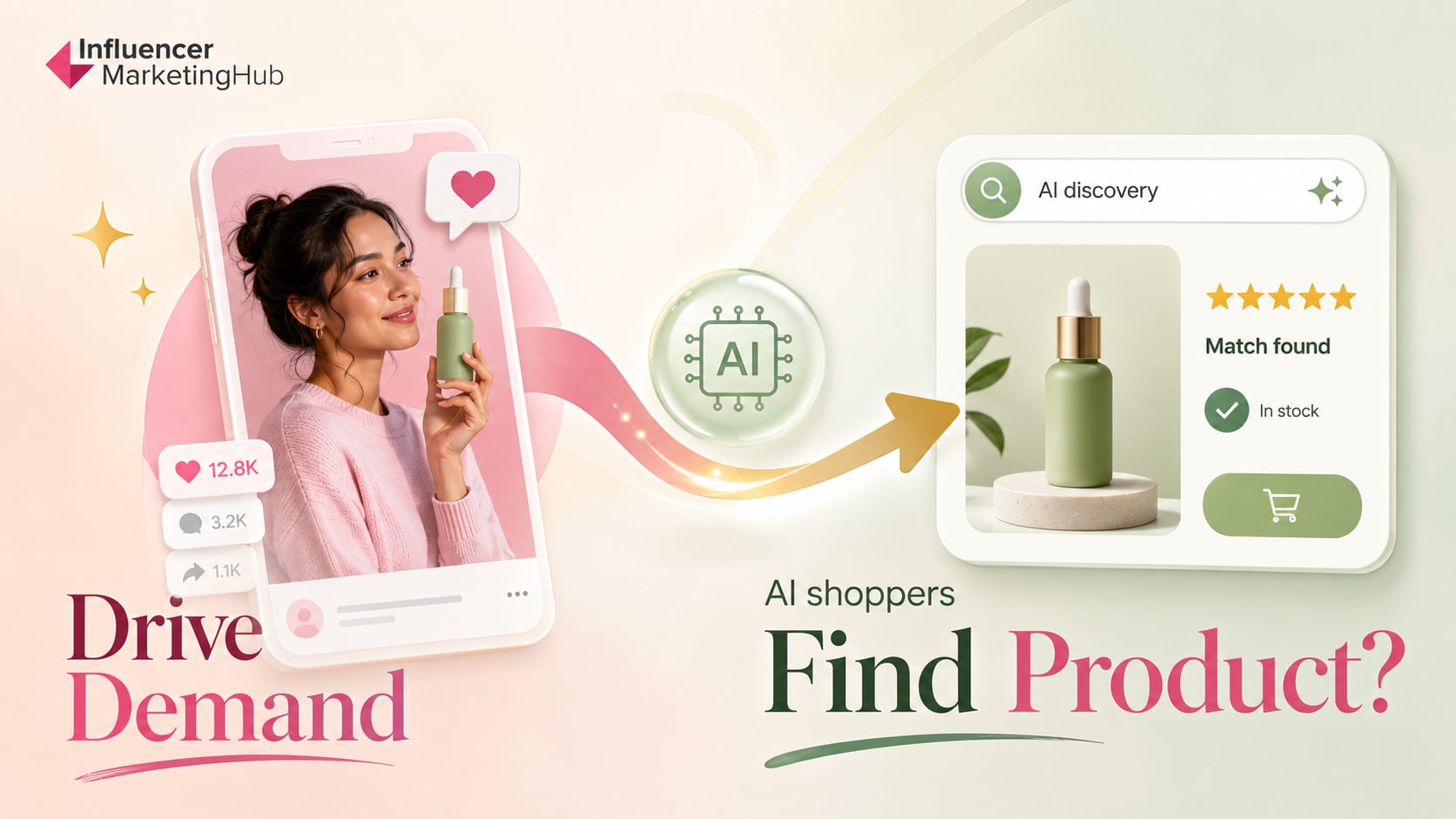
AI Shoppers Demand Useful Specificity and Structured Data
For AI shopping assistants to function effectively, they require a level of "useful specificity" that often extends beyond the conventional data points found in product catalogs. Consumers rarely ask an AI for "women’s footwear, category 184." Instead, they articulate complex, multi-faceted needs: "white sneakers that won’t look too sporty with a dress, come in wide sizes, and can arrive before a weekend trip." These granular details are far closer to the way creators communicate than the way many product catalogs are built.
The imperative for rich, structured data is not new but has gained unprecedented urgency with the advent of AI. Leading platforms like Google and OpenAI have already outlined their requirements. OpenAI’s merchant page explicitly encourages brands to share product data, including feed integrations, to ensure their products appear in ChatGPT’s shopping experiences. Similarly, Google’s product documentation emphasizes that adding "Product structured data" can make product information eligible for richer search results, encompassing price, availability, review ratings, and shipping details. Google Merchant Center’s product data specification further clarifies that accurate, correctly formatted data is crucial for matching products to relevant queries and avoiding disapprovals.
Beyond the basics (accurate name, usable images, price, currency, stock, variants, shipping, returns, brand identifiers), AI systems thrive on attributes that capture the qualitative and contextual nuances of a product. A creator might repeatedly highlight that a tote bag "stands upright," a microphone "works seamlessly with an iPhone," or a dress features "functional pockets." If these critical facts remain confined to a social media Reel and are not systematically integrated into the product’s structured attributes, FAQs, or detailed descriptions, they become invisible to AI assistants. Moreover, the "freshness problem" compounds this issue; a compelling creator recommendation can circulate for months, even years, after its initial posting. If product data—especially pricing, availability, and key attributes—is not regularly updated, AI recommendations risk presenting outdated or inaccurate information, further eroding consumer trust and leading to missed conversions. As an e-commerce director at a leading retail brand recently commented, "Our challenge isn’t just getting products online; it’s making them discoverable and relevant across all emerging channels. AI assistants demand a level of descriptive detail and semantic alignment we haven’t traditionally prioritized, necessitating a fundamental rethink of our data governance."
Operationalizing Insight: Bridging the Creator-Catalog Divide
The primary reason for this disconnect is often organizational. Most influencer marketing workflows involve a creative handoff and a reporting handoff. Creative teams approve talking points, discount codes, usage rights, and posting schedules. Later, marketing teams collect metrics like reach, engagement, clicks, and sales. Crucially, product-data and merchandising teams, who manage the catalog, often remain isolated from the rich, customer-centric language that made a campaign successful. This separation leads to small, yet cumulatively expensive, misses.
Consider a scenario where a creator testing headphones declares, "The ear cups don’t press against my glasses," a detail that resonates deeply with viewers, as evidenced by comment sections. The marketing team might leverage this clip in paid social campaigns, driving traffic to a landing page that echoes the same wording. Yet, if the main product description, comparison chart, merchant feed, and marketplace listings remain unchanged, the value of that unique selling proposition is significantly diminished for anyone searching via AI or browsing other channels.
To effectively bridge this gap, brands must integrate creator insights directly into their product information management (PIM) and data governance strategies. This requires a more collaborative and iterative workflow:
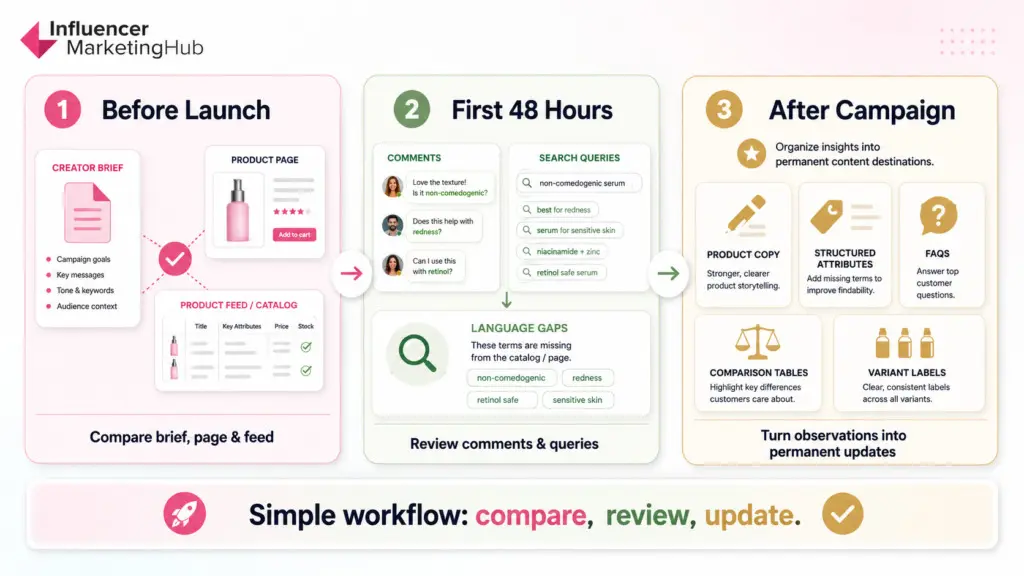
- Pre-Launch Alignment: Before a campaign goes live, creator briefs should be cross-referenced with existing product pages and data feeds. Discrepancies and opportunities for enhancement should be identified proactively.
- Real-time Monitoring & Capture (First 48-72 hours): During the initial phase of a campaign, marketing and product teams should actively review comments, direct messages, and internal search queries. The goal is to identify "buying phrases," unexpected use cases, common comparisons, recurring objections, and specific creator wording that reveals how customers genuinely perceive and categorize the product.
- Post-Campaign Integration: Following a campaign, these observed insights should be systematically incorporated into permanent product copy, structured attributes, FAQs, comparison tables, and variant labels. This ensures that valuable, human-validated language becomes a persistent part of the product’s digital identity.
- Connected Systems: Implementing a connected product-data and storefront system (e.g., a robust PIM integrated with a headless commerce platform) is paramount. Such a system can keep descriptions, attributes, availability, and channel listings aligned as shoppers navigate between social posts, AI interfaces, marketplaces, and the brand’s own site. This alignment is particularly critical when a campaign introduces new, customer-centric ways of describing an existing item.
A spokesperson for a prominent influencer marketing agency recently observed, "We’re seeing a fundamental shift from just measuring clicks to evaluating how effectively creator language translates into discoverability across the entire digital ecosystem. This demands a more integrated approach, where creative insights feed directly into data optimization, blurring the lines between marketing and merchandising." This operational shift is not merely about efficiency; it’s about optimizing for a future where product discoverability is increasingly mediated by intelligent agents.
Measuring What Matters: Beyond Direct Attribution
The advent of AI-assisted shopping complicates traditional measurement methodologies. A customer might watch a TikTok review on Monday, use an AI assistant to find similar products on Wednesday, and make a purchase from a product card presented by the AI on Friday, without ever clicking the creator’s original link. This non-linear journey renders conventional tracked links, discount codes, and affiliate sales insufficient for a holistic understanding of campaign impact.
Brands must evolve their measurement strategies to account for these multi-touchpoint, AI-mediated paths. Key metrics and questions worth asking include:
- Search Query Analysis: Did searches for the product’s name, category, or, crucially, creator-used phrases increase following the campaign? Are customers using the new, natural language terms to find the product?
- AI/Conversational Search Referrals: Are product pages seeing an uptick in traffic referred specifically from AI assistants or conversational search interfaces?
- Feed Diagnostics: Are there increased issues with missing identifiers, rejected variants, stale prices, or availability conflicts in product feeds destined for AI platforms? A clean, comprehensive feed is indicative of readiness.
- AI Presentation Accuracy: When the product is queried through major shopping assistants using common customer language, does it appear accurately, consistently, and with the relevant attributes highlighted by the creator?
- Product Data Correction Rate: Tracking how often staff must manually fix a product title, price, image, variant, compatibility detail, or stock status after a campaign launches can be a powerful diagnostic. A high correction rate suggests that the organization is driving attention to products before their underlying data infrastructure is adequately prepared.
- Customer Support Insights: Analyzing customer support tickets post-campaign can reveal critical gaps in product information. If queries cluster around sizing, compatibility, delivery timing, or "is this the same one from the video?", it indicates that the catalog failed to clearly address common customer concerns, exposing missing or unclear product data.
The Influencer Marketing Hub’s 2026 benchmark report highlights that future influencer marketing success hinges on operational issues like measurement design and quality controls in an AI-enabled landscape. Weak sales post-creator exposure might not signify a creative failure, but rather a failure in the commerce setup itself. This paradigm shift elevates product information from a static inventory detail to a dynamic, customer-centric asset, requiring seamless cooperation between creator marketing, e-commerce, merchandising, and product data teams.
Conclusion: The Future of Product Discoverability
Creators have become indispensable sources of authentic product language, distilling complex features into relatable benefits and addressing the unspoken questions buyers have before and after a sale. As AI shopping systems become more ubiquitous, their ability to extend and amplify this creator-driven demand will be contingent on the underlying product information. Brands that succeed in this evolving landscape will not necessarily be those that publish the most content, but rather those that expertly connect the rich, human language of their creators with accurate, comprehensive, and current machine-readable product information.
This necessitates a strategic alignment between marketing and data management that has historically been lacking. The challenge demands a collaborative effort across creator marketing, e-commerce, merchandising, and product data ownership. As a practical first step, brands should select a product from a recent creator campaign and meticulously compare the language used in the social post, comments, brand product page, and internal catalog fields. This exercise will invariably highlight the critical gaps and illuminate the path toward a more integrated, discoverable, and ultimately, more profitable future in the age of AI-powered commerce. The ability to seamlessly translate human insight into machine-readable data is no longer a competitive advantage; it is a fundamental requirement for survival and growth.

