

YouTube is implementing a significant alteration to its methodology for measuring creator performance, effective August 24. This change will redefine what constitutes a "view" for long-form video content, aligning it with the existing standard for YouTube Shorts and other short-form video platforms like TikTok and Instagram. Under the new system, a view will register the moment a video begins playing, irrespective of how long a user continues to watch. This policy shift comes on the heels of another major update where YouTube raised the monetization requirements for its Partner Program, demanding 8,000 qualified watch hours or 20 million qualified Shorts views for new creators by February 2027 to be eligible for ad and Premium revenue sharing.
The platform asserts that the primary objective behind this change is to foster consistency across its diverse formats and provide creators with a more unified understanding of their overall exposure. Historically, YouTube has employed differing view-counting systems for long-form videos versus Shorts. Shorts already adopted an exposure-based definition, where playback initiation triggers a view count. By standardizing this across all video types, YouTube aims to simplify cross-platform comparisons, a persistent challenge for creators navigating multiple social media ecosystems.
The Evolving Landscape of Creator Metrics and the Need for Consistency
The digital content landscape is characterized by a fragmented audience and diverse platform metrics, making direct comparisons of creator performance often misleading. A "million views" on one platform could signify a vastly different level of audience attention and engagement compared to another, due to varying definitions of a "view." Creators frequently operate across YouTube, TikTok, Instagram, and X (formerly Twitter), and the inconsistencies in how these platforms count views have made it difficult for them to accurately convey their scale and influence to potential brand partners and sponsors.
This discrepancy has been a point of frustration within the creator community. Discussions on platforms like Reddit have frequently highlighted scenarios where a YouTube video, adhering to a stricter view standard, might appear to have a smaller audience footprint than a TikTok or X video, even if the YouTube content garnered more sustained attention. The argument from many creators has been that a common top-line metric, even if it represents a broader definition, could at least provide a more level playing field for initial comparisons when competing for advertiser budgets. YouTube’s move is, in part, a response to this call for greater clarity and standardization in reporting overall reach.
Deconstructing the New Definition: Views vs. Engaged Views
From August 24, a view on YouTube will be recorded simply when the playback of a video commences. This broadens the definition significantly from the platform’s previous, more stringent criteria for long-form content, which often required a certain duration of watch time to count as a view. Consequently, creators are expected to observe a faster accumulation of public view totals, potentially leading to inflated numbers that reflect initial impressions more than sustained engagement.
Crucially, YouTube is not abandoning its more granular engagement metrics. Within YouTube Analytics, the platform will continue to track "engaged views," which represent instances where viewers have watched a video for a meaningful duration, indicating genuine interest and attention. This effectively creates a two-tiered measurement system: public "views" will serve as an exposure metric, quantifying how often a video was started, while "engaged views" will provide a deeper insight into how many people chose to stay and watch.
This distinction is paramount. While a higher public view count might boost a creator’s apparent reach, YouTube has explicitly stated that monetization, including ad revenue and Premium revenue sharing, will continue to be based on engaged views and engaged watch hours. This means that an increase in public view counts after August 24 will not necessarily translate into a proportional increase in creator earnings. Similarly, eligibility for the YouTube Partner Program, which recently saw its requirements increased to 8,000 qualified watch hours or 20 million qualified Shorts views, will also remain tied to these deeper engagement metrics.

Implications for Creators: Navigating Perceived vs. Actual Value
For creators, the immediate impact will likely be a surge in their publicly displayed view counts. This could be beneficial for initial impressions and for demonstrating broad reach to brand partners who prioritize sheer visibility. However, it also introduces a new layer of complexity. Creators will need to educate their partners on the nuances of the new metrics, emphasizing that while "views" signify exposure, "engaged views" and watch time are the true indicators of audience attention and, by extension, monetizable value.
The community has already labeled the new public view count as a "vanity metric" – a number that looks impressive but doesn’t directly correlate with financial remuneration. While this "vanity" can still be valuable for brand perception and initial pitches, creators will need to be transparent and prepared to delve into their Analytics data, providing comprehensive reports that include engaged views, average watch duration, and audience retention rates to demonstrate the true impact and value of their content. The ratio between public views and engaged views could, in itself, become a new performance indicator, signaling how effectively a creator converts initial exposure into sustained audience interest.
Challenges and Opportunities for Marketers and Brands
The updated view count poses significant implications for marketers and brands engaged in influencer campaigns and content sponsorships. When creator campaigns, sponsorship pricing, and performance reports have historically relied heavily on view counts, the redefinition necessitates a strategic recalibration.
Marketers must now recognize that the public "view" count will primarily describe exposure rather than meaningful attention. This distinction is critical when evaluating the return on investment (ROI) for various campaign objectives. For brand awareness campaigns, where the goal is maximum reach and visibility, the new, higher public view count might seem advantageous. However, for campaigns focused on education, product consideration, lead generation, or conversion, metrics beyond simple playback initiation become far more important.
One of the most immediate practical challenges for brands will be the review and potential revision of existing and future creator contracts. Many brand deals are structured around view guarantees, cost-per-mille (CPM) agreements based on views, or performance bonuses tied to view milestones. A contract promising a specific CPM based on public views could yield vastly different economics under the new counting system. Brands will increasingly need to specify in their agreements whether compensation is tied to "views" (exposure) or "engaged views" (attention), or other deeper metrics like watch time and retention.
For robust campaign reporting, brands should push for a more comprehensive data set from creators, including:
- Total Public Views: For top-line exposure and reach.
- Engaged Views: To understand the number of viewers who truly paid attention.
- Average View Duration: To gauge how long viewers watched the content.
- Audience Retention Rates: To identify drop-off points and overall engagement quality.
- Click-Through Rates (CTRs) and Conversions: For campaigns with direct response objectives.
The right combination of metrics will always depend on the campaign’s specific goals. While raw views indicate how often the "door opened" to content, engaged views and watch time reveal how many people "walked inside" and stayed. This shift places a greater emphasis on deep analytical insights rather than superficial numbers.
Industry Reactions and Historical Precedent
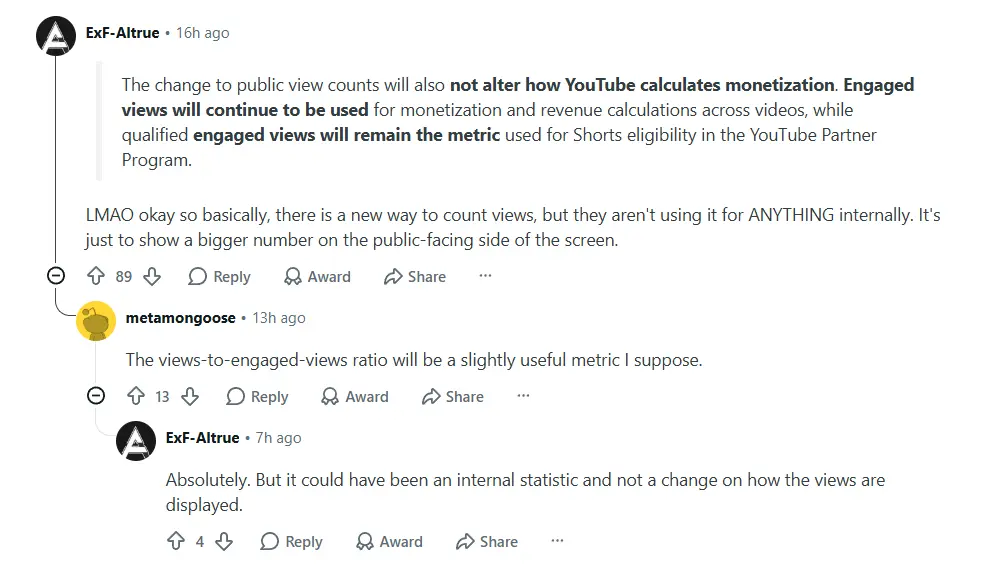
The announcement has been met with a mix of understanding and skepticism from the online community. On platforms like X and Reddit, many users expressed concerns about the potential for misleadingly inflated view counts. Some worried that the looser definition could make it easier for bot networks to artificially boost numbers, while others feared that brief clicks, autoplay features, or accidental exposure would make videos appear more widely watched than they truly were.
These concerns are not without historical precedent. The digital advertising industry has a checkered past with video metrics, most notably Facebook’s struggles in the mid-2010s. Facebook faced criticism and lawsuits over misleading video metrics, particularly how it defined a "video view" (often just three seconds of playback), which led advertisers to believe their content was being watched more extensively than it actually was. This historical context fuels the current skepticism, reminding stakeholders of the importance of transparent and meaningful measurement.
However, YouTube’s approach differs in a crucial aspect: the explicit retention of "engaged views" for monetization purposes. This safeguard distinguishes YouTube’s model from systems where commercial decisions are solely based on potentially inflated top-line figures. As one Reddit commenter pointed out, "YouTube is changing the public-facing number while continuing to use engaged views for monetization and revenue calculations." This dual-metric system, while requiring more diligent analysis, offers a path to mitigate the risks of misleading data, provided marketers and creators utilize both layers effectively.
The Broader Picture: Navigating the Nuances of Digital Attention
While YouTube’s new definition simplifies cross-platform comparisons for exposure, it simultaneously complicates the task of evaluating quality attention. Even with standardized view definitions, inherent differences between platforms — in algorithms, content formats, audience demographics, and user behavior — mean that a "view" on TikTok will never be economically identical to a "view" on YouTube. The context, audience geography, purchase intent, and content format all play a role in determining the true value of an interaction.
A creator who consistently holds an audience for 10 or 20 minutes offers a vastly different advertising environment than one who generates millions of one-second starts. This is why experienced advertising professionals and brands already prioritize metrics like minutes watched and retention rates when evaluating YouTube performance. This approach becomes even more critical after August 24.
Ultimately, the change pushes the industry further into an era where discerning meaningful engagement from fleeting exposure is paramount. For marketers, this means moving beyond easily digestible headline numbers and delving deeper into analytics to understand genuine audience behavior. The real value in influencer marketing and content creation will continue to reside not just in the sheer number of eyes reached, but in the sustained attention captured and the measurable actions inspired.
YouTube’s decision to redefine its view count reflects a balancing act: providing creators with a more competitive top-line exposure metric while attempting to preserve the integrity of monetization and deeper performance measurement. For all stakeholders, the key takeaway is clear: adapt to the new standard by understanding its nuances, recalibrating expectations, and prioritizing comprehensive data analysis to unlock the true value of digital content.

