
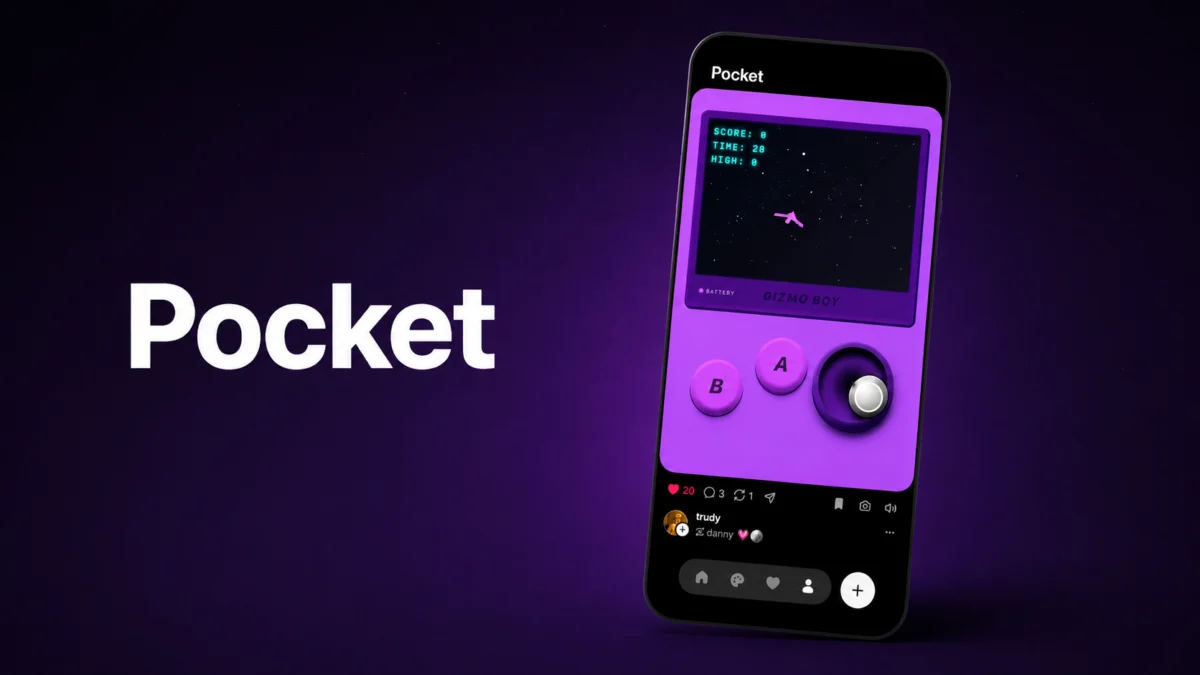
Meta’s experimental vibe-coding gaming application, Pocket, is now broadly available to users across the United States, marking a significant expansion of the tech giant’s generative artificial intelligence initiatives. This rollout follows a quiet test launch last month in Brazil, where the app garnered initial user feedback. Pocket empowers individuals to create small, interactive games—dubbed "gizmos" by Meta—using intuitive AI prompts, which are then published to a dynamic, scrollable feed for others to discover and interact with. This launch underscores Meta’s accelerated strategy to democratize AI-powered content creation, transforming passive consumption into active participation across its vast ecosystem.
The Genesis of Pocket: From Gizmo to Meta’s AI Lab
The conceptual and technological backbone of Pocket originates from Meta’s strategic acqui-hire earlier this year of the team behind Gizmo, an innovative "vibe-coded" gaming platform. Gizmo, which had been developing interactive mini-apps and games that resonated with a younger, digitally native audience, caught Meta’s attention for its unique approach to user-generated interactive content. The Gizmo team, including its founder Josh Siegel, transitioned to Meta’s Superintelligence Labs, a division dedicated to cutting-edge AI research and development. This acquisition was not merely about talent but about integrating a proven methodology for enabling non-programmers to craft engaging, responsive digital experiences.
The interactive experiences and games within Pocket, much like their Gizmo predecessors, are designed to be highly responsive and sensory. Users can interact with these "gizmos" through touch, manipulating on-screen elements, and even by tilting their phone, leveraging the device’s accelerometer for dynamic gameplay. These mini-games are further enriched with customizable sound effects and can incorporate snippets of popular music, allowing creators to infuse their creations with a specific "vibe" or mood. Crucially, Pocket also integrates with a user’s personal media library, enabling the use of photos from their camera roll or direct access to their device’s camera to personalize games, making each creation uniquely expressive. Once a "gizmo" is crafted, it can be shared on a user’s profile, where others can engage with it by saving it, remixing it to create their own variations, or simply reposting it to their networks, fostering a vibrant, iterative creative community.
The transition of Gizmo into Pocket has also marked the planned obsolescence of the original Gizmo application. Josh Siegel, the founder of Gizmo, acknowledged this bittersweet development in a public statement via X (formerly Twitter) on August 20, 2026. He expressed gratitude for the "labor of love" that Gizmo represented for its team over several years, while simultaneously conveying enthusiasm for Pocket and the future possibilities it represents under Meta’s expansive resources. This sentiment highlights the common trajectory for many innovative startups absorbed by larger tech entities, where their core technology and vision are scaled and integrated into broader product strategies.
Meta’s Aggressive AI-Driven Product Development Timeline
The launch of Pocket is not an isolated event but rather the latest manifestation of Meta’s aggressive and multifaceted push to embed AI-creation tools into mainstream consumer applications. This strategic pivot has been evident through a series of rapid product iterations and experimental app launches throughout 2026. Earlier efforts included the Meta AI app, which provides robust AI-generated image capabilities, and "Vibes," an experimental application focused on generating AI-powered videos. These initiatives demonstrate Meta’s commitment to exploring diverse modalities of generative AI, from static images to dynamic videos and now, interactive games.
Pocket now joins a growing portfolio of standalone mobile applications recently released by Meta, signaling a shift towards a more modular and experimental approach to product development. This year alone has seen the debut of Instagram Instants, an app for sharing disappearing photos; Forum, a standalone Groups app akin to Reddit; and Seller, a dedicated application for Meta’s Marketplace. Additionally, Meta has experimented with AI-driven bedtime stories and, this week, launched a Meta AI app specifically for Mac users, extending its AI capabilities to desktop environments.
This accelerated pace of product launches and experimentation is a direct outcome of Meta’s significant investments in AI-enabled software development. CEO Mark Zuckerberg articulated this strategy during Meta’s July earnings call, attributing the increased output to the efficiencies gained from leveraging AI in the development process. "Earlier this year, we shipped Instagram Instants. We also just launched Forum, a stand-alone Groups app, and Seller, a stand-alone Marketplace app. I expect it to become a lot easier to ship new apps," Zuckerberg told analysts. He emphasized the company’s intent to "build out more ideas and use our recommendation systems to scale them," indicating a future where AI not only creates content but also optimizes its distribution and adoption. This statement underscores a strategic imperative to innovate rapidly, test new concepts, and leverage AI to identify and scale promising applications, thereby strengthening Meta’s position in the fiercely competitive tech landscape.
Strategic Context: Meta’s Commitment to Generative AI and the Creator Economy
Meta’s foray into AI-powered game creation with Pocket must be viewed within the broader context of its massive strategic investment in generative AI and its ambition to dominate segments of the burgeoning creator economy. The global generative AI market, valued at approximately $15 billion in 2023, is projected to grow at a compound annual growth rate (CAGR) exceeding 30% over the next decade, potentially reaching hundreds of billions of dollars. Meta, with its foundational AI research like the Llama series of large language models, is clearly positioning itself to capture a significant share of this growth by democratizing access to powerful AI creation tools.

The creator economy, estimated to be a multi-trillion-dollar industry, thrives on platforms that empower individuals to produce and monetize unique content. Apps like Pocket aim to lower the barrier to entry for content creation, allowing anyone with an idea to become an interactive game developer, irrespective of their coding skills. This aligns with Meta’s long-term vision of fostering digital communities and enabling diverse forms of expression across its platforms. By providing tools that simplify complex tasks like game design, Meta aims to attract a new wave of creators and further entrench its ecosystem as a primary hub for digital innovation.
Furthermore, the mobile gaming market, which generated over $90 billion in revenue in 2023 and boasts billions of active users globally, represents a fertile ground for Meta’s expansion. The trend towards hyper-casual games, short-form interactive experiences, and user-generated content within gaming platforms (like Roblox or Fortnite Creative) indicates a strong market appetite for exactly what Pocket offers. By merging the accessibility of social media with the engagement of mobile gaming and the power of generative AI, Meta seeks to carve out a unique niche that could drive significant user engagement and potentially unlock new monetization avenues.
Meta’s financial commitment to AI is substantial. The company has invested tens of billions of dollars annually in research and development, with a significant portion allocated to AI infrastructure, talent acquisition, and foundational research. These investments are critical for developing the sophisticated AI models that power applications like Pocket. The strategy is clear: by rapidly iterating on AI-driven products, Meta aims to enhance user engagement, expand its user base, and ultimately secure its long-term revenue streams through advertising and future digital commerce opportunities within its evolving platforms.
Market Implications and Future Prospects
The launch of Pocket carries several significant implications for the broader tech landscape, the creator economy, and Meta’s strategic positioning.
Democratization of Game Development: Pocket significantly lowers the entry barrier for game creation, moving it from the domain of skilled programmers and designers to everyday users. This could lead to an explosion of novel, quirky, and highly personalized interactive experiences, much like TikTok democratized video editing. The "vibe-coding" concept emphasizes emotional resonance and intuitive interaction over complex logic, making game development accessible to a mass audience.
Enhanced User Engagement and Platform Stickiness: For Meta, Pocket is another tool to increase time spent within its ecosystem. By offering a novel creative outlet, it aims to keep users engaged and reduce churn, especially among younger demographics who are constantly seeking new forms of digital expression and entertainment. The social features—sharing, remixing, reposting—are designed to foster virality and community interaction, creating a self-sustaining loop of content creation and consumption.
Competition in the Creator Economy: Pocket intensifies competition with platforms like TikTok, which has been increasingly integrating creative AI tools, and even dedicated game creation platforms. Meta is leveraging its scale and AI prowess to offer a differentiated experience, aiming to attract creators who might otherwise gravitate towards other ecosystems. This move signals a broader battle for the attention and creative output of the next generation of digital content creators.
Future Monetization Potential: While Pocket currently appears to be focused on user acquisition and engagement, Meta’s long-term strategy typically involves monetization. Future possibilities include premium AI prompts or asset packs, advertising opportunities within popular "gizmos," or even direct creator monetization features like tipping or subscriptions. The ability to create and share interactive experiences could also lay groundwork for more sophisticated forms of digital commerce or advertising within a future metaverse.
Integration with the Metaverse Vision: Although Pocket is a mobile-first app, its focus on interactive, user-generated "vibe-coded" experiences aligns conceptually with Meta’s broader metaverse ambitions. The ability to quickly generate dynamic, customizable digital objects and experiences could eventually feed into more immersive AR/VR environments, allowing users to populate virtual worlds with their own AI-generated creations. Pocket can be seen as a stepping stone, familiarizing users with the concept of AI-assisted creation for interactive digital spaces.
Challenges and Opportunities: As with any user-generated content platform, Meta will face challenges related to content moderation, ensuring a safe and inclusive environment. Issues of intellectual property, particularly with the remixing feature and the incorporation of copyrighted music, will also require robust solutions. However, the opportunity lies in harnessing the collective creativity of billions of users, transforming them from consumers into active co-creators of Meta’s digital future.
In conclusion, Meta’s U.S. launch of Pocket represents a pivotal moment in its aggressive generative AI strategy. By offering an accessible, AI-powered platform for interactive game creation, Meta is not only diversifying its product portfolio but also making a bold statement about the future of digital content. This move positions Meta as a leader in democratizing advanced AI tools, empowering a new generation of creators, and ultimately reinforcing its expansive digital ecosystem against a backdrop of intense technological competition and evolving consumer expectations. The rapid iteration of apps, fueled by AI-enabled development, suggests that Pocket is merely one of many innovations Meta plans to unleash as it continues to shape the future of digital interaction.

