
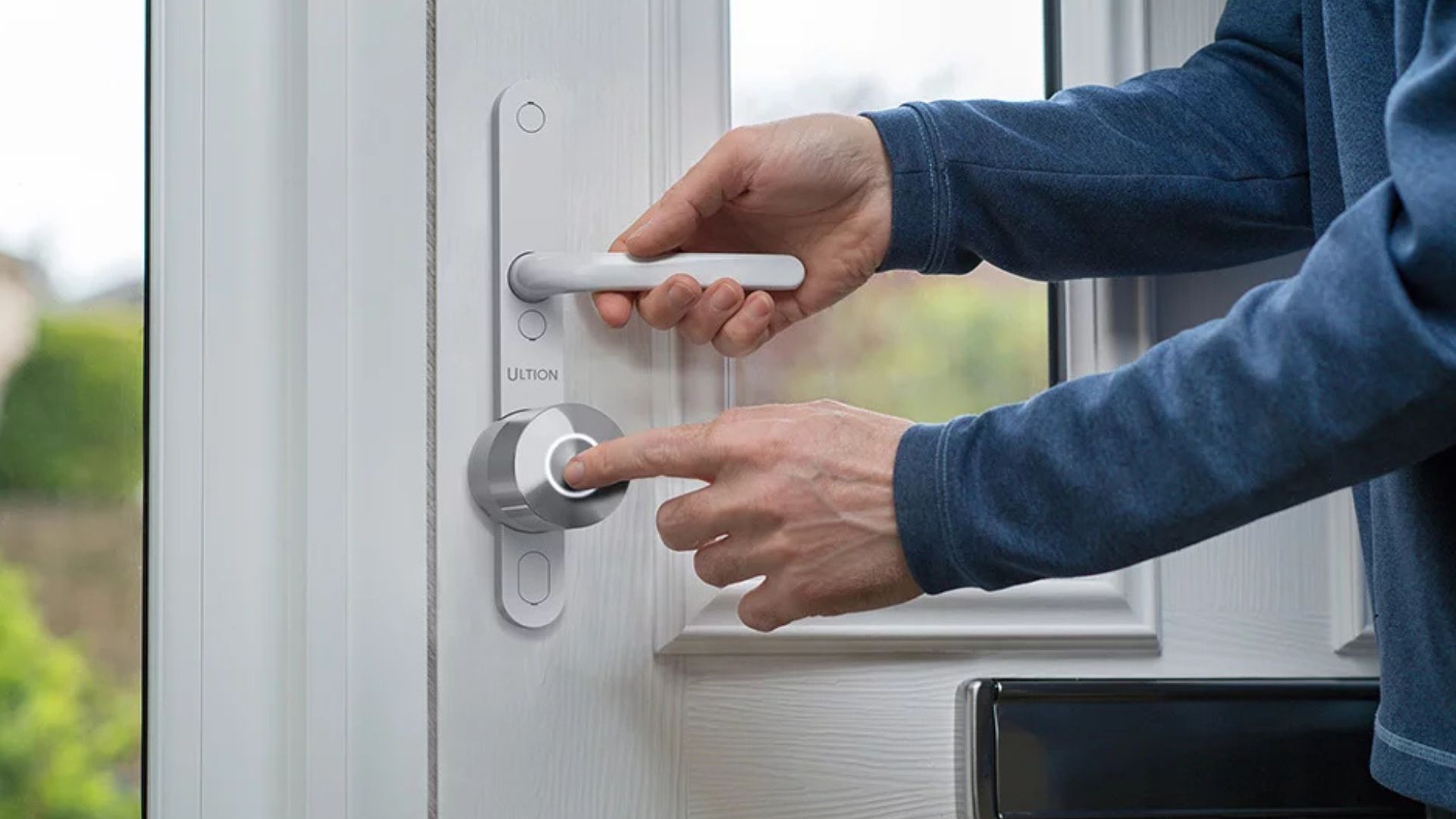
The Connectivity Standards Alliance (CSA) has officially launched the Aliro 1.0 specification, a groundbreaking communication protocol and digital credential standard designed to fundamentally transform the physical access control ecosystem. This ambitious initiative, bolstered by the significant backing of industry giants Apple, Google, and Samsung, aims to replicate the unifying impact that the Matter standard has had on the fragmented smart home market. Aliro addresses a decades-old challenge in access control: the pervasive issue of proprietary systems, closed software environments, and hardware lock-in that has historically compelled businesses, property managers, and homeowners to exclusively adopt solutions from a single vendor, hindering interoperability and consumer choice.
The core innovation of Aliro lies in its ability to securely store digital access credentials directly within the native mobile wallet applications on users’ smartphones and wearables. This approach eliminates the need for cumbersome, manufacturer-specific mobile applications or reliance on cloud-based infrastructure for basic access functions. Consequently, a single digital credential can seamlessly grant access across a diverse range of locks and entry points from different manufacturers, regardless of their physical location. This represents a significant leap forward in convenience and flexibility for users and system administrators alike.
Underpinning the Aliro specification are three distinct wireless technologies, each catering to different user interaction scenarios and installation requirements. Near Field Communication (NFC) is integrated for rapid, tap-to-unlock interactions, providing a familiar and intuitive method for physical access. Bluetooth Low Energy (BLE) is employed to support longer-range communication initiated by the user, allowing for more dynamic access scenarios. Perhaps the most transformative of the three is Ultra-Wideband (UWB) technology, which enables fully hands-free authentication. With UWB, a user can approach a secured door with their smartphone in their pocket, and the system will automatically authenticate and unlock the entry, mirroring a truly seamless and futuristic experience.
This UWB-driven hands-free functionality bears a strong resemblance to Apple’s Home Key feature, which has been available for compatible smart locks since 2021. However, Aliro’s significant advantage lies in its cross-platform compatibility. Unlike Home Key, which is primarily tied to Apple’s ecosystem and a limited number of certified lock manufacturers, Aliro extends this advanced hands-free capability to both Android and Samsung devices simultaneously, thereby democratizing this cutting-edge access experience across a much broader user base.
Beyond mere access granting, Aliro credentials are engineered with sophisticated capabilities for granular access management. The specification embeds features for access scheduling directly within the digital key itself. This means that a credential issued to a visitor or a temporary contractor can automatically enforce time restrictions and specific permissions without requiring constant internet connectivity or a dedicated third-party management application to enforce these policies. This inherent intelligence within the credential enhances security and simplifies management, particularly in dynamic environments.
Industry Collaboration and Certification Pave the Way for Interoperability
The development of Aliro 1.0 was a testament to extensive industry collaboration, with over 220 companies contributing their expertise to shape the specification. Prominent players such as Apple, ASSA ABLOY, Google, Samsung, Infineon Technologies, and STMicroelectronics were instrumental in pooling their knowledge to build a robust and comprehensive standard. Looking ahead, a significant number of companies, including Allegion, Aqara, HID, Kwikset, Nuki, NXP Semiconductors, and Qorvo, are anticipated to be among the first to achieve Aliro 1.0 certification, signaling strong market adoption intentions.
A critical design consideration for Aliro was its ability to function reliably in environments where network coverage is scarce or entirely absent. The specification is engineered to operate effectively in challenging locations such as underground car parks and elevators, which are common in commercial deployments where cellular and Wi-Fi signals are frequently unavailable, yet access control remains an indispensable requirement. This off-grid functionality significantly broadens the applicability of Aliro beyond typical residential or office settings.
It is important to clarify that Aliro operates in concert with, rather than as a replacement for, the Matter standard. While Matter is designed to manage broader smart home device communication and automation protocols, Aliro specifically addresses the direct, point-to-point authentication exchange between a mobile device and a lock reader. This symbiotic relationship means that a fully functional smart lock designed for the modern connected home will likely carry certifications for both Matter and Aliro, offering a comprehensive suite of capabilities.
The Connectivity Standards Alliance has emphasized that Aliro 1.0 is not a static release but a "living standard." Future iterations are already planned, with a roadmap that includes the addition of features such as secure credential sharing. Crucially, these future enhancements will be developed with backward compatibility in mind, ensuring that hardware certified under the initial Aliro 1.0 release will continue to function and be supported as the standard evolves. This commitment to ongoing development and backward compatibility is vital for fostering long-term trust and investment in the Aliro ecosystem.
Addressing the Fragmentation of Access Control
For decades, the physical access control market has been characterized by a high degree of fragmentation. Businesses and consumers have often found themselves locked into proprietary ecosystems dictated by their initial hardware choice. This meant that a hotel might use one key card system, a corporate office another, and a residential building yet another, with little to no ability to integrate or manage these systems collectively. The reliance on physical cards, which can be lost, stolen, or duplicated, further compounded security and convenience issues.
The introduction of smartphone-based access, while offering improvements, often created its own set of challenges. Many solutions required users to download and manage multiple apps, each linked to a specific lock manufacturer or access system. This led to a cluttered user experience and the potential for outdated apps or cloud services to compromise access. The lack of a unified standard meant that a user might have one app for their apartment door, another for their office, and a third for a gym locker, a far cry from the seamless digital experience envisioned by consumers.
Aliro’s approach, leveraging native mobile wallets, directly tackles this fragmentation. By integrating with the pre-installed wallet applications on most modern smartphones, Aliro simplifies the user experience to its most fundamental level: carrying digital keys alongside payment cards and other essential credentials. This unification not only streamlines access but also enhances security by utilizing the robust security frameworks already built into these mobile operating systems.
The Technical Underpinnings: NFC, BLE, and UWB
The thoughtful integration of NFC, BLE, and UWB technologies within the Aliro 1.0 specification is a key factor in its potential success.
-
NFC (Near Field Communication): This technology, widely adopted in contactless payments and transit systems, provides a highly reliable and secure method for very close-range communication. For access control, NFC offers a secure "tap-and-go" experience. A user simply needs to bring their phone or wearable within a few centimeters of the reader, and the digital credential is read and verified. This is ideal for scenarios where users are actively presenting their device, such as entering a secured building or unlocking their car. The inherent short range of NFC also adds a layer of security, as it requires deliberate proximity.
-
Bluetooth Low Energy (BLE): BLE extends the range of interaction, allowing for communication over several meters. This is beneficial for situations where a user might be approaching a door from a short distance, such as a residential gate or a car park entrance. BLE allows for user-initiated authentication, meaning the user might need to perform a small action on their phone to confirm their intent to access, providing a balance between convenience and security. BLE’s low power consumption is also a significant advantage, ensuring that it doesn’t heavily drain the battery of the user’s device.
-
Ultra-Wideband (UWB): UWB represents the pinnacle of convenience and security for hands-free access. This technology offers highly precise spatial awareness, enabling devices to communicate their exact position relative to each other with centimeter-level accuracy. In the context of Aliro, UWB allows for a truly seamless and secure hands-free experience. As a user approaches a door with their UWB-enabled device in their pocket, the system can accurately detect their presence and proximity, initiating the authentication process automatically without any user interaction. This technology is particularly transformative for scenarios where users have their hands full, such as carrying groceries or pushing a stroller. The precision of UWB also mitigates the risk of "relay attacks" where an attacker might try to extend the range of a wireless signal to gain unauthorized access.
The combination of these three technologies ensures that Aliro can adapt to a wide array of use cases, from rapid, intentional authentication to completely passive, hands-free entry, all while maintaining a high level of security.
Implications for Consumers and Businesses
The widespread adoption of Aliro promises significant benefits for both consumers and businesses.
For consumers, Aliro means:
- Simplified Digital Wallet: Consolidating access credentials alongside payment methods in a single, secure location.
- Enhanced Convenience: The elimination of multiple apps and the ability to use native wallet features.
- Greater Choice: Freedom to select locks and access systems from different manufacturers without sacrificing interoperability.
- Improved Security: Leveraging the robust security of mobile operating systems and the advanced capabilities of UWB for secure, contactless access.
- Broader Accessibility: Making advanced hands-free access available to a wider range of users beyond a single mobile platform.
For businesses and property managers, Aliro offers:
- Reduced Hardware Costs: Potentially lowering the long-term cost of access control systems by avoiding vendor lock-in and enabling the use of more competitive hardware.
- Streamlined Management: Centralized credential management that can be configured with granular permissions and schedules, reducing administrative overhead.
- Enhanced Operational Efficiency: Easier provisioning and de-provisioning of access for employees, visitors, or tenants.
- Improved Security Posture: The ability to implement more sophisticated access control policies with greater ease and reliability.
- Future-Proofing: Investing in a standard that is designed for continuous evolution and backward compatibility.
The backing by major technology players like Apple, Google, and Samsung is a powerful indicator of Aliro’s potential to become a de facto standard in the access control industry. Their commitment suggests that Aliro will be deeply integrated into the core functionalities of future mobile devices, making it a natural and expected part of the user experience.
The journey from a nascent specification to widespread industry adoption is often complex. However, the foundational principles of Aliro—interoperability, security, and user convenience—address fundamental pain points in the current access control landscape. As more manufacturers embrace Aliro certification and integrate it into their product lines, the vision of a truly unified and seamless physical access control ecosystem is poised to become a reality. The CSA’s Aliro 1.0 specification marks a pivotal moment, signaling a future where unlocking doors is as intuitive and integrated as making a payment or checking the time.
