
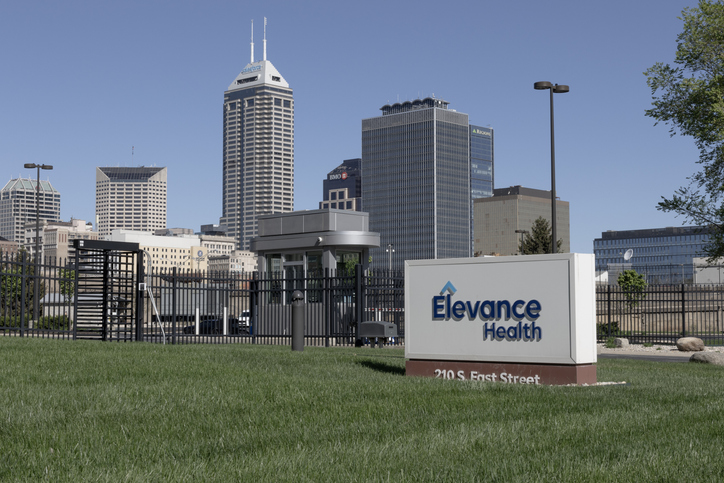
At the annual ViVE conference held in Los Angeles, Ratnakar Lavu, the Chief Digital Information Officer of Elevance Health, addressed the burgeoning concerns surrounding the use of artificial intelligence in the health insurance sector. During a high-profile interview, Lavu detailed the company’s strategic commitment to maintaining a "human-in-the-loop" philosophy, particularly regarding the contentious issue of claims denials. As the healthcare industry grapples with the integration of generative AI and automated decision-making, Elevance Health—formerly known as Anthem, Inc.—is positioning itself as a proponent of responsible innovation, seeking to balance administrative efficiency with clinical integrity and patient trust.
The backdrop of Lavu’s presentation is a period of intense scrutiny for national payers. In recent years, several major insurance providers have faced litigation and public outcry over the use of algorithmic tools that critics argue are designed to prioritize cost-cutting over patient care. Against this landscape, Lavu emphasized that while Elevance Health leverages AI to accelerate the pace of prior authorization approvals and to streamline the processing of claims, the company has established an inviolable boundary: AI is not permitted to issue denials. According to Lavu, any claim or authorization request that cannot be automatically approved by the system is diverted to a human clinician for a comprehensive manual review. This policy is intended to mitigate the risk of automated errors and to ensure that complex medical necessities are evaluated by qualified professionals rather than black-box algorithms.
The Context of ViVE 2024 and the Evolution of Elevance Health
The ViVE conference serves as a premier gathering for healthcare information technology leaders, bringing together C-suite executives, providers, and digital health innovators to discuss the future of the industry. The 2024 event was dominated by discussions on Large Language Models (LLMs) and the ethical deployment of AI. For Elevance Health, the conference provided a platform to reinforce its identity as a "health-tech" company rather than just a traditional insurer.
Since its rebranding from Anthem in June 2022, Elevance Health has undergone a significant digital transformation. The name change was intended to reflect a shift toward "whole-health" management, integrating physical, mental, and social health drivers. Central to this transformation has been the aggressive adoption of digital tools to manage its nearly 47 million members. Lavu’s insights at ViVE represent the latest chapter in this evolution, highlighting how the company utilizes its massive data sets to improve operational workflows while navigating the regulatory and ethical minefields of the AI era.
Addressing the Prior Authorization Crisis
One of the most significant pain points in modern American medicine is the prior authorization process. Designed to control costs by requiring providers to obtain pre-approval for certain treatments, the process is frequently criticized for causing delays in care and increasing administrative burnout. A 2023 survey conducted by the American Medical Association (AMA) underscored the depth of this frustration, revealing that 61% of physicians believe the use of AI by payers is actively increasing the rate of prior authorization denials. Furthermore, 94% of physicians reported that prior authorization policies lead to delays in care for patients whose treatments require approval.
Lavu addressed these concerns by explaining how Elevance Health uses AI to solve "friction points" rather than create barriers. By deploying AI to analyze claims for missing documentation or coding errors at the point of submission, the company aims to prevent claims from becoming "stuck" in administrative limbo. This proactive approach allows for faster approvals for routine procedures, freeing up human resources to focus on more complex cases. Lavu noted that by identifying missing information early, the AI tools help providers correct submissions before they reach the stage of a formal denial, thereby reducing the "ping-pong" effect between doctors and insurers.
Strategic Applications: From Call Centers to Virtual Assistants
Beyond the realm of claims and authorizations, Elevance Health has integrated AI across its entire operational spectrum. Lavu highlighted several key areas where AI is driving efficiency:
- Enhanced Virtual Assistants: The company has invested heavily in AI-powered member interfaces. These virtual assistants are designed to navigate the complexities of health insurance, helping members find in-network providers, understand their cost-sharing responsibilities, and obtain breakdowns of procedure costs. This transparency is aimed at reducing "surprise billing" and empowering consumers to make informed financial decisions about their care.
- Call Center Optimization: Elevance Health manages approximately one million member interactions per month. To handle this volume, the company uses AI to synthesize data from disparate legacy systems into a unified dashboard for customer service agents. This allows agents to resolve inquiries more rapidly without having to toggle between multiple screens.
- Post-Interaction Analysis: AI models are utilized to generate "post-call wrap-ups" at scale. By analyzing transcriptions and outcomes of these interactions, Elevance can identify systemic issues, such as recurring confusion over specific policy language, and implement improvements across the organization.
- Administrative Burden Reduction: By automating the summarization of medical records and the extraction of clinical data, the company seeks to reduce the time clinicians spend on paperwork, theoretically allowing them more time for patient interaction.
Governance and the NIST AI Risk Management Framework
As AI becomes more deeply embedded in healthcare, the risk of "hallucinations"—where an AI generates false or misleading information—and algorithmic bias becomes a primary concern. To counter these risks, Lavu stated that Elevance Health has implemented a rigorous governance program aligned with the National Institute of Standards and Technology (NIST) AI Risk Management Framework (RMF).
The NIST framework is a voluntary standard that provides a structured approach to managing AI-related risks. By adopting these guidelines, Elevance Health focuses on five key pillars:
- Explainability: Ensuring that the logic behind an AI’s output can be understood and audited by humans.
- Transparency: Being open about where and how AI is being used within the organization.
- Bias Mitigation: Actively testing algorithms to ensure they do not produce discriminatory outcomes based on race, gender, or socioeconomic status.
- Hallucination Prevention: Implementing guardrails to verify the factual accuracy of AI-generated content.
- Human Auditing: Maintaining a constant cycle of human oversight to validate AI outputs and adjust models as necessary.
Lavu emphasized that "responsible AI" is not just a buzzword for the company but a core operational requirement. This governance structure is intended to build trust with both providers and members, who are increasingly wary of how their sensitive health data is being utilized by automated systems.
Collaborative Ecosystems: Partnering with Big Tech and Startups
A notable aspect of Elevance Health’s strategy is its collaboration with the broader technology ecosystem. Lavu revealed that the company is working closely with "Big Tech" giants, including Anthropic, OpenAI, Google, and Amazon Web Services (AWS). These partnerships are not merely transactional; Elevance is positioning itself as a clinical and operational advisor to these tech companies.
"We are helping them think through the complexity of healthcare," Lavu remarked. The goal is to bridge the gap between pure technological capability and the reality of clinical workflows. Healthcare is governed by a labyrinth of reimbursement dynamics, federal policies (such as HIPAA and the No Surprises Act), and regional variations in care. By collaborating with AI developers, Elevance Health ensures that the tools being built are "healthcare-aware" and capable of functioning within the specific constraints of the industry.
Simultaneously, the company is engaging with healthcare AI startups. These smaller, more agile firms often provide niche solutions for specific clinical tasks. By integrating these startups into its platform, Elevance can pilot innovative tools while providing the startups with the scale and data necessary to refine their models.
Industry Implications and the Regulatory Landscape
The stance taken by Elevance Health comes at a time of increased regulatory activity. The Centers for Medicare & Medicaid Services (CMS) recently issued a final rule (CMS-4201-F) for 2024, which clarified that Medicare Advantage organizations may use AI to assist in making coverage determinations, but they must ensure that these tools do not result in a narrower range of coverage than traditional Medicare. The rule mandates that decisions must be based on an individual’s medical history and the physician’s clinical notes, rather than solely on an algorithmic prediction.
The industry is also watching the legal system closely. Recent class-action lawsuits against other major insurers allege that the use of AI tools led to the mass denial of claims for elderly patients in post-acute care settings. These cases have put the entire industry on notice, making Lavu’s public commitment to human-led denials a significant strategic differentiator.
Industry analysts suggest that if Elevance Health can successfully demonstrate that AI can lower costs and speed up approvals without increasing denial rates, it may set a new standard for the industry. However, the burden of proof remains high. Providers remain skeptical, and the "transparency" promised by the NIST framework will be tested as AI tools become more sophisticated.
Conclusion: Balancing Innovation with Clinical Safety
Ratnakar Lavu’s presentation at ViVE 2024 underscores a pivotal moment for Elevance Health and the broader insurance industry. The promise of AI to eliminate administrative waste—which some estimates suggest accounts for nearly 25% of total U.S. healthcare spending—is too significant to ignore. However, the risks to patient safety and the potential for eroding the doctor-patient relationship are equally substantial.
By drawing a "clear line" against AI-driven denials and committing to a framework of responsible governance, Elevance Health is attempting to chart a middle path. The success of this strategy will depend on the company’s ability to maintain transparency, prevent algorithmic bias, and ensure that technology serves as an assistant to, rather than a replacement for, human clinical judgment. As Lavu noted, the goal is to move the needle forward on innovation while never losing sight of the safety and trust required in the delivery of healthcare. The coming years will determine whether this balanced approach can truly resolve the systemic frictions of the American healthcare system or if the integration of AI will introduce a new set of complexities for patients and providers alike.
