

Google Ads is strategically prioritizing Performance Max (PMax) campaigns, signaling a significant shift for advertisers seeking to maximize their return on investment in the evolving digital advertising landscape. At its recent Marketing Live 2024 event, the tech giant introduced a suite of new features designed to refine PMax’s capabilities and empower advertisers with greater control and insight. These advancements, focusing on robust experimentation, granular data exclusions, and enhanced product overlap analysis, aim to address long-standing advertiser needs and unlock incremental performance gains across Google’s vast ad inventory.
Revolutionizing Performance Max with Advanced Experimentation Tools
The introduction of Performance Max experiments represents a pivotal development, allowing advertisers to rigorously test and validate the impact of PMax against their existing campaign strategies. This feature expands upon the already robust experimentation framework within Google Ads, which has historically enabled A/B testing of bid strategies, targeting options, and creative elements.
Previously, advertisers could test different bid strategies, such as optimizing towards a cost-per-lead (CPL) target versus a return-on-ad-spend (ROAS) goal, to understand which approach yielded the best results for specific business objectives. Now, this powerful testing methodology is being extended directly to Performance Max campaigns, offering advertisers unprecedented flexibility in how they evaluate and integrate PMax into their overall media mix.
Google is rolling out three distinct types of Performance Max experiments, each designed to address different testing scenarios and provide actionable insights:
-
Campaign Comparison Experiments: These experiments allow advertisers to directly pit a Performance Max campaign against an existing, established campaign type. For instance, an advertiser currently running a successful Shopping campaign can allocate 50% of their traffic to this existing campaign and the other 50% to a comparable Performance Max campaign. This enables a direct, data-driven comparison of their relative performance in terms of conversions, cost, and overall return on investment. This is particularly valuable for businesses heavily reliant on Shopping ads, providing a clear benchmark for PMax adoption.

-
Final URL Expansion Experiments: This type of experiment focuses on the optimization of landing page performance within PMax. Advertisers can choose to test the effectiveness of Google’s automated final URL expansion against manually selected URLs. By splitting traffic 50/50, advertisers can ascertain whether their curated landing pages or Google’s dynamic selection based on user intent and page relevance drives superior conversion rates and engagement. This feature offers granular control over the user journey post-click, a critical factor in conversion success.
-
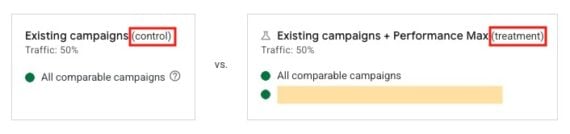
Uplift Experiments: Arguably the most sophisticated and potentially impactful of the new experiment types, Uplift experiments are designed to quantify the incremental value that Performance Max campaigns bring when run alongside other campaign types. In this setup, traffic is again split 50/50 between a control group and a treatment group. The treatment group includes the Performance Max campaign in question, alongside any "comparable campaigns." Google defines comparable campaigns as those that share the same domain, at least one overlapping conversion goal, or overlapping geographic targeting. The objective is to isolate and measure the additional performance generated by the inclusion of PMax. For example, an advertiser running a PMax campaign focused on winter jackets could have comparable campaigns such as a Search campaign targeting "winter jackets" and a Demand Gen campaign with a winter theme. The Uplift experiment would then reveal how much additional value the PMax campaign contributes beyond what these other campaigns are already achieving. This feature is crucial for advertisers looking to understand the synergistic benefits of a multi-campaign strategy orchestrated by PMax.
The strategic rollout of these experiments signals Google’s commitment to demystifying Performance Max and providing advertisers with the confidence to scale their investments. By offering these controlled testing environments, Google is enabling advertisers to move beyond assumption and make data-backed decisions about PMax’s role in their advertising ecosystems. This directly addresses a common advertiser concern: the perceived "black box" nature of PMax, offering transparency and empirical evidence of its efficacy.
Enhancing Control with Advanced Data Exclusions
In a move that addresses a long-standing advertiser request for greater control over audience targeting, Google has introduced a significant enhancement to its data exclusion capabilities within Performance Max campaigns. Historically, advertisers have been able to exclude specific keywords and placements from their campaigns to refine targeting and avoid irrelevant impressions. However, the ability to exclude specific audience segments, particularly customer match lists and remarketing audiences, remained a limitation for many campaign types, including PMax.
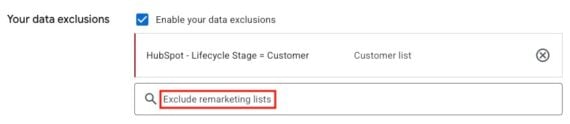
The newly implemented feature, accessible within campaign settings under "Your data exclusions," now allows advertisers to actively exclude both customer match lists and remarketing audiences. This provides advertisers with a powerful new lever to manage who sees their ads, preventing wasted ad spend on users who are unlikely to convert or who may already be highly engaged customers.
The implications of this update are far-reaching. For instance, an e-commerce business might want to exclude its most loyal customer segments (identified through a customer match list) from seeing promotional ads for products they have already purchased or are likely to purchase without further prompting. Similarly, advertisers can now exclude recent website visitors who have already converted or are in the final stages of the sales funnel from seeing certain remarketing campaigns, thereby streamlining their remarketing efforts and focusing on re-engaging users who require more nurturing.
However, as industry analysts have noted, the judicious application of these exclusions is paramount. "While the ability to exclude audiences is a welcome addition, advertisers must approach it with a clear strategy," commented a senior digital marketing consultant. "Overly aggressive exclusions can inadvertently limit reach and stifle campaign performance. The key is to understand your customer journey and identify specific segments where exclusion will genuinely drive efficiency and improve overall ROI, rather than simply reducing impressions." This nuanced approach underscores the importance of strategic audience management and a deep understanding of customer behavior.
This enhanced control empowers advertisers to refine their targeting with greater precision, ensuring that ad spend is allocated to the most receptive audiences at the most opportune moments. It signifies a step towards a more intelligent and personalized advertising experience, where campaigns are not only optimized for performance but also for audience relevance and lifecycle stage.
Tackling Product Overlap for Optimized Shopping Performance
The third key enhancement addresses the challenge of product overlap, a common issue for advertisers managing large product catalogs across multiple Google Ads campaigns, especially those utilizing Shopping and Performance Max. This new feature provides a centralized view to identify and manage instances where the same products are being advertised across different campaigns.
Advertisers can access this functionality by navigating to the "Products" section within the "Campaigns" area of their Google Ads account. Here, they will find a comprehensive list of all their advertised products, accompanied by associated performance data. Crucially, by clicking on an individual product, advertisers can now view its attributes and access a dropdown menu that lists all the campaigns currently featuring that product.
This visibility is instrumental in optimizing product-level advertising. Advertisers can analyze the performance of each product across different campaigns and identify underperforming instances. The strategic implication is akin to applying negative keywords to broad match queries; by identifying and addressing product overlap, advertisers can direct their budget towards the campaigns and strategies that yield the best results for specific products. For example, if a particular product is underperforming in a broad Performance Max campaign but excelling in a highly targeted Shopping campaign, an advertiser can strategically adjust bids, budgets, or even exclude that product from the underperforming campaign to consolidate investment where it’s most effective.
This feature is not exclusive to Performance Max but is particularly relevant in its context, given PMax’s broad reach across Google’s inventory. It allows advertisers to bring a level of precision and control to their Shopping efforts that was previously more challenging to achieve. By enabling a more strategic allocation of resources at the product level, this enhancement aims to prevent cannibalization of conversions and ensure that each product is being promoted through the most effective channels.
The integration of these three enhancements – advanced experimentation, granular data exclusions, and product overlap management – underscores Google’s ongoing commitment to making Performance Max a more transparent, controllable, and ultimately, more effective advertising solution. As the digital advertising landscape continues to evolve, these updates provide advertisers with the tools they need to adapt, optimize, and achieve their business objectives with greater confidence and efficiency. The company’s proactive approach in addressing advertiser feedback and introducing these significant upgrades suggests a strong future for Performance Max as a cornerstone of digital advertising strategies.
