
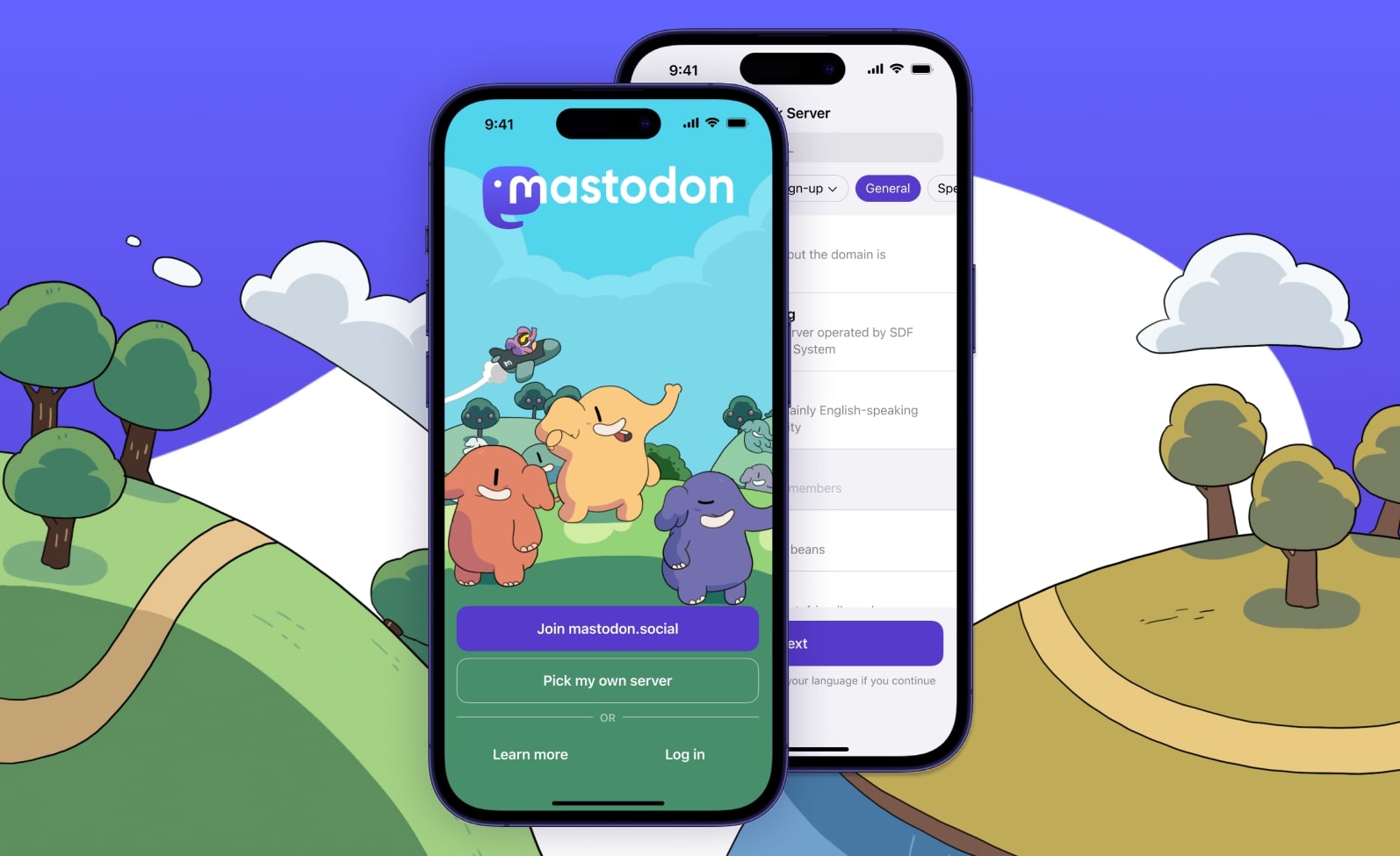
Mastodon, the decentralized, open-source social media platform often positioned as a robust alternative to centralized giants like X (formerly Twitter) and Threads, announced a significant strategic pivot this week. The organization outlined comprehensive plans to make its application more accessible and intuitive for new users, simultaneously launching initiatives specifically designed to attract and retain content creators. These changes, detailed in a recent blog post co-authored by Technical Director Renaud Chaput and Product Designer Imani Joy, signal a proactive effort to address long-standing challenges related to user adoption and engagement, while leveraging recent organizational shifts and an expanded development team.
The Genesis of a Decentralized Vision: Mastodon’s Evolution and the Fediverse
Born out of a desire for a more user-controlled and community-driven online space, Mastodon emerged as a prominent player within the "fediverse"—a sprawling, interconnected network of social platforms operating on open standards, primarily the ActivityPub protocol. Unlike monolithic social networks where a single corporation controls all data and moderation, the fediverse comprises thousands of independent servers (or "instances") run by individuals, communities, or organizations. Users choose an instance to join, and from there, can interact with users on any other compatible instance, creating a vast, federated social web. This architecture inherently offers resilience against single points of failure, censorship, and data exploitation, aligning with principles of digital sovereignty and user autonomy.
Mastodon’s profile saw an unprecedented surge in October 2022 following Elon Musk’s acquisition of Twitter, now rebranded as X. The ensuing period of uncertainty, policy shifts, and technical glitches on X prompted a significant exodus of users, journalists, academics, and public figures seeking alternative platforms. Mastodon, with its established infrastructure and philosophical alignment, became a primary destination for many. This "Twitter Exodus" led to rapid growth spurts, with hundreds of thousands of new users flocking to the platform within weeks. However, this influx also highlighted one of Mastodon’s most significant hurdles: its inherently more complex onboarding process. Newcomers, accustomed to simply signing up with an email and password, often found themselves bewildered by the necessity of choosing a server, understanding federation, and navigating the nuances of a decentralized ecosystem. This complexity, while fundamental to its design, frequently resulted in poor user retention, as many new registrants struggled to find their footing or simply abandoned their accounts.
Addressing the Onboarding Challenge: A Simplified Gateway to Decentralization
Recognizing that ease of entry is paramount for broader adoption, Mastodon’s core development team has prioritized a major overhaul of the onboarding experience. The current system, which requires new users to select an instance before even creating an account, has been identified as a significant barrier. While the concept of choosing a community (server) resonates with the platform’s decentralized ethos, the practical implementation has often proven intimidating for those unfamiliar with the fediverse.
The forthcoming updates aim to streamline this initial setup, making the process more intuitive without compromising the core principles of decentralization. While specific technical details of the new onboarding flow are still under wraps, the stated goal is to guide new users through server selection with clearer explanations, perhaps offering curated recommendations based on interests or demographics, or even providing a temporary "starter" server experience. Crucially, the organization also plans to actively promote smaller, more specialized servers. This move is a direct response to the observed trend where new users often gravitate towards the largest, most populated instances, inadvertently undermining the very strength of a distributed network. As the blog post emphasizes, "Mastodon is best when communities are spread across many independent servers, each with its own character and focus." By encouraging diversity in server choices, Mastodon seeks to foster a more vibrant, resilient, and truly decentralized ecosystem, where niche communities can thrive without being overshadowed by dominant instances. This strategy aims to reinforce the platform’s foundational values, ensuring that growth contributes to decentralization rather than inadvertently centralizing user populations within a few large servers.
Empowering the Backbone: Robust Tools for Server Operators
The health and stability of the fediverse are intrinsically linked to the capabilities of its server operators. These independent administrators bear the responsibility for maintaining their instances, moderating content, and ensuring a safe and functional environment for their users. Historically, these duties have required significant technical expertise and time commitment, often leading to burnout or inconsistent moderation practices across the network. To bolster this critical infrastructure, Mastodon is introducing a suite of new administrative tools designed to alleviate the burden on indie server operators.
Among these enhancements are features aimed at simplifying maintenance and moderation. A key addition will be the ability to utilize external blocklists, allowing administrators to automatically filter out known spam accounts or instances that engage in abusive behavior, thereby reducing manual workload and enhancing community safety. Furthermore, Mastodon plans to offer integrated content scanning capabilities for detecting illegal content and spam, a crucial step in maintaining compliance and user trust. Another significant development involves tools to reduce media storage usage. Serving remote media posts through a trusted third party will offload substantial data storage requirements from individual server operators, addressing a common financial and technical strain, particularly for smaller instances with limited resources. These improvements are not merely technical upgrades; they represent a strategic investment in the longevity and scalability of the decentralized model. By making server operation more manageable and less resource-intensive, Mastodon aims to encourage the creation and sustainability of more diverse instances, further strengthening the fediverse’s distributed nature and reducing the barriers to entry for potential administrators.
Cultivating Creativity: New Features for Content Creators
Beyond user acquisition and infrastructure support, Mastodon is making a concerted effort to attract and empower content creators, including public figures, journalists, institutions, and independent thought leaders. This push recognizes the vital role creators play in driving engagement and drawing new audiences to any social platform. To this end, a series of app updates are specifically tailored to meet the needs of creative professionals.
A central feature in this initiative is a redesigned user profile. This enhanced profile will allow individuals to more effectively showcase their work, whether it be articles, artistic portfolios, podcasts, or other forms of digital content. The goal is to provide creators with a dedicated space to present their professional identity and portfolio, moving beyond a simple stream of posts. Complementing this, an enhanced compose experience is in the works, likely offering more robust formatting options, improved media embedding, and tools to streamline the content creation process. Perhaps the most innovative feature aimed at creators is a new email notification option. This functionality would enable individuals to follow a creator’s updates via email, even if they do not yet possess a Mastodon account. This bridges a significant gap, allowing creators to reach a wider audience that might be hesitant to join a new social platform, while simultaneously exposing potential new users to Mastodon content. This feature could prove particularly appealing to newsletter writers, independent journalists, and other creators who rely on direct audience engagement and seek to expand their reach beyond the confines of a single platform. By catering to the specific needs of creators, Mastodon aims to foster a more vibrant ecosystem of original content, enhancing its appeal as a viable and creator-friendly alternative to established platforms.
Recent Innovations: Building Momentum and Modernizing the Platform
The announced strategic updates are not isolated incidents but build upon a series of significant feature rollouts in recent months, demonstrating a sustained commitment to platform modernization and user experience. In September 2025, Mastodon introduced "Quote Posts," a feature similar to those found on X and other platforms, allowing users to embed and comment on other posts. Crucially, Mastodon’s implementation included additional user controls, reflecting its emphasis on preventing misuse and "dunking" culture often associated with such features on centralized networks. This nuanced approach aims to facilitate discussion while maintaining a respectful environment.
Following this, in October 2025, Mastodon revealed plans for its own take on "Starter Pack-style" user recommendations, dubbed "Collections." These curated collections are designed to help new users discover interesting accounts and communities more easily, addressing another aspect of the onboarding challenge by providing a guided entry into the diverse content available on the fediverse. These recent innovations highlight a proactive development strategy focused on iteratively improving the user experience, adopting popular functionalities while adapting them to Mastodon’s unique decentralized and community-focused philosophy.
A New Era of Leadership and Governance: The Nonprofit Transition
These sweeping strategic and technical changes coincide with a significant restructuring of Mastodon’s leadership and organizational framework, marking a new chapter for the platform. In November 2025, founder Eugen Rochko stepped down from his role as CEO, a pivotal moment that followed the platform’s announced transition to a nonprofit structure at the beginning of the same year. This shift to a nonprofit model underscores Mastodon’s commitment to its public good mission, prioritizing community welfare and open-source development over commercial interests or shareholder returns. This structure is intended to ensure the platform’s long-term sustainability and align its governance with its decentralized ethos.
In Rochko’s place, Austria-based Felix Hlatky assumed the role of Executive Director, tasked with guiding the organization through its next phase of growth and development. Further strengthening its operational and legal capabilities, Mastodon recently announced a division of Hlatky’s duties. Dr. Marius Rothermund, a certified German lawyer, has joined the leadership team, primarily providing legal expertise during the ongoing restructuring. This legal focus is particularly crucial as the organization navigates its transition across three distinct legal and operational markets: the United States, Germany, and Belgium. This strategic expansion of leadership and legal counsel reflects Mastodon’s maturation as a global platform, requiring robust governance and compliance frameworks to support its ambitious growth plans and ensure its stability as a nonprofit entity. The restructuring is a clear signal that Mastodon is professionalizing its operations to meet the demands of a rapidly evolving digital landscape while staying true to its founding principles.
Current Landscape, Future Outlook, and Broader Implications
Today, Mastodon’s monthly active user base hovers between 750,000 and 1 million, depending on the tracking source. While a third-party tracker estimates closer to 750,000, another suggests as many as 1 million, with Mastodon’s own site reporting around 785,000. These figures, while modest compared to the hundreds of millions on X or Threads, represent a dedicated and growing community that values privacy, open standards, and community control. However, the path to sustained, widespread adoption remains challenging.
The implications of Mastodon’s strategic overhaul are significant. By prioritizing newcomer onboarding, the platform directly addresses its most persistent barrier to growth. A simpler, more guided entry process could dramatically improve user retention, transforming temporary curiosity into lasting engagement. The focus on empowering server operators is equally critical, as robust and well-managed instances are the bedrock of a healthy fediverse. By reducing the technical and administrative burden, Mastodon fosters a more diverse and resilient network of communities. Furthermore, the push to attract creators, particularly through features like the email notification option, has the potential to expand Mastodon’s reach beyond its existing user base, drawing in audiences who may not yet be ready to fully commit to a new social media platform but are interested in specific content.
In the broader social media landscape, Mastodon continues to carve out a unique niche. While it may never achieve the sheer scale of centralized platforms, its strength lies in its decentralized architecture, open-source nature, and community-driven ethos. The competition from new decentralized-leaning alternatives like Bluesky, which operates on its own AT Protocol, or Meta’s Threads, which has committed to integrating with the fediverse via ActivityPub, underscores the growing interest in alternative social models. Mastodon’s current strategic moves position it to better compete in this evolving environment, demonstrating a clear commitment to balancing its core decentralized principles with the pragmatic need for user-friendliness and creator support. The success of these initiatives will not only determine Mastodon’s future trajectory but could also offer a compelling blueprint for how decentralized social media can thrive and expand its influence in an increasingly centralized digital world.
