
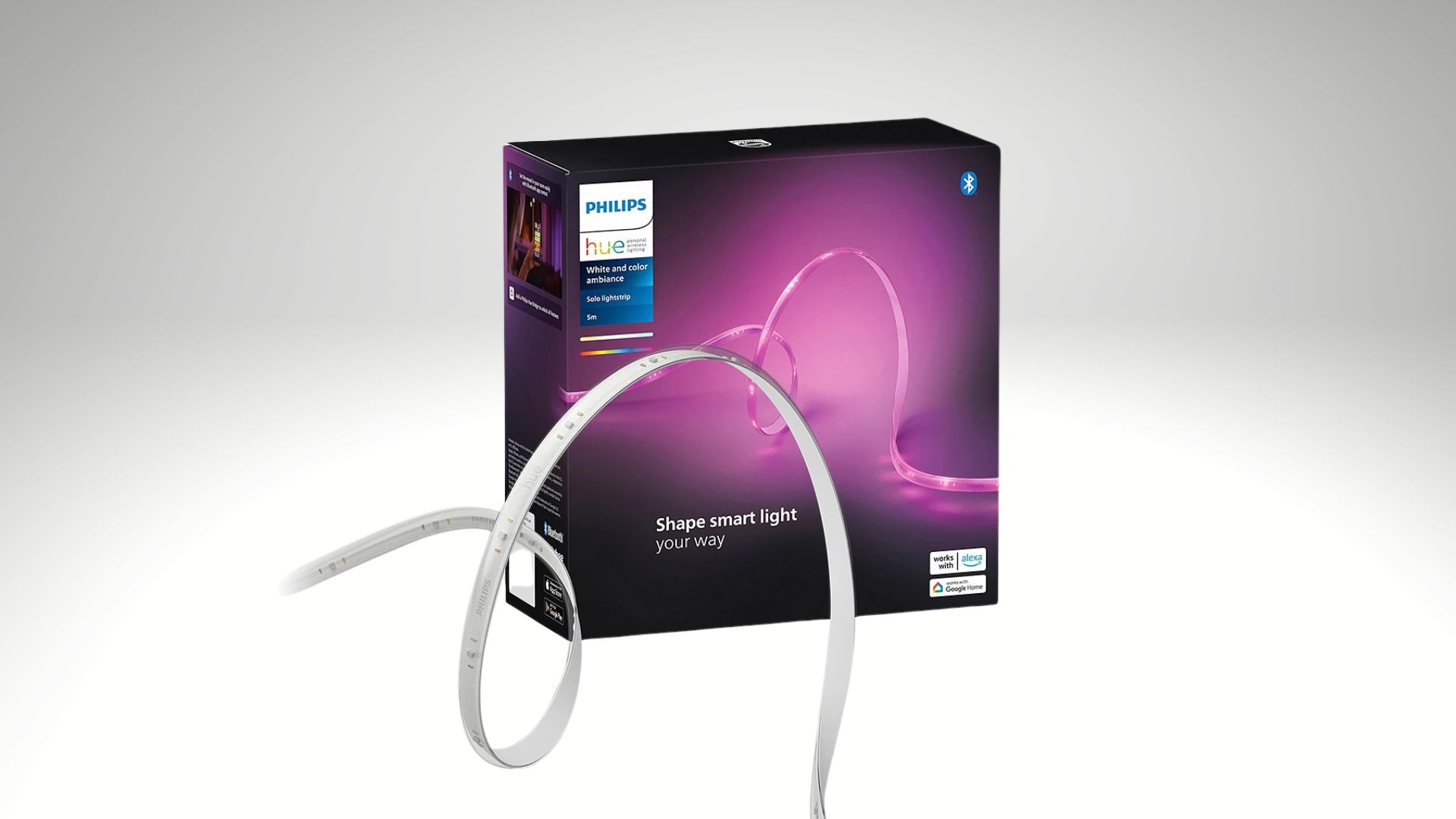
Philips Hue has officially launched its new Essential Light Strip in the United Kingdom, a move that signals a strategic expansion of its smart lighting portfolio aimed at a more budget-conscious consumer base. This introduction follows an earlier debut in the United States, indicating a phased global rollout for the brand’s latest entry-level offering. The Essential Light Strip represents Philips Hue’s commitment to democratizing smart lighting, providing a more affordable entry point without entirely sacrificing the core functionalities that have defined the brand’s premium reputation. This development is particularly noteworthy given the increasing consumer interest in home automation and customizable ambient lighting solutions.
A New Era for Philips Hue Strip Lighting
The Essential Light Strip is not merely an isolated product launch but part of a comprehensive refresh of Philips Hue’s existing light strip range. This strategic update aims to streamline its product offerings and cater to a wider spectrum of user needs and financial considerations. Available now through select UK retailers, including prominent online platforms like Very, the 5-meter (approximately 16.4-foot) version of the Essential Light Strip is priced at £69.99. This price point positions it as one of the most economically accessible Philips Hue branded light strips to date, a significant factor for consumers who may have previously found the brand’s higher-end options to be prohibitively expensive. The company’s historical pricing strategy has often placed its premium products in a higher bracket, making this accessible option a potentially game-changing move for market penetration.
Core Functionality and Enhanced Ambiance
Despite its more accessible price tag, the Essential Light Strip does not compromise on delivering core smart lighting capabilities. It is capable of producing both white and colored gradient lighting effects, allowing users to paint their spaces with a vast array of hues and dynamic light transitions. The ability to adjust brightness offers granular control over ambiance, from subtle background illumination to more vibrant and eye-catching displays. Furthermore, the strip supports a broad color temperature range, spanning from a warm 2,200 Kelvin (K) to a cool 6,500K. This versatility enables users to tailor the lighting to suit various activities and times of day, mimicking natural daylight cycles or creating specific moods for relaxation, focus, or entertainment.
The Philips Hue app serves as the central command for the Essential Light Strip, offering a user-friendly interface for customization. The app includes a library of preset scenes, thoughtfully curated to enhance different moods and occasions. Whether a user is seeking to cultivate a serene atmosphere for an evening unwind, create a festive ambiance for holiday celebrations, or set the stage for a productive work session, these pre-programmed scenes provide an effortless starting point. For users prioritizing longevity and reliability, the LEDs within the Essential Light Strip are rated for approximately 15,000 hours of use. This substantial lifespan ensures that the product will offer consistent performance over an extended period, contributing to its overall value proposition.
Integration and Smart Home Ecosystem
A key aspect of the Philips Hue ecosystem is its reliance on the Hue Bridge for unlocking the full suite of advanced features. When connected to a Hue Bridge, the Essential Light Strip gains access to a more sophisticated level of control and integration. This includes seamless integration with other smart home platforms, notably through the Matter standard. Matter, an emerging connectivity standard, aims to simplify and unify the smart home landscape by enabling devices from different manufacturers to communicate with each other more effectively. By supporting Matter, the Essential Light Strip becomes compatible with a wider ecosystem of smart home devices, enhancing its utility and future-proofing its integration capabilities. This broad compatibility is a significant advantage for users looking to build a cohesive and interconnected smart home.
However, it is important to note that the Essential Light Strip can still be utilized effectively without a Hue Bridge. In this configuration, users can still leverage the basic app-based controls for adjusting colors, brightness, and accessing preset scenes. This offers a lower barrier to entry for those who may not yet own a Hue Bridge or are only beginning their smart lighting journey. The flexibility to operate both with and without the bridge caters to a broader audience and allows for incremental upgrades to a smart home setup.
Understanding the Limitations and Trade-offs
As an entry-level product, the Essential Light Strip naturally comes with certain limitations when compared to Philips Hue’s more premium light strip offerings. One notable difference lies in its dimming capability. The Essential model can dim down to 2% of its maximum brightness. While this provides a good range of low-light settings, higher-end Philips Hue strips can dim considerably further, down to 0.2%, offering even finer control for creating very subtle ambient lighting effects.
The color blending technology is another area where the Essential model exhibits a less sophisticated performance compared to its premium counterparts. While it can produce gradient effects, the transitions and the nuances of color mixing may not be as refined as those found in more advanced strips. Furthermore, unlike some of the premium strips that can be extended with additional segments to create longer runs of light, the Essential Light Strip cannot be extended. However, it does retain the practical feature of being cuttable to size, offering flexibility for users to adapt the strip to specific lengths and installation requirements, such as fitting behind furniture, under cabinets, or along architectural features. This cut-to-size functionality remains a valuable attribute for customization.
Global Rollout and Future Availability
The listing of the Essential Light Strip on Philips Hue’s global website strongly suggests that a broader international rollout is indeed planned. This indicates a strategic approach by the company to introduce the product in key markets sequentially. For the time being, however, availability in the UK is restricted to a select number of retailers. The company has not yet provided official launch dates for other European markets, leaving consumers in countries such as the Netherlands, Spain, and Germany awaiting further announcements regarding when they can expect to purchase the Essential Light Strip. This phased approach allows Philips Hue to manage inventory, gather initial market feedback, and refine its marketing strategies for each region.
Market Implications and Consumer Impact
The introduction of the Philips Hue Essential Light Strip is likely to have several significant implications for the smart lighting market. Firstly, it directly challenges more affordable smart lighting brands by offering a well-established brand name and a robust app experience at a more accessible price point. This could attract a new segment of consumers who have been hesitant to invest in smart lighting due to cost concerns. Secondly, it reinforces the trend towards tiered product offerings within the smart home industry, where brands provide a range of products to cater to different budgets and feature requirements.
For consumers, this launch translates into greater choice and affordability within the Philips Hue ecosystem. Individuals and families looking to enhance their home ambiance with smart, color-changing lights now have a more attainable option from a trusted brand. The inclusion of Matter support, even in an entry-level product, is also a forward-thinking move that aligns with industry efforts to promote interoperability and simplify the smart home experience. While the limitations compared to premium models are present, they are balanced by the significantly lower cost, making the Essential Light Strip a compelling proposition for many.
Background and Context of Smart Lighting Growth
The smart lighting market has experienced exponential growth over the past decade, driven by increasing consumer adoption of smart home technology, declining hardware costs, and a growing appreciation for the aesthetic and functional benefits of customizable lighting. Philips Hue, a pioneer in this space, has consistently positioned itself as a premium provider, known for its robust ecosystem, high-quality products, and extensive app features. However, this premium positioning has also meant a higher average selling price, limiting its reach to a more affluent demographic.
The launch of the Essential Light Strip can be viewed as a strategic pivot by Philips Hue (owned by Signify) to capture a larger share of the growing smart lighting market. By segmenting its product line, the company can address the needs of a wider range of consumers, from budget-conscious individuals to tech enthusiasts seeking the most advanced features. This approach is common in consumer electronics, where brands often offer a tiered product strategy (e.g., entry-level, mid-range, premium) to maximize market penetration and revenue. The timing of this launch also coincides with increased consumer focus on home improvement and creating personalized living spaces, a trend that has been amplified in recent years.
Analysis of Competitive Landscape
The entry-level smart lighting segment is highly competitive, populated by numerous brands offering a variety of light bulbs, strips, and fixtures at various price points. Brands like Govee, Wyze, and various unbranded options often compete aggressively on price. Philips Hue’s strategy with the Essential Light Strip appears to be leveraging its established brand equity, user-friendly app, and the promise of reliable performance and future compatibility (via Matter and the Hue Bridge) to differentiate itself. While it may not always be the absolute cheapest option, the perceived value proposition—combining brand trust with essential smart lighting features—could be a significant draw for consumers.
The inclusion of gradient effects, even in a simplified form, is a key differentiator in the entry-level segment, as many cheaper alternatives only offer solid colors. This suggests Philips Hue aims to provide a taste of its signature lighting experiences without the premium price tag. The long-term success of the Essential Light Strip will likely depend on its ability to deliver a satisfactory user experience that meets the expectations set by the Philips Hue brand, while also proving its value against a backdrop of intense competition.
Future Outlook for Philips Hue’s Product Strategy
The introduction of the Essential Light Strip is likely a precursor to further product line diversification for Philips Hue. As the smart home market continues to evolve, consumers will demand more tailored solutions, and brands that can offer a comprehensive range of products at different price points are best positioned for sustained growth. The success of this entry-level offering could encourage Signify to develop more affordable versions of other popular Philips Hue products, or to introduce new product categories that cater to a broader market. The ongoing development of standards like Matter will also play a crucial role in shaping the future of smart lighting, enabling greater interoperability and potentially driving down costs further across the industry. Philips Hue’s continued investment in both premium innovation and accessible options suggests a balanced approach to maintaining its market leadership while adapting to the dynamic demands of the global smart home consumer.
