
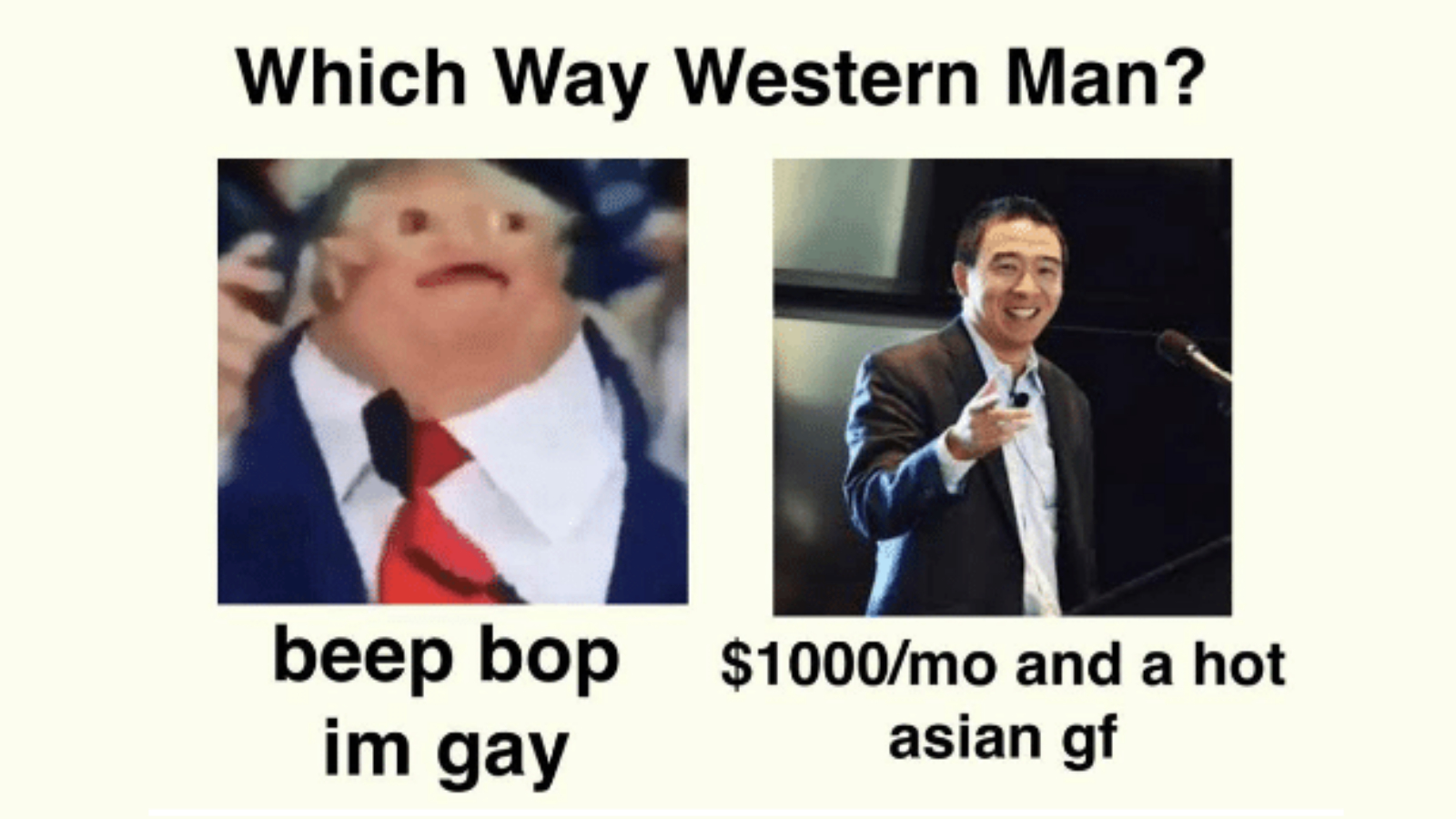
The phrase Which Way, Western Man? has transitioned from the title of an obscure 20th-century white nationalist manifesto into a pervasive digital catchphrase, eventually finding its way into official United States government communications. While its origins are rooted in the racialist ideologies of the late 1970s, the term has undergone a complex evolution through various internet subcultures, ranging from sincere extremist rhetoric to ironic social media commentary. In recent years, particularly between 2025 and 2026, the phrase has sparked significant national debate following its adoption by federal agencies, highlighting the volatile intersection of internet meme culture and administrative rhetoric.
Historical Foundations: The 1978 Manifesto
The origin of the catchphrase is traced to the 1978 book Which Way, Western Man? authored by William Gayley Simpson. A former clergyman who abandoned his faith to embrace a worldview influenced by Friedrich Nietzsche and racialist thinkers, Simpson spent years crafting what would become a seminal text for the American far-right. The book, often spanning over 700 pages in various editions, posits that the "Western Man" is facing an existential crisis brought about by internal moral decay and external demographic shifts.
Simpson’s work is characterized by its adherence to white supremacist and anti-Semitic conspiracy theories. He argued that a globalist network was intentionally undermining Western civilization and advocated for the mass deportation of minorities and the establishment of a rigid social hierarchy. For decades, the book remained a staple within fringe nationalist circles, published by entities such as National Vanguard Books, but it had little to no presence in the broader public consciousness until the advent of the digital age.
The Digital Resurgence: From 4chan to Mainstream Social Media
The transformation of Simpson’s title into a "memetic" catchphrase began in the mid-2010s. Digital forensics indicate that the phrase "Which Way, Western Man?" started appearing on the anonymous imageboard 4chan as early as May 2016. Initially, it was utilized within the /int/ (International) and /pol/ (Politically Incorrect) boards to frame discussions on American and European politics. Early iterations often featured the phrase alongside images of traditional European architecture or contemporary political figures, presenting a binary choice between "traditionalism" and "modernity."
By 2017, the phrase had migrated to other platforms, including the image-sharing site Imgflip and the social media platform X (formerly Twitter). During this period, the phrase began to merge with the "Dramatic Crossroads" meme format—a visual trope depicting a fork in a road leading to two different destinations, often one idyllic and one dystopian. This convergence provided a visual shorthand for the "Which Way, Western Man?" sentiment, allowing users to quickly communicate a sense of civilizational choice.
The Shift Toward Irony and Sanitization
As the phrase moved further from its extremist origins, its usage became increasingly ironic. In the early 2020s, internet users began applying the "Which Way, Western Man?" caption to mundane or absurd choices, such as selecting between two different pop songs, fast-food items, or video game aesthetics. This "shitposting" culture effectively decoupled the phrase from its white supremacist roots for many younger users who were unaware of William Gayley Simpson’s work.
A notable turning point occurred in February 2021, when a viral post on X featured an edited version of the Dramatic Crossroads meme with the catchphrase, garnering over 40,000 likes. This event marked the phrase’s entry into the wider internet zeitgeist. For a significant portion of the online population, "Which Way, Western Man?" became a harmless template for humor, though civil rights watchdogs continued to warn that the phrase served as a "dog whistle"—a coded message that appears innocuous to the general public but carries specific meaning for a target subgroup.
Chronology of Government Usage and Public Outrage
The most controversial chapter in the history of the phrase began in late 2025. On August 11, 2025, the official account for the U.S. Department of Homeland Security (DHS) posted a recruitment advertisement for Immigration and Customs Enforcement (ICE) on X. The graphic featured Uncle Sam standing before a set of directional signs with the caption: "Which Way, American Man?"

The post immediately drew condemnation from historians, civil rights organizations, and political commentators who identified the linguistic parallel to Simpson’s book. Critics argued that the use of a white nationalist slogan by a federal law enforcement agency was either an intentional signal to extremist elements or a catastrophic failure of communication vetting.
In response to the backlash, Tricia McLaughlin, the DHS Assistant Secretary for Public Affairs, dismissed the allegations. She stated that the post was a literal interpretation of America being at a "crossroads" and characterized the criticism as "tiresome." Despite this defense, the incident intensified scrutiny of the administration’s digital communication strategies.
The controversy was reignited on January 14, 2026, when the official White House X account posted an image titled "Which way, Greenland man?" The post utilized the Dramatic Crossroads format and referenced ongoing geopolitical discussions regarding the Arctic territory. Given the previous DHS controversy, the White House post was viewed by many as a deliberate provocation. It received over 17 million views within a month, sparking a renewed national dialogue regarding the normalization of fringe rhetoric in official state channels.
Data and Analytical Perspectives
The surge in the phrase’s popularity is reflected in search engine data and social media analytics. According to trend analysis, searches for "Which Way, Western Man?" and "William Gayley Simpson" spiked by over 400% following the August 2025 DHS post. Analytical firms specializing in digital extremism noted that while 70% of the phrase’s usage in 2025 was categorized as "ironic" or "neutral," the remaining 30% was linked to accounts frequently sharing nationalist or supremacist content.
Sociological experts suggest that the "Which Way, Western Man?" phenomenon is a prime example of "semantic bleaching," a process where the original, often controversial meaning of a word or phrase is eroded through repetitive, varied use. However, the application of such language by government institutions complicates this process. Political analysts argue that when a state entity adopts a phrase with extremist origins, it effectively "re-politicizes" the term, regardless of the intended irony or ignorance of the staff involved.
Broader Implications for Political Discourse
The "Which Way, Western Man?" controversy underscores the challenges of modern political communication in an era defined by meme culture. For government agencies, the incident serves as a cautionary tale regarding the importance of historical literacy in social media management. The use of language that can be traced back to supremacist manifestos, even if intended as a play on a popular internet trend, risks alienating segments of the population and damaging the perceived neutrality of federal institutions.
Furthermore, the debate highlights the evolving nature of political "dog-whistling." In a digital environment where the line between sincere belief and ironic performance is frequently blurred, identifying extremist rhetoric becomes a complex task. Supporters of the administration’s messaging argue that the "cancel culture" surrounding the phrase inhibits creative communication, while detractors maintain that the preservation of democratic norms requires a zero-tolerance policy for language rooted in racialist ideologies.
As of early 2026, the phrase remains a point of contention. While it continues to be used in its ironic capacity by general internet users, its presence in the political arena has solidified its status as one of the most polarizing catchphrases of the decade. The trajectory of "Which Way, Western Man?" from a 1970s manifesto to a 2020s government headline serves as a powerful reminder of how ideas—and the language used to carry them—can be repurposed, sanitized, and weaponized in the digital age.
