
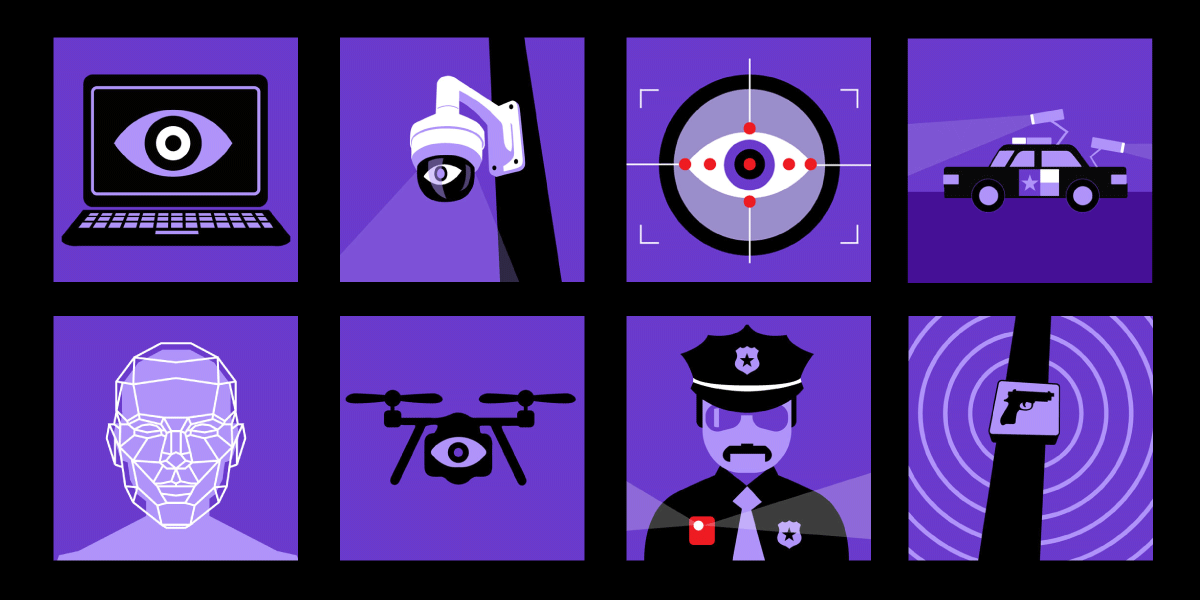
In cities across the United States, law enforcement agencies are increasingly adopting sophisticated surveillance tools—ranging from automated license plate readers (ALPRs) to facial recognition software—without the traditional hurdles of budgetary approval or public debate. This phenomenon is driven by a complex ecosystem of surveillance technology vendors, federal agencies, and wealthy private donors who provide "free" access to equipment. While these programs are marketed as cost-effective solutions for cash-strapped municipalities, a growing body of evidence suggests that the true cost of these tools is measured in the erosion of civil liberties, the creation of permanent data pipelines to federal agencies, and a significant bypass of local democratic oversight.
The proliferation of these "free" tools has created what civil rights advocates describe as an accountability gap. By circumventing the standard procurement process, police departments often avoid the public hearings and city council votes that typically accompany major technology acquisitions. This lack of transparency has allowed for the quiet integration of local law enforcement data into federal databases, most notably those managed by Immigration and Customs Enforcement (ICE) and the Department of Homeland Security (DHS). The result is a surveillance infrastructure that operates with minimal restrictions, often targeting vulnerable populations and undermining the protections afforded by sanctuary city policies and the First Amendment.
The Pilot Program Strategy: Bypassing the Council
One of the most common methods for introducing surveillance technology into a community is through the use of trials and pilot programs. Vendors frequently offer police departments complimentary access to their software and hardware for a set period, often ranging from 90 days to two years. Because these trials do not involve the immediate expenditure of tax dollars, they frequently bypass the legal requirements for city council approval or public disclosure.
In Denver, Colorado, the police department has recently engaged in multiple trials for "drone-as-first-responder" (DFR) programs. These trials involve competing vendors, including Flock Safety and Skydio, the latter of which partners with the multi-billion-dollar police technology firm Axon. While these programs are framed as efficiency measures, they raise significant privacy concerns due to the drones’ ability to capture high-definition footage of private property and unsuspecting civilians. Furthermore, these aerial platforms can be equipped with ALPR technology, effectively turning a localized camera system into a mobile, airborne surveillance net.
The history of such pilot programs suggests they are rarely temporary. A notable precedent occurred in New Orleans, where the city used predictive policing software from Palantir for six years before the public or the City Council became aware of the program’s existence. Similarly, in Fall River, Massachusetts, the police department continued to use the ShotSpotter acoustic gunshot detection system for free after the city declined to pay the $90,000 annual fee, illustrating how vendors use "free" access to maintain a foothold in a jurisdiction until funding can be secured.
Philanthropic Influence and Private Foundations
When public funding is unavailable or politically unfeasible, wealthy private donors and police foundations often step in to bridge the gap. This "philanthropic" model of surveillance acquisition allows law enforcement to obtain equipment that the public may have explicitly rejected.
In San Francisco, billionaire Chris Larsen has become a central figure in the city’s surveillance landscape. Larsen donated $9.4 million to fund the San Francisco Police Department’s (SFPD) Real-Time Investigation Center, a centralized hub that aggregates data from various surveillance feeds across the city. This donation followed a controversial 2025 ballot measure, Proposition E, which Larsen also supported. The measure successfully eroded the city’s landmark surveillance technology law, granting the SFPD the authority to deploy new surveillance tools for a full year without prior oversight.
In Atlanta, the Atlanta Police Foundation (APF) has faced legal challenges regarding its role as a private entity purchasing equipment for public law enforcement. Advocacy groups, including the Atlanta Community Press Collective and Lucy Parsons Labs, filed suit to argue that the APF’s actions on behalf of the police should be subject to public records laws. A Georgia court eventually ruled in favor of transparency, noting that private foundations cannot be used as a "black box" to shield police acquisitions from public scrutiny. These cases highlight a growing trend where private wealth is used to dictate public safety policy, often prioritizing high-tech surveillance over community-led initiatives.
Federal Grants and the "Grant-Ready" Vendor Model
The most significant driver of "free" surveillance technology is the federal government. Through programs like the Homeland Security Grant Program (HSGP), which includes the Urban Areas Security Initiative (UASI) and the State Homeland Security Program (SHSP), the Department of Homeland Security provides billions of dollars to state and local agencies. Additionally, the Department of Justice’s Byrne JAG program serves as a primary source of funding for "homeland security" equipment.
Surveillance vendors have adapted their business models to specifically target these federal funds. Companies like Motorola Solutions and Flock Safety market their products as "grant-ready," providing police departments with pre-written grant applications and policy templates. Flock Safety, in partnership with the policy-writing firm Lexipol, offers a "License Plate Readers Grant Assistance Program" to help departments navigate the federal bureaucracy.
While these grants cover the initial installation and hardware costs, they often leave local taxpayers responsible for ongoing subscription and maintenance fees. In Sumner, Washington, a $50,000 grant covered the first year of a Flock ALPR system, but the city was subsequently left with an annual bill of $39,000. In Santa Cruz, California, the police department utilized an SHSP grant to install a network of cameras at the city’s entrances and exits, effectively locking the municipality into a long-term surveillance contract that had not been fully vetted by the community.
Data Pipelines and the Role of Fusion Centers
The most profound hidden cost of federally funded surveillance is the mandatory or incentivized data sharing that accompanies the grants. Since the September 11 attacks, the DHS has fostered a network of approximately 80 "fusion centers" across the United States. These centers serve as clearinghouses for data collected by local, state, and federal agencies.
Research indicates that many fusion centers are entirely dependent on federal grants, with some reporting that 100 percent of their annual budgets come from DHS programs. This financial dependency creates a backdoor for federal agencies like ICE to access local data. A report by the Surveillance Technology Oversight Project (S.T.O.P.) documented instances where ICE agents used a Philadelphia-area fusion center to query ALPR data, allowing them to track the movements of undocumented individuals in a city that had officially designated itself a sanctuary jurisdiction.
This data pipeline effectively nullifies local privacy laws and sanctuary policies. When a local police department uploads license plate data or facial recognition scans to a shared network, that information becomes accessible to federal authorities, regardless of local ordinances. The "free" technology thus serves as a toll for entry into a national surveillance web, where local data is repurposed for federal enforcement priorities.
Chronology of the Surveillance Expansion and Public Response
The tension between surveillance expansion and public oversight has reached a boiling point in several major U.S. cities over the last two years:
- March 2024: San Francisco voters pass Proposition E, allowing police to use drones and facial recognition for a year without oversight, backed by significant private funding.
- May 2025: The Denver City Council unanimously rejects a $666,000 contract extension for Flock Safety cameras due to concerns over data sharing with ICE.
- June 2025: A Georgia court rules that the Atlanta Police Foundation must comply with public records requests, setting a precedent for foundation transparency.
- August 2025: Community organizers in Denver launch the "Turn Flock Off Now" campaign after the Mayor’s office allows cameras to remain operational despite the Council’s rejection of the contract.
- September 2025: Reports surface regarding the use of DHS-funded fusion centers by ICE to bypass sanctuary city protections in the Northeast.
These events demonstrate a cyclical pattern: technology is introduced through non-traditional funding, the public reacts once the scale of surveillance becomes clear, and local officials often struggle to regain control over systems that have already been integrated into daily police operations.
Implications for Civil Liberties and Governance
The shift toward "free" surveillance represents a fundamental change in how cities are governed. When police departments can acquire technology without budgetary approval, the "power of the purse"—a primary tool for legislative oversight—is effectively neutralized. This leads to a "mission creep" where tools purchased for narrow purposes, such as counter-terrorism or solving violent crimes, are gradually used for routine traffic enforcement, monitoring political protests, or immigration enforcement.
Furthermore, the reliance on subscription-based models means that "free" today almost always means "expensive" tomorrow. As departments become dependent on these tools, vendors gain significant leverage to increase prices, knowing that the political cost of "turning off the lights" on a surveillance system is high.
To combat these trends, civil liberties advocates suggest that cities must implement strict "Surveillance Technology Oversight Ordinances." These laws require that any technology used by police—regardless of how it was funded—must undergo a public hearing, a competitive bidding process, and a formal vote by elected officials. Without such safeguards, the "free" tools of today will continue to build the permanent surveillance infrastructure of tomorrow, at a cost that the public never agreed to pay.
