
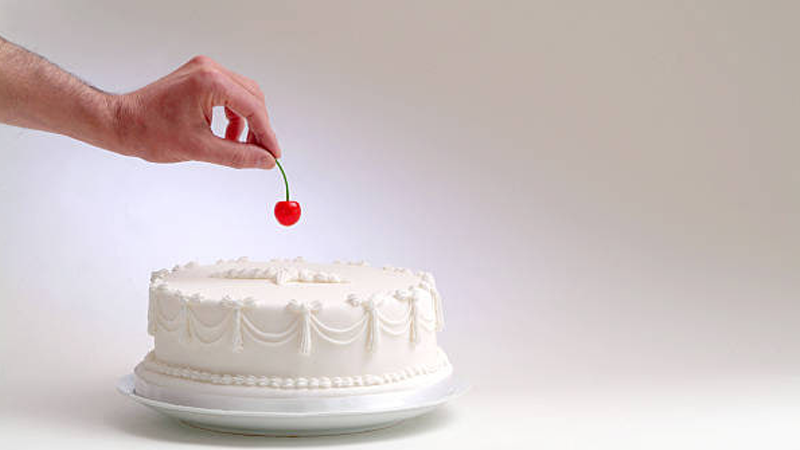
The digital landscape of 2025 and early 2026 has witnessed the emergence of a distinctive visual phenomenon known as Cherry On Top Reaction Images, a trend that has redefined the way users interact within the comment sections of major social media platforms, most notably TikTok. These images and short-form video clips, which typically depict a human hand carefully placing a bright red maraschino cherry atop a pristine white cake or a swirl of whipped cream, serve as a visual manifestation of the long-standing English idiom "the cherry on top." While the phrase has historically denoted a final flourish or a desirable feature that completes an already positive situation, its transition into a digital "reaction" format has introduced layers of irony, sincerity, and surrealism. As this meme continues to proliferate, it offers a compelling case study in how static stock photography from the early 2000s can be resurrected and repurposed through the lens of modern generative artificial intelligence and algorithmic social media trends.
The origins of the most ubiquitous iteration of the Cherry On Top meme can be traced back nearly two decades before its current viral status. The foundational image—a high-contrast, professional stock photograph—was originally uploaded to the digital repository iStockphoto.com on December 29, 2006. Credited to a contributor known by the pseudonym "ene," the photograph was designed to meet the commercial needs of the mid-2000s, a period characterized by a demand for clean, literal interpretations of common concepts for use in advertising and web design. For over a decade, the image remained a staple of the culinary blogosphere, appearing frequently on baking websites, recipe forums, and digital advertisements for confectionery products starting as early as 2010. During this period, the image functioned exactly as intended: a high-quality, generic representation of dessert preparation.
However, the metamorphosis of this stock asset into a cornerstone of internet culture began in earnest during the first quarter of 2025. The shift was precipitated by the increasing integration of image-based replies in social media comment sections, particularly on TikTok. As users sought more efficient ways to convey complex sentiments without the use of text, the "cherry on top" idiom provided a perfect template for reacting to content. Initially, the image was used earnestly to signal that a specific video or comment was the perfect conclusion to a thread. By late 2025, however, the usage had bifurcated. On one hand, it remained a tool for genuine appreciation; on the other, it became a vehicle for "deep-fried" or ironic humor, where the placement of the cherry was framed as a satirical commentary on over-the-top or unnecessary additions to digital content.
The timeline of the meme’s spread highlights a significant escalation in late 2025 and early 2026, driven largely by the democratization of generative AI tools. By mid-February 2026, the traditional stock photo had been modified into hundreds of variants. These variations often involved surreal distortions, such as replacing the cherry with unrelated objects or using AI to extend the frame of the original image in ways that defied physics. On February 17, 2026, a prominent TikTok creator under the handle @santi_whey published a compilation of these altered images. The video, which showcased the rapid evolution from a simple baking photo to a series of increasingly bizarre visual non-sequiturs, garnered over 641,500 views and 128,200 likes within a ten-day period. This specific instance marked a turning point, signaling that the "Cherry On Top" trend had moved beyond a simple reaction image into a creative subculture of its own.
A critical technological driver in this evolution was the release and refinement of advanced video generation models, such as OpenAI’s Sora. In late February 2026, the trend transitioned from static images to hyper-realistic, AI-generated video loops. On February 23, 2026, TikTok user @rftyerror utilized these tools to create a video in which a cake is bombarded by an impossible number of cherries, effectively "overloading" the visual metaphor. This video, which received more than 301,400 views in less than a week, exemplifies the "maximalist" phase of the meme. Analysts suggest that the success of such content lies in the "uncanny valley" effect—the cherries look real enough to be appetizing, yet their behavior is clearly the product of an algorithmic imagination, creating a sense of visual cognitive dissonance that highly engages modern viewers.
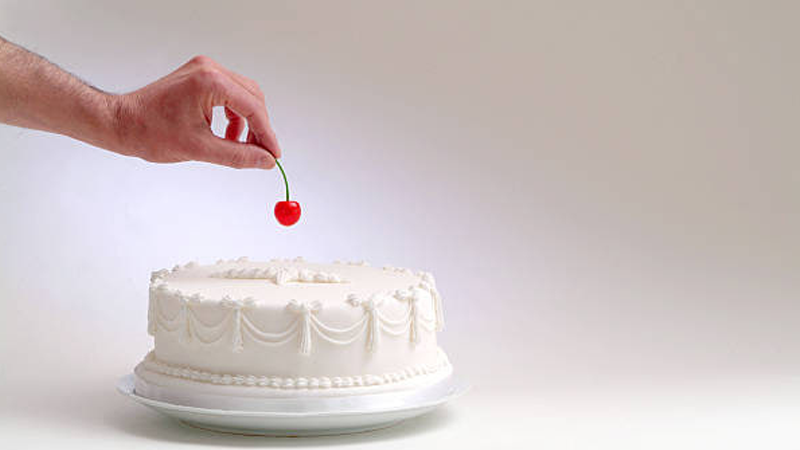
The broader implications of the Cherry On Top phenomenon extend into the realms of linguistics and digital sociology. Historically, idioms have relied on shared verbal or written contexts to survive. The "visual idiom," as seen here, suggests a shift toward a more universal, image-based lexicon. Because the act of placing a cherry on a cake is a cross-cultural symbol of completion, the meme has successfully bypassed linguistic barriers, appearing in the comment sections of Eastern European, South American, and East Asian creators with equal frequency. Furthermore, the trend illustrates the "cyclical nature of digital artifacts." The fact that a 2006 stock photo can become the primary mode of communication for Gen Z and Gen Alpha users in 2026 underscores a unique aspect of internet culture: nothing is ever truly obsolete; it is merely waiting for a new context.
From a technical perspective, the proliferation of the Cherry On Top meme has been supported by the specific UI/UX (User Interface/User Experience) updates implemented by TikTok and other ByteDance-affiliated platforms. The streamlining of the "image search to comment" pipeline allowed users to quickly find and post the iStockphoto original. As the query "cherry on top" became a trending search term, the platform’s internal algorithms began prioritizing the image, creating a feedback loop that ensured its ubiquity. This algorithmic reinforcement is a key component of modern meme-making, where the platform itself becomes an active participant in the spread of a specific visual trope.
Market analysts and social media researchers have noted that the "Cherry On Top" trend also reflects a growing fatigue with traditional "high-effort" content. In an era of polished, influencer-driven videos, the simplicity of a hand placing a cherry on a cake offers a moment of "visual Zen" or, conversely, "visual chaos" when modified by AI. This duality—the ability to be both calmingly repetitive and hilariously absurd—is what gives the meme its staying power. It serves as a versatile tool for users to express satisfaction, sarcasm, or simply to participate in a collective digital "inside joke" that requires no prior knowledge other than an understanding of the basic idiom.
As of March 2026, the trend shows no signs of immediate deceleration. Instead, it is diversifying. New variants have emerged involving different fruits, different desserts, and even 3D-rendered "low-poly" versions that harken back to 1990s video game aesthetics. The "Cherry On Top" has become more than just a reaction; it has become a template for digital experimentation. While some critics argue that the reliance on AI-generated variants strips the meme of its human element, others contend that the creative ways in which users "prompt" these AI tools to subvert the original image represent a new form of digital folk art.
In conclusion, the journey of the Cherry On Top reaction image from a static commercial asset in 2006 to a multi-modal, AI-enhanced cultural staple in 2026 reflects the broader trajectory of the internet itself. It is a story of how old media is recycled through new technology, how linguistic metaphors are translated into visual shorthand, and how the collective whim of the social media comment section can turn the most mundane of images into a global symbol. As digital communication continues to favor the visual over the textual, the "cherry on top" serves as a reminder that in the world of internet memes, the final touch is often just the beginning of a new cycle of creativity. The phenomenon stands as a testament to the enduring power of simple imagery and the transformative potential of the modern digital audience.
