
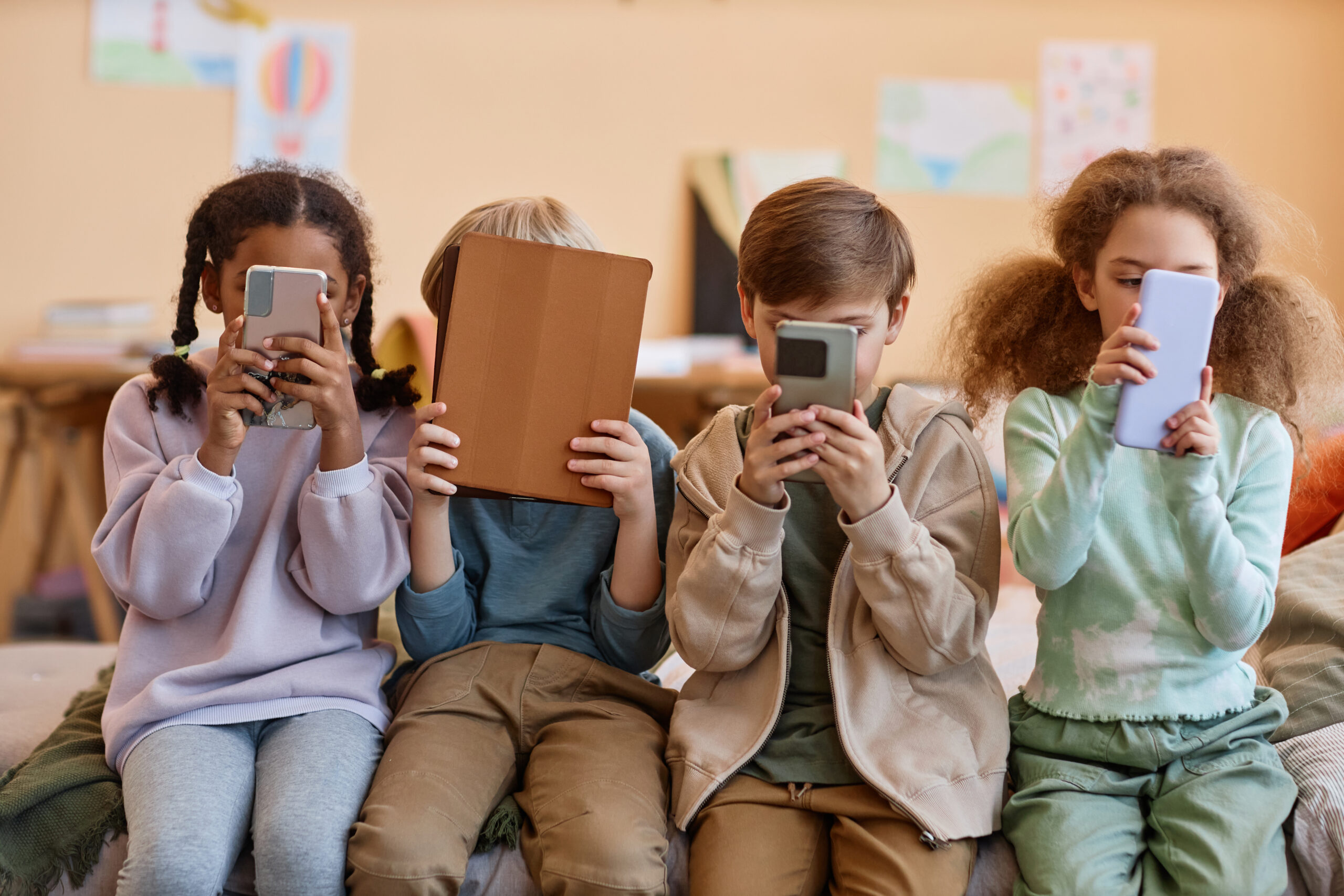
The pervasive presence of screens in modern childhood presents a complex challenge for parents and developmental experts alike. While often perceived as benign or even educational, digital content, even that designated as "family-friendly," subtly yet significantly molds children’s language, behavior, self-perception, and cognitive functions. This influence extends far beyond explicit lessons, embedding values and norms that may diverge from parental intentions, as evidenced by a recent incident where an eight-year-old child adopted inappropriate language directly from a supposedly TV-G rated program, prompting parental concern over the disparity between network ratings and actual content. This occurrence highlights a broader phenomenon: screen time is not merely a neutral activity but an active shaper of young minds.
The Ubiquitous Digital Landscape and Evolving Parental Challenges
The digital revolution has fundamentally altered the landscape of childhood. Children today are digital natives, growing up immersed in a world saturated with smartphones, tablets, streaming services, and interactive games. Data from organizations like Common Sense Media consistently show a significant increase in screen media consumption among children. For instance, a 2021 report indicated that children aged 8-12 spend an average of 4 hours and 44 minutes on screens daily, while teenagers aged 13-18 average 7 hours and 22 minutes, excluding schoolwork. This omnipresence makes screens an undeniable force in developmental trajectories, prompting a critical examination of their deeper, often unacknowledged effects. Parents, often relying on official ratings like TV-G or parental guidance labels, frequently find these classifications inadequate in reflecting the nuanced impacts of content on impressionable minds. The challenge is compounded by the sheer volume and diversity of content, making comprehensive vetting nearly impossible for individual families.
Key Areas of Subtly Influenced Child Development
Research and anecdotal evidence point to five critical ways in which screen time subtly shapes children, often without immediate parental awareness:
1. The Pervasive Influence of Comparison Culture
Children are naturally observant, and the digital world offers a constant stream of idealized realities. From animated films depicting perfect families embarking on grand adventures to YouTube channels showcasing children with bedrooms overflowing with toys, and characters with impeccably styled appearances, screens present a curated, often unattainable vision of "normal." This constant exposure can inadvertently foster a comparison culture. When a child’s lived experience — their home, their family dynamics, their possessions, or their physical appearance — doesn’t align with these polished screen portrayals, a subtle sense of inadequacy or missing out can emerge. Child psychologists have noted that this "expectation gap" can contribute to feelings of dissatisfaction, envy, and even anxiety, as children struggle to reconcile their reality with the perceived perfection on screen. Studies on social media use among adolescents, for example, have linked exposure to idealized lifestyles with lower self-esteem and increased body image concerns. While direct links in younger children are still being extensively researched, the foundational patterns of comparison are established early.
- Analysis of Implications: This constant visual feed of aspirational lifestyles can undermine a child’s appreciation for their own circumstances. It can fuel materialism, foster unrealistic expectations for personal happiness, and create a subconscious drive to conform to external, often superficial, standards.
- Expert Recommendation: Developmental experts advocate for actively helping children appreciate their unique lives. This involves highlighting the joy in everyday moments – the warmth of baking, the shared laughter in a car ride, the comfort of family reading time. Cultivating gratitude is presented as a robust defense mechanism against the insidious effects of comparison, shifting focus from external validation to internal contentment.
2. Scripting Behavior and Language: The Mimetic Effect
Children are adept mimics, and the behaviors and linguistic patterns exhibited by screen characters can quickly translate into real-life actions. Even content marketed as "harmless" frequently features characters who roll their eyes at parents, engage in sibling rivalry with hostile undertones, or rely on sarcasm as a primary mode of communication. While these tropes might serve as comedic devices for scriptwriters, they often clash directly with the values of respect, kindness, and cooperative interaction that parents strive to instill at home. The anecdotal account of an eight-year-old adopting an inappropriate "F-word" from a show serves as a stark reminder of this mimetic power. Research grounded in Albert Bandura’s social learning theory underscores that children learn a vast array of behaviors, attitudes, and emotional responses through observing others, including those on screen. Studies by organizations like the American Academy of Pediatrics (AAP) have consistently highlighted the impact of media violence on children’s aggression, but this extends to more subtle social behaviors as well.
- Analysis of Implications: The adoption of undesirable screen-scripted behaviors can lead to increased defiance, disrespect towards authority figures, heightened sibling conflict, and a general erosion of polite and considerate social interaction within the family unit and beyond.
- Expert Recommendation: Parents are encouraged to actively redirect undesirable mimicked behaviors with clear, concise statements that reinforce family values, such as, "In our family, we share toys, we don’t snatch them," or "We use kind words, even when we disagree." Equally important is proactively pointing out and praising positive behaviors, like expressing gratitude or showing support for siblings, to provide clear, real-world examples of desired conduct.
3. Normalization of Undesirable Content and Desensitization
Repeated exposure to certain types of content, even if seemingly minor, can gradually shift a child’s perception of what is acceptable and "normal." Many "kid-friendly" programs incorporate casual put-downs, mild forms of aggression, or language that, while not overtly offensive, can be unsettling to parents. The more frequently children encounter such elements, the more normalized and acceptable they become in their developing moral framework. A study published in the Journal of Adolescence (2004) demonstrated that children who are repeatedly exposed to aggressive behavior in media become less sensitive to it, a phenomenon known as desensitization. This means that a character who routinely refers to their siblings as "twerps" or a show where causing minor harm is played for laughs can subtly teach children that such behaviors are not only permissible but potentially humorous.
- Analysis of Implications: Desensitization can diminish a child’s natural empathy, making them less reactive to others’ pain or discomfort. It can lower their threshold for what constitutes inappropriate language or action, potentially leading to increased engagement in bullying or a decreased willingness to intervene in unjust situations.
- Expert Recommendation: Fostering empathy and critical thinking is paramount. Parents can engage children in discussions by asking questions like, "How do you think that character felt when that happened?" or "Would that be okay if it happened to you?" These "check-ins" not only nurture emotional intelligence but also build digital literacy by encouraging children to analyze and critically evaluate the content they consume rather than passively absorbing it.
4. Shaping Identity and Role Models
Beyond immediate behaviors, screens play a significant role in shaping a child’s nascent identity and their understanding of what it means to be "cool," "brave," "funny," or even to embody specific gender roles. Children naturally imitate people they admire, and in the absence of diverse real-life mentors, screen characters often fill this void, becoming powerful, albeit virtual, role models. A YouTube creator’s confident swagger or a Disney princess who achieves her goals through pouting or disobedience can profoundly influence how a child believes they should act or solve problems. This extends to perceptions of gender, success, and social interaction. Sociologists and media critics frequently highlight how media narratives, even in children’s programming, perpetuate stereotypes and influence self-perception, often without explicit intent.
- Analysis of Implications: Reliance on screen-based role models can lead to distorted self-perception, unrealistic expectations about life, and the internalization of harmful stereotypes. Children might develop a narrow view of what success entails or how problems should be approached, potentially limiting their emotional and social toolkit.
- Expert Recommendation: Parents are advised to proactively point children toward real-life heroes and diverse positive role models. When a child expresses admiration for a character, parents can engage them by asking, "What do you like about them?" and then connect those admirable traits to individuals they know in real life. For example, "You know who’s just as brave? Officer Joey, who helps keep you safe at school." This helps ground abstract ideals in tangible, relatable experiences and people.
5. Impact on Attention Spans and Cognitive Development
The rapid-fire pacing, constant sound effects, and nonstop action prevalent in much of children’s digital content are designed to capture and hold attention. However, this constant stimulation also trains developing brains to crave a high level of sensory input. This "rewiring" can affect how children process information and regulate their attention. Their brains become accustomed to this accelerated pace, making real-life activities, which are inherently slower and less intensely stimulating, feel comparatively dull or "boring." Neuroscientists have increasingly pointed to the potential links between excessive exposure to fast-paced media and challenges with executive function, impulse control, and sustained attention. While the long-term effects are still under active investigation, early findings suggest a correlation between high screen time and reduced capacity for deep focus.
- Analysis of Implications: A shortened attention span can have significant repercussions for academic performance, as children struggle with tasks requiring sustained concentration. It can also impact their ability to engage in imaginative play, develop problem-solving skills through prolonged effort, and find contentment in quieter, less stimulating environments.
- Expert Recommendation: To counteract this, experts recommend incorporating slower-paced downtime activities into a child’s routine. Activities such as finger painting, building with LEGOs or blocks, reading, or simply engaging in quiet conversation while enjoying a popsicle on the front steps, help a child’s nervous system recalibrate. These moments allow the brain to remember that valuable and interesting experiences can unfold at a gentler, more contemplative pace, fostering the development of sustained attention and patience.
Official Responses and Broader Implications
Major health organizations, including the American Academy of Pediatrics (AAP) and the World Health Organization (WHO), have issued guidelines regarding screen time for children, emphasizing moderation and the importance of high-quality, educational content. These guidelines increasingly stress not just the quantity of screen time but also the quality of content and the context in which it is consumed. Media literacy initiatives are gaining traction in educational settings, aiming to equip children with the critical thinking skills necessary to navigate the digital world.
The implications of these subtle screen time effects extend beyond individual families to broader societal challenges. There is an ongoing debate about the responsibility of content creators and media regulators to produce material that supports healthy child development rather than inadvertently undermining it. The digital age demands a multi-faceted approach involving parents, educators, policymakers, and the tech industry to ensure that technology serves as a tool for enrichment rather than an unwitting architect of developmental challenges.
In conclusion, while screens are an undeniable and indelible part of contemporary life, their influence on children is far from neutral. The critical task for parents and caregivers is to remain highly intentional about shaping the voices, values, and role models that influence their children. Understanding these subtle effects empowers parents to make more informed choices, engage proactively with their children’s media consumption, and actively cultivate the values and skills they wish to see flourish in their children. The digital landscape necessitates not just passive monitoring, but active, engaged co-piloting through the formative years of development.
