
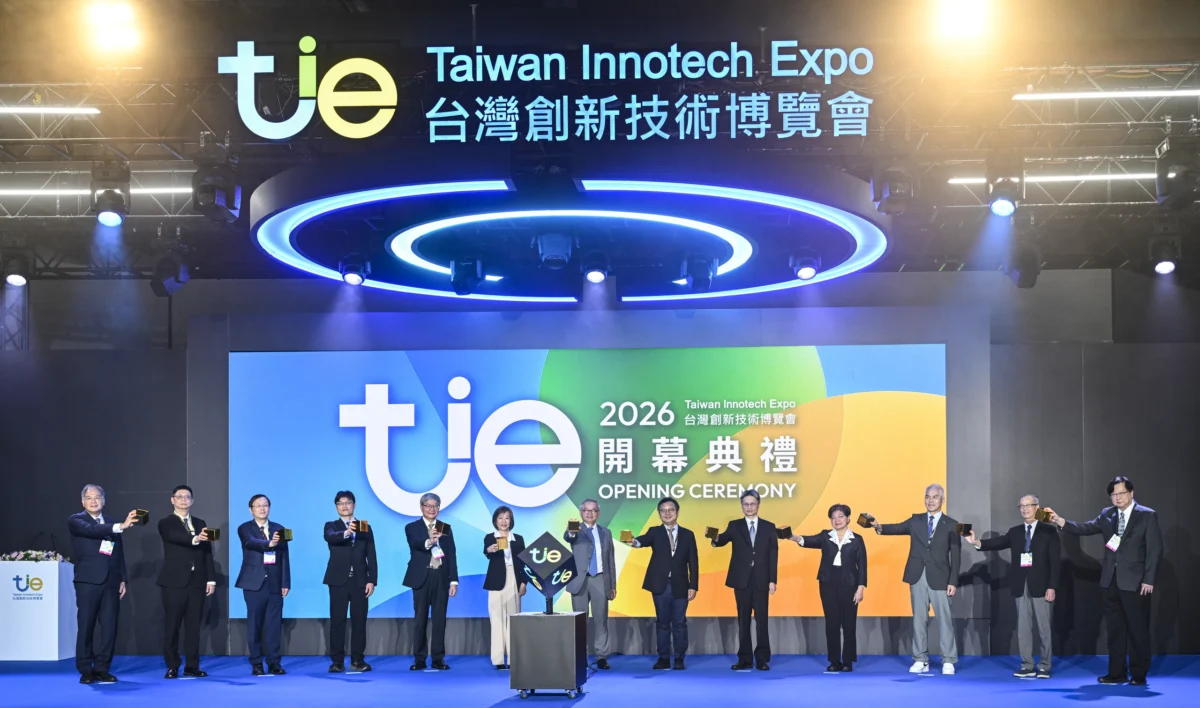
The Taiwan Innotech Expo (TIE) 2026, an event that has rapidly ascended in prominence within the global technology calendar, has unequivocally positioned Artificial Intelligence (AI) as the linchpin of Taiwan’s next economic evolution. As a seasoned global technology correspondent, witnessing the opening day of TIE 2026 provided a tangible demonstration of this strategic pivot. The expo itself serves as a physical manifestation of this ambitious vision, showcasing not only its expansive scale and growing international participation but also the intricate coordination between governmental bodies and private enterprises. Under the overarching creed of "innovation for value creation," Taiwan is actively pursuing a future defined by system-integration leadership and the pervasive embedding of AI across every conceivable industry.
This commitment to developing and deploying AI systems with deliberate intent stands in stark contrast to recent discussions surrounding the potential existential risks posed by advanced large language models. While some global tech giants grapple with the ethical and societal implications of unchecked AI development, Taiwan’s approach, as evidenced at TIE 2026, is focused on harnessing AI as a transformative tool for traditional industries, extending its value creation far beyond the factory floor and into every facet of the economy. This proactive stance is particularly timely, addressing the prevailing anxieties about the accelerating pace of AI advancement and its potential societal impact.
The race for AI infrastructure and global leadership is no longer a nascent pursuit; it is a dynamic competition in which Taiwan is emerging as a formidable contender. This year’s expo, a testament to this ambition, is a collaborative effort involving 12 Taiwanese government agencies. It operates under a newly established policy framework designed for orderly transformation, built upon three foundational pillars: smart applications, key technologies, and digital infrastructure. These pillars are meticulously crafted to reshape Taiwan’s industrial base and set new global benchmarks for AI integration. The sheer breadth of innovation on display is staggering, with over 400 exhibitors from 18 countries presenting more than 1,000 technologies. This collective showcase underscores the pervasive nature of AI, demonstrating its application in sectors as diverse as healthcare, sports, smart manufacturing, water resource management, next-generation communications, agriculture, and net-zero sustainability.
The opening ceremony of TIE 2026 was a powerful statement of the expo’s scale and national significance, marked by the presence of high-ranking government officials and strategic partners. The National Science and Technology Council (NSTC) commanded a particularly prominent presence, underscoring the government’s deep commitment to fostering technological advancement. Political Deputy Minister of the Executive Yuan Wu Cheng-wen, Vice Minister of Economic Affairs Cynthia Kiang, and representatives from numerous other government agencies were in attendance, collectively officiating the unveiling of the exhibition. Their presence symbolized a unified governmental commitment to driving technological innovation and industrial development through cross-ministerial collaboration. These leaders, embodying a spirit of proactive service, emphasized Taiwan’s vision of AI serving humanity, rather than posing a threat.

A central tenet articulated by government leaders was the imperative for Taiwan’s innovation ecosystem to prioritize commercialization. This strategic focus is backed by a substantial financial commitment, with a planned allocation of 229.2 billion TWD (approximately 7.2 billion USD) for technological development in the upcoming year. This significant investment signals a clear intent to translate research and development into tangible economic value and global market leadership. Taiwan’s ambition extends beyond domestic development; the nation actively seeks to foster international engagement, extending an open invitation to ambassadors and representatives from across the globe. This initiative aims to enhance Taiwan’s global relevance and facilitate collaborative innovation. The expo’s theme, "AI-Powered Innovation, Sustainable Future," encapsulates this dual ambition of technological advancement and global cooperation. Events like TIE serve as crucial conduits for technology transfer, patent licensing, and fostering robust industry-academia collaborations.
The timing of TIE 2026 is particularly auspicious, coinciding with reports of Taiwan’s exceptional economic performance in the first half of 2026. The island achieved a remarkable 14.15% economic growth rate, marking a 39-year high. This robust economic momentum is further bolstered by anticipated major investments in Sovereign AI infrastructure. While Taiwan has long been a global leader in hardware manufacturing, the current strategic emphasis is on integrating its expertise in chip design, system architecture, and AI model development into comprehensive, problem-solving application systems. This holistic approach is designed to leverage Taiwan’s existing strengths and propel it to the forefront of the AI revolution.
Key Innovations Unveiled at Taiwan Innotech Expo 2026
As part of an international delegation, this correspondent had the opportunity to witness firsthand Taiwan’s growing influence and its strategic initiatives for global expansion. Engagements with companies showcasing advancements in AI, Frontier Technologies, and Information and Communication Technology (ICT) revealed several groundbreaking developments.
One significant breakthrough observed was in the realm of data center infrastructure: the unveiling of a 3.2-terabit-per-second silicon photonics optical engine. This technology directly addresses the escalating demand for higher speed and capacity in data transmission, a critical bottleneck for AI-intensive applications. The innovative design significantly reduces latency and signal loss by physically minimizing the distance between the chip’s electrical signal origination and the optical conversion point. This advancement is poised to revolutionize data center performance, enabling faster and more efficient processing of the massive datasets that fuel AI development.
Furthermore, local innovators are demonstrating remarkable ingenuity in transforming maritime logistics through the application of a "floating campus" model to marine vessels. By integrating high-bandwidth onboard 5G systems with satellite backhaul, these companies are establishing unprecedented connectivity between isolated ships and shore-based command centers. This sophisticated hybrid infrastructure facilitates real-time remote maintenance, high-resolution drone navigation, and AI-driven cargo safety verification. Such advancements not only highlight Taiwan’s leadership in connectivity solutions but also underscore the potential of robust infrastructure to ensure operational continuity, safety, and precision in even the most remote environments on Earth. These systems are designed to provide essential services, including product verification and research and development support, to the broader maritime industry, a sector critical to global trade.

A Strategic Vision for Global Impact
The Taiwan Innotech Expo 2026 is more than just a showcase of technological prowess; it is a strategic platform for Taiwan to assert its leadership in the global AI landscape. The government’s multi-pronged approach, focusing on infrastructure, key technologies, and smart applications, is designed to foster a self-sustaining innovation ecosystem. The substantial financial commitment to R&D and the emphasis on commercialization indicate a clear understanding of the economic imperatives driving the AI era.
The expo’s success in attracting over 400 exhibitors from 18 countries and showcasing more than 1,000 technologies speaks volumes about Taiwan’s growing influence as a hub for international collaboration. The presence of numerous government agencies, including the NSTC and the Ministry of Economic Affairs, signifies a unified national strategy to propel Taiwan to the forefront of AI innovation. This coordinated effort, coupled with a significant investment of approximately 7.2 billion USD in technological development, underscores the nation’s commitment to not only developing cutting-edge AI technologies but also to ensuring their widespread adoption and impact.
The "AI-Powered Innovation, Sustainable Future" theme resonates deeply with global challenges. By focusing on applications in areas like healthcare, agriculture, and net-zero sustainability, Taiwan is demonstrating a commitment to leveraging AI for societal good. The invention competition, featuring 550 entries from diverse international teams, further amplifies this collaborative spirit, highlighting Taiwan’s ambition to foster a global community of innovators.
The recent economic data, showing a 14.15% growth rate in the first half of 2026, provides a compelling backdrop to TIE 2026. This strong economic performance is likely to be further amplified by strategic investments in Sovereign AI infrastructure. Taiwan’s established dominance in hardware manufacturing, combined with its burgeoning expertise in chip design, system architecture, and AI model development, positions it uniquely to offer end-to-end AI solutions. This integrated approach, moving beyond component manufacturing to comprehensive application systems, is a key differentiator that will shape Taiwan’s competitive advantage in the global market.
The Path Forward: Commercialization and Global Integration
The emphasis on commercialization at TIE 2026 is a critical strategic shift. For years, Taiwan has been recognized as a powerhouse in hardware production, but the focus is now on translating this manufacturing strength into market-ready AI solutions. This involves not only developing advanced AI models but also ensuring they are integrated into practical, commercially viable applications that address real-world problems. The significant government funding allocated for technological development is intended to accelerate this transition, bridging the gap between research and market adoption.

The "floating campus" model for maritime logistics is a prime example of this commercialization drive. It showcases how Taiwan’s technological expertise can be applied to solve complex challenges in traditional industries, creating new markets and revenue streams. The development of a 3.2-terabit-per-second silicon photonics optical engine also points towards a future where data transmission speeds can keep pace with the ever-increasing demands of AI, a crucial enabler for future technological advancements.
Taiwan’s proactive approach to AI development, characterized by strategic government coordination, substantial investment, and a clear focus on international collaboration and commercialization, positions it as a key player in shaping the future of AI. As the global race for AI leadership intensifies, Taiwan Innotech Expo 2026 has firmly established the island nation as a vital center for innovation, where cutting-edge technology meets a pragmatic vision for economic growth and societal benefit. The implications of this strategic transformation are far-reaching, promising to influence global technology trends and redefine the economic landscape for years to come. The commitment to orderly development, underpinned by a robust framework of smart applications, key technologies, and digital infrastructure, suggests a sustained and impactful trajectory for Taiwan in the AI-driven future. The ongoing exploration of green innovation and healthcare solutions, alongside the vibrant invention competition, further underscores Taiwan’s holistic vision for a future powered by intelligent, sustainable, and globally integrated technologies.

