
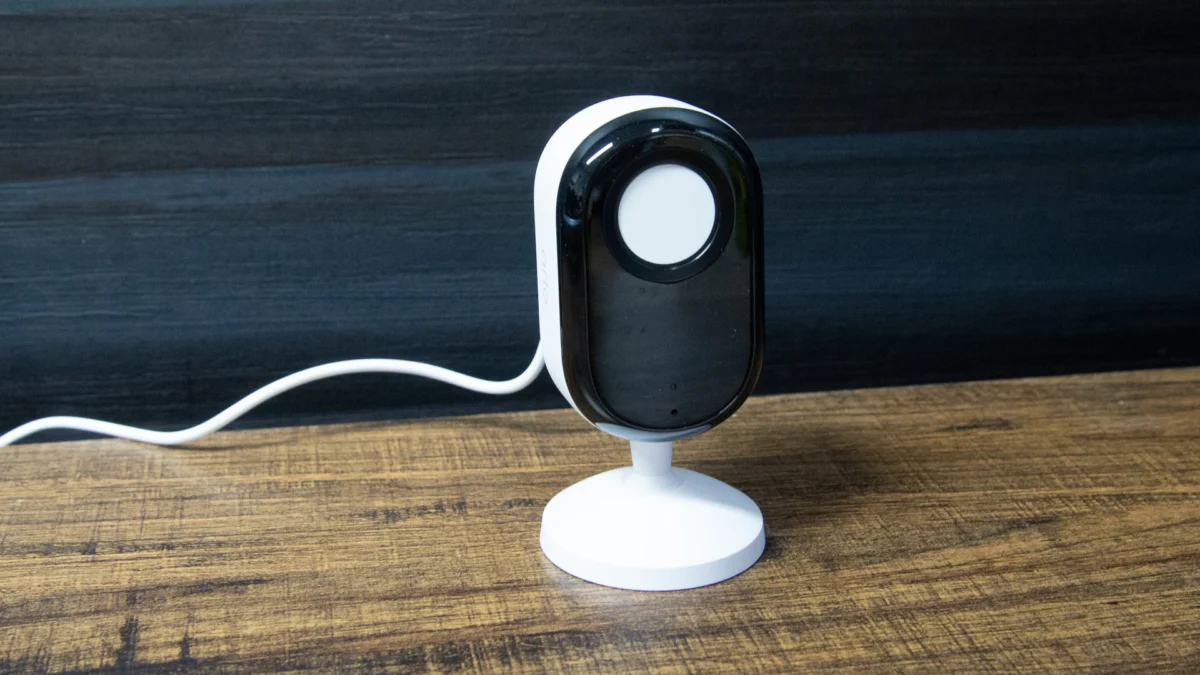
The Arlo Essential 3 2K Indoor Security Camera emerges as a compelling option for consumers seeking robust home surveillance without the premium price tag of Arlo’s outdoor, battery-powered models. This mains-powered unit distills the core Arlo experience into a more accessible form factor, offering excellent 2K video quality, reliable object detection, and the user-friendly Arlo app, all complemented by a reassuring physical privacy shield. However, the true potential of this indoor guardian is inextricably linked to Arlo’s subscription services, which, while feature-rich, present a significant ongoing cost that potential buyers must carefully consider.
Product Overview and Positioning
Arlo has established a strong reputation for its durable, weatherproof, and wire-free outdoor security cameras, often lauded for their performance and ecosystem integration. These premium devices, however, come with a substantial investment, particularly for those looking to extend their surveillance indoors. The Arlo Essential 3 2K Indoor Security Camera is strategically positioned to address this market gap. It leverages the established Arlo platform and core technologies, making them available in a more compact, cost-effective, and mains-powered design tailored specifically for indoor environments. This shift from battery power to a USB-C connection simplifies installation and ensures continuous operation, a crucial factor for a device designed to monitor living spaces. The inclusion of a physical privacy shield, a feature not always present on competing indoor cameras, offers a tangible assurance of privacy when the camera is not actively in use, allowing users to visually confirm its operational status.
Design and Installation: Simplicity Meets Tactile Privacy

The absence of an internal battery significantly reduces the physical footprint of the Arlo Essential 3 2K Indoor Security Camera, making it considerably smaller and less obtrusive than its battery-powered counterparts, such as the Arlo Pro 6 2K. Installation is designed to be straightforward: place the camera on a flat surface like a desk, shelf, or bookcase, connect the provided USB-C cable to a power source, and the device is ready for initial setup via the Arlo app. The accompanying stand is versatile, allowing for easy repositioning on furniture or a quick transition to a wall-mounted configuration, providing flexibility to suit various room layouts and surveillance needs.
The standout design element, however, is the integrated physical privacy shield. This intelligently designed plastic cover automatically flips up to physically obstruct the camera lens when recording is deactivated. This feature is not merely a cosmetic addition; it serves as a critical privacy mechanism for an indoor camera, providing immediate visual confirmation that the camera is not capturing video. In an era of heightened data privacy concerns, this tangible assurance can be a significant deciding factor for consumers.
Features and the Subscription Dilemma
Connectivity is facilitated through both 2.4GHz and 5GHz Wi-Fi bands, ensuring broad compatibility with most home networks. The camera operates seamlessly within the Arlo app, which continues to be a significant strength of the Arlo ecosystem. The app is praised for its polished interface, intuitive navigation, and comprehensive control over camera settings and recorded footage. Locating and reviewing past recordings is generally a swift and uncomplicated process.
The primary caveat associated with unlocking the full potential of the Arlo Essential 3 2K Indoor Security Camera lies in its subscription model. While basic functionality, including live viewing and standard motion alerts, is accessible without a subscription, advanced features such as intelligent object detection, cloud video storage, and extended recording history are locked behind Arlo Secure plans. These subscriptions are not inconsequential in terms of cost and vary geographically.

In the UK, the basic Arlo Secure plan is priced at £7.99 per month for a single camera, offering person, animal, package, and vehicle detection, but only seven days of cloud video history. This limited history is notably shorter compared to some competitors. A more comprehensive plan, covering up to four cameras for £11.99 per month, is available and can be found within the app’s subscription section, though it may not be prominently advertised on the Arlo website. The top-tier Arlo Secure Plus, at £19.99 per month (or $29.99 in the US), supports unlimited cameras, offers up to 4K resolution recording (though this camera is 2K), and provides 14 days of video history, alongside advanced AI features.
In the United States, the pricing structure differs, with Arlo Smart Aware costing $9.99 per month for one camera ($19.99 for unlimited cameras) and providing full-resolution video and AI custom detection. Arlo Smart Secure is $29.99 per month for unlimited cameras and includes 24/7 Professional Monitoring. The Ultra Secure plan, at $49.99 per month, adds 24/7 continuous recording for up to three cameras. While the US offerings might appear more feature-rich for the price, Arlo subscriptions, in general, remain a significant ongoing expense.
For the Arlo Essential 3 2K Indoor Security Camera, the standard Arlo Secure plan in the UK appears to offer the most balanced value proposition, as the premium AI features, while sophisticated, may not be considered indispensable for most indoor surveillance scenarios.
The effectiveness of Arlo’s object detection on the basic plan is a significant positive, substantially reducing the incidence of unnecessary motion alerts. The inclusion of activity zones further refines this, though their utility is arguably more pronounced in outdoor environments than indoors. Features like facial recognition, while available with certain subscriptions, are typically limited to a single camera within an Arlo system, making them more practical for an exterior camera monitoring an entry point. Similarly, vehicle recognition is of limited practical use indoors unless an unusual event occurs.
The most compelling premium feature is custom detection, which allows users to train the camera to recognize specific events by providing before-and-after images. This capability opens up genuinely useful applications, such as identifying when a door has been left ajar. However, the reliability of this feature is dependent on the distinctness of the visual difference between the training images, and it requires a noticeable change to be effective. Despite these advanced capabilities, the core functionality provided by the more affordable cloud plans is generally sufficient for many users.

The Arlo app’s mode management is another strong point. Users can configure three distinct modes: Arm Away, Arm Home, and Standby. Each mode can be tailored to activate specific cameras, which is particularly advantageous indoors where continuous monitoring of every room may not be desired. These modes can be managed manually, scheduled, or even triggered by geolocation, allowing for a largely automated and self-sufficient security system once configured. The ease of browsing recordings, with filters for date, camera, and motion type, further enhances the user experience.
Performance: Crisp Imaging Day and Night
The Arlo Essential 3 2K Indoor Security Camera delivers video at a resolution of 2304 x 1296 pixels, a significant upgrade from Full HD. This 2K resolution provides a noticeable increase in sharpness and detail without imposing the substantial storage and bandwidth demands associated with 4K video. The 130-degree field of view is ample for capturing a broad perspective of most rooms, provided the camera is strategically positioned.
Daytime footage is consistently impressive, maintaining strong detail across the entire frame even in busy visual environments. Facial features are rendered with clarity, ensuring that individuals can be easily identified.
During nighttime operation, the camera automatically switches to monochrome footage, utilizing infrared illumination to enhance visibility in low-light conditions. The image quality remains sharp, although moving subjects may appear slightly softer. Nevertheless, it remains straightforward to isolate clear frames that allow for positive identification of individuals. For an indoor security camera, the performance in both day and night conditions is highly commendable and presents few areas for significant criticism.

Analysis of Implications
The introduction of the Arlo Essential 3 2K Indoor Security Camera signifies a strategic move by Arlo to broaden its market appeal. By offering a more affordable entry point into its ecosystem, the company aims to capture consumers who may have been deterred by the cost of its premium outdoor cameras. The emphasis on a compact design, simple installation, and the inclusion of a physical privacy shield directly addresses common consumer priorities for indoor surveillance devices.
However, the inherent reliance on a subscription service for advanced features presents a clear strategic challenge. While Arlo’s subscription plans offer robust functionality, the ongoing costs can accumulate, potentially negating some of the initial cost savings compared to the camera’s hardware price. This pricing model forces consumers to weigh the upfront hardware investment against a continuous operational expense. The competitive landscape for smart home security is increasingly crowded, with many manufacturers offering cloud storage and intelligent detection features as part of their device’s initial purchase price or through more attractively priced subscription tiers. Arlo’s continued success in this segment will likely depend on its ability to demonstrate a clear value proposition that justifies its subscription fees, perhaps through superior AI capabilities, seamless ecosystem integration, or a more compelling long-term cost of ownership.
The inclusion of a physical privacy shield is a significant differentiator. As concerns about data privacy and the potential for unauthorized access to camera feeds grow, tangible assurances of privacy become increasingly important. This feature not only provides peace of mind but also adds a layer of user-friendliness by offering a clear, at-a-glance indication of the camera’s operational status.
Conclusion

The Arlo Essential 3 2K Indoor Security Camera largely succeeds in its objective of delivering core Arlo capabilities in a more accessible package. Its compact design, straightforward setup, and excellent video performance, both day and night, are significant strengths. The intuitive Arlo app and effective object detection further enhance its appeal. The physical privacy shield is a welcome and important addition for an indoor camera.
The primary consideration for potential buyers remains the subscription model. While the camera functions without a subscription, its most advanced and beneficial features are contingent on ongoing monthly payments. The cost of these subscriptions, particularly in certain regions, is a factor that cannot be overlooked. For those who prioritize the Arlo ecosystem, its user-friendly app, and reliable detection capabilities, and are willing to accept the recurring subscription costs, the Arlo Essential 3 2K Indoor Security Camera represents a high-quality and capable indoor surveillance solution. However, consumers seeking a purely one-time hardware purchase with all features included may need to explore alternative options in the market. The decision ultimately hinges on a careful evaluation of individual needs, budget, and the perceived value of Arlo’s subscription-based service.

