
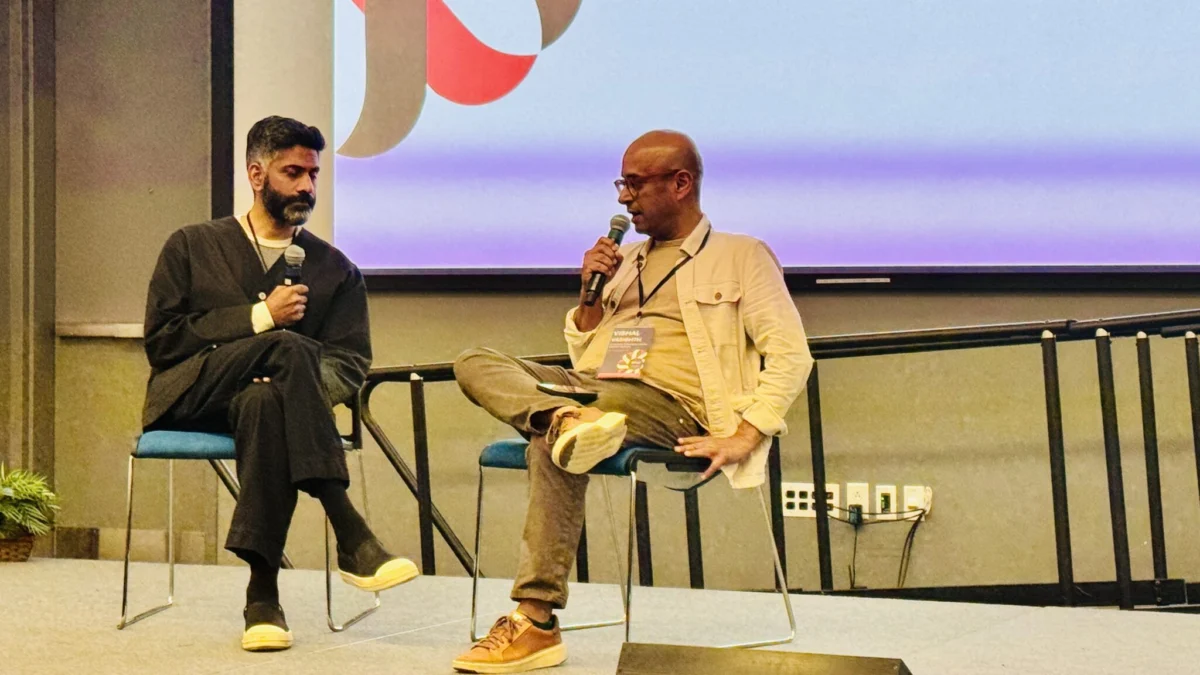
At the South Asian Healthcare Leadership Forum (SAHLF) held recently in Somerville, Massachusetts, a different side of the typical Silicon Valley success story emerged. While the healthcare technology sector is often defined by metrics, valuation rounds, and technical specifications, Dr. Shiv Rao, the co-founder and CEO of Abridge, offered a narrative that was decidedly more human. Rao, a practicing cardiologist whose company was recently valued at more than $5 billion, used the platform to move beyond the "tech bro" archetype, revealing a life shaped by international displacement, profound personal tragedy, and a deep-seated commitment to the city of Pittsburgh.
Abridge has rapidly become a titan in the generative artificial intelligence space, specifically targeting the epidemic of physician burnout. However, according to Rao, the foundation of the company was not built solely on lines of code, but on a series of formative experiences ranging from his childhood in Hyderabad to the influence of a grandfather who wrote Urdu poetry. These details, shared before an audience of healthcare executives and innovators, provide a blueprint for a leadership style that prioritizes empathy and historical context over disruptive rhetoric.
The Rise of Abridge and the Crisis of Clinical Documentation
To understand the significance of Rao’s personal history, one must first look at the problem Abridge seeks to solve. In the current American healthcare landscape, administrative burden is cited as the leading cause of physician attrition. Industry data indicates that for every hour a doctor spends with a patient, they spend an additional two hours on electronic health record (EHR) documentation and administrative tasks. This "pajama time"—hours spent charting at home after clinic—has led to record-high levels of burnout across the medical profession.
Abridge utilizes ambient AI to listen to patient-clinician conversations and automatically generate structured clinical notes. Since its founding in 2018, the company has raised over $250 million, including a massive $150 million Series C round in early 2024 led by Lightspeed Venture Partners and Redpoint Ventures. The company’s valuation has skyrocketed to $5 billion as health systems like UPMC, Emory Healthcare, and the University of Kansas Health System rush to implement tools that can return time to their providers.
However, for Rao, the drive to automate documentation is personal. He frequently references his father, a cardiologist who was eventually forced into retirement not by a lack of clinical skill, but by an inability to keep pace with the typing requirements of modern medical technology. This intersection of family history and technological innovation defines the ethos of Abridge, distinguishing it from competitors who approach the problem from a purely computational perspective.
A Transcontinental Childhood and the Architecture of Resilience
Rao’s journey began with a move that would define his worldview. When he was a young child, his father decided the family should return to India to ensure the children remained connected to their heritage. This resulted in a five-year period in Hyderabad, a city in southern India known for its rich history and emerging tech scene. During this time, Rao’s father maintained his medical practice in Pittsburgh, undertaking a grueling monthly commute between the United States and India—a feat Rao reflects on today as he travels weekly between Pittsburgh and San Francisco.
"I always think of him," Rao told the SAHLF audience. "It was a much more brutal commute than what I’m doing. He was able to do it, so I can."
This period in India was characterized by a deep immersion in middle-class Indian culture, involving stamp collecting, chess, and cricket. Yet, the return to the United States brought a different set of challenges. Rao described being bullied in both directions: he was the "American kid" in India and the "Indian kid" in Pittsburgh. While many might view such experiences as purely negative, Rao noted that venture capital firms like Pillar VC often look for a certain level of "damage" or hardship in founders, viewing it as a prerequisite for the resilience needed to scale a unicorn company.
The cultural influence of his family also extended to intellectual curiosity. Rao spoke at length about his grandfather, a Hindu lawyer who taught himself Urdu—a language traditionally associated with the Mughal dynasty and Muslim culture in India—to write poetry. This ability to traverse cultural and linguistic boundaries left a lasting impression on Rao, fostering an appreciation for creative expression that would later manifest in his interests in punk rock, philosophy, and skateboarding.
The Impact of Tragedy: The Murder of John Baglier
Perhaps the most pivotal moment in Rao’s youth was a tragedy that occurred during his junior year of high school. The event not only shaped his personal development but also dictated the geography of his professional life. Rao recounted the kidnapping and murder of his close friend, John Baglier, in 1996.
The case was a major news event in Western Pennsylvania at the time. Baglier was abducted at gunpoint from a mall parking lot in Hempfield Township, leading to a nationwide manhunt that ended when the kidnapper committed suicide as authorities closed in. The trauma of the event deeply affected the local community and Rao’s family specifically.
"My parents were shaken so deeply that they told me I couldn’t leave the area," Rao explained. While his older sister attended Cornell University, Rao remained in Pittsburgh to attend Carnegie Mellon University (CMU). This forced proximity to his hometown led him to explore philosophy and religious studies as he sought to process the loss of his friend.
It was at CMU that Rao’s path toward medicine was finally solidified. Despite his parents’ subtle hopes that he would follow in their footsteps, Rao initially resisted a career in STEM. However, a lecture on design thinking by an architecture professor—featuring the story of Dr. Govindappa Venkataswamy, an Indian ophthalmologist who revolutionized cataract surgery through high-volume, low-cost delivery—changed his perspective. He realized that medicine could be a venue for massive scale and systemic impact, leading him to enroll in medical school in Pittsburgh.
Pittsburgh as a Hub for Healthcare Innovation
Rao’s decision to keep Abridge headquartered in Pittsburgh, rather than relocating to the traditional tech hubs of Palo Alto or Seattle, is a strategic choice rooted in the city’s unique ecosystem. Once the center of the American steel industry, Pittsburgh has reinvented itself as a leader in healthcare and robotics, driven by institutions like UPMC and Carnegie Mellon.
By staying in Pittsburgh, Rao has been able to leverage a local talent pool that understands the nuances of both high-level engineering and clinical practice. Furthermore, his presence in the city allows him to maintain his relationship with his father, visiting him every Sunday. These visits serve as a constant reminder of the company’s mission.
"Number one, he gives me inspiration because what can we build that would have kept him still in practice?" Rao said. "But number two, what sacrifices did he make to give me the opportunity to get into punk rock, to play the drums, to be a DJ, and to take my time to figure it out?"
Market Implications and the Future of AI in Medicine
The story of Shiv Rao and Abridge arrives at a critical juncture for the healthcare industry. As the first wave of generative AI products moves from pilot programs to enterprise-wide implementation, the focus is shifting toward "clinician-centric" design. Analysts suggest that the AI medical scribe market is expected to grow at a compound annual growth rate (CAGR) of over 25% through 2030.
Abridge’s success is increasingly tied to its ability to handle complex clinical workflows, such as prior authorization and multi-specialty documentation. By integrating directly with major EHR vendors like Epic, Abridge has positioned itself as a seamless layer in the physician’s daily routine.
The reactions from the investment community have been overwhelmingly positive, with backers citing Rao’s dual identity as a physician and a technologist as a primary reason for their confidence. Unlike many AI startups that are "solutions looking for a problem," Abridge was built to address a specific, documented pain point that Rao witnessed firsthand in his father’s clinic and his own practice as a cardiologist at UPMC.
Conclusion: A Legacy of Empathy and Technology
The South Asian Healthcare Leadership Forum provided a rare glimpse into the psychological and historical underpinnings of one of the most successful startups in recent years. Shiv Rao’s narrative suggests that the future of healthcare technology may not be found in cold efficiency, but in the restoration of the human connection between doctor and patient.
By reflecting on his grandfather’s poetry, his father’s struggles with technology, and the personal tragedies that kept him rooted in Pittsburgh, Rao has built a company that mirrors his own kaleidoscopic background. As Abridge continues its trajectory toward a potential initial public offering (IPO) or further expansion, its foundation remains tethered to the very human experiences of its founder. For the medical community, the hope is that Rao’s "ambient" approach to technology will finally allow the next generation of physicians to focus on the art of healing rather than the burden of the keyboard.

