
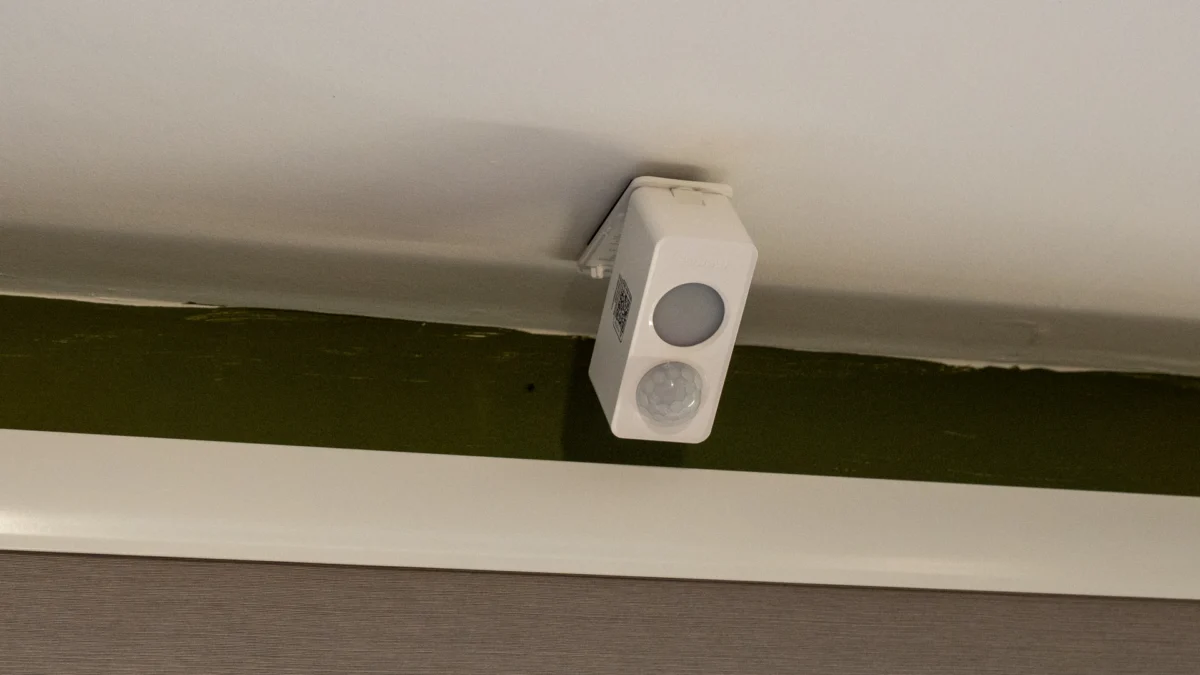
The Meross Thread Smart Presence Sensor MS605 is a sophisticated device that attempts to redefine smart home presence detection by integrating multiple sensing technologies and broad compatibility through Matter over Thread. While offering a potentially powerful and flexible solution for automating environments, its journey from unboxing to reliable operation is paved with a significant amount of user configuration, which may deter those seeking a plug-and-play experience. This review delves into the sensor’s capabilities, its intricate setup process, performance nuances, and its place within the evolving smart home landscape.
A Fusion of Sensing Technologies for Enhanced Detection
At its core, the Meross MS605 distinguishes itself by employing a dual-sensor approach, combining a Passive Infrared (PIR) sensor with a millimeter-wave (mmWave) radar. PIR sensors are adept at detecting sudden changes in heat, making them effective for identifying gross motion, such as a person entering a room. However, they can struggle with subtle movements or stationary individuals, leading to false negatives or missed detections. The mmWave sensor, on the other hand, operates by emitting low-power radio waves and analyzing the reflections. This technology excels at detecting even the slightest movements, such as breathing or the subtle shifts of someone sitting still, making it ideal for maintaining presence detection once a person is already in the space.
The MS605 further enhances its utility by segmenting the mmWave detection area into three distinct zones. This granularity allows for highly customized automation scenarios. For instance, a user could configure the outer zone to trigger a welcome light upon entry, the middle zone to activate ambient lighting, and the innermost zone to adjust climate control when a person is seated. This multi-zone capability moves beyond simple motion detection, offering a nuanced understanding of occupancy and activity within a space.

In addition to its motion and presence detection capabilities, the MS605 incorporates a light sensor. This feature is crucial for intelligent automation, enabling the sensor to gauge ambient light levels and inform decisions. For example, lights could be programmed to turn on only when motion is detected and the room is dark, thereby conserving energy and avoiding unnecessary illumination during daylight hours.
Design and Form Factor: Function Over Aesthetics
In an era where smart home devices often strive for minimalist and unobtrusive designs, the Meross MS605 presents a more utilitarian aesthetic. Its form factor is described as "boxy" and a "throwback to the early days," featuring a pronounced plastic dome for the PIR sensor that makes it protrude more than some of its sleeker competitors, such as the SwitchBot mmWave Presence Sensor. While not inherently a deal-breaker, this design choice might be a consideration for users who prioritize the visual integration of their smart home devices.
However, the MS605 compensates for its less refined appearance with practical design elements. The sensor is equipped with a hinged stand at the back, offering significant flexibility in positioning and angling it to achieve optimal detection coverage. Furthermore, it utilizes sticky Velcro strips for wall mounting, a thoughtful inclusion that simplifies installation and, importantly, allows for easy removal when battery replacement is necessary. The device is powered by a single CR123A battery, which Meross estimates can last up to three years, though this figure is contingent on the frequency of sensor activations.
The Setup Conundrum: A Steep Learning Curve

The Meross MS605’s ambition to be a highly configurable device is both its greatest strength and its most significant hurdle. While it boasts Matter over Thread compatibility, promising seamless integration with various smart home ecosystems, the initial setup and ongoing configuration are managed through the Meross mobile application, which communicates with the sensor via Bluetooth.
This Bluetooth dependency introduces a minor, yet persistent, annoyance. To conserve battery life, the Bluetooth connection automatically shuts down. Consequently, any adjustment to the sensor’s settings necessitates reactivating the Bluetooth connection by pressing a physical button on the sensor itself. This process, while understandable from a power-saving perspective, can become tedious when fine-tuning the sensor’s performance.
The Meross app offers an "automatic mode" designed to simplify the calibration process. Users are instructed to activate any potential sources of interference, such as fans or air conditioning units, leave the room, and allow the software to analyze the environmental background noise. The intention is for the sensor to intelligently configure itself to ignore these disturbances. In practice, however, this automatic setup is reported to be unreliable, with the sensor often detecting presence in an empty room immediately after configuration.
When the automatic setup falters, users are presented with a suite of manual adjustment options. The app provides a log that allows users to identify and flag false positives, effectively teaching the sensor to disregard them. More granular control is available through manual sensitivity adjustments for each of the three mmWave detection ranges.
The flexibility extends to how the PIR and mmWave sensors interact. The default configuration prioritizes mmWave detection followed by PIR confirmation. However, users can opt for a PIR-first approach, where the PIR sensor initiates detection, and then the mmWave sensor maintains presence. Alternatively, the PIR sensor can be entirely disabled, relying solely on the mmWave radar for all detection.

The true power of the MS605 lies in its ability to be programmed as three distinct sensors, each with its own configurable range. This allows for complex automation routines. For example, a user might set the furthest range to trigger a hallway light upon entry, a closer range to turn on main room lights upon approaching a specific area, and the closest range to activate a smart fan when a person is seated.
Further customization options include setting the duration of motion detection required before presence is registered (defaulting to 0 seconds but adjustable) and configuring the timeout period for detecting absence. These granular settings significantly impact how the sensor behaves within a smart home system and are crucial for achieving desired automation outcomes via Matter over Thread.
Ecosystem Compatibility and Performance Nuances
The Meross MS605’s Matter over Thread designation promises broad compatibility, but the actual user experience can vary depending on the smart home ecosystem. When integrated with Apple HomeKit, the MS605 appears as three separate motion sensors and a light sensor. However, Apple Home’s automation capabilities are limited; they cannot directly leverage the duration of presence or absence detection. Instead, they rely on the timing parameters configured within the Meross app.
Integration with Amazon Alexa presents a more significant limitation. In testing, the light sensor was reportedly non-functional when connected to Alexa, diminishing the sensor’s overall utility within that ecosystem.

Homey, a popular open-source smart home platform, appears to offer the most comprehensive integration. It exposes all the features seen in Apple Home and, crucially, allows for triggering Flows based on the duration of detected presence or absence. However, a caveat exists: if the Meross app is set to require 30 seconds of presence before triggering, and a similar delay is configured in Homey, the total wait time before a rule executes can be up to a minute, highlighting the importance of understanding how settings cascade across different platforms. This fragmentation of control, where settings might be spread across multiple apps, can detract from the seamless smart home experience.
Real-World Performance: A Tale of Calibration
Initial impressions of the Meross MS605’s performance were, to put it mildly, underwhelming. Following the automatic setup, the sensor consistently reported presence in an unoccupied office, indicating a fundamental issue with its initial calibration. Attempts to rectify this through manual adjustments in the app, including logging and removing false positives, proved to be a time-consuming and largely ineffective process. Changes made to sensitivity and absence detection timeouts often resulted in a more unreliable sensor, leading to premature light shut-offs.
The turning point in achieving reliable performance came with experimenting with the activation modes. Switching the detection sequence to PIR first, followed by mmWave, offered some improvement. However, for the specific environment of the test office, disabling the PIR sensor entirely and relying solely on the mmWave radar proved to be the most effective solution, yielding significantly more dependable results.
This experience underscores a critical point: the Meross MS605 is not a "set-and-forget" device. Its extensive array of configuration options, while offering unparalleled flexibility, demands a dedicated user willing to invest time in calibration. For those who are comfortable delving into technical settings and troubleshooting, the MS605 can be a powerful tool.

When properly calibrated, the sensor demonstrates impressive performance. It exhibits a quick response time to changes in occupancy and effectively avoids false positives. In a practical test designed to challenge basic motion sensors, the MS605 successfully kept lights on by accurately detecting the user remaining still at a desk, only triggering the "absence" state and turning off the lights when the user physically left the room. This ability to distinguish between true absence and mere stillness is a hallmark of advanced presence detection and a significant advantage over simpler motion sensors.
The multi-distance sensing capability, when configured correctly, offers a level of environmental awareness that basic mmWave sensors lack. The ability to trigger different automations based on proximity within a room opens up sophisticated possibilities for personalized comfort and energy management.
Final Verdict: Powerful Potential Hampered by Complexity
The Meross Thread Smart Presence Sensor MS605 stands as a testament to the advancements in presence detection technology. It eschews the need for proprietary hubs, instead leveraging the universal standard of Matter over Thread for broad ecosystem compatibility. Its integrated PIR and mmWave sensors, coupled with a light sensor and three configurable detection zones, provide a potent and adaptable platform for smart home automation.
However, its significant configuration requirements and the often-frustrating Bluetooth-based setup process present a considerable barrier to entry for many users. The need to repeatedly press a button to wake the sensor for Bluetooth connectivity, coupled with the extensive manual calibration necessary for reliable operation, positions the MS605 more as a sophisticated tech product for enthusiasts rather than an accessible consumer device.

For users who are willing to invest the time and effort to meticulously configure its settings, the Meross MS605 rewards them with a highly flexible and powerful presence detection solution that can deliver nuanced and efficient smart home automations. For those seeking a simpler, more immediate experience, alternative presence sensors that offer a more streamlined setup and less intricate configuration might be a more suitable choice.
Testing Methodology: A Deep Dive into Real-World Use
Our evaluation of the Meross Thread Smart Presence Sensor MS605, like all smart home devices reviewed, is based on an extensive "living with" methodology. This approach recognizes that the true performance and utility of such devices are best assessed over extended periods, within the context of a functional smart home ecosystem. Unlike single-use appliances, smart home components are designed to interact and operate in conjunction with other devices, creating dynamic and evolving environments.
Therefore, a brief testing window is insufficient to capture the full spectrum of a presence sensor’s capabilities and limitations. We integrate the MS605 into our daily routines, allowing it to perform its functions over weeks and months. This prolonged engagement enables us to observe its reliability, identify any persistent issues with false positives or negatives, and evaluate its responsiveness across various scenarios and environmental conditions.
Our team’s daily immersion in the smart home technology landscape provides a crucial comparative advantage. We are constantly assessing how individual devices perform relative to their competitors and the broader market offerings. This ongoing exposure allows us to understand what truly matters to users—ease of setup, reliable performance, meaningful automation capabilities, and seamless integration. Our reviews are committed to objectivity, providing a fair and comprehensive assessment, and are funded independently, ensuring that our verdicts are driven by product merit rather than commercial influence.

Frequently Asked Questions
-
Do you need a hub to use the Meross Thread Smart Presence Sensor MS605?
Yes, a Thread border router and a Matter controller are required to operate the Meross Thread Smart Presence Sensor MS605. These components form the backbone of the Matter over Thread network. -
Why does the Meross Thread Smart Presence Sensor MS605 use Bluetooth?
Bluetooth is utilized solely for the local configuration of the sensor. This allows users to connect to the Meross app to adjust settings, calibrate detection zones, and manage firmware updates without requiring a direct Wi-Fi connection or network pairing for every adjustment.
Meross Thread Smart Presence Sensor MS605: Technical Specifications
| Feature | Specification |
|---|---|
| Type | mmWave presence sensor and PIR sensor |
| UK RRP | £39.99 |
| US RRP | $33.99 |
| Size (Dimensions) | 77 x 35 x 48.5mm |
| Weight | 85g |
| Release Date | 2026 (Note: This likely indicates a future release or update designation, as the article is dated earlier) |
| Smart Home Ecosystems | Matter-over-thread |
| Detection Range | Up to 6 meters |
| Field of View | Not specified |
| Battery | 1x CR123A |
Score

[Placeholder for a numerical or qualitative score, based on the full review’s assessment.]

