
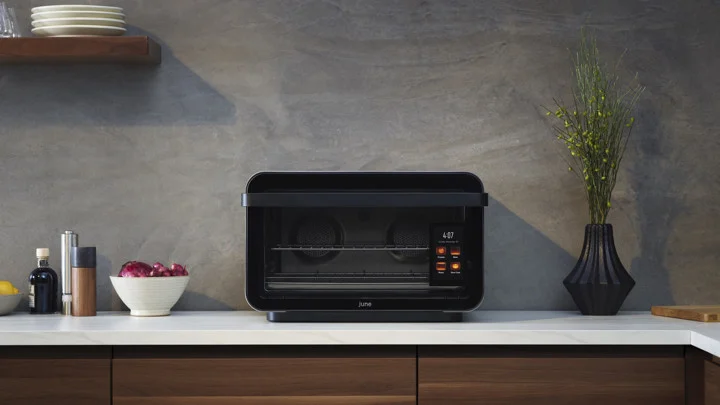
The cessation of cloud services for June Ovens, a consequence of Weber’s acquisition of the smart appliance company in 2021, has prompted a dedicated community initiative to breathe new life into the hardware. Project July, a grassroots effort spearheaded by June Oven owners, aims to circumvent the loss of app-dependent features by relocating the necessary software onto the ovens themselves, thereby transforming them into self-sufficient smart appliances. This innovative approach ensures that users can continue to leverage the advanced functionalities of their June Ovens, even in the absence of external server support.
The Genesis of Project July: Addressing the Digital Dead End
The impetus behind Project July stems from a shared concern among June Oven owners. Many possess functional hardware but face the prospect of losing integral smart features as June’s proprietary cloud infrastructure is decommissioned. Instead of attempting the monumental task of replicating June’s cloud services on a new, external platform, Project July has adopted a more localized and direct strategy. The project engineers have developed a method to install a compact server directly onto the oven’s internal components. This on-board server acts as a local hub, enabling seamless communication between the oven and users’ mobile devices over their existing home Wi-Fi networks. This localized architecture eliminates reliance on June’s defunct cloud, restoring a significant degree of smart functionality.
The journey to Project July began subtly, evolving from user discussions on online forums and communities dedicated to the June Oven. As news of the impending cloud shutdown circulated, a sense of urgency and a collective desire to preserve the investment in these sophisticated appliances emerged. Initial conversations focused on understanding the technical architecture of the June Oven and identifying potential pathways for independent operation. The development of Project July represents a significant leap from theoretical discussions to a tangible, functional solution, demonstrating the power of community-driven innovation when faced with corporate decisions that impact consumer technology.
Restoring Functionality: Local Connectivity and Enhanced Features
Project July has already achieved several key milestones in its mission to restore and enhance June Oven functionality. The team reports successful local pairing of the modified ovens with multiple smartphones and tablets, confirming the core connectivity objective. Furthermore, integration with Home Assistant, a popular open-source home automation platform, has been a significant achievement, allowing June Ovens to be incorporated into broader smart home ecosystems. This integration opens up a wealth of possibilities for automation and control, extending beyond the oven’s standalone capabilities.
Crucially, several core smart features are now operational locally. Users can remotely preheat their ovens, precisely set cooking temperatures, and cancel active cooking cycles, all without any reliance on June’s former cloud servers. These are not merely basic conveniences but essential functions that define the "smart" aspect of the appliance, and their restoration is a testament to the project’s success.
One of the most impressive upgrades offered by Project July is to the oven’s built-in camera. The original June Oven camera operated at a mere 1 frame per second (fps), providing a rather rudimentary live feed. Project July has significantly enhanced this capability, enabling a live camera feed at up to 15 fps. This substantial improvement offers a much clearer and more responsive visual monitoring experience. Moreover, the project can now provide an MJPEG stream of the camera feed, which is a standard format for video streaming and is particularly useful for integration with systems like Home Assistant, further solidifying the oven’s place within a connected home environment.
Software Development: A Hybrid Approach to User Interface
Complementing the hardware modifications, Project July has also seen progress on the software front. A customized Android application has been developed to interface with the modified ovens. While this application provides access to the restored smart features, it is not a direct, pixel-for-pixel replacement of the original June app. The team acknowledges that a native, fully featured replacement for the original June app is still under active development. A notable current limitation is that the customized Android app cannot be signed for use on Apple devices, meaning iOS users will need to rely on alternative methods for interaction or await further development. This bifurcated approach to software development reflects the challenges of recreating a sophisticated user experience from the ground up while prioritizing core functionality and community needs.
The Installation Process: A Hands-On Commitment
The implementation of Project July is not a plug-and-play affair; it requires a degree of technical proficiency and a willingness to engage with the hardware directly. For the supported June Oven models, the installation process involves a series of hands-on steps. Users are instructed to carefully turn their oven onto its left side, unscrew and remove seven screws to gain access to the internal components, and then connect a micro-USB cable to a specific board within the oven. Following this physical connection, a laptop needs to be booted from a USB stick to facilitate the installation of the Project July software. This intricate process underscores the project’s DIY ethos and its reliance on the technical acumen of its users.
The developers have intentionally withheld public download links for the software at this stage. This cautious approach is attributed to a commitment to thorough testing and validation. Before inviting a wider community to undertake the installation, the Project July team intends to conduct more extensive testing and gather further feedback. Once the software is deemed robust and reliable, checksums will be published for all files, providing an additional layer of assurance for users regarding the integrity of the downloaded components. This deliberate pace ensures that the project prioritizes user success and minimizes potential issues arising from premature releases.
Hardware Compatibility: A Hurdle for Later Models
A significant limitation currently affects third-generation June Ovens. The Project July team has identified that these later models lack the essential micro-USB port and two specific buttons found on the second-generation models. These ports and buttons are critical for the current installation method. Consequently, third-generation June Ovens are not supported by the current iteration of Project July. The development team is actively investigating alternative connection points and methods that might enable compatibility with these newer models, but for now, the project is primarily aimed at owners of Gen 2 June Ovens. This hardware dependency highlights the challenges of reverse-engineering and retrofitting technology, especially when faced with subtle design changes between product generations.
The Philosophy of Local Control: Privacy and Independence
A core tenet of Project July is the commitment to local control and user privacy. The entire system is designed to operate independently, without any reliance on the defunct June cloud, any Project July-specific accounts, or external servers. This means that all data, including sensitive camera footage, remains strictly within the user’s home network. This focus on local processing and data storage directly addresses growing concerns about data privacy and the potential for smart devices to become vectors for surveillance or data exploitation. By keeping data local, Project July empowers users with greater control and transparency over their own information.
This independent approach is also reflected in the project’s organizational structure. Project July is an entirely independent community effort and has no affiliation with, nor does it receive any support from, June or Weber. This distinction is crucial, emphasizing that the project is a user-driven initiative born out of necessity and ingenuity, rather than an official extension or endorsement from the original manufacturers.
A Call for Community Engagement and Future Prospects
For the time being, the Project July team is actively seeking engagement from June Oven owners. They encourage individuals to follow the project’s progress, offer feedback, and participate in discussions. This collaborative approach is vital for refining the installation process, identifying potential bugs, and gathering user insights that will shape the future development of the project. The release of installation files is contingent upon the successful completion of this validation phase.
The long-term prospects for Project July are promising, albeit dependent on continued community involvement and developer dedication. The project has demonstrated a viable path to restoring smart functionality to June Ovens, thereby extending their lifespan and value for owners. The success of Project July could serve as a powerful case study for other owners of discontinued smart appliances, inspiring similar community-led initiatives to combat planned obsolescence and preserve valuable consumer technology. As the project moves closer to a public release, the focus will undoubtedly shift to scalability, broader hardware support, and the development of a more polished user experience, ensuring that June Ovens can continue to serve as intelligent kitchen companions for years to come. The initiative represents a compelling narrative of consumer agency in the face of corporate decisions, showcasing how collaborative efforts can redefine the lifecycle of smart devices.

