
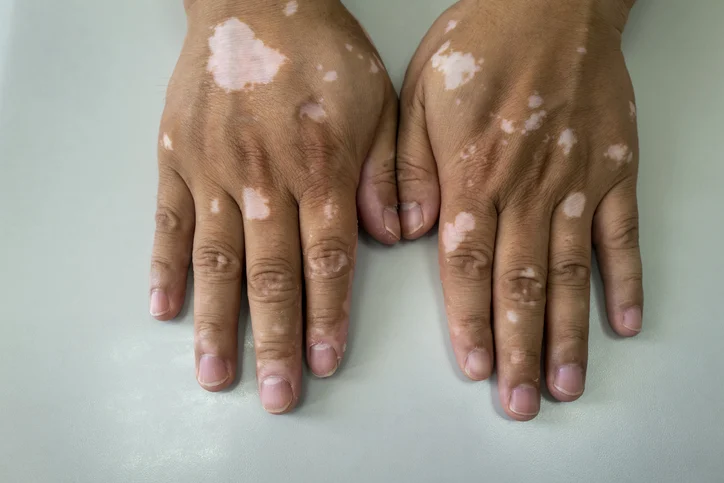
Pfizer Inc. has unveiled detailed Phase 3 clinical trial results demonstrating that its oral medication, Litfulo (ritlecitinib), achieved significant repigmentation in patients suffering from nonsegmental vitiligo. The data, presented during the European Academy of Dermatology and Venereology (EADV) annual meeting in Vienna, Austria, marks a critical milestone for the pharmaceutical giant as it seeks to expand the clinical applications of the drug. Currently approved for the treatment of alopecia areata, Litfulo’s success in vitiligo trials suggests it may soon provide a systemic treatment option for millions of individuals living with this chronic autoimmune skin condition. Based on the robust efficacy and safety profile observed in these pivotal studies, Pfizer has confirmed its intention to submit regulatory filings to global health authorities, including the U.S. Food and Drug Administration (FDA) and the European Medicines Agency (EMA).
Understanding the Pathology and Impact of Nonsegmental Vitiligo
Vitiligo is a chronic autoimmune disorder characterized by the destruction of melanocytes—the cells responsible for producing skin pigment (melanin). This destruction results in the appearance of white, depigmented patches on the skin, hair, and mucous membranes. The condition is broadly categorized into two types: segmental and nonsegmental. Segmental vitiligo typically appears on only one side of the body and is less common. Nonsegmental vitiligo, also known as generalized vitiligo, is the most prevalent form, characterized by symmetrical patches that develop on both sides of the body. These patches often appear on highly visible areas such as the face, neck, hands, and feet, frequently leading to significant psychological distress and a decreased quality of life for those affected.
According to data from the Global Vitiligo Foundation, the condition affects approximately 1% to 1.5% of the world’s population, translating to roughly 70 million people globally. Despite its prevalence, the therapeutic landscape for vitiligo has remained relatively stagnant for decades, often relying on off-label use of topical corticosteroids or phototherapy, which may offer inconsistent results. The emergence of Janus kinase (JAK) inhibitors has signaled a shift in the treatment paradigm, moving toward targeted therapies that address the underlying immunological drivers of the disease.
Mechanism of Action: The Role of JAK3 and TEC Inhibition
Litfulo (ritlecitinib) represents a novel class of kinase inhibitors. Unlike first-generation JAK inhibitors that target multiple enzymes within the JAK family (JAK1, JAK2, JAK3, and TYK2), ritlecitinib is a selective inhibitor of Janus kinase 3 (JAK3) and the TEC family of tyrosine kinases. In the context of autoimmune diseases like vitiligo and alopecia areata, the immune system’s T-cells become overactive, releasing cytokines that signal through the JAK pathway to attack healthy tissue.
By blocking JAK3 and TEC, Litfulo interrupts the signaling of interleukin-15 (IL-15) and other pro-inflammatory cytokines that are essential for the recruitment and activation of the T-cells responsible for destroying melanocytes. This dual-action mechanism is designed to provide a more targeted immunosuppressive effect, potentially reducing the risk of side effects associated with broader JAK inhibition while effectively halting the progression of depigmentation and encouraging the return of natural skin color.
Detailed Phase 3 Clinical Trial Design and Methodology
The data presented at the EADV meeting were derived from two global, randomized, double-blind, placebo-controlled Phase 3 studies. These trials were designed to evaluate the efficacy, safety, and tolerability of Litfulo in a diverse patient population. A total of 2,174 patients were enrolled across the clinical program, making it one of the largest clinical assessments for a vitiligo treatment to date.
The study participants were divided into groups receiving either a high dose or a low dose of ritlecitinib, or a placebo. The primary and secondary endpoints were meticulously selected to measure repigmentation across different areas of the body:
- Facial Repigmentation: Measured by the Facial Vitiligo Area Scoring Index (F-VASI 75), which tracks the proportion of patients achieving at least 75% improvement in facial pigment from the start of the study.
- Total Body Repigmentation: Measured by the Total Vitiligo Area Scoring Index (T-VASI 50), which tracks the proportion of patients achieving at least 50% improvement in pigment across the entire body.
In the United States, the primary endpoints were assessed at week 52, while for international regulatory purposes, the F-VASI 75 was the primary measure and the T-VASI 50 served as a key secondary endpoint.
Analysis of Efficacy Data: Significant Gains in Pigmentation
The results of the 52-week analysis demonstrated a clear dose-response relationship and a statistically significant advantage over the placebo group. In the high-dose cohort, 21.8% of patients achieved the F-VASI 75 threshold (75% or greater facial repigmentation). In the low-dose group, 12.4% of participants reached this mark. In stark contrast, only 2.4% of patients in the placebo group showed similar levels of improvement.
When evaluating the impact on the entire body, the results were equally encouraging. Approximately 13% of patients in the high-dose group achieved at least 50% total body repigmentation (T-VASI 50), compared to 8.9% in the low-dose group and a mere 1.9% in the placebo group. Pfizer noted that the onset of improvement was observable as early as week 24, with repigmentation continuing to progress through the full 52-week duration of the study. This suggests that long-term treatment may yield even greater cumulative benefits for patients.
Dr. Iltefat Hamzavi, a senior staff physician in the Department of Dermatology at Henry Ford Health and a lead investigator for the study, emphasized the clinical importance of these findings. "Research has shown that Litfulo not only significantly improved facial and total body repigmentation but also resulted in greater disease stabilization compared to the placebo," Hamzavi stated. He further noted that the results solidify the potential for an oral, systemic treatment to address the underlying drivers of nonsegmental vitiligo, offering a new alternative to topical therapies.
Safety Profile and the Regulatory Landscape
As with all drugs in the JAK inhibitor class, safety remains a primary focus for regulators and clinicians. The most common treatment-emergent adverse events (TEAEs) reported in the Litfulo vitiligo trials included upper respiratory tract infections, nasopharyngitis, headaches, and elevated levels of blood creatine phosphokinase (an enzyme that can signal muscle or heart stress). However, the incidence rates of these events were generally low and consistent across both the high and low-dose groups. Pfizer reported that no new safety signals were identified, and the drug’s safety profile in vitiligo patients remains consistent with the data previously gathered during its development for alopecia areata.
Despite the favorable trial results, Litfulo carries a "black box" warning on its label—a requirement mandated by the FDA for all JAK inhibitors. This warning highlights potential risks for serious infections, cardiovascular events, blood clots, and certain types of cancer. While these risks are class-wide and not necessarily specific to Litfulo’s selective mechanism, they represent a significant consideration for physicians when prescribing the drug.
Competitive Market Dynamics and Future Outlook
If approved for vitiligo, Litfulo will enter a market that is becoming increasingly competitive but remains largely underserved. Currently, the only FDA-approved pharmacological treatment specifically for repigmentation in vitiligo is Incyte’s Opzelura (ruxolitinib), a topical cream. Opzelura, a JAK1/JAK2 inhibitor, has seen significant commercial success, with Incyte reporting $678.5 million in revenue for 2025, a 33.4% year-over-year increase.
However, many patients and dermatologists prefer oral systemic treatments over topicals, particularly for generalized vitiligo where patches are widespread and difficult to treat with creams alone. This is where Pfizer’s Litfulo and AbbVie’s Rinvoq (upadacitinib) aim to compete. Rinvoq recently received European Commission approval for nonsegmental vitiligo and is currently under review by the FDA.
The pipeline for vitiligo treatments continues to expand beyond JAK inhibitors. Teva Pharmaceutical is currently advancing an anti-IL-15 antibody into Phase 2b development following positive early-stage results. Additionally, Argenx is exploring the potential of an antibody that blocks IL-2 and IL-15 signaling, acquired through its purchase of Forte Biosciences. These biological therapies represent the next wave of innovation, aiming for even more targeted immune modulation.
Conclusion and Strategic Implications for Pfizer
The successful Phase 3 results for Litfulo in vitiligo reinforce Pfizer’s commitment to its immunology and inflammation portfolio. By securing a second major indication for ritlecitinib, Pfizer can leverage its existing commercial infrastructure and established relationships with dermatologists to capture a significant share of the vitiligo market.
For the millions of patients worldwide, the potential approval of an oral medication like Litfulo represents more than just a clinical advancement; it offers the hope of a more manageable and effective way to treat a condition that is often stigmatized. As Pfizer prepares its regulatory submissions for the FDA and EMA, the medical community awaits the potential arrival of a new systemic standard of care that could fundamentally change the lives of those living with nonsegmental vitiligo. The next 12 to 18 months will be pivotal as regulatory agencies review the data and determine the drug’s role in the future of dermatological medicine.

