
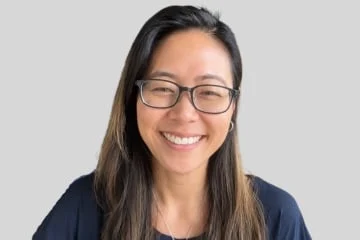
Cheryl Sew Hoy, a seasoned entrepreneur based in Austin, Texas, is at the forefront of a burgeoning field focused on what many might consider an unlikely subject: human waste. Her company, Tiny Health, launched in 2020, is dedicated to empowering individuals to monitor the essential microorganisms residing within their digestive systems, a crucial element for maintaining holistic wellness. This innovative approach dramatically simplifies a process that historically necessitated inconvenient in-person doctor visits and the often-unpleasant task of stool collection. Tiny Health has transformed this experience into a streamlined, home-based service, complete with a convenient kit and a prepaid mailer for seamless laboratory analysis.
In a recent in-depth conversation, Sew Hoy elaborated on the profound significance of gut health and provided granular details regarding Tiny Health’s inception, its strategic customer acquisition initiatives, its successful funding rounds, and other pivotal aspects of its journey. The comprehensive audio recording of this discussion is available below, with the accompanying transcript meticulously edited for enhanced clarity and conciseness.
The Unseen World Within: Understanding the Gut Microbiome
When asked about the core mission of Tiny Health, Sew Hoy did not shy away from the company’s direct engagement with biological samples. "Bluntly speaking, we deal with poop," she stated. "Customers send us swabs of their poop. We analyze it in a lab and produce a report about what’s in the poop and the gut microbiome, the 38 trillion health-related microbes living inside humans." This extensive microbial ecosystem, often referred to as the gut microbiome, plays an indispensable role in human physiology.
Sew Hoy emphasized the critical link between the gut and the immune system, noting that "Eighty percent of the human immune system lives in the gut." This underscores the profound impact of gut health on "overall well-being" and its direct correlation with the development of chronic conditions if not properly managed. The scientific community’s understanding of the microbiome has expanded exponentially in recent years, revealing its influence on everything from nutrient absorption and vitamin synthesis to mood regulation and even immune system development. Studies published in journals like Nature and Cell have consistently highlighted the intricate symbiotic relationship between humans and their gut microbes, suggesting that imbalances in this ecosystem can contribute to a wide array of health issues, including inflammatory bowel disease, obesity, and even certain neurological disorders.
Beyond Conventional Diagnostics: Tiny Health’s Advanced Analysis
Addressing the notion that Tiny Health’s service merely replicates existing medical tests, Sew Hoy clarified the nuanced distinction. "Yes and no," she responded. "It depends on the stool analysis. Persistent diarrhea or constipation may require a doctor’s diagnosis and treatment, which might include antibiotics." However, Tiny Health’s approach transcends conventional diagnostic pathways.
"What we do with the stool analysis is different," Sew Hoy explained. "We use a technology called shotgun metagenomic sequencing that detects all the bugs in your gut, including bacteria, parasites, viruses, archaea, and fungi." This advanced sequencing method provides a comprehensive and detailed snapshot of the entire microbial community, identifying not just the presence of specific organisms but also their relative abundance and functional potential.
Sew Hoy further elaborated on the often-overlooked importance of beneficial bacteria. "The human gut has many beneficial bacteria. Conventional medical education and public discourse often miss this. The bacteria in our guts digest our food and nutrients, and produce metabolites and enzymes that support overall health." This perspective challenges a purely pathogenic view of gut microbes, highlighting their vital contributions to human health. The metabolites produced by gut bacteria, such as short-chain fatty acids (SCFAs) like butyrate, are known to have anti-inflammatory properties and play a crucial role in maintaining the integrity of the gut lining.
The practical applications of Tiny Health’s services extend to diverse populations. "For example," Sew Hoy noted, "athletic teams and even pro athletes come to us to optimize performance and fitness because they travel a lot and are under stress from training and recovery." Elite athletes understand that gut health can directly impact energy levels, nutrient absorption, immune function (crucial for preventing illness during demanding training schedules), and recovery times. Optimizing their gut microbiome can provide a competitive edge by enhancing overall physiological resilience and efficiency.
The Tiny Health Journey: From Concept to Funding
The genesis of Tiny Health was deeply personal for Cheryl Sew Hoy. "I started the company in 2020 when my son was just a week old," she recounted. This period of intense personal transition coincided with a deep dive into the scientific literature. "I spent the first two years, before our public launch in 2022, understanding microbiome research and science." Her commitment to acquiring a robust understanding of the field was evident in her proactive learning approach: "I took PhD-level classes online to educate myself and understand our staffing needs, such as the right scientists and clinical staff." She also leveraged her entrepreneurial network and expertise, assembling an advisory board comprising distinguished professionals from leading medical institutions such as the Mayo Clinic and Johns Hopkins.
The initial funding for Tiny Health was bootstrapped. "I launched the company with $50,000 of my own money," Sew Hoy revealed. "I offered equity initially to team members because I didn’t have the cash to pay them." This early-stage strategy, while challenging, allowed her to assemble a core team dedicated to the company’s vision. This initial investment was strategically deployed to validate the core concept: "$50,000 funded a study with nine subjects. I wanted to prove I could build the platform with the help of scientists I retained."
The successful completion of this pilot study paved the way for significant external investment. "After collecting the data for one year, I raised $4.5 million in seed money in 2021," Sew Hoy stated. This infusion of capital enabled critical expansion, including the hiring of her "first engineer and my first full-time scientist." Sew Hoy candidly acknowledged her own expertise, stating, "I’m not a scientist, a microbiologist, or a doctor." This self-awareness highlights her strength as a visionary leader capable of identifying and recruiting top talent in specialized fields. The company’s trajectory continued its upward momentum, culminating in a recent Series B funding round. "We just closed a Series B funding round for $33 million," she announced, signaling substantial investor confidence in Tiny Health’s business model and market potential.
This impressive fundraising achievement is underpinned by Sew Hoy’s prior entrepreneurial success. "This is my second venture-funded company," she shared. "I built my first, a digital wallet and daily deals company, in New York in 2010 and sold it to Walmart Labs in 2013." This prior exit demonstrates her proven ability to scale technology companies and navigate complex acquisition processes, providing valuable experience that informs her leadership at Tiny Health.
Streamlining Sample Collection and Analysis
The user experience at Tiny Health is meticulously designed for ease and minimal disruption. "We send customers a kit. It includes a small, prepaid USPS shipping box," Sew Hoy explained. The process is designed to be intuitive: "Customers open the kit, which contains a swab. They collect their stool, swab it, drop the swab in a tube-like container, put it in the box, and mail it to us. It’s relatively easy." This focus on user-friendliness is paramount in a market where the subject matter can be a deterrent.
Tiny Health also caters to a professional market with a more sophisticated offering. "We also offer a clinical-grade test that has a more involved collection method and two-day shipping. Only practitioners with certain licenses can order it." This dual-pronged approach allows Tiny Health to serve both direct-to-consumer needs and professional healthcare settings.
Recognizing the inherent reluctance some individuals may have towards collecting biological samples, the company has invested in innovative solutions. "We understand that folks don’t want to collect poop. We’ve innovated the process with a swab that resembles a Q-tip," Sew Hoy stated, highlighting the company’s commitment to improving the user experience through thoughtful design. This attention to detail aims to reduce friction and increase accessibility for a wider audience interested in understanding their gut health.
Customer Acquisition Strategies: A Multi-Channel Approach
Tiny Health employs a diverse array of strategies to reach its target audience, a testament to the evolving landscape of digital marketing and consumer engagement. "Advertising is our primary driver," Sew Hoy confirmed. "Roughly 50% of new customers come from Meta Ads and Google Search." The company is actively exploring emerging platforms, with "TikTok and Pinterest" being areas of current focus.
The remaining customer acquisition is driven by organic channels, with a particular emphasis on content marketing. "The other half is organic, driven by content. We’re adapting to LLMs and genAI visibility, away from traditional SEO." This forward-thinking approach to content strategy reflects an understanding of how search algorithms and user engagement are shifting, particularly with the rise of generative AI.
Beyond paid and organic search, Tiny Health leverages the power of direct communication and influencer marketing. "Email marketing and Instagram influencers are huge for us, too." This combination of targeted advertising, engaging content, and trusted recommendations from social media personalities forms a robust marketing funnel.
Furthermore, Tiny Health has established a significant business-to-business (B2B) arm. "Plus, we have a B2B component where we work directly with healthcare practitioners." This strategic partnership model allows for wider dissemination of Tiny Health’s testing capabilities through established medical channels, providing healthcare professionals with advanced tools to inform patient care. The company also actively participates in industry events, stating, "We also go to trade shows and give talks at conferences," to further build brand awareness and engage with potential partners and customers.
Accessing Tiny Health and Connecting with the Founder
For individuals interested in exploring their gut health through Tiny Health’s services, the company’s website serves as the primary gateway. "We’re at TinyHealth.com," Sew Hoy directed. For those seeking to connect with the founder directly, she is accessible on professional networking platforms: "I’m on LinkedIn." This transparency and accessibility underscore Tiny Health’s commitment to open communication and customer engagement. The company’s growth and substantial funding rounds signal a strong belief in the transformative potential of microbiome analysis, positioning Tiny Health as a key player in the future of personalized health and wellness.

