

This week’s influx of new services for merchants signals a significant acceleration in the adoption of advanced technologies across the e-commerce sector, with a particular emphasis on artificial intelligence, omnichannel integration, and enhanced customer experience. From making brands discoverable across emerging AI platforms to streamlining complex fulfillment processes and revolutionizing customer engagement, these developments underscore a proactive approach by businesses to adapt to the rapidly changing digital marketplace. The updates span critical areas including payments, agentic commerce, AI visibility, product customization, dropshipping, email marketing, and comprehensive customer experience platforms, collectively pointing towards a more intelligent, integrated, and customer-centric future for online retail.
AI Integration and Discoverability: A New Frontier for Brands
In a move that could redefine how consumers interact with brands online, Juspay has launched Breeze Universal, a groundbreaking service designed to make brands discoverable across a spectrum of AI platforms, including ChatGPT and Claude, as well as traditional marketplaces and merchant-specific platforms. This innovative solution connects directly to a business’s existing online stores and product catalogs, whether they are hosted on platforms like Shopify and WooCommerce or are custom-built. By centralizing and making this product data accessible across diverse digital touchpoints, Breeze Universal aims to bridge the gap between brands and consumers engaging with AI-powered search and discovery tools.
The strategic significance of this launch lies in its anticipation of a future where conversational AI plays a pivotal role in product discovery. As consumers increasingly rely on AI assistants for recommendations and information, ensuring brand visibility within these emerging ecosystems becomes paramount. Juspay’s initiative positions brands to be at the forefront of this shift, allowing them to leverage their existing product data to engage with a growing segment of online shoppers who are turning to AI for their purchasing decisions. This development is particularly relevant given the projected growth of AI-driven commerce, with market analysts forecasting a substantial increase in sales facilitated through AI interfaces in the coming years. The ability to seamlessly integrate product catalogs with AI platforms like ChatGPT and Claude, as facilitated by Breeze Universal, offers a tangible competitive advantage.
Unifying Fulfillment: Bridging the Physical and Digital Retail Divide

The ongoing integration of in-store and online operations remains a critical focus for retailers aiming to provide a seamless customer journey. Lightspeed Commerce, a prominent e-commerce omnichannel platform, has announced a strategic partnership with ShipStation, a leading shipping and logistics software provider. This collaboration integrates ShipStation’s robust capabilities directly into the Lightspeed ecosystem. The enhancement means that fulfillment processes are now more tightly woven into the point-of-sale (POS) system, offering retailers the ability to manage both in-store and online orders with greater efficiency.
This unification is particularly impactful for businesses that operate both brick-and-mortar stores and e-commerce websites. Historically, managing inventory and fulfilling orders across these disparate channels has been a significant operational challenge. By embedding ShipStation’s functionalities within Lightspeed’s POS, retailers can now sell across multiple channels without the added complexity often associated with disparate systems. Automated tax calculations further simplify the process, enabling merchants to focus on growth rather than administrative burdens. This partnership reflects a broader industry trend towards creating a truly omnichannel experience, where the lines between online and offline shopping blur, and customers expect consistent service and fulfillment regardless of how they choose to interact with a brand. The immediate implication is a reduced operational overhead for retailers and a more fluid experience for consumers, who benefit from faster, more accurate order fulfillment.
AI-Powered Customer Experience: Turning Feedback into Action
In the realm of customer engagement, Alchemer has unveiled Iris, an AI-native platform designed to transform customer feedback into actionable insights. Alchemer, traditionally known for its online survey and customer feedback tools, has leveraged artificial intelligence to create a more dynamic and responsive customer experience management system. Iris is built to process feedback from a wide array of consumer channels, including surveys, online reviews, and social media, and then translate that data into tangible actions.
The platform’s capabilities extend to automating responses to customer reviews, triggering follow-up communications, identifying critical insights, and seamlessly integrating these actions into existing team workflows. This move towards an AI-native approach signifies a maturation in how businesses approach customer feedback. Instead of simply collecting data, Iris aims to create a closed-loop system where feedback directly informs operational improvements and customer service strategies. The emphasis on remaining "human-first," with users controlling the application of AI, addresses potential concerns about over-automation and ensures that human oversight remains integral to customer interactions. This approach is crucial for maintaining brand authenticity and trust, especially in an era where AI is becoming increasingly prevalent. The potential for Iris to proactively address customer issues and surface trends could lead to significant improvements in customer satisfaction and loyalty.
Content Integration and Evolving Shopping Experiences

Flipkart, India’s leading e-commerce marketplace, has introduced a novel microdrama vertical within its shopping app, signaling a growing trend of integrating entertainment and content with the shopping experience. In partnership with content platforms Pratilipi and Terribly Tiny Tales, Flipkart has embedded this new feature into its "Play" section, alongside its existing content-led discovery platform, Explore. This strategic integration aims to enhance user engagement by offering a richer, more interactive discovery journey.
The inclusion of microdramas, short-form video content often featuring compelling narratives, represents a creative approach to customer engagement. By blending storytelling with e-commerce, Flipkart seeks to capture the attention of its user base and potentially influence purchasing decisions through immersive content. This strategy aligns with broader trends in social commerce and shoppable content, where engaging narratives and influencer-driven recommendations are increasingly driving sales. The success of this initiative could pave the way for other marketplaces to explore similar content-integration strategies, further blurring the lines between entertainment and commerce. The timing, ahead of key shopping seasons, suggests an effort to boost user retention and drive impulse purchases through engaging content.
Streamlining Payments: The Rise of QR Codes and Installment Options
The payments landscape continues to evolve with innovations aimed at simplifying transactions for both merchants and consumers. Ecommpay has launched QR Code Payments, a solution that provides merchants with a single, static QR code that can be displayed across various touchpoints, from printed signs to website pages. This allows customers to scan the code, select their payment amount, and complete the transaction seamlessly. Merchants can customize the appearance of the payment page, offering a branded experience. The QR code’s continuous availability until deactivated by the merchant adds a layer of flexibility for businesses, particularly small businesses and those in physical retail settings.
This offering taps into the growing global adoption of QR code payments, driven by their convenience and contactless nature. The ability to easily generate and manage a persistent QR code simplifies payment acceptance for a wide range of businesses, reducing the need for complex payment hardware.
In parallel, Shopline, an e-commerce platform, has partnered with Splitit to integrate card-linked installment payments. This collaboration allows Shopline merchants to offer customers the option to pay over time using their existing credit cards, without requiring new applications or credit checks. Splitit’s technology is embedded directly into the Shopline platform, enabling merchants to activate installment payment options with minimal implementation effort. This move addresses the increasing consumer demand for flexible payment solutions, such as Buy Now, Pay Later (BNPL) options, by providing a card-native installment solution that can be easily adopted by merchants. The availability of such options can lead to increased conversion rates and average order values, as consumers feel more empowered to make larger purchases.

Enhancing Security and Consumer Protection
In an effort to bolster consumer trust and security, Amazon has introduced new protections for its Alexa for Shopping service. U.S. customers can now ask Alexa to verify the authenticity of any communication, including messages, emails, phone calls, and text messages, purportedly from Amazon. This feature involves submitting the communication to Amazon for review, allowing the company to identify and take down malicious actors and protect a broader base of consumers. This initiative builds upon Amazon’s earlier launch of a dedicated email address for communication verification and the inclusion of a verification form on its customer service pages.
The introduction of this Alexa-based verification system is a significant step in combating phishing and fraud. As digital communication channels proliferate, consumers are increasingly vulnerable to deceptive practices. By enabling voice-based verification through a trusted platform like Alexa, Amazon is providing an accessible and user-friendly layer of security. This proactive approach to consumer protection is vital for maintaining customer confidence and safeguarding the integrity of online transactions. The ability to quickly and easily confirm the legitimacy of communications can prevent significant financial losses and reputational damage for both consumers and the brand.
Empowering Merchants with Advanced Tools
The week has seen several releases of advanced tools designed to empower merchants with greater control over product customization, AI-driven operations, and sales strategies. Sigmira is set to launch a product customizer specifically for WooCommerce merchants selling personalized items. This cloud-based platform will allow shoppers to customize products directly within an e-commerce store, preview their designs, and enable merchants to configure options, pricing, and manage production workflows. By handling the customization aspect, Sigmira allows WooCommerce merchants to focus on their core business operations.
Furthermore, Anthropic has released AI agent blueprints for retailers, providing them with templates to build shopping and merchant agents on the Claude platform. This initiative is particularly timely with the holiday shopping season approaching and the growing demand for conversational search tools. These blueprints can help retailers create agents capable of suggesting inventory, pricing strategies, and marketing campaigns, while also enabling shoppers to use these agents for personalized recommendations and seamless cart additions. The move towards providing blueprints democratizes the development of sophisticated AI agents, making advanced capabilities accessible to a wider range of businesses.

Optimizing Content and User-Generated Content for AI
Bazaarvoice, a platform focused on user-generated content (UGC), has introduced an AI visibility package aimed at preparing brand content and UGC for AI search and recommendation engines. This package makes authentic customer content structured and accessible, priming it for consumption by AI platforms. Bazaarvoice has collaborated with AI visibility measurement providers like Bluefish, Evertrie, and Profound to offer an independent measurement layer that tracks and scores the frequency with which brand content appears in AI-generated answers.
This development is critical in the evolving AI landscape. As AI models increasingly rely on real-world data for their outputs, ensuring that UGC is optimized for AI consumption can significantly boost brand visibility and credibility. By making customer reviews, testimonials, and product feedback readily interpretable by AI, Bazaarvoice is helping brands leverage their most authentic marketing assets in new and powerful ways. The ability to measure this AI visibility provides brands with valuable data to refine their content strategies.
Expanding Global Reach and Operational Efficiency
Logistics and operational efficiency continue to be areas of significant innovation. Flexport, a freight forwarder and logistics platform, has expanded its fulfillment services to Canada and the United Kingdom, establishing new facilities in Mississauga and Manchester, respectively. This expansion allows brands to store inventory and fulfill orders directly within these key markets, while maintaining their existing platform, account teams, and logistics relationships. Flexport’s ability to handle customs clearance directly and manage returns within the respective countries simplifies international fulfillment for its clients.
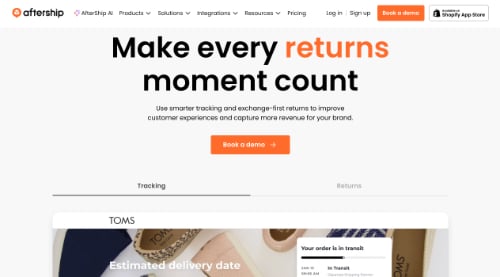
In the realm of post-purchase experiences, AfterShip has launched "Intelligence," a new module designed to bring agentic automation and predictive capabilities to its platform. This AI-powered solution proactively identifies shipment issues, gathers context, recommends resolutions, and executes tasks. While financial and customer-facing decisions still require human approval, AfterShip’s approach emphasizes explainability and reviewability of every AI action. This innovation aims to transform the post-purchase phase from a potential cost center into a revenue-generating engine by enhancing customer satisfaction through proactive problem-solving and efficient issue resolution.
Enhancing Marketing and Sales Strategies
Listrak, an email marketing platform, is offering a free email marketing audit tool for retailers. This no-signup-required tool assesses various aspects of marketing emails, including deliverability, accessibility, mobile optimization, content, and conversion setup. By evaluating emails against 30 high-performing tactics, the audit provides retailers with actionable insights to improve their email campaign effectiveness. This initiative underscores the continued importance of email marketing as a direct communication channel with consumers, even in an AI-driven world.
For dropshippers, Crosslist has introduced a micro-budget testing method designed to help validate new sales channels with minimal financial risk. This approach encourages sellers to allocate a small budget, list a limited selection of products, and monitor buyer behavior over a 14-to-30-day period. The goal is to identify early demand signals and make data-driven decisions about expanding distribution. This method is particularly valuable in the often volatile dropshipping market, where identifying profitable sales channels is crucial for sustained success.
Finally, WizCommerce, an AI-powered operational platform for distributors and manufacturers, has launched WizCRM, a new customer relationship management tool. WizCRM is designed to help teams manage accounts, track deals, log interactions, assign tasks, and generate quotes that can be converted into ERP-synced orders. A key feature is WizPilot, an AI sales assistant that can answer customer queries and perform tasks, enhancing the productivity of sales teams. This AI-first CRM for wholesalers represents a significant step towards integrating advanced AI capabilities into B2B sales processes, aiming to streamline operations and improve customer engagement within the wholesale sector.

