
The digital marketing landscape is in constant flux, with businesses increasingly navigating a challenging environment characterized by a decline in organic search traffic. This shift has spurred a critical need for diversification in marketing strategies, with social media platforms emerging as pivotal channels for cultivating brand awareness, fostering engagement, and ultimately, driving sales. While prominent social networks have long offered native analytics tools to monitor follower growth and engagement metrics, these insights have historically been confined within their own ecosystems, failing to bridge the crucial gap to organic search performance. However, a significant development from Google is set to revolutionize how businesses understand and leverage their social media presence in relation to search engines.
A new functionality within Google Search Console now empowers account holders to meticulously track the organic search activity originating from their social media profiles. Following a phased rollout, this feature is now universally available, offering robust support for professional accounts across leading platforms including YouTube, TikTok, X (formerly Twitter), and Instagram. This integration marks a significant stride in unifying cross-channel marketing analytics, allowing businesses to gain a holistic view of their online presence and its impact on search visibility.
Bridging the Social-Search Divide: Search Console’s New Frontier
Google Search Console, a free service from Google that helps you monitor, maintain, and troubleshoot your site’s presence in Google Search results, has historically focused on website performance. By introducing the ability to track social media profiles, Google is effectively treating these platforms as "platform properties," on par with traditional websites. This innovative approach allows businesses to extend their analytical reach beyond the confines of individual social networks and understand how their content is being discovered and interacted with through Google Search.
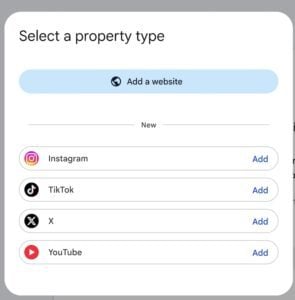
The process of integrating social media profiles into Search Console is designed to be straightforward. Users can activate this feature by navigating to the "Add property" option within the top-left drop-down menu. Following a simple authentication process, which verifies ownership and connection to the respective social media account, users can begin receiving valuable data. Initial data integration typically appears within a 36-hour timeframe, enabling businesses to quickly gain insights into their social media’s search performance.
Unpacking the Social Media Dashboard in Search Console
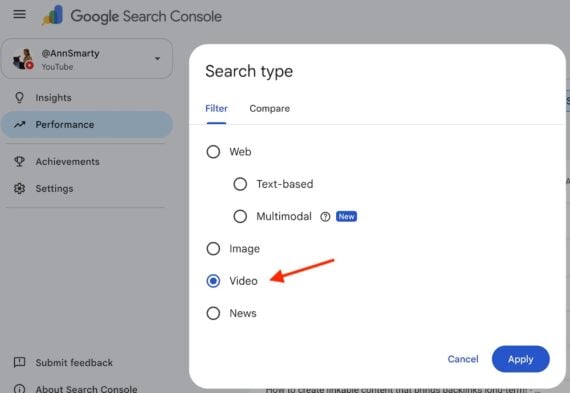
Upon successfully adding a social media profile as a property, users will find a dedicated dashboard within Search Console. This dashboard, while currently featuring a focused set of tools, provides critical data for understanding search performance. It primarily includes an "Insights" tab and a "Performance" section. The Performance section is particularly impactful, offering detailed metrics related to search activity. This includes various search types such as text or multimodal web search, image search, video search, and News. Crucially, it also provides visibility into Google Discover, a personalized content feed that surfaces relevant articles and information to users.
The inclusion of these diverse search filters is a game-changer for content creators and marketers. For instance, the ability to filter by "Video" search type is especially pertinent given the increasing prominence of video content in search results and its growing integration into AI-powered search features. YouTube videos, in particular, often rank highly in Google Search and are increasingly being featured in AI Overviews, AI Mode, and Gemini. Prior to this Search Console update, meticulously tracking the organic search ranking of individual videos was a time-consuming and often burdensome task.
Deep Dive into Video Performance and SEO Opportunities
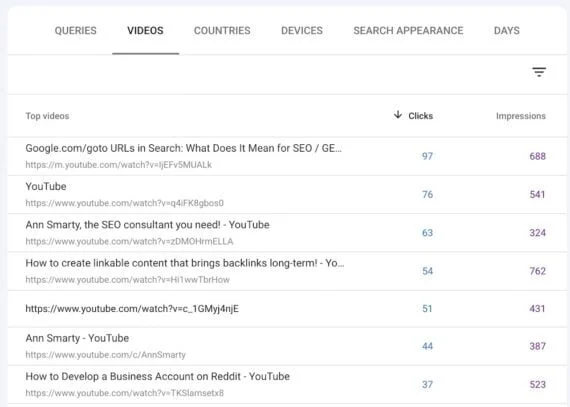
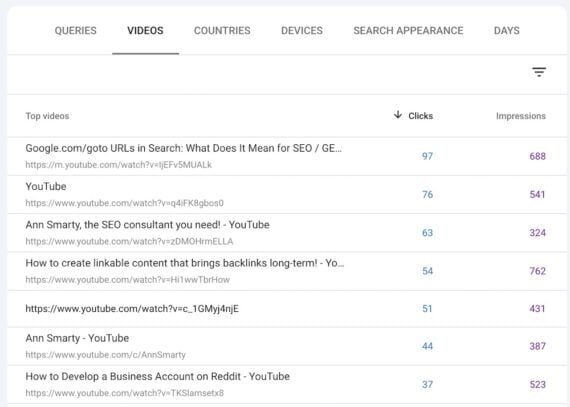
For businesses heavily invested in video content, especially on platforms like YouTube, the new Search Console functionality offers unparalleled advantages. After linking a YouTube channel as a property, users can access its Performance dashboard. By selecting the "Videos" search type, they can identify which specific YouTube videos are ranking in Google Search and the extent to which they are generating clicks. Clicking on individual video links within this report reveals the precise search queries for which those videos are appearing, offering invaluable insights into user search intent.
This granular data opens up new avenues for video Search Engine Optimization (SEO). Traditional optimization tactics can now be more strategically applied based on concrete search performance data. For example, identifying queries that demonstrate a high number of views but a low click-through rate, coupled with an average search position below the top four, can signal an opportunity. Including such queries prominently in video titles can significantly improve click-through rates and overall visibility. Furthermore, by analyzing top-ranking queries, creators can experiment with video titles and descriptions to further enhance their ranking and reach. This data-driven approach allows for a more precise and effective optimization strategy, moving beyond educated guesswork.
Leveraging Visual Search and Content Discovery
The implications of this update extend beyond video. E-commerce businesses that utilize platforms like Instagram for showcasing product imagery can now monitor the "Multimodal search" performance filter for their Instagram properties. This filter is instrumental in determining whether their product photos are appearing in image search results, a critical pathway for visual discovery and potential sales. By understanding which images are being surfaced and for what queries, businesses can refine their visual content strategy and optimize their product listings for broader search visibility.
While the new social media metrics in Search Console do not currently include a dedicated "Branded search" filter, this does not diminish their utility. Users can still manually filter queries to ascertain where their social media profiles and individual posts rank for their brand name and its various permutations. This manual oversight, combined with the automated performance data, allows for a comprehensive understanding of brand discoverability across search and social platforms.
The Future of Cross-Channel Marketing Analytics
The introduction of social media profile tracking within Google Search Console represents a significant elevation of cross-channel marketing strategies. It empowers businesses to create a more cohesive and integrated online presence. For instance, a merchant can now strategically publish an article on a specific topic, develop a complementary video on the same subject for YouTube, and share relevant product images on Instagram. By annotating Search Console with the exact dates each of these assets went live, they can then meticulously track the organic search performance of each element. This allows for a direct correlation between content creation efforts across different channels and their impact on search engine visibility.
Moreover, this new functionality is poised to uncover a wealth of new target keywords. By analyzing the queries that rank for YouTube videos, businesses can gain a deeper understanding of evolving user search behavior and identify emerging search terms that might not have been on their radar previously. This can inform future content creation, product development, and overall marketing strategy, ensuring businesses remain agile and responsive to market demands.
Context and Background: The Evolving Search Ecosystem
This expansion of Search Console’s capabilities comes at a time when the digital marketing landscape is undergoing a profound transformation. The consistent, albeit debated, trends of declining organic reach on many social media platforms have forced businesses to re-evaluate their reliance on single channels. Simultaneously, Google’s own search ecosystem is evolving at an unprecedented pace, with the integration of AI into search results, the growing importance of multimodal search (combining text, images, and video), and the rise of personalized content discovery platforms like Google Discover.
For years, marketers have grappled with the fragmentation of data. Analytics tools for social media platforms provided deep insights into on-platform engagement but offered little to no visibility into how that content was being discovered or performing in broader search engines. Conversely, tools like Google Search Console excelled at website performance but lacked the ability to connect this to social media efforts. This new integration by Google directly addresses this long-standing analytical gap.
While the exact date of the initial development and testing phases for this feature is not publicly detailed, its gradual rollout suggests a period of refinement and validation. The fact that it now supports major platforms like YouTube, TikTok, X, and Instagram indicates a strategic effort to provide comprehensive coverage for the most influential social media channels used by businesses for marketing purposes. The authentication process, requiring users to prove ownership of their social media accounts, is a standard security measure designed to protect user data and ensure the integrity of the analytics provided.
Implications for Businesses and Marketers
The immediate implication of this update is the enhanced ability for businesses to measure the ROI of their social media content in relation to organic search. Instead of relying solely on vanity metrics like likes and shares, marketers can now quantify how their social media efforts contribute to search visibility, click-throughs, and potentially, conversions.
For content creators, particularly those on YouTube, the ability to identify underperforming videos that are nevertheless ranking for specific queries presents a clear path for improvement. By refining titles, descriptions, and thumbnails based on actual search data, creators can unlock significant growth potential.
E-commerce businesses can leverage the multimodal search insights to optimize their product imagery for platforms like Google Images, driving more qualified traffic to their online stores. This is particularly relevant in an era where visual search is becoming increasingly sophisticated and integral to the online shopping experience.
The broader impact is a push towards more integrated and data-driven marketing strategies. Businesses can now build a more cohesive narrative across their website, blog, social media channels, and video content, all while having a unified view of how these efforts contribute to their overall organic search performance. This fosters a more strategic approach to content creation and distribution, ensuring that marketing investments are optimized for maximum impact.
Furthermore, the insights gleaned from this new feature can inform keyword strategy. Identifying queries that drive traffic to social media profiles can reveal new content opportunities and potential long-tail keywords that might be less competitive but highly relevant to the business’s target audience.
In conclusion, Google Search Console’s expansion to include social media profile tracking is a pivotal development in the realm of digital marketing analytics. It breaks down existing silos, providing businesses with a more comprehensive and actionable understanding of their online presence and its interplay with organic search. As the digital marketing landscape continues to evolve, tools that offer such integrated insights will become increasingly indispensable for businesses seeking to thrive in a competitive online environment.

