
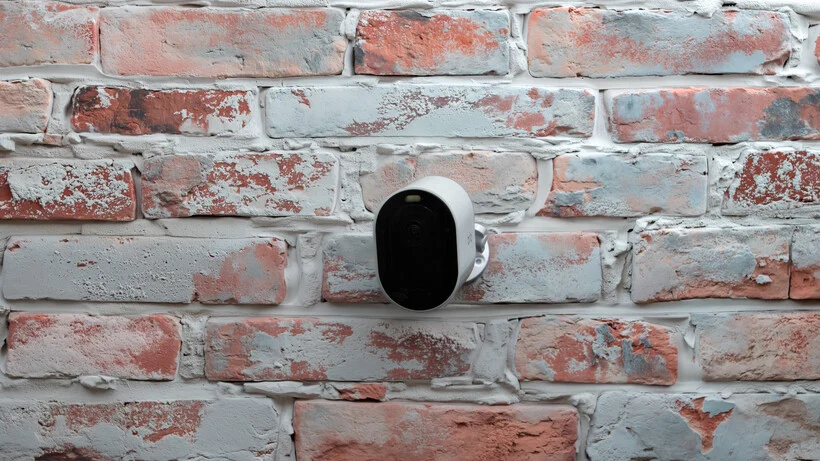
The home security market is increasingly dominated by integrated ecosystems, with Ring and Arlo emerging as two of the most prominent players. Both companies offer a comprehensive suite of products beyond just security cameras, encompassing video doorbells, alarm systems, and other smart home devices. Given the subscription-based nature of their cloud storage and advanced features, consumers are often faced with the decision of committing to one ecosystem over the other. This in-depth analysis aims to provide a clear comparison, evaluating key aspects such as camera capabilities, smart detection, smart home integration, subscription costs, and overall system comprehensiveness, to help consumers make an informed choice.
For those looking to explore options beyond these two giants, dedicated guides to the best smart video cameras and wireless doorbells can offer further insights into the broader market landscape.
Ring vs. Arlo: A Snapshot Overview
| Feature | Ring | Arlo |
|---|---|---|
| Camera Resolution | Up to 4K | Up to 4K |
| 2K Cameras | Yes | Yes |
| 4K Cameras | Yes | Yes |
| Color Night Vision | Selected models | Selected models |
| Smart Detection | Person, package, vehicle, and more (plan/model dependent) | Person, vehicle, package, animal, fire, custom (plan dependent) |
| Smart Home Support | Alexa | Alexa, Google Home, Apple Home, SmartThings, IFTTT |
| Cloud Storage | Up to 180 days | Up to 60 days |
| Lowest Paid Plan | $4.99/month | $7.99/month |
| Unlimited Camera Plan | $9.99/month | $17.99/month |
| Professional Monitoring | Yes | Yes |
| Whole-Home Alarm | Ring Alarm | Arlo Home Security System |
| Contractual Obligation | No | No |
Product Range and Pricing: Expanding Horizons
Ring has significantly broadened its product portfolio, moving beyond its initial doorbell offerings to include a diverse range of cameras. The lineup now extends from the more accessible $79.99 Ring Battery Outdoor Cam to the robust $199.99 Outdoor Cam Pro. The latter represents a substantial upgrade from older Ring models, boasting 4K video resolution, advanced 3D Motion Detection, and flexible installation options including wired, plug-in, or Power over Ethernet (PoE). The $99.99 Outdoor Cam Plus offers 2K recording, while the newer $169.99 Spotlight Cam enhances its capabilities with 2K video, motion-activated illumination, and various power configurations. At the premium end, the Spotlight Cam Pro and Floodlight Cam Pro deliver 4K recording capabilities. This evolution addresses a past criticism that Ring was confined to a 1080p ecosystem, a limitation that has now been largely overcome across its product range.
Arlo, on the other hand, maintains a strong emphasis on higher-resolution cameras. Its Arlo Pro 6, for instance, records in 2K HDR with a wide 160-degree diagonal field of view and color night vision. The Arlo Ultra series further pushes the boundaries with 4K capabilities. Notably, Arlo’s flagship cameras are predominantly battery-powered, offering greater installation flexibility, with a more limited selection of wired models primarily designed for indoor use. Ring offers a broader selection of models, often providing both battery-powered and wired versions of the same camera, catering to diverse user preferences. Furthermore, Ring provides a more extensive range of video doorbells, with multiple battery and wired options, whereas Arlo currently offers a single doorbell model.
Winner: Ring – for its wider hardware selection and more diversified product offerings across camera types and doorbells.
Video Quality: Arlo’s Enduring Edge, Ring’s Notable Catch-Up
For users prioritizing the ability to discern fine details, such as license plates or distant objects, Arlo generally maintains a slight advantage in video quality. Its high-end cameras combine 2K or 4K resolutions with wide-angle lenses, High Dynamic Range (HDR), and color night vision. The Arlo Pro 6, for example, features a 160-degree diagonal field of view, with some Arlo cameras boasting up to 180 degrees, allowing for a broader capture of the environment.

Ring has made significant strides in video resolution. Its latest models, including the Outdoor Cam Plus (2K), Outdoor Cam Pro, and Spotlight Cam Pro (both 4K), demonstrate a clear commitment to higher-definition recording. However, Ring itself cautions that 2K and 4K recording can increase bandwidth consumption and potentially impact streaming performance or notification latency. In comparative testing, Arlo cameras have often exhibited slightly sharper images than their Ring counterparts, though the gap has narrowed considerably with the introduction of newer Ring models.
Winner: Arlo – for its consistently superior image clarity and wider field of view on its premium models.
Live View and Notifications: Intelligent Detection Capabilities
The effectiveness of a home security system hinges on its ability to deliver relevant notifications without overwhelming the user. Both Ring and Arlo offer sophisticated methods for intelligent detection, but Arlo generally leads in the breadth of its AI-powered object recognition. Arlo cameras can detect people, animals, vehicles, and packages, with subscription plans enabling custom detection scenarios, such as monitoring for an open garage door or a specific area of activity. Advanced features include fire detection, where a camera can visually identify flames, and audio detection, which can identify sounds like glass breaking, screams, or gunshots. Notifications are often augmented with AI-powered captions, providing immediate context.
Ring’s standard offerings include person, package, and vehicle detection. The "Familiar Faces" feature, which utilizes facial recognition, is available as an upgrade. While Ring’s AI systems also provide captioned notifications and powerful search functionalities, Arlo’s detection capabilities are more granular and diverse out-of-the-box.
In terms of motion detection management, both systems offer tools to refine alerts. Arlo allows for motion sensitivity adjustments and the drawing of activity zones. Ring cameras support these features, and some advanced models incorporate 3D Motion Detection. This radar-based technology enables users to set precise detection distances, which can be particularly beneficial in busy areas to filter out irrelevant movement and significantly reduce the number of false alerts. For instance, a Ring doorbell on a busy street can be configured to ignore motion beyond the property line, ensuring notifications are only triggered by activity within the yard. Both systems demonstrate comparable response times for alerts, although factors such as broadband speed, mobile connection strength, and geographical location play a role.
Winner: Arlo for AI Detection, Ring for Advanced Hardware Motion Management – Arlo excels in the variety of intelligent object detection, while Ring offers more sophisticated hardware-based motion detection controls.
Smart Home Integration: Ecosystem Compatibility
Arlo boasts broader smart home compatibility, supporting Amazon Alexa, Apple HomeKit, Google Home, IFTTT, and Samsung SmartThings, though specific compatibility can vary by camera model. Recent updates have extended Apple HomeKit support to newer Essential Second-Generation models, allowing compatible Arlo cameras to integrate seamlessly with Apple’s Home app, providing live feeds, screenshots, two-way audio, and motion alerts.

Ring’s smart home integration is more tightly aligned with Amazon’s ecosystem. Its primary integration is with Alexa, enabling compatible Echo devices to display live camera feeds, announce events, and even facilitate answering the door remotely. This makes Ring an excellent choice for households already invested in Amazon’s smart home devices. However, for users primarily utilizing Google Home or Apple Home, Ring’s ecosystem limitation can be a significant drawback. Ring officially states that Alexa is its sole supported smart-home integration platform.
Winner: Arlo for Wider Compatibility, Ring for Deeper Alexa Integration – Arlo offers more flexibility for users with diverse smart home ecosystems, while Ring provides a more deeply integrated experience for Alexa users.
Subscription Plans and Cloud Storage: Value Proposition
This is an area where Ring presents a notably more attractive proposition for many consumers. Ring’s subscription plans begin at $4.99 per month for a single camera or doorbell, offering up to 180 days of video history and smart alerts. The Ring Multi-Plan, priced at $9.99 per month, covers all eligible devices at a single location, while the Ring Pro Plan ($19.99/month) adds professional monitoring and advanced AI features. The extended 180-day video history is a significant advantage, especially for individuals who travel frequently or require access to older footage.
Arlo’s paid plans start at $7.99 per month for one camera, with an unlimited camera plan costing $17.99 per month when billed annually. These plans typically provide 60 days of video history and include features like person, vehicle, package, and animal detection, along with custom detection capabilities. Arlo’s subscription model is arguably justified by the more intensive processing required for its higher-resolution cameras and sophisticated AI analytics.
Crucially, neither company mandates long-term monitoring contracts, providing flexibility for users to discontinue their subscriptions if they find them unwarranted. However, for users planning to equip an entire property with multiple cameras, the monthly cost difference between Ring’s $9.99 unlimited plan and Arlo’s $17.99 equivalent can accumulate significantly over time.
Winner: Ring – for its more affordable subscription tiers, particularly its unlimited camera plan, and longer video storage duration.
Professional Monitoring and Whole-Home Security: A Comprehensive Approach
Ring holds a substantial advantage for users seeking a more integrated alarm system rather than just a collection of cameras. Ring Alarm integrates seamlessly with a wide array of sensors, including entry, motion, and environmental detectors, and its base station offers cellular backup for added security. The Ring Pro plan ($19.99/month) includes 24/7 professional monitoring for Ring Alarm, enabling dispatch of emergency services when the alarm is triggered. Ring also offers a unique $99/month "Virtual Security Guard" service, which provides live video monitoring by human agents and real-time intruder deterrence, showcasing Ring’s evolution beyond its doorbell origins.

Arlo offers its own Home Security System centered around an all-in-one sensor capable of detecting multiple conditions such as entry, motion, temperature fluctuations, water leaks, and tilt. While innovative, this approach is less straightforward than dedicated door and window sensors. Arlo Premium ($24.99/month when billed annually) includes 24/7 professional monitoring and emergency response, alongside its camera features. For users prioritizing cameras first and an alarm system second, Arlo’s integrated approach may suffice. However, for a single, cohesive system encompassing cameras, door/window sensors, motion detection, and professional monitoring, Ring presents a more streamlined and compelling solution.
Winner: Ring – for its more robust and comprehensive whole-home alarm system and integrated professional monitoring services.
Conclusion: Which System Reigns Supreme?
The choice between Ring and Arlo ultimately depends on individual priorities and existing smart home infrastructure.
For those seeking a dedicated video doorbell, Ring offers a significantly wider selection of models, catering to various budgets and technical requirements, from basic battery-powered units to advanced 4K options.
If the primary focus is on camera performance and advanced AI features, Arlo emerges as the more attractive proposition. Its cameras consistently deliver superior image quality at the higher end, featuring 2K and 4K resolutions, expansive fields of view, HDR, and sophisticated color night vision. Arlo’s AI detection capabilities are more detailed, and its broader smart home compatibility makes it less restrictive. However, Arlo’s ecosystem tends to be more expensive to enter and maintain.
Conversely, if the objective is to build a comprehensive security system rather than just installing cameras, Ring becomes the preferred choice. Its current camera lineup has evolved considerably, offering 2K and 4K options that rival competitors. More importantly, Ring provides a clear pathway from a single doorbell to a complete, integrated alarm system, encompassing sensors and professional monitoring without the need for a patchwork of disparate products. The more affordable subscription plans, especially the $9.99/month unlimited camera option, are a significant advantage, particularly for users deploying multiple devices.
In summary, while Arlo excels in overall video quality and advanced AI features, it comes with a higher price point and less hardware variety. Ring offers a more extensive range of cameras, a more cost-effective cloud service, and a superior alarm system, making it the more pragmatic and comprehensive choice for the majority of homes.

