
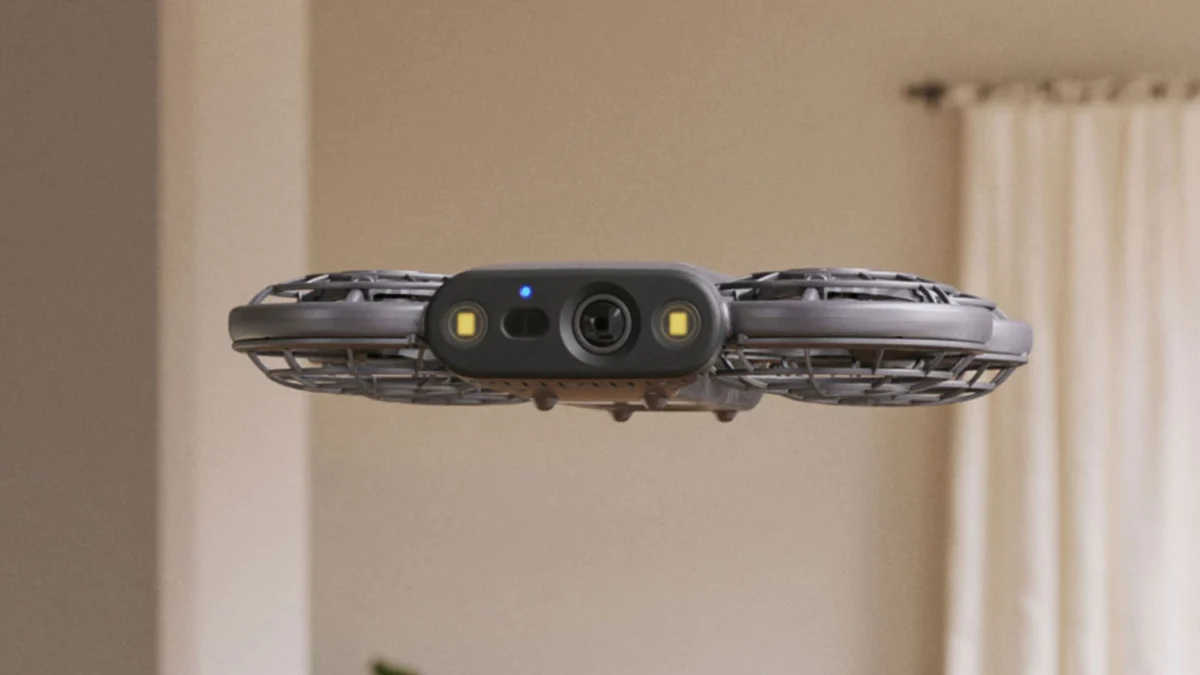
Amazon’s Ring division is poised to revolutionize property security with the long-awaited launch of its autonomous flying Ring Drone Cam and the ground-based Ring Rover Cam. After years of development marked by significant technological hurdles and strategic pivots, these intelligent security devices are finally set to become available to consumers and businesses, signaling a significant advancement in proactive surveillance technology. The Ring Drone Cam, priced at $249.99, is slated to begin shipping on January 27, 2027, while the more robust Ring Rover Cam, intended for commercial applications, will be available for $999.99 on December 16, 2026. These offerings mark the debut of "Ring Robotics," Amazon’s ambitious venture into the realm of mobile, AI-powered security solutions.
The journey to bring the Ring Drone Cam to market has been a protracted and complex one. Ring first showcased the concept of a flying security camera several years ago, sparking considerable interest but also highlighting the significant engineering challenges involved. Jamie Siminoff, Ring’s founder, has candidly acknowledged that early iterations of the drone were plagued by reliability issues that rendered them unsuitable for commercial release. One particular redesign, intended to enhance functionality, spiraled in complexity and cost, with projections suggesting a potential retail price exceeding $5,000. This starkly contrasted with the core mission of providing accessible consumer security solutions. The finalized model represents a significant triumph of miniaturization and sophisticated engineering, weighing a mere 165 grams and equipped with a high-definition 2K camera on the front and a secondary 1080p camera discreetly positioned underneath. Integrated LEDs are designed to illuminate dark areas, with Ring suggesting that the dynamic movement of these lights could act as a deterrent to potential intruders, mimicking the presence of someone actively searching a space with a flashlight.
Innovative Surveillance Capabilities
Unlike traditional, stationary Ring security cameras, the Drone Cam is engineered for dynamic engagement. It is capable of executing pre-programmed patrol routes, autonomously investigating activity detected by integrated sensors, or responding to user-directed flight commands. This level of operational autonomy is facilitated by Amazon’s Alexa Home Map technology. This advanced feature provides users with a detailed 3D representation of their property, allowing for intuitive point-and-tap navigation for the drone, thereby eliminating the need for manual piloting through complex indoor environments. The AI Pilot system is the backbone of the drone’s navigation and obstacle avoidance capabilities. A significant portion of the processing power required for these complex operations is offloaded to the cloud. This architectural choice allows for a more compact and cost-effective hardware design. However, it also underscores the critical reliance on a stable and robust Wi-Fi connection for optimal performance. The current iteration of the Drone Cam offers a limited flight time of eight to ten minutes per charge, positioning it as a tool for targeted, short-duration surveillance rather than continuous, round-the-clock monitoring.
The Ring Rover Cam: A Commercial Guardian
The Ring Rover Cam adopts a distinct, ground-based approach to autonomous security. Visually, it bears a striking resemblance to Amazon’s previously launched, albeit discontinued, Astro robot. Priced at $999.99, this device is primarily engineered for commercial enterprises requiring advanced monitoring solutions for environments such as warehouses, retail spaces, and other indoor facilities. The Rover Cam is equipped with a high-resolution 4K camera mounted on an extendable periscope, capable of reaching a height of four feet. This allows for elevated surveillance angles and improved situational awareness. Additional features include an integrated siren for audible alerts, two-way audio communication for direct interaction, and a rotating body that provides a comprehensive 360-degree field of vision.
Similar to the Drone Cam, the Rover Cam can adhere to scheduled patrol routes and initiate automatic responses to detected disturbances. A notable advantage of the Rover is its capability to record footage even while in transit between designated locations. Both the Drone Cam and the Rover Cam will integrate with Alexa Home Map, with this feature slated for release alongside the Rover Cam on December 16, 2026. This integrated mapping system is expected to enhance the usability and effectiveness of both devices by providing a unified interface for managing and monitoring autonomous security assets.
Addressing Privacy Concerns in an Autonomous Era
The introduction of mobile surveillance devices capable of navigating indoor spaces inevitably raises significant privacy considerations. Ring has proactively addressed these concerns by outlining specific operational protocols. The Drone Cam is designed to automatically power down its camera when docked, ensuring that recording only commences during triggered flights. Furthermore, both devices will utilize Ring’s new TAKE encryption system, a proprietary technology aimed at safeguarding recorded footage and user data. The Rover Cam, however, presents a nuanced approach to continuous monitoring. While it can record and respond to movement, its ability to continue monitoring for motion even when docked is a feature that may warrant further public scrutiny and discussion regarding its implications for privacy in a commercial setting.
Historical Context and Market Implications
The development of Ring Robotics represents a significant strategic investment by Amazon into the burgeoning market for smart home and business security. The initial concept for the Drone Cam emerged during a period of intense innovation in consumer robotics and drone technology. Early prototypes, however, encountered challenges related to battery life, flight stability, and the prohibitive cost of advanced sensor and processing hardware. The decision to delay commercialization until these issues were adequately addressed demonstrates a commitment to product quality and user experience.
The market for autonomous security systems is projected for substantial growth. According to a recent report by Grand View Research, the global smart security market was valued at $31.5 billion in 2022 and is expected to expand at a compound annual growth rate (CAGR) of 17.2% from 2023 to 2030. This growth is attributed to increasing awareness of security threats, the proliferation of smart home devices, and advancements in artificial intelligence and IoT technologies. Ring’s entry into this space with both aerial and ground-based autonomous solutions positions Amazon to capture a significant share of this expanding market.
The pricing strategy for both devices reflects a tiered approach, catering to different market segments. The $249.99 price point for the Drone Cam, while still a notable investment, makes autonomous aerial surveillance more accessible to a broader consumer base than initially anticipated. The $999.99 price for the Rover Cam positions it as a premium solution for businesses, competing with established providers of commercial security systems. The integration with the Alexa ecosystem and the potential for future expansion of Ring Robotics’ capabilities offer a compelling value proposition for existing Amazon customers.
Expert and Consumer Reactions (Inferred)
While official statements from competitors have not yet been released, it is reasonable to infer that the introduction of Ring Robotics will prompt a reassessment of competitive strategies within the security technology sector. Companies specializing in traditional security cameras, alarm systems, and even existing drone manufacturers may feel the pressure to innovate and integrate similar autonomous capabilities into their product lines.
Consumer reaction is likely to be mixed. Enthusiasm for advanced security features and the novelty of autonomous surveillance is expected, particularly among tech-savvy individuals and homeowners seeking enhanced protection. However, concerns regarding privacy, data security, and the potential for misuse of such technologies will undoubtedly be a significant topic of discussion. The emphasis on encryption and user-controlled flight parameters by Ring aims to mitigate these concerns, but ongoing public discourse and regulatory oversight will be crucial. The limited battery life of the Drone Cam might also temper expectations for continuous monitoring, potentially leading to a demand for improved battery technology or charging solutions in future iterations.
Broader Societal and Technological Implications
The advent of autonomous security devices like the Ring Drone Cam and Rover Cam carries broader implications for society and the technological landscape. The increased deployment of AI-powered surveillance raises questions about the balance between security and privacy, the potential for algorithmic bias, and the ethical considerations of pervasive monitoring. As these technologies become more sophisticated and accessible, discussions surrounding their responsible development and deployment will become increasingly important.
From a technological standpoint, the success of Ring Robotics could accelerate advancements in several key areas, including AI-powered navigation, real-time sensor fusion, cloud-based processing for edge devices, and miniaturized power systems. The integration of these devices into smart home and business ecosystems also highlights the growing importance of interoperability and seamless communication between diverse IoT devices. The long-term impact of these innovations could extend beyond security, influencing the development of autonomous systems in other sectors, such as logistics, inspection, and personal assistance. As Amazon continues to push the boundaries of what is possible with artificial intelligence and robotics, the landscape of home and business security is set for a profound transformation.

