
In the contemporary landscape of digital product development and corporate identity, the most critical failures in branding often occur long before a designer opens a software tool or drafts a logo. Industry analysis suggests that the disconnect between strategic intent and visual execution is primarily rooted in the ambiguity of language. Terms such as “modern,” “trustworthy,” “premium,” and “disruptive” frequently serve as placeholders for undefined concepts, creating a significant gap in the creative process. To address this, design leaders have identified a vital intermediary stage known as the “pre-concept” phase—a period of rigorous research, stakeholder alignment, and visual foundation-building that ensures the eventual design is rooted in shared understanding rather than creative guesswork.
The Strategic Gap in Brand Identity Development
The branding industry has seen a massive shift in the last decade, with the global market for brand identity services estimated to reach over $30 billion by 2028. However, despite the increased investment, many projects struggle with high revision rates and stakeholder dissatisfaction. According to a 2023 study on design-business alignment, nearly 45% of design projects suffer from "scope creep" or "directional pivot" because the initial brief was interpreted differently by stakeholders and creative teams.
This discrepancy is most visible during the transition from verbal strategy to visual concept. When a health technology firm requests a “disruptive” identity, the term may suggest a bold, neon-colored aesthetic to a designer, while the CEO may interpret it as a streamlined, more efficient version of traditional healthcare. Without a pre-concept phase to adjudicate these definitions, the first presentation of visual concepts often results in a fundamental mismatch, leading to costly delays and eroded trust.
Chronology of the Pre-Concept Phase
The pre-concept phase functions as a practical bridge between the abstract brand strategy and the finalized visual identity. It typically follows a structured timeline that prioritizes cognitive alignment over aesthetic production.
- Phase One: Contextual Research (Days 1–5): This stage involves moving beyond the standard creative brief. Designers and strategists investigate the competitive landscape not just for aesthetic trends, but for "perception cues." They analyze how competitors utilize typography, color, and layout to signal specific values like security or innovation.
- Phase Two: Stakeholder Discovery Workshops (Days 6–10): Instead of collecting personal opinions, these sessions use targeted exercises to uncover hidden assumptions. The goal is to move from "What do you like?" to "What must the audience believe?"
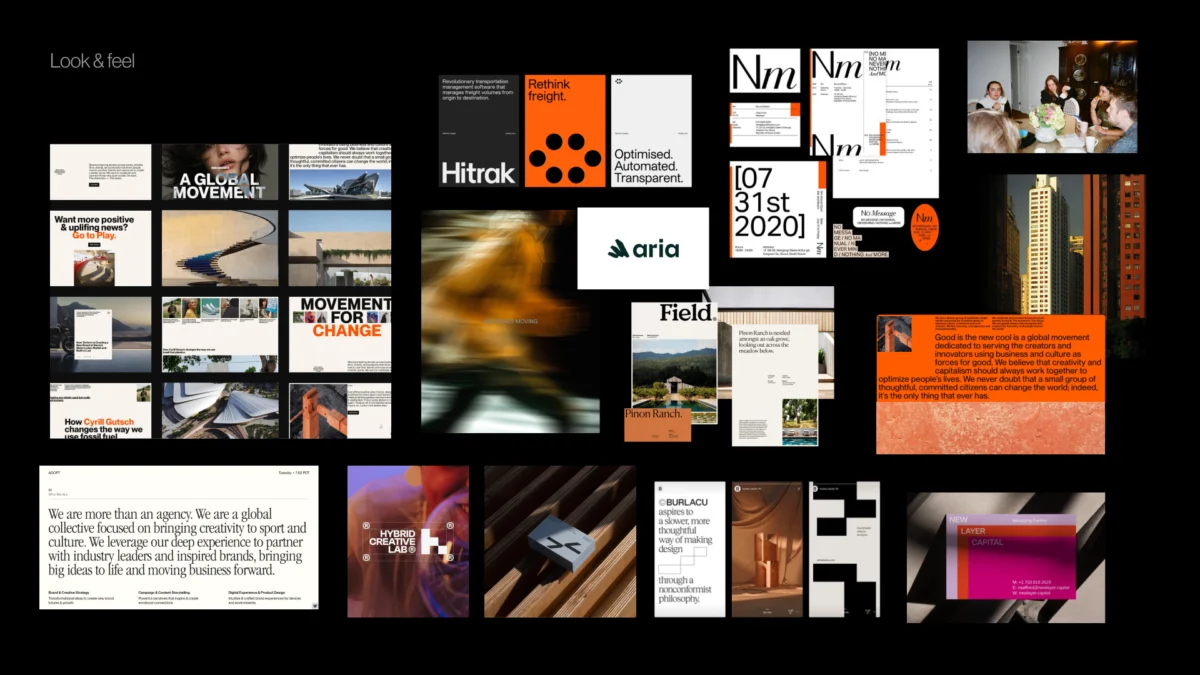
- Phase Three: Visual Perception Mapping (Days 11–15): Using the data gathered, teams create perception maps and "Look and Feel" boards. These are not concepts but references used to establish boundaries.
- Phase Four: Design Code Definition (Days 16–20): Before any original logo work begins, the team establishes "Design Codes"—visual principles that translate brand values into graphic metaphors.
Data-Driven Discovery: Uncovering Hidden Assumptions
The pre-concept phase relies heavily on the psychological principle of perception. As branding expert Marty Neumeier famously noted, a brand is a person’s "gut feeling" about a product or service. To manage this feeling, designers must first understand the existing perceptions within the client organization.

In a recent case study involving a fintech startup, the team sought to appear "bold" while maintaining "credibility." In the financial sector, where consumer trust is paramount, "boldness" can be a liability if it suggests recklessness. Through perception mapping—a process of placing competitors on a two-axis grid (e.g., Understated vs. Bold, Accessible vs. Exclusive)—the stakeholders realized that their definition of "bold" was not about loud colors, but about "confident minimalism." By identifying this early, the design team avoided exploring high-energy, neon-inflected directions that would have been rejected by the board.
Supporting data from McKinsey & Company’s "The Business Value of Design" report highlights that companies that integrate design into their strategic decision-making process see 32% higher revenue growth than their peers. The pre-concept phase is a direct application of this integration, forcing business leaders to think through the visual implications of their strategic goals.
Methodologies for Visual Alignment
To move from verbal to visual, designers utilize several specialized exercises during the pre-concept phase.

Exercise 1: Competitor Perception Mapping
Stakeholders are asked to categorize the visual identities of their competitors based on tension points. For a health tech company working with conservative government institutions, the axes might be "Traditional vs. Progressive" and "Corporate vs. Human." This exercise often reveals significant disagreements among stakeholders. One executive may see a competitor as "innovative," while another sees them as "unprofessional." Resolving these disagreements in the workshop prevents them from surfacing during the final concept review.
Exercise 2: The Visual Brand Driver
This metaphorical exercise requires stakeholders to choose images from unrelated categories—such as transportation, furniture, or architecture—to represent the company. If the company were a type of transport, would it be a high-speed train (signaling reliability and fixed routes) or a private jet (signaling exclusivity and speed)? The choice of adjectives to describe these images is critical. A "lounge chair" might represent "comfort" to one person and "lack of urgency" to another. These linguistic nuances are the building blocks of the brand’s eventual visual language.
Translating Strategy into Design Codes
Once the workshops are complete, the findings are distilled into "Design Codes." These are specific visual principles that serve as the foundation for the upcoming concept phase.

For example, a parenting application aiming for "research-backed support for real life" might establish a design code that combines "organic chaos" with "editorial structure." This might manifest as handwritten lines (representing the messiness of parenting) overlaid on a rigid, grid-based layout (representing the research-backed, scientific aspect).
By establishing these codes early, the designer creates a set of "boundaries" for the creative process. This does not stifle creativity; rather, it provides a sharper problem to solve. It ensures that when the first concepts are presented, they are not a surprise to the client but the logical conclusion of a shared journey.
Industry Reactions and Expert Perspectives
Design directors at leading agencies have increasingly advocated for this "strategy-first" approach. "The era of the ‘big reveal’ is ending," says one senior creative director. "Clients no longer want to wait six weeks for a logo they might hate. They want to be part of the decision-making process that leads to the logo."

Market research supports this shift toward transparency. According to a report by Marq (formerly Lucidpress), consistent brand presentation can increase revenue by up to 33%. However, consistency is impossible to maintain if the foundation of the brand is built on vague adjectives. The pre-concept phase provides the documentation and alignment necessary to maintain this consistency across digital and physical touchpoints.
Broader Implications for the Design Industry
The formalization of the pre-concept phase has significant implications for how design services are sold and executed.
- Reduced Revision Cycles: By reaching alignment before the concept phase, agencies report a 40-50% reduction in major revision rounds. This improves profitability for the agency and reduces time-to-market for the client.
- Objective Evaluation: The pre-concept checklist shifts the feedback loop from "I like it" or "I don’t like it" to "Does this meet our agreed-upon design codes?" This professionalizes the relationship and elevates the designer from a "pixel-pusher" to a strategic partner.
- AI Integration: As generative AI tools become more prevalent in the design process, the pre-concept phase becomes even more essential. AI can generate infinite variations of a "modern logo," but it cannot define what "modern" means for a specific brand’s context. The human-led pre-concept phase provides the "prompt engineering" required for AI to be useful.
Conclusion: The First Concept Should Not Be a Guess
The strongest visual concepts do not start in design software; they start with the right questions. The pre-concept phase is an essential discipline for any organization looking to build a brand that resonates with its audience and stands the test of time. By researching brand context, uncovering hidden assumptions, and turning shared direction into a visual foundation, design teams can ensure that the first concept is not a gamble, but a calculated step toward a successful identity.

In a market saturated with generic visuals and AI-generated noise, the brands that succeed will be those that have done the hard work of defining who they are and how they should be perceived before a single pixel is moved. The pre-concept phase is the engine of that success, providing the clarity and confidence needed to turn a broad strategy into a powerful, visual reality.

