
The future of online retail is evolving rapidly, driven by a burgeoning collaboration between e-commerce titan Shopify and cutting-edge web development platform Vercel. At Vercel’s Ship 26 conference in San Francisco on October 15th, a pivotal announcement underscored this shift: the joint development of e-commerce solutions designed to serve both human consumers and artificial intelligence agents. This strategic partnership introduces a new paradigm for online shopping, blending enhanced developer tools with sophisticated AI capabilities to create more intelligent, accessible, and versatile storefronts.
The core of this initiative lies in the integration of Shopify’s revamped Hydrogen software development kit (SDK) with Vercel’s innovative, AI-enabled open-source storefront template, dubbed Vercel Shop. This collaboration, unveiled by Shopify CEO Tobi Lütke and Vercel CEO Guillermo Rauch on the Ship 26 stage, signifies a significant step towards "agentic e-commerce," a concept where AI plays an increasingly active role in the shopping journey, from product discovery to transaction completion.
Hydrogen: Empowering Developers with Reusable E-commerce Architecture
Shopify’s rebuilt Hydrogen SDK serves as the foundational layer for this new e-commerce ecosystem. Designed to provide developers with a robust set of reusable tools, Hydrogen enables the creation of dynamic Shopify storefronts that can be built using any JavaScript framework or runtime. This flexibility is crucial in an industry where technological agility is paramount. Previously, building custom storefronts on Shopify often involved significant integration efforts, requiring developers to meticulously connect front-end experiences with back-end systems for product catalogs, real-time inventory, pricing, and checkout processes.
The rebuilt Hydrogen SDK addresses these complexities by abstracting common e-commerce functionalities into modular, shareable components. Developers can leverage these pre-built tools, allowing them to concentrate on crafting unique shopper experiences rather than reinventing core e-commerce mechanics. This approach significantly accelerates development cycles and reduces the technical burden associated with creating sophisticated online stores. The SDK’s architecture promotes code reusability, a key principle in modern software development that leads to more maintainable and scalable applications.
Vercel Shop: A Customizable Template for the AI-Integrated Future
Complementing Hydrogen’s developer-centric tools, Vercel Shop offers a tangible manifestation of this new e-commerce vision. This open-source template is not just another e-commerce theme; it’s an AI-ready storefront that incorporates structured product information, making it readily understandable by AI agents. Vercel Shop integrates seamlessly with the Hydrogen SDK, providing a customizable foundation that can be adapted to a wide range of merchant needs.
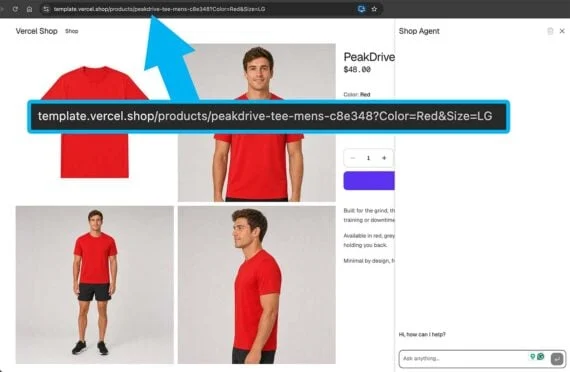
A key feature of Vercel Shop is its inherent support for both human and AI-driven shopping interactions. For human visitors, it presents a familiar and intuitive e-commerce interface. However, beneath the surface, the template is designed to expose product data in a format that AI agents can parse and interpret efficiently. This structured data, often reflected in URL parameters for specific product configurations (as seen in example URLs like template.vercel.shop/products/peakdrive-tee-mens-c8e348?Color=Red&Size=LG), allows external AI systems to query product details, compare options, and initiate shopping actions programmatically.
The Rise of Agentic E-commerce: Two Distinct AI Roles
The collaboration between Shopify and Vercel is paving the way for "agentic e-commerce," a future where AI agents can act on behalf of consumers, and intelligent assistants can enhance the in-store experience. Vercel Shop facilitates these capabilities through two primary AI-driven mechanisms: external agents and an integrated store assistant.
External Agents: AI as a Personal Shopper
The first AI capability empowers external agents to shop on behalf of humans. Imagine an AI personal shopper that can browse an online store, identify desired products based on complex criteria, compare prices and availability across different options, and even assemble a shopping cart without direct human intervention. Vercel Shop is engineered to support these external agents by providing structured product data and API-like access to shopping functionalities.
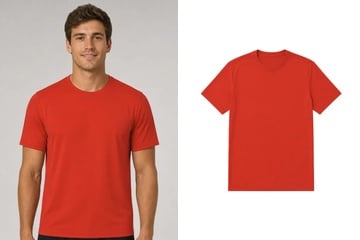
This means an AI agent, tasked with finding a specific item, such as a black jacket in a particular size, doesn’t need to rely on screen scraping or complex visual interpretation of a webpage. Instead, it can directly access machine-readable product information. This structured data allows the agent to understand product attributes, variants, and specifications programmatically. The agent can then interact with the store’s system to add items to a cart, check inventory levels, and present options to the human user for final approval. This capability has profound implications for accessibility, allowing individuals who may have difficulty navigating traditional websites to engage in online shopping through AI intermediaries.
The Store Assistant: Enhancing Human Browsing with AI
The second AI-driven feature within Vercel Shop is an optional, integrated shopping assistant. This AI-powered chatbot acts as a knowledgeable guide for human shoppers, akin to virtual assistants like Walmart’s Sparky or Amazon’s Alexa for Shopping. This assistant can help users discover products, navigate through product variations, answer questions about store policies, and manage their shopping cart through a conversational interface.
Crucially, this store assistant operates on the same Shopify cart as the visual storefront. This means that a user can add an item while browsing the site, then ask the assistant to modify its size or suggest complementary products, such as finding a matching hat for a previously selected jacket. All changes made through the assistant are reflected in the shared cart, ensuring a consistent and unified shopping experience regardless of the interaction method.
A Seamless Checkout Process: Prioritizing Security and Familiarity
While AI agents and assistants can streamline the discovery and selection process, Shopify emphasizes that the final purchase remains a human-centric experience. Shopify’s CEO Tobi Lütke articulated this philosophy, noting, "Checkouts are ridiculously hard to get right. It’s one of those pieces of software that actually does need 20 years of tinkering with." This highlights Shopify’s commitment to providing a secure, reliable, and proven checkout system.
The AI assistant is designed to facilitate cart management and product selection but cannot independently place orders or process payments. This ensures that sensitive financial transactions are handled through Shopify’s established and trusted checkout flow, providing shoppers with a sense of security and familiarity. Developers have the ability to enable the store assistant and configure its access to Vercel’s AI Gateway, allowing for customization of its guidance and product presentation.
Background and Chronology of the Partnership
The announcement at Ship 26 is not an isolated event but rather a significant milestone in an ongoing strategic alignment between Shopify and Vercel. The partnership has been steadily building momentum, with key developments preceding the latest revelations.
- June 30, 2023: Vercel and Shopify publicly announced their collaboration to rebuild Hydrogen. This initial phase focused on enhancing the Hydrogen SDK, making it more versatile and empowering developers to build Shopify storefronts across a broader spectrum of JavaScript frameworks and runtimes. The goal was to democratize the creation of high-performance, custom storefronts on the Shopify platform.
- October 15, 2023: At Vercel’s Ship 26 conference, Tobi Lütke and Guillermo Rauch shared the stage to unveil the practical applications of their partnership: the full integration of the rebuilt Hydrogen SDK with Vercel Shop, a template explicitly designed for AI-enabled e-commerce. This event showcased the tangible outcomes of their joint development efforts, demonstrating the future of agentic retail.
This chronology indicates a deliberate and phased approach to innovation, starting with foundational developer tools and culminating in sophisticated, AI-driven user experiences. The continuous collaboration underscores a shared vision for the future of e-commerce, one that is more intelligent, adaptable, and user-centric.
Broader Impact and Implications for the E-commerce Landscape
The collaboration between Shopify and Vercel carries significant implications for the broader e-commerce industry. By making AI integration more accessible and providing developers with powerful tools, they are lowering the barrier to entry for sophisticated online retail experiences.
- Enhanced Customer Experiences: The ability for AI to assist shoppers in finding products, managing carts, and even acting as a personal shopper promises to create more engaging and efficient online shopping journeys. This can lead to increased customer satisfaction and loyalty.
- Developer Productivity: The reusable components within Hydrogen and the template-driven approach of Vercel Shop empower developers to build more complex and feature-rich storefronts with greater speed and less effort. This can foster innovation and allow smaller businesses to compete with larger enterprises.
- Accessibility and Inclusivity: Agentic e-commerce has the potential to make online shopping more accessible to a wider range of individuals, including those with disabilities or those who prefer interacting with technology through natural language.
- Data-Driven Optimization: The structured product data and AI capabilities facilitate more sophisticated data analysis, enabling merchants to gain deeper insights into customer behavior and optimize their product offerings and marketing strategies.
- The Future of Retail Interfaces: This partnership signals a shift from purely visual interfaces to a more fluid, multi-modal interaction model where AI plays a central role in bridging the gap between consumers and products.
Vercel’s own merchandise store, Vercel.shop, serves as a live demonstration of the Vercel Shop template and its integrated shopping assistant, offering a glimpse into this future. As the e-commerce landscape continues to evolve, driven by advancements in AI and a demand for more personalized and efficient shopping experiences, the collaboration between Shopify and Vercel is poised to play a pivotal role in shaping its trajectory. Their combined efforts are not just about building better online stores; they are about redefining the very nature of how we shop and interact with brands in the digital age.

