
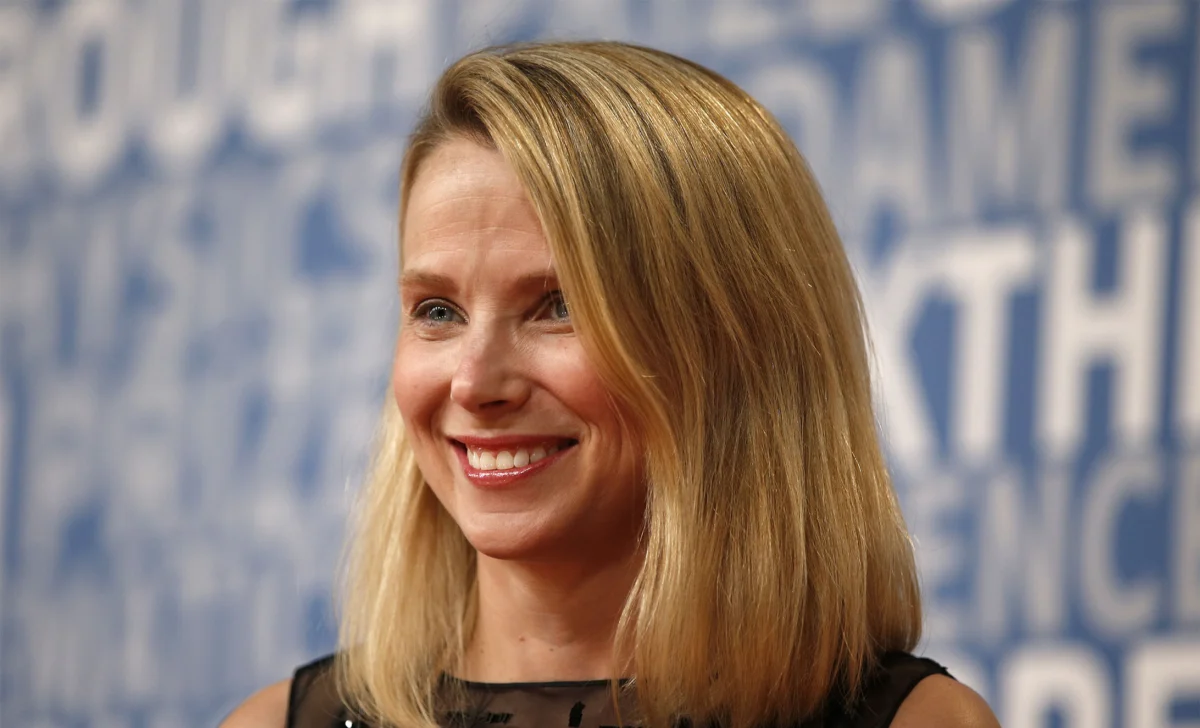
Former Yahoo CEO and pioneering Google engineer Marissa Mayer has recently found herself at the center of a burgeoning controversy, drawing considerable criticism for her public remarks on leveraging artificial intelligence in deeply personal aspects of life, particularly parenting. The debate, which escalated following an interview regarding her new application, Dazzle, has reignited long-standing concerns about Silicon Valley’s often-divergent perspective on human relationships and the increasing integration of AI into intimate domains.
The Genesis of the Controversy: Dazzle and the Birthday Presentation
The initial spark for the public outcry came from a New York Times interview published on October 25, 2026, where Mayer discussed Dazzle, an AI assistant designed to learn from a user’s camera roll. In what she seemingly intended as a compelling demonstration of Dazzle’s capabilities, Mayer recounted how the AI helped her generate three bullet points describing her 10-year-old daughter for a school birthday presentation. The descriptors—"empathetic, creative, and an animal lover"—were, to many observers, notably generic, akin to a broad horoscope that could apply to a multitude of children. This anecdote, meant to showcase the product’s utility, instead triggered a wave of incredulity and criticism across social media and news platforms.
Dazzle, launched on September 29, 2026, with significant venture capital backing, aims to transform how users interact with their vast digital photo archives. By analyzing images and associated metadata, the AI is designed to surface memories, suggest activities, and even assist with personal planning. Mayer positioned the app as a solution to the "mental load" of modern life, particularly for busy individuals and parents. However, the specific example she chose, pertaining to a child’s personal attributes, struck a nerve.
Immediate Public Reaction and Mayer’s Clarification
The public response was swift and largely negative. Progressive activist Leah Greenberg, among others, articulated a widespread sentiment, remarking on X (formerly Twitter) that "the fact that Marissa Mayer would voluntarily disclose this to a reporter is a pretty good demonstration of how deeply the culture of Silicon Valley has diverged from the rest of humanity." This reaction underscored a growing cultural chasm between the tech industry’s vision of an optimized, AI-assisted future and the broader societal understanding of human connection and emotional labor. Critics argued that delegating the nuanced task of describing one’s child to an algorithm, however advanced, suggested a detachment from the very essence of parental engagement.
Following the initial wave of backlash, Mayer took to X to defend her position in a lengthy post on October 27, 2026. She clarified that her intention was not to rely on Dazzle to "explain her child to her." Instead, she stated she was testing the prototype’s capabilities. Her defense elaborated that Dazzle, by sifting through years of digital photos, had resurfaced "forgotten kindergarten projects" like a "snake devenomer" or a "sandcat playground." These rediscovered artifacts, she contended, provided concrete evidence that illustrated her daughter’s creativity and care for animals, thus validating the AI’s derived descriptors. While this explanation offered a more nuanced view of the AI’s role as a memory aid, the initial impression of outsourcing emotional reflection had already taken root.
A Pattern of AI Integration into Personal Life: Precedent Set by Tech Leaders
Mayer’s incident, however, did not occur in a vacuum. It follows a series of public statements from other prominent Silicon Valley figures who have advocated for the integration of AI into areas traditionally considered deeply personal and emotionally demanding, particularly child-rearing and social interaction. This recurring theme suggests a broader cultural trend within the tech elite, where the principles of efficiency and optimization, central to technological innovation, are increasingly applied to the human condition itself.
Just the previous year, OpenAI CEO Sam Altman, a leading figure in the generative AI revolution, sparked a similar controversy. During an appearance on national television with late-night host Jimmy Fallon, Altman, known for his ownership of a Bored Ape NFT, made the striking assertion, "I cannot imagine… figuring out how to raise a newborn without ChatGPT." This comment, broadcast to millions, was met with considerable public disapproval, with many finding it indicative of a privileged and detached perspective on the profound experience of parenthood. Altman, however, appeared unfazed by the negative feedback. Months later, he again courted controversy on X, proposing a "cool use case" for ChatGPT Work: creating a podcast that would discuss children’s upcoming birthdays or soccer games and "explain your kids’ interests." This suggestion was met with a brutal "ratio" of critical comments, including the widely echoed question, "What if you just talked to your children?" These instances collectively painted a picture of a tech leadership increasingly comfortable, and even enthusiastic, about delegating fundamental human responsibilities and connections to artificial intelligence.
Beyond parenting, Mayer’s interview also revealed her broader vision for Dazzle’s application in daily life. She remarked that the AI could help users outsource the "mental load" of tasks such as "figuring out the theme for your child’s birthday party." She detailed her own use cases, including planning a playdate for her daughter, booking family activities for vacations, and even deciding on Halloween costumes. Perhaps most tellingly, Mayer proposed a future where her AI assistant could coordinate plans directly with her husband’s AI assistant. When the interviewer posed a critical question, asking if it was "depressing to imagine this ‘frictionless future’… planned by AI," Mayer’s candid response – "I haven’t really thought that through" – highlighted a perceived lack of reflection on the deeper societal and emotional implications of such pervasive AI integration.
Mark Zuckerberg’s Vision of AI-Mediated Social Connections
The discourse around AI’s role in human connection extends beyond parenting to the very fabric of social relationships, a domain championed by Meta CEO Mark Zuckerberg. Zuckerberg, like his Silicon Valley peers, envisions a future where AI plays a significant role in fulfilling human social needs. In a podcast interview last year, he cited statistics suggesting that "the average American I think has, it’s fewer than three friends, three people they’d consider friends, and the average person has demand for meaningfully more, I think it’s like 15 friends." He concluded that "the average person wants more connectivity, connection than they have."
Zuckerberg’s solution to this perceived deficit in human connection involves AI. He predicts an increasing social acceptance of outsourcing emotional needs to AI therapists or even AI romantic partners. While acknowledging that "there are all these things that are better about physical connections when you can have them," he posited that "the reality is that people… feel more alone a lot of the time than they would like." This perspective aligns with Meta’s substantial investments in virtual reality and the metaverse, where increasingly realistic virtual embodiments of AI avatars are being developed. Critics observe that Meta appears more focused on improving human relationships with these digital approximations than on fostering genuine, unmediated connections between the billions of actual humans who utilize its platforms daily. The underlying assumption seems to be that if a human connection is lacking, an AI-powered substitute can effectively fill the void, potentially without fully grappling with the root causes of social isolation.
The Philosophical Divide: Efficiency vs. Humanity
At the heart of this ongoing debate lies a fundamental philosophical tension, often epitomized by the culture of the tech industry itself: the relentless pursuit of efficiency. Silicon Valley’s ethos frequently prioritizes optimization, data-driven solutions, and the elimination of "friction" in processes. This mindset is evident in various "biohacking" trends, where individuals attempt to optimize their own bodies through regulated sleep schedules monitored by health trackers, or even by injecting unregulated "peptide stacks" in an effort to maximize productivity and lifespan.
While this drive for efficiency is undeniably beneficial in fields like electric vehicle manufacturing or semiconductor development, its application to human relationships raises profound questions. Human connections are inherently complex, messy, and often inefficient. They involve vulnerability, imperfect communication, emotional labor, and the willingness to navigate discomfort. These very "inefficiencies," however, are often what forge depth, resilience, and meaning in relationships. When these interactions are delegated to algorithms designed to streamline and optimize, there is a risk of surrendering the very experiences—the challenges, the learning, the profound satisfactions—that define our humanity. The emotional nuances, the unspoken understandings, and the serendipitous moments that build true intimacy are difficult, if not impossible, for current AI models to genuinely replicate or understand, given their foundational reliance on pattern recognition and data processing rather than lived emotional experience.
Public Perception and Ethical Implications
The tech leaders’ enthusiastic embrace of AI in personal life contrasts sharply with broader public sentiment. A Pew Research Center study conducted in September 2025 revealed significant public apprehension regarding AI’s impact on human relationships. The study found that a substantial 50% of U.S. adults believe that AI will diminish people’s ability to form meaningful relationships. In stark contrast, only a meager 5% of respondents thought AI would facilitate these connections. These statistics underscore a profound divergence in outlook: while tech innovators envision AI as a solution to social deficits, a significant portion of the public perceives it as a potential threat to the quality and authenticity of human bonds.
The ethical implications of this trajectory are vast. If children are described by algorithms, if social interactions are mediated by AI, and if emotional support is primarily derived from machines, what becomes of human empathy, self-awareness, and the capacity for genuine, unmediated connection? Critics argue that such pervasive AI integration could lead to a superficialization of relationships, where the convenience of an AI assistant replaces the effort required for deep human engagement. It raises questions about the long-term psychological effects, particularly on younger generations growing up in an increasingly AI-saturated environment. Will they develop the emotional intelligence and resilience needed to navigate the complexities of human interaction if their initial experiences are largely "frictionless" and algorithmically curated?
Looking Ahead: The Future of Human Connection in an AI World
The controversies surrounding Marissa Mayer, Sam Altman, and Mark Zuckerberg are not isolated incidents but rather symptomatic of a larger societal reckoning with the rapid advancements of artificial intelligence. They highlight a crucial ongoing dialogue about the boundaries of technology and the essence of what it means to be human. While AI offers undeniable benefits in numerous domains, the push to integrate it into the most intimate aspects of personal life—parenting, friendship, and emotional well-being—challenges deeply held cultural values and raises fundamental questions about the future of human connection.
As AI continues to evolve, the distinction between utility and intrusion will become increasingly blurred. The challenge for society will be to harness the powerful capabilities of AI without inadvertently eroding the fundamental human experiences that give life meaning. This necessitates not just technological innovation but also careful ethical consideration, public discourse, and a collective decision on where the line should be drawn between human experience and algorithmic optimization. The debate sparked by Mayer’s comments serves as a potent reminder that while technology can enhance life, it cannot, and perhaps should not, replace the messy, imperfect, yet profoundly fulfilling journey of human connection.

