
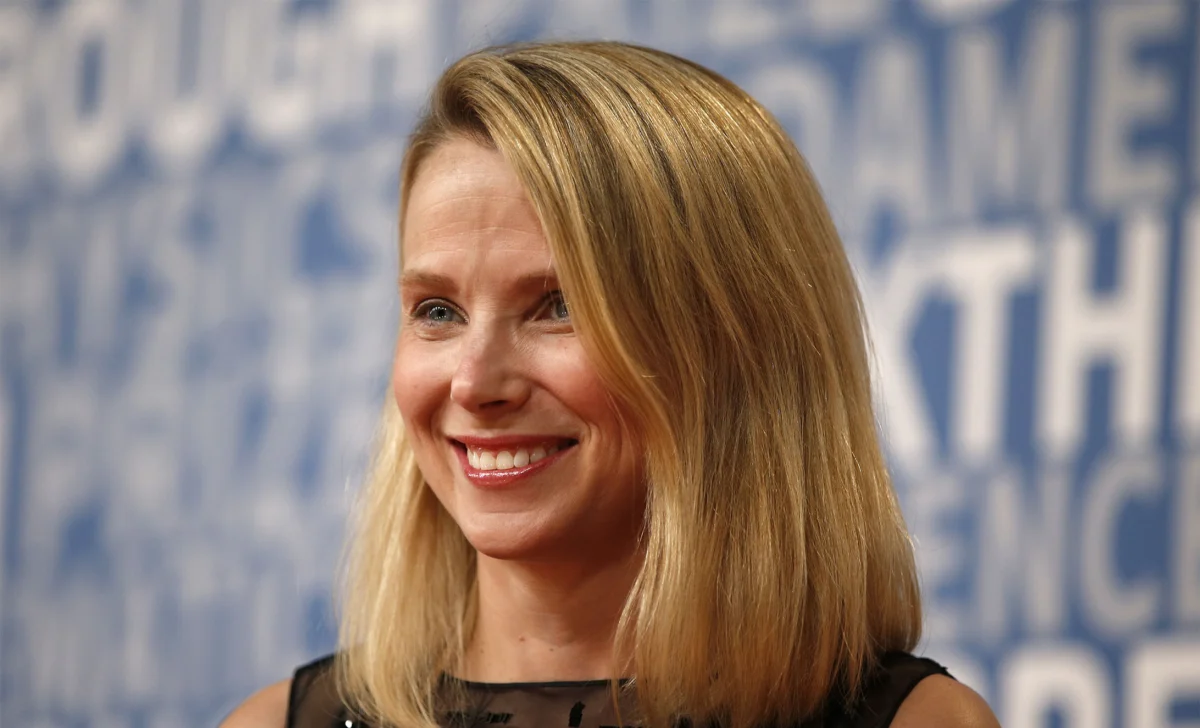
A recent interview with former Yahoo CEO and early Google engineer Marissa Mayer has ignited a fresh wave of public debate regarding the appropriate integration of artificial intelligence into deeply personal aspects of human life, particularly child-rearing and social relationships. Mayer, discussing her new application, Dazzle, an AI assistant designed to learn from a user’s camera roll, highlighted a feature that assisted her in generating three bullet points about her 10-year-old daughter for a school presentation. The descriptors—"empathetic, creative, and an animal lover"—were presented by Mayer as an impressive demonstration of Dazzle’s capabilities, yet they quickly drew criticism for their generic nature, sparking a broader discussion about the perceived disconnect between Silicon Valley’s vision for AI and the public’s anxieties surrounding its societal impact.
The Dazzle Controversy and Mayer’s Initial Remarks
The controversy originated from an interview published on October 25, 2026, where Mayer showcased Dazzle, her latest venture, which aims to leverage the vast, unstructured data within a user’s camera roll to offer personalized insights and assistance. Dazzle, launched shortly before the interview on September 29, 2026, is positioned as an AI assistant capable of streamlining various aspects of daily life. The specific anecdote that garnered significant attention involved Mayer using Dazzle to craft a description of her daughter for a school presentation. While Mayer intended to illustrate the product’s utility in recalling memories and synthesizing information, the resulting descriptors were widely perceived as vague and impersonal, igniting a swift backlash across social media platforms and news outlets.
Critics quickly pointed out that the generated description could apply to a multitude of children, suggesting a superficial understanding of individual personality, even when drawing from a rich source like a personal camera roll. Progressive activist Leah Greenberg publicly expressed her astonishment, stating on X (formerly Twitter) that Mayer’s voluntary disclosure served as a "pretty good demonstration of how deeply the culture of Silicon Valley has diverged from the rest of humanity." This sentiment resonated with a significant portion of the public, who interpreted the anecdote not as a testament to AI’s power, but as a troubling sign of increasing reliance on technology for tasks that traditionally demand human intuition, emotional engagement, and intimate knowledge. The core of the criticism centered on the idea that delegating such a personal reflection to an algorithm, regardless of its sophistication, fundamentally devalues the unique bond between parent and child.
Mayer’s Defense and the Broader "Mental Load" Argument
Following the immediate public outcry, Mayer issued a detailed defense via a lengthy X post, aiming to clarify her initial remarks. She asserted that her intention was not to rely on Dazzle to understand her child, but rather to rigorously test the prototype’s capabilities. Mayer explained that the app successfully resurfaced forgotten kindergarten projects, such as a "snake devenomer" or a "sandcat playground," which then served as concrete examples illustrating her daughter’s creativity and care for animals. She argued that the AI acted as a memory aid, helping her recall specific instances that supported the generalized traits, rather than generating the traits themselves in a vacuum.
While her clarification provided a degree of nuance, the interview itself contained further examples that continued to fuel public skepticism about the intended scope of Dazzle’s utility and Mayer’s broader vision for AI. In the same conversation, Mayer remarked on the potential for her AI to "outsource the mental load" associated with various domestic and social responsibilities. She cited instances of using her app to plan a playdate for her daughter, book family activities during vacations, and even decide on Halloween costumes. More strikingly, she proposed a future where her AI assistant could coordinate plans directly with her husband’s AI assistant, envisioning a "frictionless future" orchestrated by algorithms. When directly asked by the reporter if such a future, largely planned by AI, might be depressing, Mayer’s response was, "I haven’t really thought that through." This admission, coupled with the examples of extensive delegation, reinforced the perception that the drive for efficiency among some tech leaders might inadvertently overlook the intrinsic value and emotional depth derived from engaging with life’s inherent complexities. The concept of "mental load," often disproportionately borne by women in heterosexual partnerships, is a recognized psychological and sociological phenomenon, and while AI could theoretically alleviate some burdens, critics question whether such delegation for emotionally significant tasks is beneficial or detrimental to human well-being.
A Pattern Among Tech Titans: Altman’s Precedent
The controversy surrounding Mayer’s comments is not an isolated incident but rather echoes a growing pattern of Silicon Valley executives advocating for AI’s deep integration into personal, emotionally charged domains. OpenAI CEO Sam Altman, a prominent figure in the AI landscape, has previously drawn significant public ire for similar statements regarding child-rearing. Last year, during an appearance on national television with late-night host Jimmy Fallon, Altman candidly stated, "I cannot imagine… figuring out how to raise a newborn without ChatGPT." This remark, made to a broad audience, was met with widespread public disapproval, seen by many as a shocking endorsement of outsourcing fundamental parental responsibilities to an algorithm. Critics argued that the development of patience, humility, and kindness, crucial virtues in child-rearing, stems precisely from navigating the unpredictable and often challenging realities of human interaction, something an AI, currently incapable of genuine human emotion or lived experience, cannot replicate or teach.
Altman, seemingly unfazed by the negative feedback, continued to champion AI for familial tasks. Just a few months prior to Mayer’s interview, he took to X to suggest a "cool use case" for ChatGPT Work: creating a podcast that would announce children’s upcoming birthdays or soccer games and "explain your kids’ interests." This suggestion was brutally "ratioed" on the platform, indicating a strong negative public sentiment, with many users directly challenging the premise, asking, "What if you just talked to your children?" These instances highlight a recurring theme: tech leaders, perhaps blinded by the potential for technological efficiency, often propose solutions that appear to diminish the very human experiences that many value most, overlooking the intrinsic rewards of personal effort and emotional investment in relationships. The public reaction suggests a clear demarcation line for many regarding where AI’s utility should end and human responsibility should begin.
Zuckerberg’s Vision: AI for Social Connection and Combating Loneliness
Adding another dimension to this ongoing debate, Meta CEO Mark Zuckerberg has articulated a vision where AI plays a pivotal role in addressing perceived societal deficits in human connection. Last year, during a podcast appearance, Zuckerberg observed that "the average American… has fewer than three friends," while simultaneously having "demand for meaningfully more, I think it’s like 15 friends." He concluded that "the average person wants more connectivity, connection than they have." From this premise, Zuckerberg predicts a future where it becomes increasingly "socially acceptable" to outsource emotional needs to AI therapists or even AI romantic partners.
While acknowledging that "there are all these things that are better about physical connections when you can have them," Zuckerberg asserted that "the reality is that people… feel more alone a lot of the time than they would like." He detailed how virtual-reality embodiments of AI avatars are rapidly advancing in realism, suggesting that Meta’s strategic focus leans towards improving relationships with these digital approximations of humans, rather than exclusively fostering deeper connections among the billions of actual human users on its platforms. This perspective aligns with Meta’s substantial investments in the metaverse, where AI-driven avatars and immersive virtual environments are central to the user experience. The implication is that if authentic human connections are perceived as difficult to form or maintain, AI could step in to fill that void, offering companionship, emotional support, and even simulated intimacy. This vision, while presented as a solution to loneliness, raises profound questions about the nature of genuine connection, empathy, and the potential for a society that increasingly turns to artificial entities for its most fundamental social and emotional needs.
The Public’s Perception: Data and the Disconnect
The public’s response to these technological propositions from influential figures underscores a significant divergence in perspective between the tech elite and a substantial portion of the general populace. While tech leaders often present AI as an unequivocal path to efficiency and problem-solving, broad societal apprehension persists regarding its impact on human relationships and well-being. This sentiment is robustly supported by empirical data. A Pew Research Center study conducted in September 2025 revealed that a striking 50% of U.S. adults believe that AI will ultimately reduce people’s ability to form meaningful relationships. In stark contrast, only a mere 5% of respondents thought AI would facilitate the building of such connections.
This statistical chasm highlights a fundamental concern that many ordinary citizens harbor: that while AI might offer convenience, it risks eroding the very fabric of human interaction that defines our social existence. The perceived willingness of tech leaders to delegate emotionally resonant tasks to algorithms is often viewed as a symptom of a "Silicon Valley bubble," a cultural phenomenon where the pursuit of optimization and technological advancement inadvertently overlooks the nuanced complexities of human experience. This disconnect is exacerbated when high-profile figures, often perceived as already detached from common societal struggles due to their immense wealth and insulated lifestyles, suggest solutions that appear to bypass human effort and emotional investment. The public, therefore, is not merely resistant to new technology but is critically evaluating the ethical and social trade-offs inherent in the widespread adoption of AI for personal and relational domains.
The Philosophy of Efficiency vs. Humanity
Underpinning these proposals from tech leaders is often a deeply ingrained cultural ethos prevalent within the tech industry: the relentless pursuit of efficiency and optimization. This mindset, highly effective in fields like engineering, software development, or manufacturing—where the goal is to build faster, cheaper, and more reliably—is frequently extended to human life itself. This manifests in trends like "biohacking," where individuals attempt to optimize their physical and cognitive functions through quantified self-tracking (e.g., advanced sleep schedules with health trackers) or experimental interventions (e.g., injecting unregulated "peptide stacks" to boost productivity). The human body and mind are treated as systems to be fine-tuned and maximized, much like a computer algorithm or a production line.
While efficiency serves as a clear and valuable "north star" when developing electric vehicles or computer chips, its application to human relationships presents a fundamental philosophical challenge. Human connections are inherently, beautifully, and sometimes painfully messy. They are forged through shared experiences, vulnerability, conflict resolution, compromise, and mutual effort—processes that are far from efficient in a purely algorithmic sense. These interactions, with all their unpredictability and emotional friction, are precisely what give our lives meaning, foster empathy, and cultivate personal growth. When the difficult, yet profoundly fulfilling, experience of being human—of engaging with others in all their complexity—is delegated to computers, there is a risk of surrendering not just the inconvenience, but also the very essence of what makes these connections rich and valuable. The pursuit of a "frictionless future," while appealing on the surface, may inadvertently strip away the opportunities for genuine connection and the development of crucial social and emotional intelligence that arise from navigating the inherent "friction" of human interaction.
Ethical and Societal Implications
The implications of a society increasingly reliant on AI for emotional labor and relational development are far-reaching and warrant careful consideration. Ethically, questions arise about the authenticity of relationships mediated or managed by AI. If an AI generates birthday wishes, plans family events, or even offers companionship, does the human recipient truly feel seen, understood, or loved in the same way they would through human-initiated and human-executed actions? There is a risk that by outsourcing these gestures, we may inadvertently diminish the intrinsic value of genuine human effort and emotional investment, leading to a more superficial and less satisfying experience of connection.
Societally, a broad embrace of AI for personal relationships could have profound effects on the development of empathy, emotional intelligence, and critical social skills. Learning to navigate complex human emotions, resolve interpersonal conflicts, and offer authentic support are foundational aspects of human development. If AI increasingly insulates individuals from these challenging but growth-inducing experiences, future generations might find themselves less equipped to handle the nuances of real-world human interaction. Furthermore, the commodification of emotional support and companionship through AI could exacerbate existing inequalities, where access to "quality" AI relationships might become another marker of social stratification. The risk is not merely that AI might assist us, but that it might replace essential human functions, ultimately reshaping our understanding of what it means to be connected, empathetic, and truly human in an increasingly technological world.
The debate sparked by Marissa Mayer, following on the heels of similar comments by Sam Altman and Mark Zuckerberg, underscores a critical juncture in the integration of AI into society. It highlights a fundamental tension between the relentless drive for efficiency and the irreducible value of human connection. As AI technologies continue to advance, the conversation must shift beyond merely what AI can do, to what it should do, and critically, what aspects of human experience we must safeguard from technological delegation to preserve the depth and meaning of our lives.

